







Getting a sunburn can be really painful. It makes everyday tasks hard, so finding good sunburn relief is key.
The Mayo Clinic says treating sunburn doesn’t speed up healing. But, it can make the pain, swelling, and discomfort better. Knowing how to calm sunburned skin is important for feeling better and avoiding more problems.
Good sunburn care mixes home remedies with medical help when needed. This way, people can handle their symptoms better and get back to feeling good.
Understanding Sunburn: Causes and Symptoms
Knowing about sunburn is key to preventing it and treating it well. Sunburn happens when your skin gets too much UV radiation from the sun or tanning beds.
The American Academy of Dermatology says getting five or more bad sunburns by age 20 raises your risk of melanoma by 80%. It also increases your risk of non-melanoma skin cancer by 68%. This shows why it’s vital to know about sunburn’s causes and signs.
UV Radiation and Sunburn
UV radiation is the main reason for sunburn. There are two kinds of UV radiation: UVA and UVB. UVA goes deep into the skin, causing early aging. UVB is the main cause of sunburn.
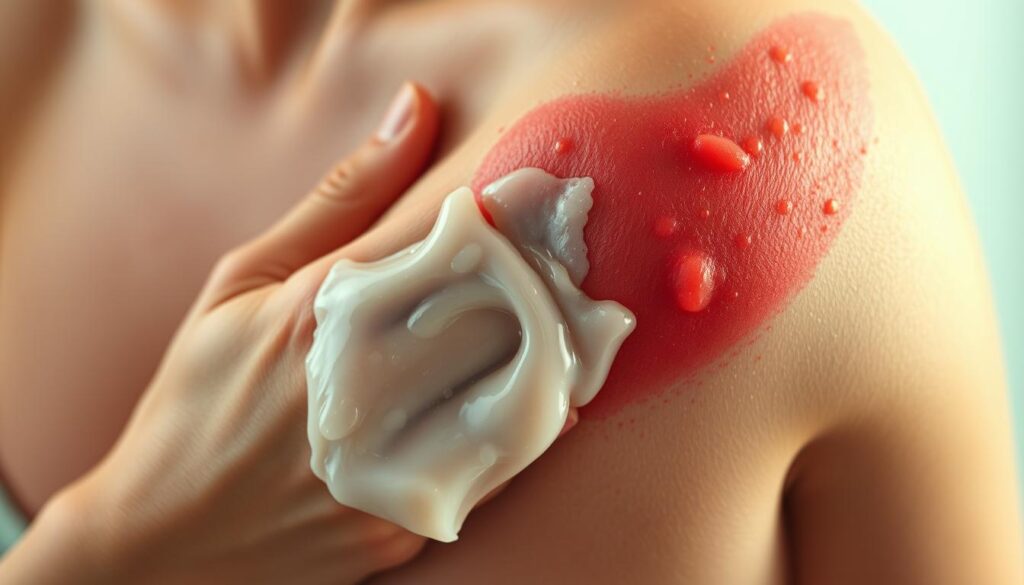
When UV radiation harms the skin, it leads to inflammation. This causes the redness, swelling, and pain of sunburn. Symptoms can be mild or severe, sometimes even blistering.
Spotting sunburn symptoms is key to getting the right sunburn treatment. If you have severe sunburn, acting fast is important. It helps ease the pain and prevents more harm.
By knowing what causes and shows sunburn, you can prevent it and treat it well. This reduces the chance of long-term skin damage.
Immediate Steps to Take After Getting Sunburned
If you’ve gotten sunburned, acting fast with the right sunburn care tips can help reduce the risk of long-term skin damage and ease your discomfort.
The first step is to take a cool bath or shower to help reduce the heat in your skin. You can also apply cool compresses several times a day to continue cooling the skin and reducing inflammation. Medical experts, like those at MedStar Washington Hospital Center, suggest taking over-the-counter medications like ibuprofen at the first sign of sunburn. This can help reduce pain and inflammation.
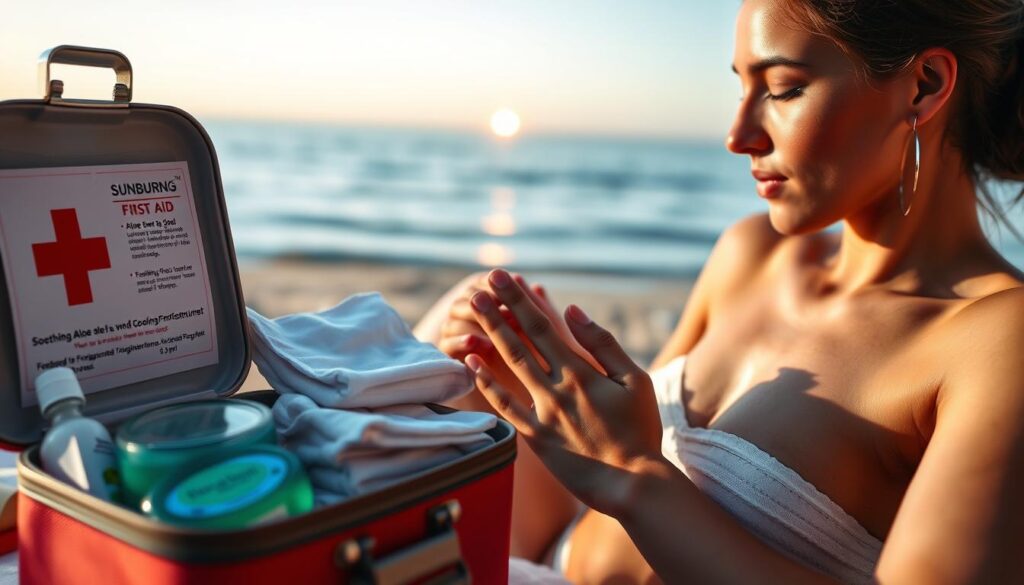
After cooling your skin, it’s essential to moisturize to help your skin recover. Use a gentle, fragrance-free moisturizer to lock in hydration. Reapply frequently to keep your skin hydrated and promote healing. Staying hydrated by drinking plenty of water is also key as sunburn can dehydrate you.
For additional relief, consider using topical creams or gels that contain aloe vera or hydrocortisone. These can help soothe the skin and reduce inflammation. Remember, the key to effective sunburn care is to act quickly and be consistent with your treatments, following these valuable sunburn care tips.
By taking these immediate steps, you can alleviate some of the discomfort associated with sunburn. This can also potentially reduce the risk of long-term damage. Making sunburn care tips a part of your sunburn recovery process is essential.
Home Remedies for Sunburn Relief
Learn how home remedies can ease sunburn pain and help it heal. Sunburn can hurt and upset you, but there are ways to feel better at home.
One easy fix is using a cool compress on the sunburned area. It cools the skin and makes it feel better. You can use a wet cloth or a cold pack wrapped in a towel to protect your skin.
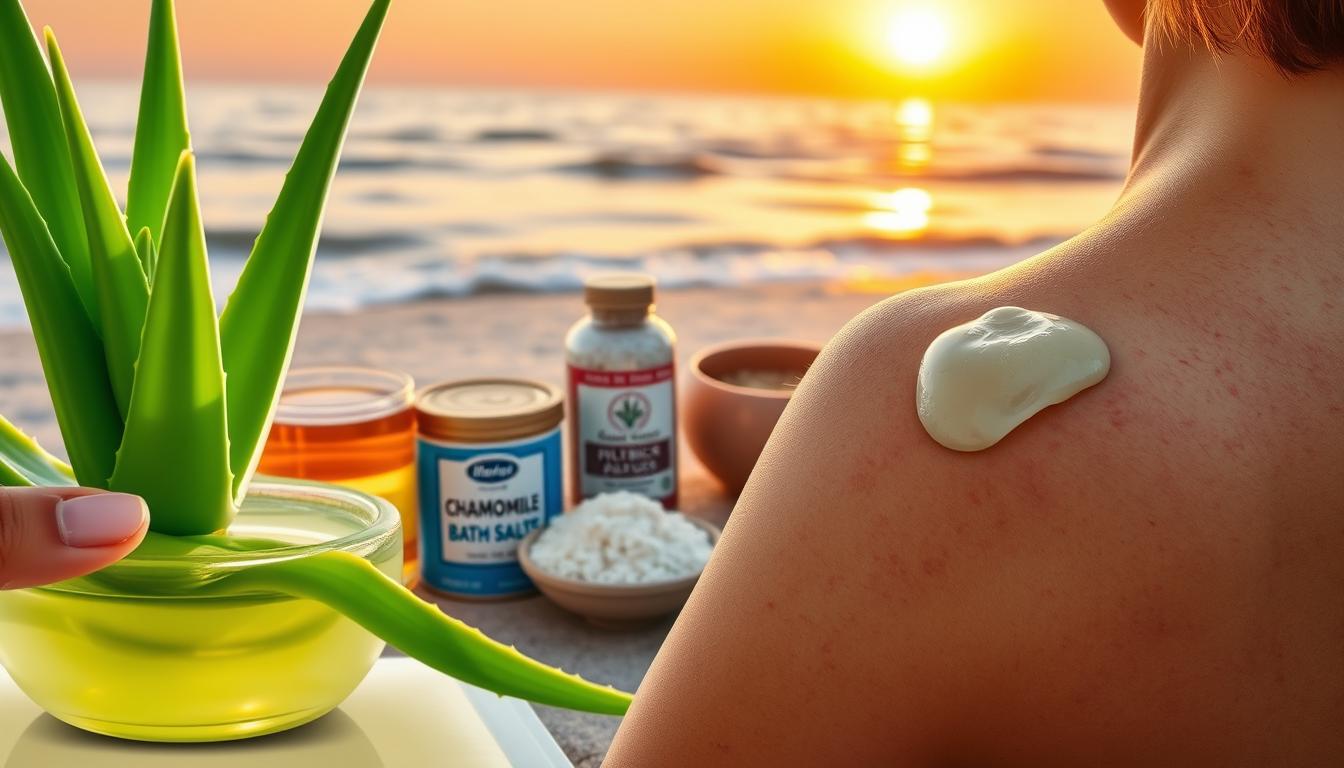
Moisturizers and lotions are key in soothing sunburned skin. The Mayo Clinic says they can really help. Aloe vera and calamine lotion are great because they cool and reduce inflammation. Aloe vera is special because it helps the skin heal and look less red.
Taking a cool bath is another good way to ease sunburn. Adding things like colloidal oatmeal or baking soda to the water makes it even better. After the bath, dry your skin gently and apply a moisturizer to keep it moist.
It’s also important to remember that preventing sunburn is the best way to avoid it. These home remedies can help, but it’s key to protect your skin from the sun. Use sunscreen, wear clothes that cover you, and stay in the shade when the sun is strong.
By using these home remedies, you can make sunburn feel better and help it heal. But, if your sunburn is really bad or you have other symptoms, see a doctor.
Over-the-Counter Treatments for Sunburn
Alleviating sunburn pain and discomfort can be achieved through the use of OTC treatments. When you’ve gotten too much sun,over-the-counter treatmentscan provide the relief you need. These treatments include pain relievers and topical creams that can help soothe sunburned skin.
One of the most effective OTC treatments for sunburn ishydrocortisone cream. The FDA recommends using nonprescription 1% hydrocortisone cream to treat mild to moderate sunburn. This cream can help reduce inflammation and itching associated with sunburn.
In addition to hydrocortisone cream,pain relieverssuch as ibuprofen or aspirin can help alleviate the discomfort caused by sunburn. These medications work by reducing inflammation and relieving pain.
Other OTC treatments that can providesunburn reliefinclude topical creams and gels that contain ingredients like aloe vera or menthol. Aloe vera is known for its soothing properties, while menthol can help cool the skin.
It’s essential to follow the instructions on the packaging for any OTC treatment and to consult with a healthcare professional if you have any questions or concerns. By using these treatments effectively, you can find relief from sunburn discomfort and help your skin recover more quickly.
Hydration: The Importance of Fluids in Recovery
Hydration is key to helping your skin heal from sunburn. When your skin gets sunburned, it loses fluids, leading to dehydration. MedStar Washington Hospital Center says hydration is very important for severe sunburns.
Dehydration makes sunburn symptoms worse. Your skin feels tighter, drier, and more uncomfortable. Drinking lots of fluids helps replace lost fluids and aids in healing.
Tips for Staying Hydrated:
Drink at least eight glasses of water a day to stay hydrated. This helps your skin heal faster from sunburn. Eating hydrating foods like watermelon and cucumbers also helps.
Avoid drinks that can dry you out, like caffeine or alcohol. Choose water, clear broths, or coconut water instead.
By focusing on hydration, you can speed up your skin’s recovery from sunburn. It’s a simple but effective part of your treatment plan.
Protecting Your Skin from Further Damage
Protecting your skin from further damage is key when recovering from sunburn. When your skin is sunburned, it’s more at risk from the sun and other factors.
Using a mineral-based sunscreen with 30-50 SPF is a top sunburn care tip. It blocks UVA and UVB rays, as the American Academy of Dermatology suggests. This prevents more damage to your skin.
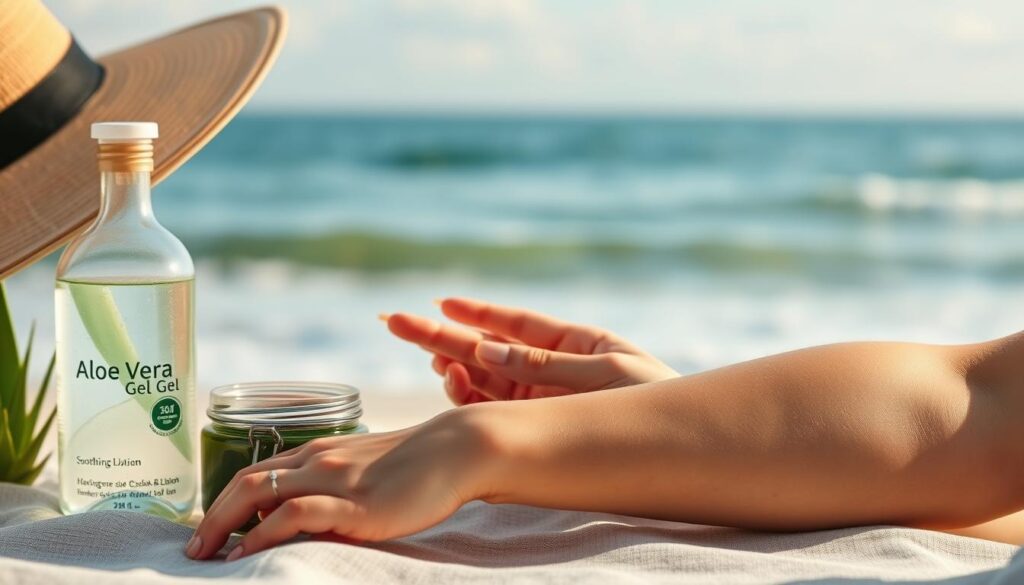
Wearing protective clothing is also important. Clothes with a tight weave, like cotton, block UV rays. A wide-brimmed hat protects your face, neck, and ears from the sun.
Seeking shade, mainly during peak sun hours (10 am to 4 pm), is vital. Try to stay under an umbrella, tree, or other shade to avoid direct sun.
By following these sunburn care tips, your skin can heal faster and avoid long-term damage. Remember, protecting your skin is an ongoing effort, even after a sunburn.
When to Seek Medical Attention for Sunburn
Most sunburns can be treated at home. But, some cases need immediate medical help. It’s important to know when to seek professional care to avoid more problems.
The Mayo Clinic says to get medical help if you have severe sunburn. Symptoms like fatigue, nausea, or dizziness are also warning signs. Severe sunburn can cause blisters, infections, and long-term skin damage.
Key indicators for seeking medical attention include: severe blistering, fever, chills, and nausea or dizziness. If you have any of these symptoms, see a healthcare professional right away.
Preventing sunburn is better than treating it. But, if you do get sunburned, knowing when to seek medical help is key. Being aware of severe sunburn signs and acting quickly can help you recover faster and avoid long-term damage.
Early recognition and the right response can greatly help in managing sunburn effectively.
Long-Term Effects of Sunburn
Sunburn is more than a temporary issue; it can harm your skin for a long time. Getting sunburned, even when you’re young, raises your risk of skin cancer later on. The FDA warns about this risk.
The immediate signs of sunburn, like redness and pain, are common. But the long-term effects can be worse. Repeated sunburns can cause your skin to age faster, leading to wrinkles and age spots. This happens because UV rays damage your skin’s DNA, causing photoaging.
Also, the risk of skin cancer is a big worry. The FDA stresses the need to protect your skin from the sun. Prevention is key to avoiding the long-term effects of sunburn, including skin cancer.
Understanding the Risks
The connection between sunburn and skin cancer is clear. UV exposure from the sun or tanning beds can damage DNA, leading to cancer. It’s important to remember that sunburn relief is not just about treating symptoms but also preventing future sunburns.
To reduce long-term harm, it’s vital to protect yourself from UV radiation. Use sunscreen, wear protective clothing, and stay in the shade when the sun is strong.
Tips for Preventing Future Sunburns
Developing sun-safe habits is key to avoiding sunburns. Using sunscreen correctly is a big part of this. The U.S. Food and Drug Administration says to reapply sunscreen every two hours to stay protected.
Protective clothing is also vital. Wearing long-sleeved shirts and pants can help a lot. Plus, staying in the shade, mainly between 10 am and 4 pm, can also help prevent sunburn.
Be careful around reflective surfaces like water and sand. They can make you more exposed to the sun. Using sunscreen, wearing protective clothes, and staying in the shade can help you enjoy the outdoors safely.
Following these sunburn care tips helps prevent sunburn and keeps your skin healthy long-term. Remember, it’s always better to prevent sunburn than to treat it.
Children and Sunburn: Special Considerations
Children’s skin is very sensitive to the sun, making it important to prevent sunburn. The American Academy of Pediatrics suggests using sunscreen and protective clothing to keep kids safe from the sun.
When treating sunburn in kids, be gentle. Their skin is more delicate, and harsh treatments can make things worse. It’s best to use soft, fragrance-free moisturizers and avoid harsh chemicals.
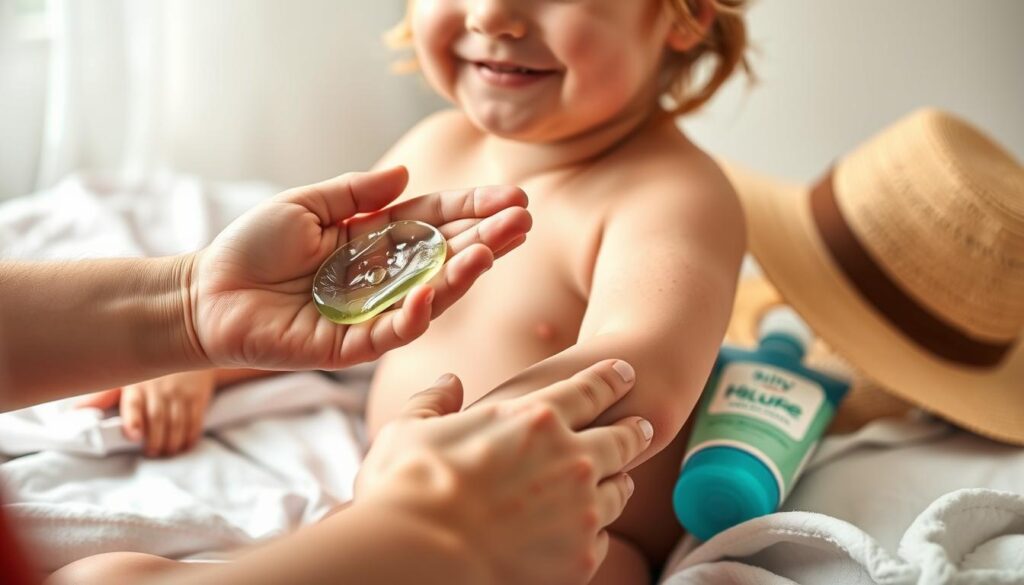
To prevent sunburn in kids, use a mix of strategies. Apply sunscreen with the right SPF, dress them in protective clothing, and stay in the shade when the sun is strongest. Teaching kids about sun protection early on helps them develop good habits for life.
If a child gets sunburned, make sure they drink plenty of water. This helps their skin heal. Applying cool compresses or taking cool baths can also help. But, always talk to a doctor for advice that fits the child’s needs.
By being careful and prepared, parents can lower the risk of sunburn in their kids. This way, they can enjoy the outdoors safely.
The Link Between Sunburn and Skin Care Routine
A good skin care routine can help with sunburn pain and prevent it from happening again. Dermatologists say to add sun protection to your daily routine. This helps avoid sunburn and skin damage.
When you get sunburned, your skin gets sensitive and needs gentle care. Gentle skin care practices are key during recovery. Use mild cleansers and moisturizers without harsh chemicals.
Hydration is important for sunburn recovery. Drinking water helps keep your skin moist. Also, hydrating products in your routine can soothe sunburned skin.
“Sunburn significantly impacts your skin care routine, and knowing how to adjust it can aid in recovery.”
Preventing sunburn is tied to a consistent skin care routine with sun protection. Use a broad-spectrum sunscreen with high SPF every day, even on cloudy days. Also, reapply sunscreen every two hours or after swimming or sweating.
By adding sun protection to your daily routine, you can lower sunburn risk. This approach not only prevents sunburn but also boosts your skin’s health.
Frequently Asked Questions About Sunburn Care
Sunburn care is key to easing pain and helping your skin heal. Many wonder how to treat sunburn well. Using creams or gels like aloe vera can make your skin feel better.
People also ask how to avoid getting sunburned. Using sunscreen with a high SPF, wearing protective clothes, and staying in the shade are good ways to prevent it.
Knowing when to see a doctor for sunburn is important. If you have severe blisters, fever, or chills, you should get medical help. A doctor can give you the right treatment.
Learning about sunburn care can help prevent long-term skin damage. It also makes sunburn less painful.