





Creating a simple emergency plan is key to keeping your family safe in disasters. Disasters can happen anytime, so being ready is critical.
Make a plan today. Your family might not be together during a disaster. Knowing which disasters could hit your area is important. This knowledge helps you get ready for the unexpected.
Having a disaster preparedness plan means your family knows what to do in emergencies. This reduces the chance of getting hurt or lost.
What is an Emergency Plan?
An emergency plan is like a roadmap for dealing with emergencies. It outlines steps to keep people safe during unexpected events. It’s a detailed plan for preparing, responding, and recovering from emergencies.
Having a good emergency plan is key to handling emergencies like natural disasters or medical crises. It helps by identifying emergencies that could hit your family or community.
To make a family emergency plan, you need to know what emergencies might happen. You also need a clear way to communicate and know the evacuation routes. An important part is having an emergency kit ready with food, water, first aid, and important papers.
Knowing why an emergency plan is important is the first step to being ready. With a plan, families can lower the risk of harm, damage, and quick recovery from emergencies.
An emergency plan isn’t just made once; it needs regular checks and updates. This means staying informed about dangers, updating contact info, and practicing the plan. This way, everyone knows their part.
Identifying Potencial Emergencies
Knowing the risks in your area is key to a strong emergency preparedness kit and plan.
Different places face different emergencies. Some areas might be more at risk for floods, earthquakes, or wildfires. It’s important to know if these could happen near you.
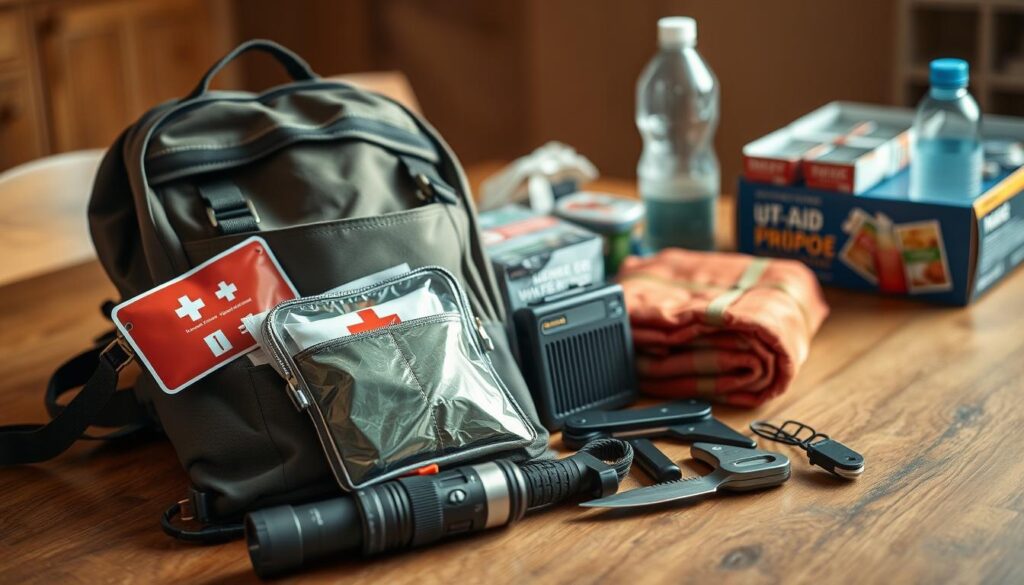
Natural disasters can be very harmful. Earthquakes can cause a lot of damage, and floods can force people to leave their homes. Knowing these risks helps you make a plan that fits your area.
Natural Disasters and Man-Made Emergencies
Both natural and man-made emergencies need different plans. Natural disasters include hurricanes, tornadoes, and wildfires. Man-made emergencies might be industrial accidents or terrorist attacks.
An emergency alert system is key for quick warnings and updates. Learn about the alert systems in your area.
Knowing about emergencies and having a plan helps you respond better. It’s not just about having a plan. It’s about being ready to act.
By understanding the risks, you can take steps to lessen their impact. This knowledge is essential for a good emergency plan.
Creating a Family Emergency Plan
A good family emergency plan can really help when unexpected things happen. It has a few important steps to make sure your family is ready for emergencies.
Talking about emergency plans with your family is the first step. You need to think about what emergencies could happen, like natural disasters or power outages. Then, you should know how to handle them.
Identifying Emergency Contact Information is key. Make sure everyone has a list of important phone numbers. This includes your local emergency services and a contact person outside your area.
It’s also important to plan for different situations. Know the safest ways to leave your home, have a meeting spot outside, and know how to stay in touch if you get lost.
Getting everyone involved in planning is very important. This means kids too. They should learn basic emergency steps and how to act in emergencies.
By following these steps and making a plan that fits your family, you can be more ready for emergencies. This helps your family stay safe and prepared.
Assembling an Emergency Kit
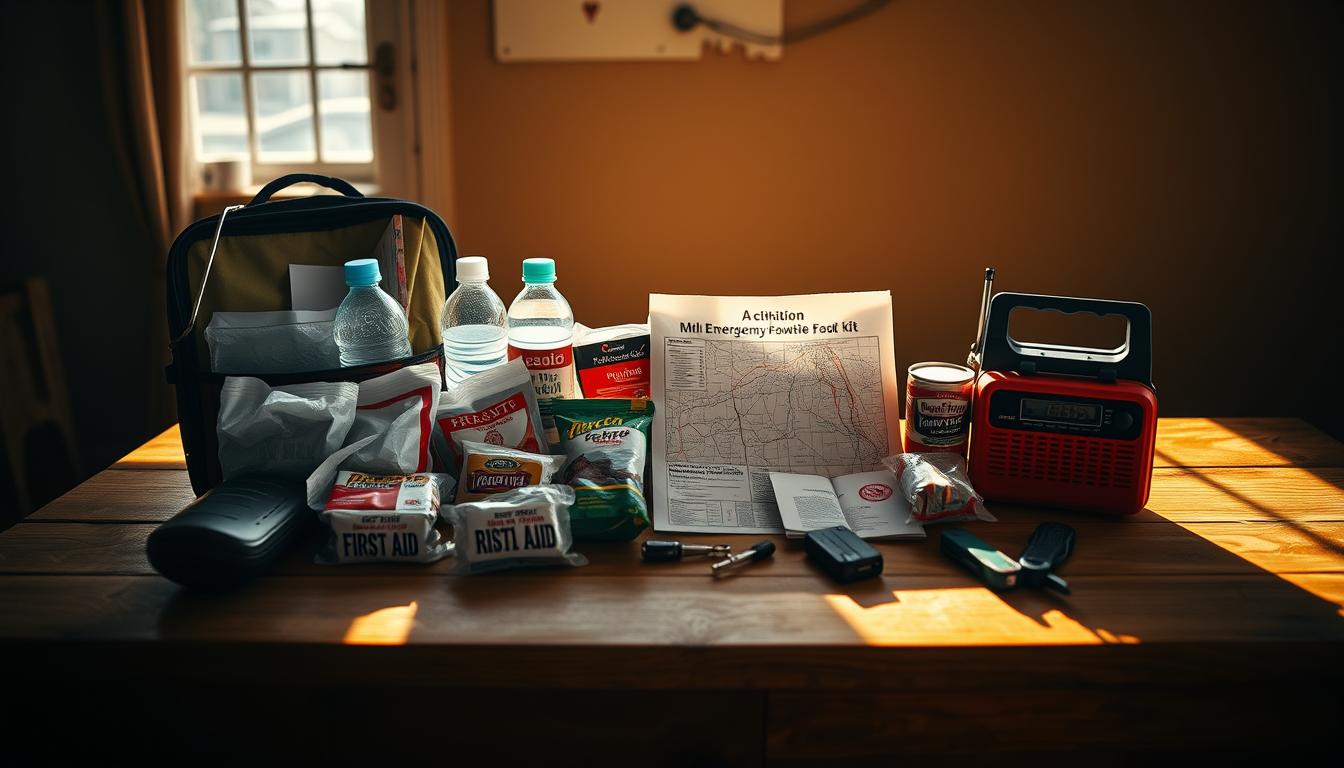
Preparing an emergency kit is key to emergency planning. It provides essential supplies when you need them most. Your emergency kit, also known as a “go bag,” should be easy to grab. It should have items that help you and your family survive for at least 72 hours.
Some important items for your emergency kit include copies of identification and insurance, photos of family and pets, cash, a map, a list of medications, a flashlight, and first aid supplies. Don’t forget non-perishable food and enough water (at least one gallon per person per day) to keep your family going.
It’s important to tailor your emergency kit to your family’s needs. For example, if you have babies, add diapers, formula, and baby food. If you have pets, include their food, water, and any needed medication. A manual can opener and a battery-powered radio are also good to have.
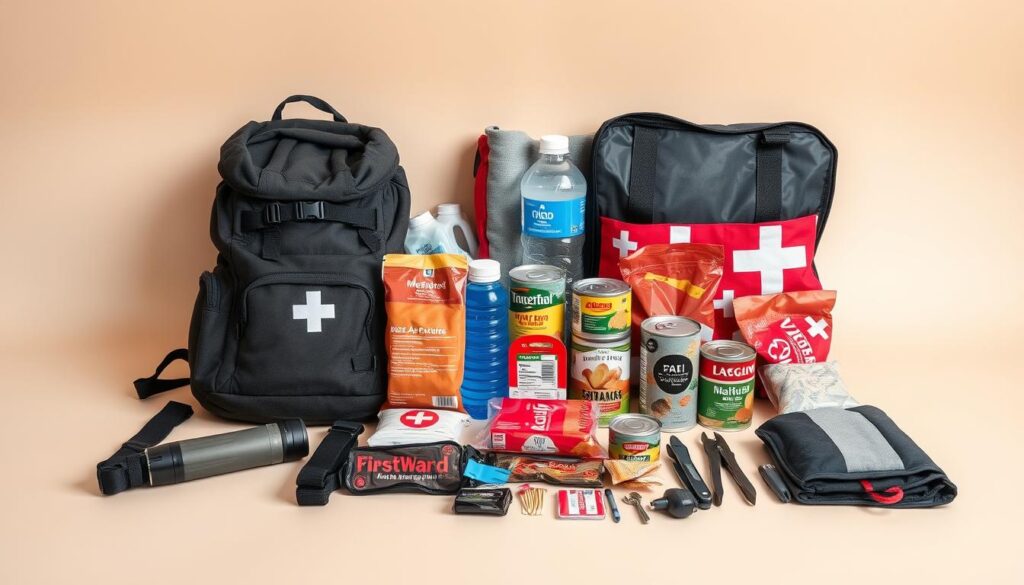
Your emergency kit should be easy to find and known to everyone in your family. It’s also important to check your kit often. Make sure all items are good to use and not expired. Check food, water, and medication dates, and test batteries and flashlights.
Having a well-prepared emergency kit helps you respond to emergencies better. It ensures the safety and well-being of you and your family.
Preparing Your Home
A well-prepared home is your first defense against emergencies. It’s important to make sure your home is safe and ready for any situation. This involves several key steps.
Home Safety Checks are a must. Regularly check your home for hazards like faulty wiring, gas leaks, and structural damage. Fix these issues quickly to avoid bigger problems during emergencies.
Having a clear emergency evacuation route is key. Find the safest ways to leave your home fast. Practice these routes with your family. This way, everyone knows what to do in an emergency.
Also, know how to open your garage door manually in a power outage. Most doors have an emergency release. Learn how to use it so you can open the door when needed.
“Preparation is key to surviving emergencies. By preparing your home, you can lower the risks of unexpected events.”
Don’t forget other parts of home emergency preparedness. Have a fire extinguisher on each level and teach your family basic first aid.
By following these steps, you can make your home safer. And your family will be more ready for emergencies.
Understanding Evacuation Routes
Knowing the safest evacuation routes is vital for any emergency plan. When disaster hits, a clear evacuation route can save lives. It keeps you and your family safe.
To make a good evacuation plan, decide where to go and how to get there. You might choose a hotel, a friend’s house, or an emergency shelter. Pick a place far from danger.
When picking your route, think about the emergency type, likely paths, and hazards. Also, have backup routes ready in case the main one is blocked.
Practicing your disaster evacuation plan is key. Do drills with your family to learn the route and destination. This practice lowers panic and confusion in real emergencies.
Stay updated on local hazards and how they might affect your route. Knowing this helps you make smart choices during emergencies.
Involving Children in Planning
Getting kids involved in emergency planning can really boost their safety. It’s key to make a children emergency plan they can follow.
Talking about emergencies in a clear but not scary way is important. Explain what emergencies are and how they might affect your family. This helps kids feel ready and in charge.
Make sure kids know how to reach emergency contacts. Teach them the phone numbers and addresses of these contacts.
Also, make sure schools and daycare centers have these numbers. This way, everyone looking after your kids will know what to do in an emergency.
When kids help plan for emergencies, they feel safer and more confident. This approach helps them respond better in unexpected situations.
Remember, a good emergency plan isn’t just about having one. It’s about making sure everyone, including kids, knows and can use it.
Staying Informed
Being ready for emergencies is more than just having a plan. It also means staying informed with emergency alert systems.
One key way to stay informed is by signing up for emergency notifications from local authorities. These alerts can share important info about disasters, evacuation orders, and safety steps.
To sign up, visit your county’s official website or emergency management page. You can usually register by giving your contact info, like your phone number and email. This way, you’ll get updates quickly.
Also, keep an eye on local news and weather reports during emergencies. Many places use social media to share disaster warnings and other vital info.
By using these methods, you and your family can stay informed and safe during emergencies. Remember, knowing what’s happening is a big part of being prepared.
Practice Makes Perfect
To be truly prepared, it’s essential to practice your emergency plan with all household members. Practicing your plan helps ensure that everyone knows what to do in case of an emergency. This reduces confusion and panic.
Conducting regular emergency drills is a key part of disaster preparedness. It lets you find any weaknesses in your plan and make changes. It also helps to make sure everyone knows their emergency steps.
Making emergency drills fun and engaging is possible. You can use different scenarios and involve all family members in planning. This keeps everyone interested and makes sure your plan is complete and effective.
By practicing your emergency plan often, your household will be better ready for emergencies and disasters. This boosts your disaster preparedness.
Reviewing and Updating Your Plan
To keep your emergency plan current, it’s key to review and update it often. This involves several important steps to keep the plan working well.
Start by checking your emergency contacts. Make sure phone numbers, email addresses, and physical addresses are current. This includes family members, emergency services, and other important contacts.
Then, check your Stay Box and Go Bag. Replace any expired, damaged, or unnecessary items. This includes food, water, first aid supplies, and personal items.
After checking your contacts and supplies, update your plan as needed. You might need to change contact info, adjust evacuation routes, or update your emergency kit.
Regular reviews ensure your emergency plan is ready when needed. It’s a step towards safety and being prepared.
By following these steps, you can keep your emergency plan current and effective. Regular reviews and updates are key to staying ready.
Local Resources and Support
Having access to local emergency resources can greatly help you deal with disasters.
Local resources, like emergency shelters, food banks, and disaster relief groups, are key. They help people and families in emergencies. For example, shelters offer safe places to stay, and food banks provide food.
It’s important to know about the emergency support in your area. Find out where shelters are, how to get to food banks, and who can help with money and supplies.
“Community resilience is built on the foundation of preparedness and support. By understanding and utilizing local resources, individuals can significantly enhance their ability to cope with emergencies.”
Looking at our emergency resource library can give you tips for emergencies. It helps you make a detailed emergency plan for your community.
Additional Tips for Specific Needs
Creating an emergency plan means thinking about everyone’s needs. This includes people with disabilities, medical conditions, or special cultural or religious needs.
For a special needs emergency plan, consider dietary needs, medical equipment, and essential medicines. People with disabilities need a plan that includes backup power for medical devices and safe evacuation routes.
Households with people who speak different languages should make sure everyone understands the plan. It’s also important to consider cultural and religious practices during emergencies. This might mean having the right supplies and knowing how to follow specific religious practices.
By making your emergency plan fit your household’s unique needs, you can make sure everyone is ready and safe in emergencies.