







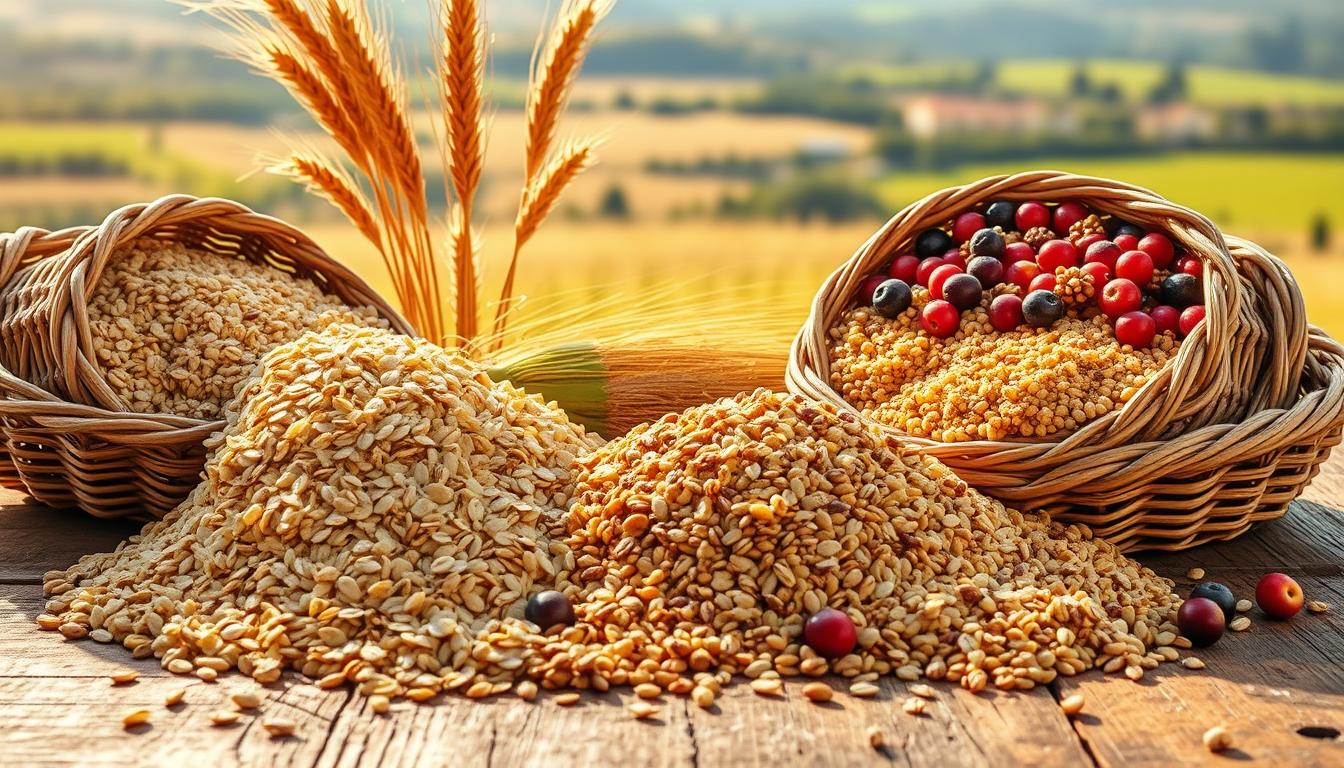
Choosing the right food is key to keeping our energy up. Whole grains are a top pick for boosting energy and nutrition. They’re different from refined grains because they offer more health benefits. Whole grains give us carbs for energy, fiber for a healthy gut, and important vitamins and minerals.
Adding whole grains to our diet can really improve our health. They give us lasting energy, help our digestion, and make our diet more balanced. By picking whole grains, we’re moving towards a healthier life.
Understanding Whole Grains
To understand whole grains, knowing their parts is key. Whole grain kernels have three main parts: the bran, germ, and endosperm. Each part is packed with nutrients that boost health and energy.
The bran is the outer layer, full of fiber and antioxidants. It’s a big source of fiber, helping with digestion and feeling full. The bran also has phytochemicals and B vitamins, adding to its nutritional value.
The germ is the sprouting part, rich in healthy fats, vitamins, and minerals. It’s a big source of vitamin E, folate, and B vitamins. These nutrients help with energy and heart health.
The endosperm is the biggest part, made mostly of carbs and proteins. It’s a main energy source for the grain. It also has some vitamins and minerals, but less than the bran and germ.
Together, the bran, germ, and endosperm make whole grains very nutritious. Eating whole grains gives you all their nutrients. This helps keep your diet balanced and boosts your health.
Knowing how whole grains are made shows their value in a healthy diet. Adding different whole grains to your meals can greatly benefit your health and energy.
How Whole Grains Boost Energy Levels
Whole grains play a key role in boosting energy, backed by science. They provide carbs, which are essential for energy all day long.
Carbohydrates are the body’s main energy source. Whole grains have complex carbs that release energy slowly. This is different from refined grains, which give a quick energy boost followed by a crash.
Whole grains offer many energy benefits. They are full of fiber, vitamins, and minerals that help the body make energy. For example, they have manganese, a mineral important for energy production.
Whole grains give energy for longer than refined grains do. They have more fiber and nutrients, which slow digestion. This means you can stay energized for more time.
Adding whole grains to your diet can really help your energy. By choosing whole grains over refined ones, you get a steady energy boost. This helps you stay energized all day.
Popular Whole Grain Options
There are many whole grains like quinoa and brown rice. They are key to a healthy diet, giving us important nutrients and energy.
Whole grains include many nutritious foods. These are barley, bulgur, farro, millet, quinoa, black rice, brown rice, red rice, wild rice, oatmeal, popcorn, whole-wheat flour, and more. They are full of fiber, vitamins, and minerals, making them great for a better diet.
Whole Grain Varieties
Quinoa is a complete protein, with all nine essential amino acids. It’s also packed with iron, magnesium, and fiber. Brown rice is known for its fiber and manganese, which is good for bones.
Barley is high in fiber and can help lower cholesterol. Millet is a small-grained cereal with lots of protein and fiber. Whole-wheat products like bread and pasta are also good, providing fiber, vitamins, and minerals.
Adding whole grains to your diet is easy. Just swap them for refined grains in your meals. Choose whole-wheat bread instead of white, or brown rice over white.
Try different whole grains to make your meals more interesting. Use quinoa in salads or whole-wheat pasta in your favorite dishes. With so many options, it’s easy to eat healthy and tasty.
How to Incorporate Whole Grains into Your Diet
Whole grains are great for your health. They can boost your energy and make your meals better. Adding them to your diet is easy and beneficial.
Start by swapping whole-grain products for the regular ones. Use whole-wheat tortillas instead of white ones. Choose whole-grain bagels over plain ones. Health experts say this can really help you eat healthier.
“The whole grain versions of your favorite foods can be just as tasty, if not tastier, than their refined counterparts.”
It’s easy to add whole grains to your meals. Try oatmeal or whole-grain cereal for breakfast. Add quinoa to your salads for extra protein. You can also try farro, bulgur, or barley in your cooking.
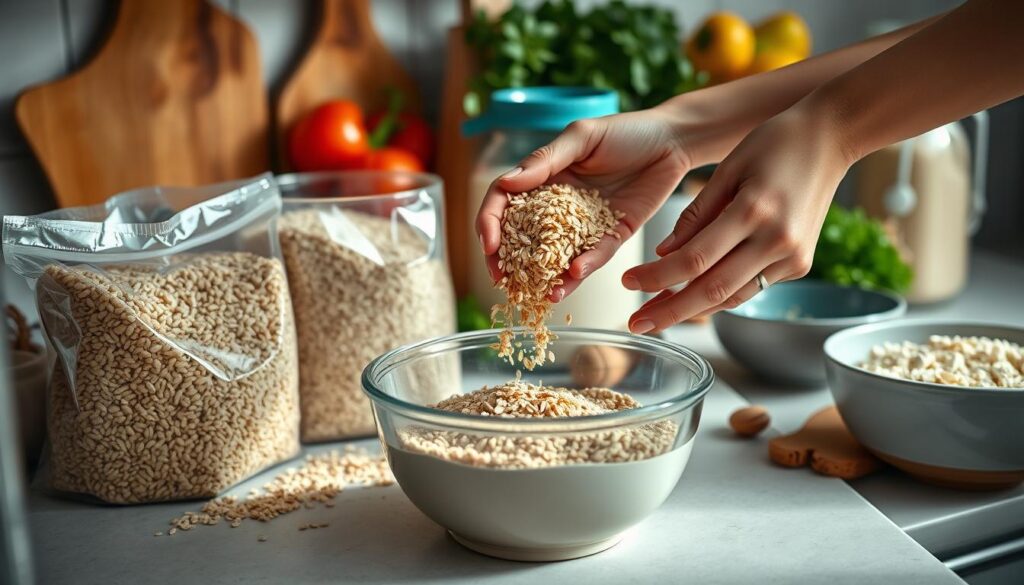
As you eat more whole grains, you’ll feel the difference. You’ll have more energy and be healthier. Making whole grains a part of your meals is a big step towards a better life.
Here are some more whole grain tips. Try dishes from Middle Eastern or Asian cuisines. They often use whole grains. Also, try new recipes that focus on whole grains.
Whole Grains and Digestive Health
Whole grains are packed with fiber, which is key for digestive health. This fiber helps avoid constipation and diverticular disease, studies show.
Fiber plays a huge role in keeping your gut healthy. It helps food move smoothly through your system. It also stops diverticula, small pouches in the digestive tract, from forming. Eating whole grains can lower your risk of diverticulitis.
A diet full of whole grains also boosts good gut bacteria. This strengthens your immune system and improves your health.
To get these benefits, add brown rice, quinoa, and whole-wheat bread to your meals. These foods are not just high in fiber. They also have vitamins, minerals, and antioxidants.
By focusing on whole grains, you’re helping your digestive system and overall health.
Whole Grains for Different Lifestyles
Whole grains are more than just a healthy choice. They are a high-performance fuel for many lifestyles. They are packed with carbohydrates, giving you the energy you need. This is true for athletes, busy professionals, and anyone who loves to stay active.
For those who are always on the move, whole grains are a big plus. They give you energy that lasts, perfect for long workouts or busy days. This is because they have complex carbs that release glucose slowly, keeping your energy up.
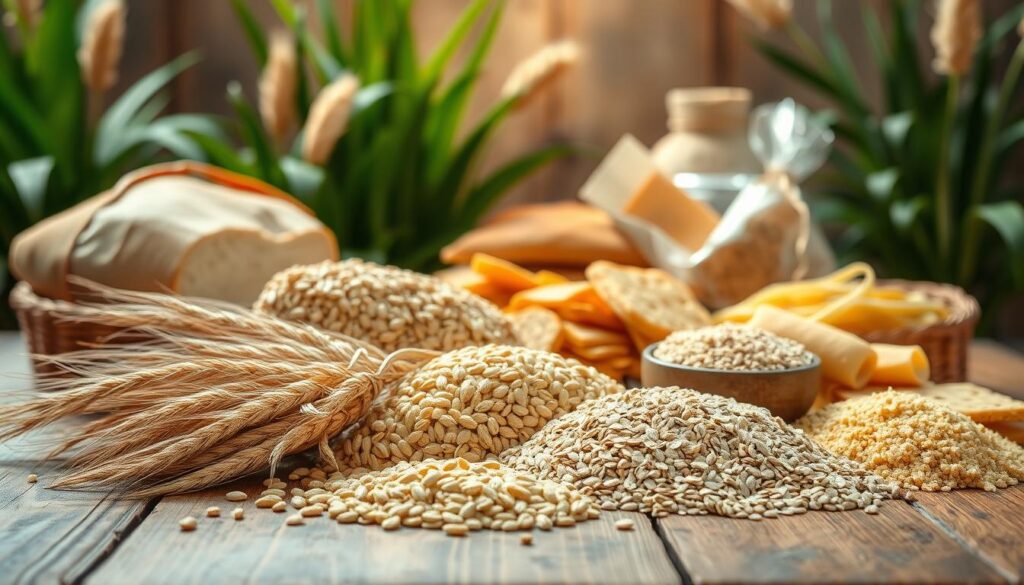
Adding whole grains to your diet is easy. Just swap out refined grains for whole grain ones. Try whole wheat bread instead of white, or brown rice over white. This small change can boost your energy and health a lot.
Whole grains are also super flexible in your meals. You can have oatmeal for breakfast or quinoa salads for lunch. This makes it easy to keep whole grains in your diet, helping you stay energized and healthy.
By making whole grains a key part of your meals, you’re doing more than just fueling up. You’re also boosting your health. Whole grains are linked to better heart health and digestion.
Myths Surrounding Whole Grains
Whole grains are packed with health benefits, but they’re often misunderstood. One big myth is about gluten, a protein in some grains.
Some think gluten is bad for everyone, but that’s not true. Gluten is not inherently bad for most people. Only those with celiac disease or gluten intolerance should avoid it.
Debunking myths about whole grains is key to seeing their value. The idea that whole grains don’t help with weight loss is wrong. Whole grains are full of fiber, which keeps you feeling full.
“The whole grain, with its complex carbohydrates, fiber, and nutrients, is a cornerstone of a healthy diet, dispelling the myth that grains are inherently fattening or unhealthy.”
Another myth is that adding whole grains to your diet is hard. But, it’s easy to start with oatmeal for breakfast or brown rice instead of white rice.
By learning the truth and debunking myths, we can make better food choices. It’s about debunking myths and enjoying the health benefits of whole grains.
Reading Labels: Identifying Whole Grains
To make sure you’re getting whole grains, it’s key to learn how to read food labels well. Start by looking at the ingredient list. Ingredients are listed from most to least, so whole grain should be among the first.
When you check the list, search for whole grains like “whole wheat,” “brown rice,” or “quinoa.” Seeing these at the top means the product is mostly whole grains. Also, watch out for tricks like “multigrain” or “made with whole grains.” These don’t always mean it’s mostly whole grain.
The Whole Grain Stamp is another great tool. It shows products that meet whole grain standards. But, always check the ingredient list to make sure it fits your diet.
“The best way to ensure you’re consuming whole grains is by being an informed consumer. Reading labels carefully and understanding what you’re looking for can make a significant difference in your dietary choices.”
Being careful with labels and knowing the terms helps you make better choices. By focusing on the ingredient list and looking for whole grain stamps, you can pick products that meet your whole grain needs.
Cooking with Whole Grains
Whole grains are not just healthier than refined grains; they’re also super versatile. You can use them for breakfast, lunch, or dinner. They make your meals more nutritious and tasty.
Start by swapping whole grains for refined ones in your recipes. Try wild rice or barley in soups, stews, and salads. They add a rich texture and a nutty flavor. Experimenting with different whole grains can introduce you to new tastes and textures.
Another fun way to use whole grains is in ground meat or poultry. Adding cooked brown rice or whole-grain breadcrumbs makes meatballs or burgers more moist and flavorful. This trick works for both meat and vegetarian dishes.
Cooking with whole grains can also be a fun and creative journey. Try making whole-grain salads with veggies, nuts, and seeds. Or, experiment with whole grains in your baked goods. The options are endless, leading to a more varied and healthy diet.
By choosing whole grains, you make your meals not only healthier but also more exciting and flavorful. So, get creative and try out new whole grain recipes today!
Whole Grains in Cultures Around the World
Global cuisine is filled with diverse uses of whole grains. This shows their versatility and nutritional value. Different cultures have made whole grains a key part of their traditional dishes.
In many Asian cultures, brown rice and barley are staples. In Japan, brown rice is often served with various dishes. In Korea, barley is used in soups and stews. Whole grains are not just a source of energy; they are also deeply rooted in the cultural and spiritual practices of these communities.
In the Middle East, whole grains like bulgur and freekeh are common. Bulgur is a key ingredient in tabbouleh, a salad with vegetables and herbs. Freekeh is often used in pilafs and stews, showing its versatility in cooking.
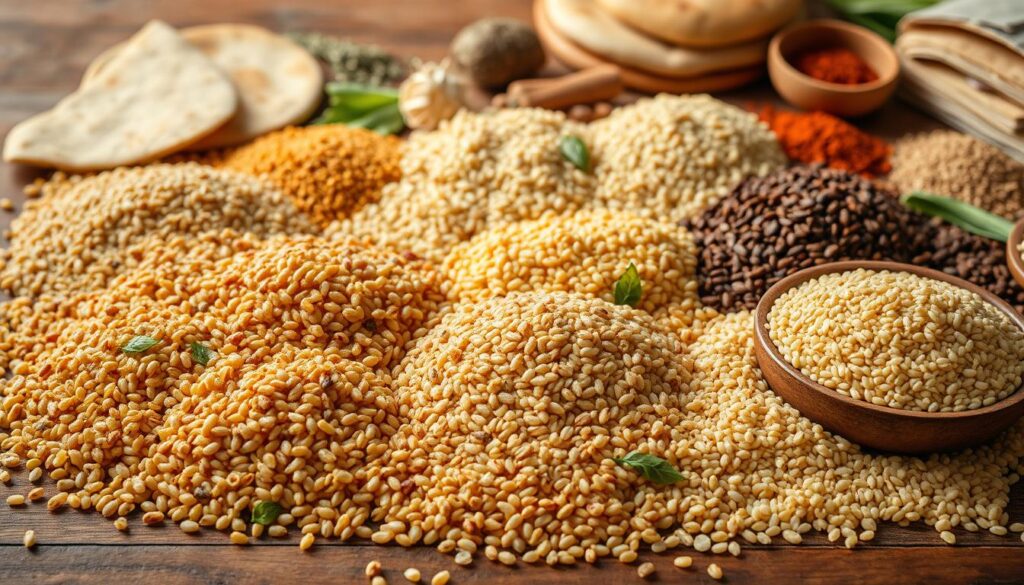
In Africa, whole grains like sorghum and millet are key to many traditional dishes. Sorghum is used to make a thick porridge in some regions. Millet is often ground into flour for baking. These grains are not only nutritious but also resilient to harsh climate conditions, making them ideal for local cuisines.
The Cultural Significance of Whole Grains
The use of whole grains in global cuisine is not just about sustenance; it’s also about cultural identity and community. In many societies, traditional dishes made with whole grains are served during special occasions and celebrations, highlighting their importance beyond mere nutrition.
Understanding and appreciating the role of whole grains in different cultures can enrich our culinary experiences. By embracing the diversity of whole grain uses, we can foster a more inclusive and culturally sensitive approach to food and nutrition.
Conclusion: Making Whole Grains a Staple
Adding whole grains to your diet is easy and helps a lot. They boost your energy and health. Whole grains are good for your digestion and eating habits.
To make whole grains a part of your meals, start small. Try to eat half of your grains as whole grains. This is what health experts suggest.
Choosing whole grains is great for your health. It helps you eat well and follow good dietary advice. Begin by adding whole grain foods to your meals. Then, try new recipes to keep things exciting.
Adopting whole grains is a smart move towards a healthier life. With so many options, switching to whole grains is simple. You’ll soon see the positive effects on your health.