







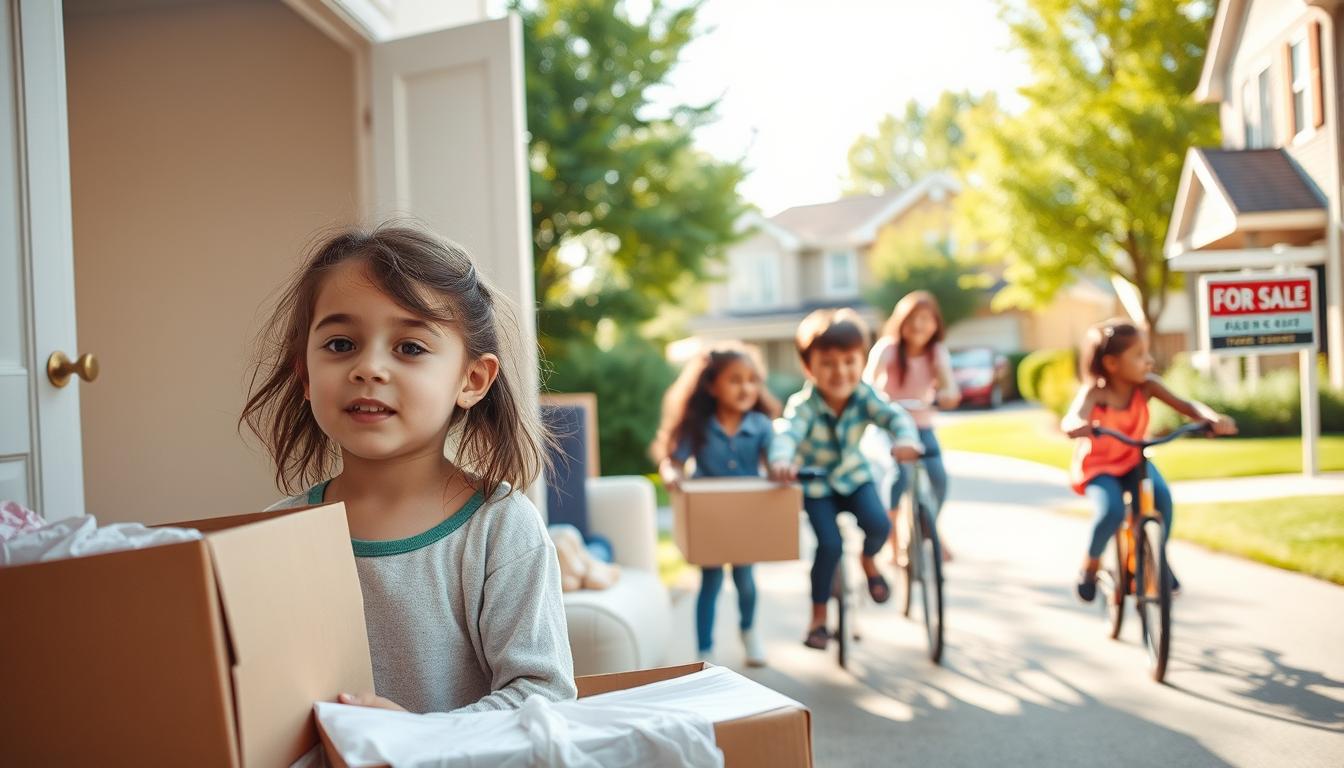
Moving to a new home can be scary for kids. The change in place, friends, and school can make them feel stressed and anxious.
As a parent, it’s key to support your child in this big change. Maintaining familiar routines and letting kids help with the move can really help.
This article will share useful family moving tips to ease your child’s transition. By using these strategies, you can make the move less stressful for your kids.
With the right steps, your child will quickly get used to the new home. Your family can then start making new memories together.
Understanding Children’s Feelings About Moving
Relocating can make kids feel sad or angry. It’s key for parents to get and accept these feelings. This helps kids adjust to their new home.
Kids might act differently when they hear about moving. Some might get very attached or emotional. Others might feel angry or not want to move. Acknowledging these feelings is important for them to deal with the change.
A 12-year-old might feel left out and anxious about leaving friends and familiar places. Parents can help by talking openly and involving kids in the moving process.
Understanding that moving stress is real for kids helps parents act. They can be patient, reassuring, and let kids share their feelings about the move.
Explaining why you’re moving in a way kids can get is also good. Talk about the good things about the new home and community. This helps kids start to see the positive sides of the move.
Preparing Your Child for the Move
Moving to a new home is a big change. Preparing your child is key for a smooth transition. It’s more than just packing boxes and changing addresses. It’s about making sure your child feels safe and supported.
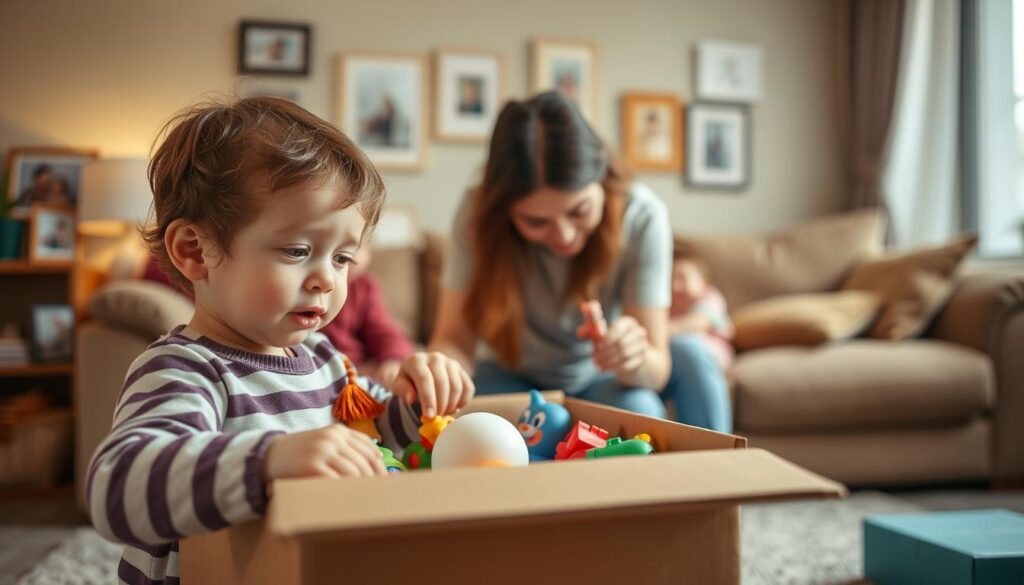
Start by having an open conversation about the move. Be honest and clear with your kids. Tailor your explanation based on their age and understanding.
Approaching the Conversation
When talking about the move, listen to their worries. Let them share their feelings and concerns. This makes them feel heard and understood.
Family communication is very important during this time. Be ready to talk about it several times. Reassure them that the family will be together and face this change as a team.
“The way you talk to your child about the move can significantly impact their adjustment to the new home.”
Involve your child in the moving process. Let them help with packing or setting up their new room. This gives them a sense of control and makes the change less scary.
By preparing kids well and keeping communication open, you can make the move less stressful for everyone.
Creating a Positive Moving Experience
Involving children in the moving process can make it better for them. It gives them a sense of control and agency. This can help reduce stress for them.
Encouragingkid involvementin decision-making is a good way to do this. Letting them help with things like decorating their new room or packing their stuff makes them feel more involved. This decision-making process empowers them and helps them feel connected to their new place.
Making the moving process fun for kids is also key. Activities like having a “packing party” or playing games while packing can make it enjoyable. Even a special “moving day” box with their favorite snacks and toys can add to the fun.
It’s also good to let kids say goodbye to the old home and hello to the new one. A small ceremony or ritual can help them deal with the change. It makes them feel more positive about the move.
By using these strategies, parents can make the moving experience better for their kids. It makes the transition to a new home smoother and less stressful for everyone.
Exploring the New Neighborhood Together
Exploring your new neighborhood as a family can be fun. It’s a chance to find new favorite places and make memories. It also helps your kids feel at home.
Begin by checking out playgrounds, parks, and libraries. These places are fun and help you meet others. Libraries, for example, often have events for kids.

Discovering your new neighborhood is easy. Try new restaurants, visit museums, or walk around. These activities make your area feel welcoming.
Let your kids choose where to go next. This lets them feel in charge and makes things more fun. Exploring together strengthens your bond and makes your new home better.
By focusing on family exploration, you help your kids adjust and live well in your new home. So, explore, discover, and enjoy your new neighborhood together.
Unpacking and Setting Up a New Space
The process of unpacking and setting up a new space is a chance to make your new house feel like home for your kids. It’s important to have a plan that focuses on making a cozy and familiar place for them.
Experts say one of the best ways is to unpack the kids’ rooms first. This helps them feel more at home and comfortable in the new place. It lets them have a space that feels truly their own, which is key for adjusting to the new home.
When setting up kids’ rooms, arrange their favorite toys, books, and furniture to match their old setup as much as you can. This similarity can offer comfort during big changes. Also, getting your kids involved in the setup can make them feel more in charge and excited about their new space.
Creating a comfortable space is more than just unpacking. It’s about making the new place welcoming. Make sure their room is not just unpacked but also organized and decorated to show their personality.
As you keep unpacking and setting up your new home, remember to make it feel like a home. Adding family photos, favorite decorations, and familiar items can really help your family adjust faster.
Establishing New Routines
As families move into new homes, starting new routines helps kids feel stable. It’s important to create new routines for kids to adjust to their new place.
Keeping consistency in daily routines brings comfort and normalcy. Stick to regular times for meals, homework, and bedtime, even in a new home.
Adapting familiar routines to the new home makes the transition easier. For example, keep bedtime stories a nightly tradition. This keeps things feeling the same.
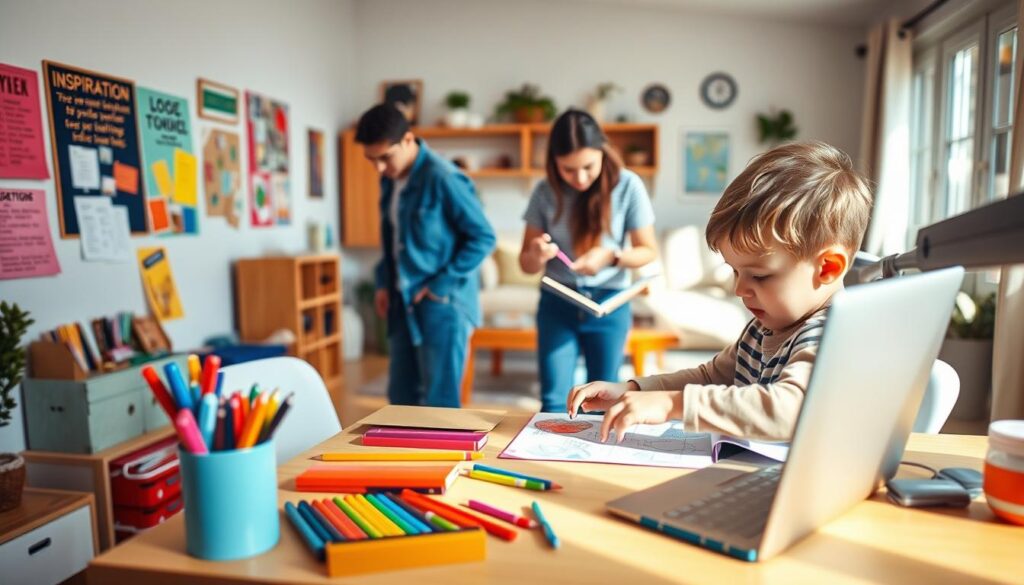
Getting kids involved in making new routines is also good. It makes them feel more in charge of their new space. They can pick new weekend activities or a favorite park to visit.
By maintaining familiar routines and adding new ones, families help kids adjust better. This mix helps make the new place feel like home.
Helping Kids Cope with Change
Coping with change is key for kids, like when they move to a new home. They often find it hard to adjust. So, parents need to offer emotional support and guidance.
Being patient and understanding is important. Parents should listen to their child’s feelings. They should say it’s okay to feel sad or scared. This emotional validation makes kids feel safe and understood.
It’s also important to help kids become resilient. Encourage them to explore, make friends, and do things they like. This helps them feel connected to their new place.
Strategies for Supporting Kids
Parents should keep talking and listen to their kids. Offer reassurance and help them feel secure. Creating a routine or ritual can also help them feel at home.
By being supportive, patient, and helping them build resilience, parents can help kids adjust to their new life.
Celebrating the New Home
The excitement of moving into a new home is huge. It’s a chance to start new memories and make the house feel like home for your kids.
Hosting a housewarming party is a great way to celebrate. Invite friends and family to see the new place. You can also plan fun activities like a scavenger hunt or a backyard picnic to make it special.

Creating traditions in your new home is also important. You could have a special dinner on the first night or a monthly ritual. These become cherished memories for your children.
By focusing on the positive and involving your kids, you can help them adjust. It’s about turning a house into a home filled with love, laughter, and happy memories.
Seeking Professional Help if Needed
Knowing when your child needs extra help during a move is key. While many kids adjust well to a new home, some struggle. They may show signs of moving stress that parents might find hard to handle alone.
It’s important to watch for signs that your child needs professional help. Look for sadness, withdrawal from fun activities, or trouble sleeping. If these signs last, it’s time to seek support from a professional.
Professional help can be counseling or therapy. A mental health expert can give your child the tools to deal with their feelings. As one expert says, “Children often benefit from having a safe space to express their feelings about significant changes in their lives.”
“Children often benefit from having a safe space to express their feelings about significant changes in their lives.”
Getting professional help shows you care about your child’s well-being. It’s a big step in helping them adjust to their new home. By being proactive and seeking help when needed, you can help your child overcome moving challenges and thrive in their new place.
Emphasizing the Positives of Moving
Moving to a new home can be a big change for kids. It offers many benefits and chances for growth. By focusing on the good sides, parents can help their kids feel more confident and excited.
There are many benefits to moving. Kids get to try new things, make new friends, and learn to be resilient. As they settle into their new place, they might find new hobbies, learn new skills, and grow stronger.
By looking at moving as a positive adventure, parents can help their kids succeed. This view can help them enjoy their new home and take advantage of all it offers.