







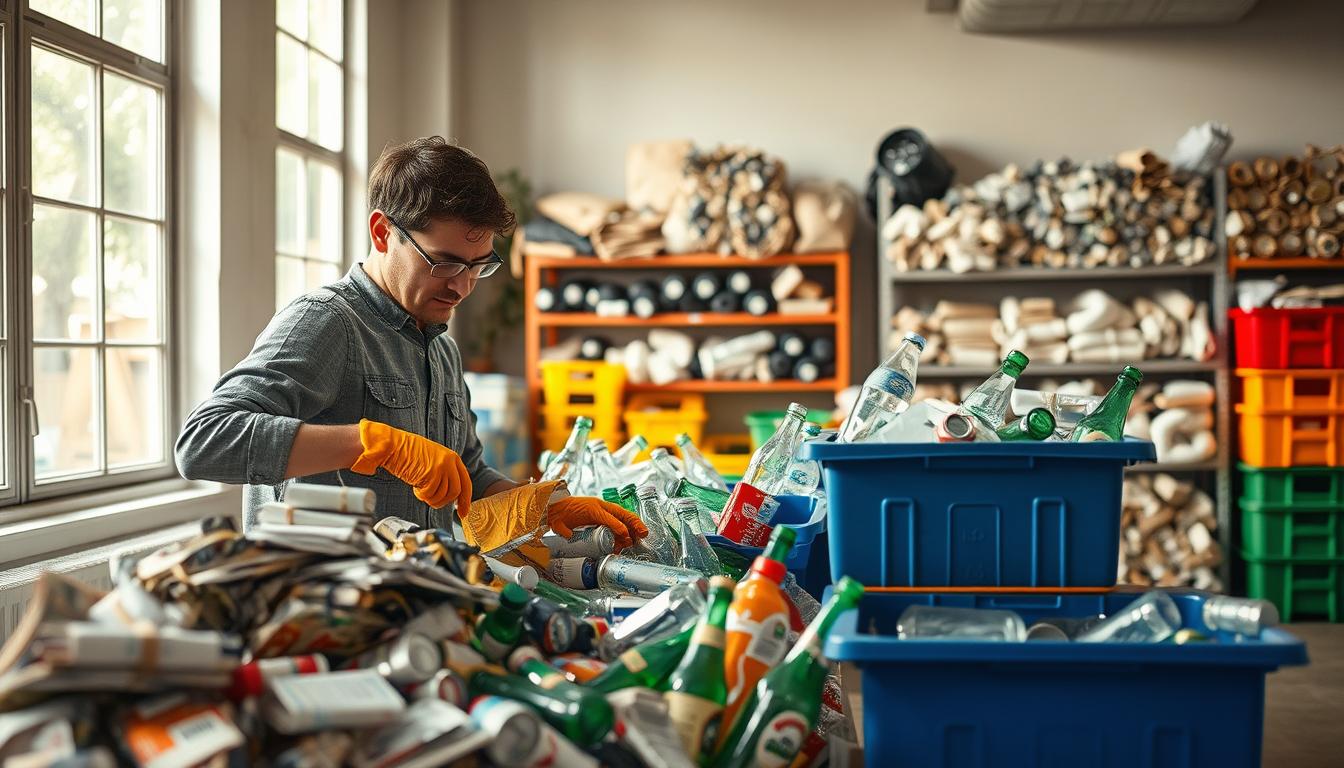
Knowing how to sort recyclables is key to bettering the U.S. waste management system.
The biggest myth is that the U.S. recycling system works perfectly, like the postal service. But, Materials Recovery Facilities (MRFs) face big challenges because of bad sorting processes.
By learning to sort recyclables right, we can help improve waste management. Proper sorting is a simple yet powerful way to help the environment.
Understanding the Importance of Recycling
Recycling is key to solving environmental problems. The Environmental Protection Agency (EPA) says 75% of waste can be recycled. But, as of 2018, only 32.1% of waste was recycled. This shows we can do better.
Recycling helps the planet. It cuts down on pollution and saves energy. For example, making aluminum cans from recycled cans uses 95% less energy than making new aluminum.
Recycling has many benefits. It saves natural resources, reduces landfill waste, and lowers greenhouse gas emissions. It also creates jobs and boosts the economy.
To make our future greener, we must value recycling. By recycling right, we can greatly help the environment. This makes our planet healthier for everyone.
The Basics of Recycling
Recycling starts with collecting waste and turning it into useful resources. The recycling process kicks off with gathering recyclables. These items then go to Materials Recovery Facilities (MRFs) for sorting.
MRFs sort mixed waste into different types like cardboard, plastic, and glass. This step is key. It decides how well recyclables can be made into new products.
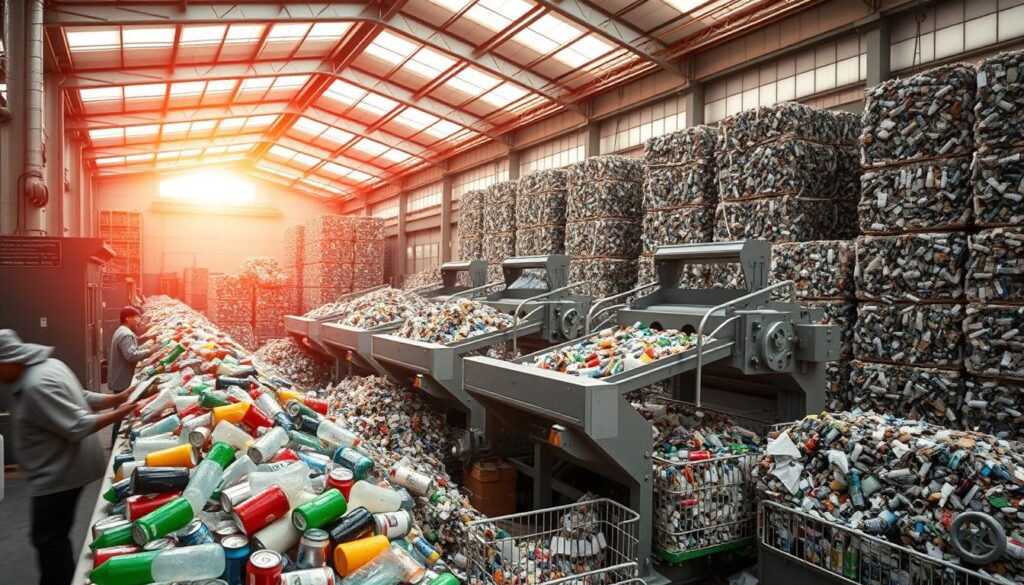
MRFs play a big role in recycling’s success. But, they face problems like contamination and mixed materials. These issues can lower the quality of materials being recycled.
To tackle these problems, knowing what local recycling programs accept is important. It’s also vital to sort and clean recyclables before they reach MRFs.
Learning about the recycling process and MRFs can help a lot. It can improve recycling rates and cut down on waste.
Types of Recyclable Materials
Recyclable materials include paper, cardboard, plastics, glass, and metals. Knowing the different types is key to recycling well.
Paper and Cardboard
Paper and cardboard are often recycled. Cardboard boxes should be flattened to save space. This makes recycling more efficient.
Paperboard products, like cereal boxes, need to be dry and clean. Moisture can ruin the material, making recycling harder.
Other recyclables are plastics, glass, and metals. Each has its own recycling rules.
Plastics, for example, are sorted by resin identification code. Knowing these codes helps sort plastics right.
By understanding recyclable materials and how to prepare them, we can help a lot. This saves natural resources and cuts down landfill waste.
How to Properly Sort Recyclables
Learning to sort recyclables is key to efficient recycling. It’s not just about separating materials. It’s about making sure these materials can be processed right, reducing contamination, and helping our planet.
Understanding what your local recycling program accepts is vital. Not all plastics are created equal. Some plastics might not be accepted in your area. Also, plastics with food on them are often not accepted because they can mess up other materials. Always rinse your recyclables before putting them in the bin.
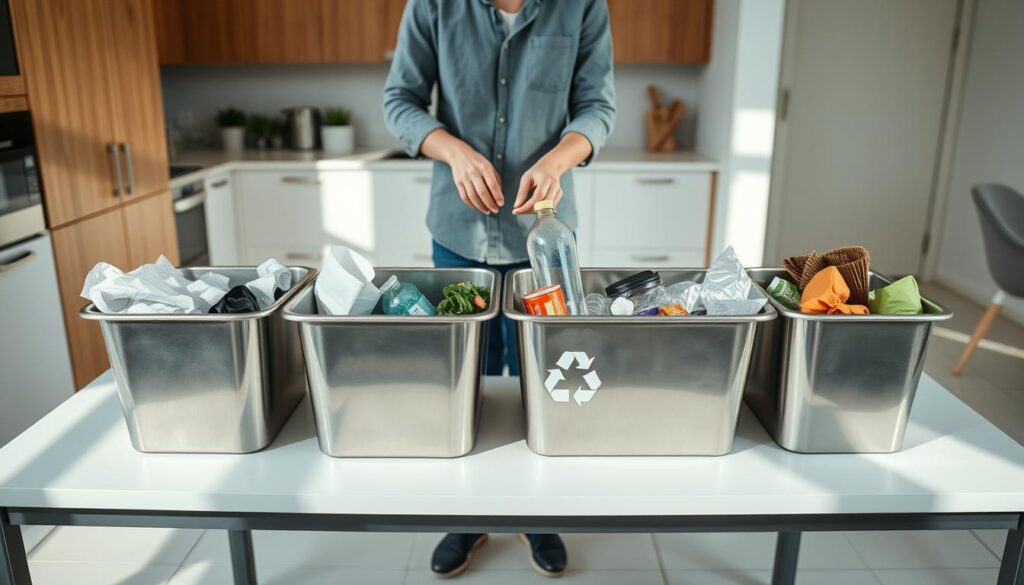
Sorting waste well is more than just separating recyclables from trash. You need to know the different types of recyclables, like paper, plastics, glass, and metals. Each type has its own rules for how to prepare and sort them.
To prevent contamination, follow recycling guidelines carefully. This means removing lids and labels, not putting recyclables in bags, and keeping them dry. By doing these simple things, you can greatly lower the chance of contamination and make sure your recyclables are handled right.
By taking the time to sort recyclables correctly and following local recycling guidelines, you can make a big difference. It’s a simple yet powerful way to help our planet for the future.
Local Recycling Guidelines
To recycle well, knowing your local recycling rules is key. Local recycling rules differ a lot from place to place. It’s important to know what can be recycled in your area.
Many places have stopped recycling glass because of too much contamination. This shows how important it is to know your recycling guidelines. Too much contamination can make all recyclables unusable.
To get the latest on municipal recycling, check your local government or waste management website. They usually have lists of what can be recycled, when to collect it, and how to prepare it.
Knowing your local recycling rules helps reduce contamination and increases what can be recycled. By following these rules, you help your community’s recycling program a lot.
The Role of Recycling Centers
Recycling centers, like Materials Recovery Facilities (MRFs), are key in recycling. MRFs sort and process recyclable materials well.
The complexity of MRFs lies in their ability to separate waste into multiple streams, often six or more, to ensure that materials are properly categorized for further processing.
The operation of MRFs involves advanced technology and machinery to sort materials based on their type, such as plastics, metals, and papers.
This process not only requires significant investment in equipment but also skilled personnel to manage and maintain the facilities.
The efficiency of MRFs can significantly impact the overall effectiveness of recycling programs.
One of the challenges faced by MRFs is the contamination of recyclables. When non-recyclable materials are mixed with recyclables, it can lead to entire batches being rejected, reducing the overall recycling rate.
Education and awareness about proper recycling practices are key in minimizing contamination.
Despite these challenges, MRFs play a critical role in materials processing. They enable the recovery of valuable materials that can be used to manufacture new products. This conserves natural resources and reduces landfill space.
In conclusion, recycling centers, like MRFs, are vital in modern waste management. Their ability to sort and process recyclables efficiently is key to recycling program success.
Tips for Beginners
Starting to recycle is simpler than you might think. Learning to sort materials is a great first step. It helps you live more sustainably.
Start Simple: Begin with the basics. Know what can be recycled in your area. This includes paper, plastic, glass, and metal. Learn about recycling symbols and what they mean.
Simplify Your Sorting Process: Use separate bins for different waste types. This makes recycling easier and gets others to join in.
Experts say, “Small changes in our daily habits can lead to significant positive impacts on the environment.” –
Recycling is not just about saving resources; it’s about setting an example for future generations.
Practical Tips for Everyday Recycling
1. Reduce Contamination: Make sure recyclables are clean and free of trash. This helps them get recycled properly.
2. Stay Informed: Recycling rules can change. It’s important to keep up with what’s recyclable in your area.
3. Participate in Community Programs: Many places have special recycling for electronics and hazardous waste. Joining these programs helps dispose of these items right.
By following these easy recycling tips, beginners can make a big difference. Remember, every small step helps protect our planet.
Educating Others about Recycling
As we aim for a greener future, educating others about recycling is key. Programs that teach recycling can greatly boost recycling rates. They help create a culture that cares for the environment.
Studies show that communities with strong recycling education see their rates go up. This is because learning about recycling empowers people to act sustainably.
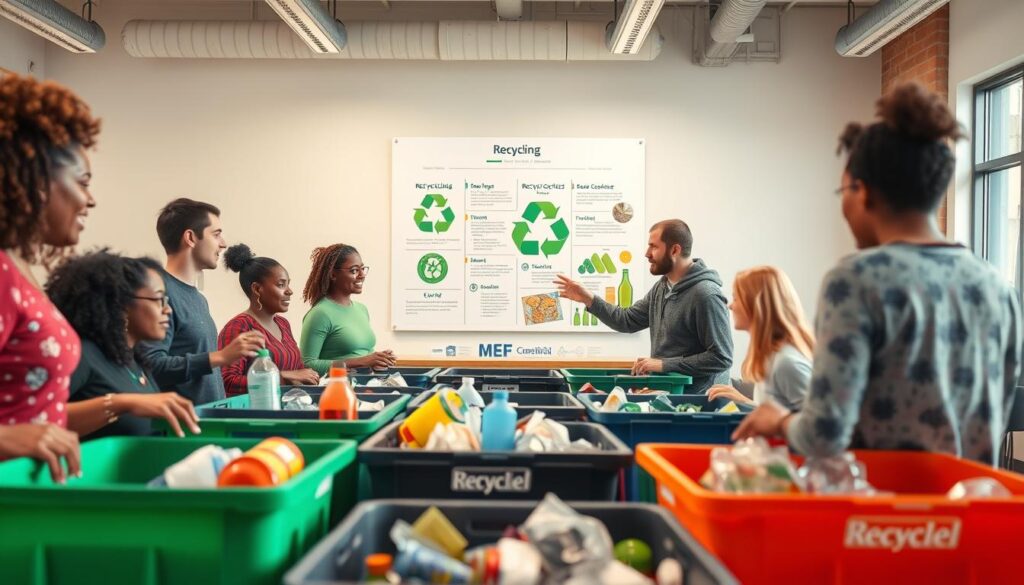
Community workshops and school programs are great for teaching recycling education. They teach the value of recycling and how to do it right. They also show how to cut down on waste.
“Education is the most powerful tool which you can use to change the world.” – Nelson Mandela
This quote shows how education can change the world. It’s very true for sustainability and saving our planet. By teaching others about recycling, we help make our world more sustainable.
Strategies for Effective Recycling Education
To teach others about recycling well, try these methods:
1. Host community events and workshops to spread the word about recycling.
2. Work with schools to add recycling lessons to their classes.
3. Use social media to share recycling tips and facts.
By using these methods, we can help make our communities more eco-friendly. We can promote environmental awareness and sustainability together.
Special Formats for Recycling
Not everything can be recycled through standard curbside programs. Some items need special care. This includes electronics and hazardous waste, which require unique handling procedures.
Electronics Recycling is key in today’s waste management. Old computers, smartphones, and TVs contain hazardous materials. If not disposed of properly, they can pollute the environment. Many communities have designated centers for electronics recycling.
Hazardous waste disposal also needs special attention. Batteries, fluorescent light bulbs, and certain household chemicals are examples. They should not be thrown away with regular trash. Instead, they should be taken to facilities equipped to handle hazardous materials.
“Recycling is not just about saving resources; it’s also about reducing the environmental impacts of waste disposal.” – Environmental Protection Agency
By understanding the need for special recycling formats, we can make a big difference. It’s about taking responsibility for our waste. And ensuring we’re doing our part to protect the planet.
The Future of Recycling Practices
Recycling is on the verge of a big change. The Environmental Protection Agency (EPA) has set high goals for recycling rates. This marks a new chapter in how we handle waste.
Innovations in Recycling Technology are key to this change. New sorting machines, powered by AI, make recycling better and faster. A report shows these machines can boost recycling by up to 30%.
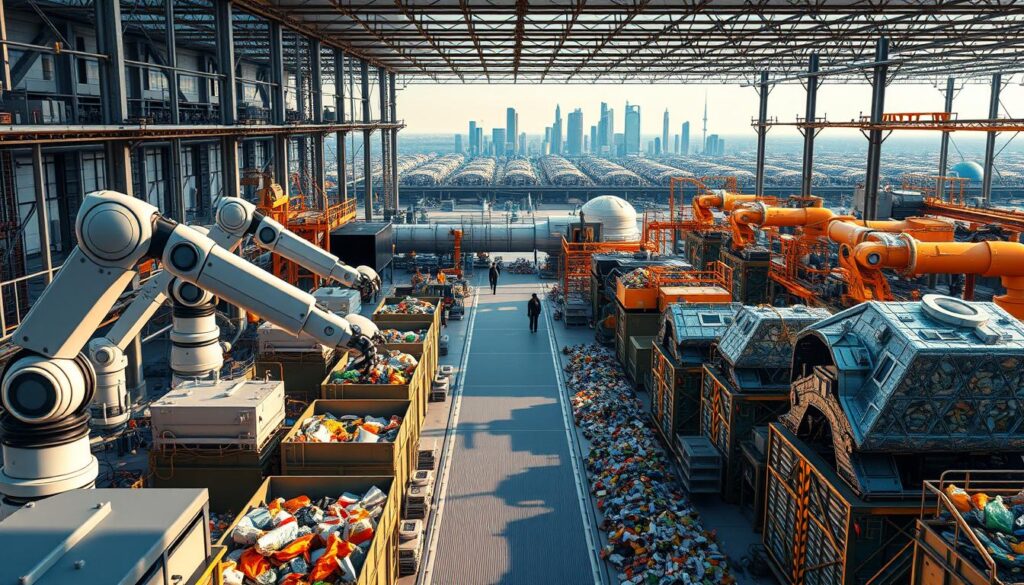
The future of recycling also means new materials and products. These are made to be recycled, cutting down on waste. As
“The future of recycling is not just about processing waste; it’s about redesigning our economy to be more sustainable.”
Getting people involved and educated is also vital. Teaching the public about recycling helps increase its success. This way, more people can join in and make a difference.
Recycling Innovations go beyond tech. New business models and policies also play a big role. For example, Extended Producer Responsibility (EPR) policies hold manufacturers responsible for their products’ waste.
The way forward is to embrace these changes and keep pushing for more sustainability. By doing this, we can make recycling a big part of our lives. This will help us build a greener future.
Volunteering and Community Involvement
Joining recycling volunteer programs can greatly help your community’s environment. Being part of the community is key for recycling success. It helps sort and process recyclables and promotes sustainability.
Many places need volunteers for sorting, teaching about recycling, and clean-up events. Environmental volunteering is everywhere, from cleaning parks to pushing for better recycling systems.
To get started, reach out to your local recycling centers or green groups. They often have community recycling volunteer spots. Many groups also provide training to help volunteers make a bigger difference.
Helping out in recycling efforts can also strengthen community ties and teach kids about the environment. Through environmental volunteering, you help build a greener future.
In short, volunteering and community action are vital for recycling success. By joining local efforts and supporting recycling volunteer work, you help make your community more sustainable.
Frequently Asked Questions about Recycling
Many of us have questions about recycling. We want to do better, but we’re not sure how. Here, we’ll answer some common questions to help you understand recycling better.
One big question is what can be recycled. Usually, you can recycle paper, plastic, glass, and metal. But, it’s important to check what your local recycling program accepts.
Some people wonder if they should rinse food containers before recycling them. The answer depends on where you live. But, many places say yes to rinsing to keep things clean.
Knowing these answers can help us recycle better. It’s a step towards a greener future.