





Creating music at home is now easier than ever, thanks to new tech. Soundtrap says music production is about making a song from an idea. It needs creativity, knowing how to use recording gear, and understanding digital audio workstations (DAWs).
With the right tools and some knowledge, anyone can make great music creation at home. This article will dive into the world of music production. It will also show you how to start with home recording.
Getting Started with Home Music Production
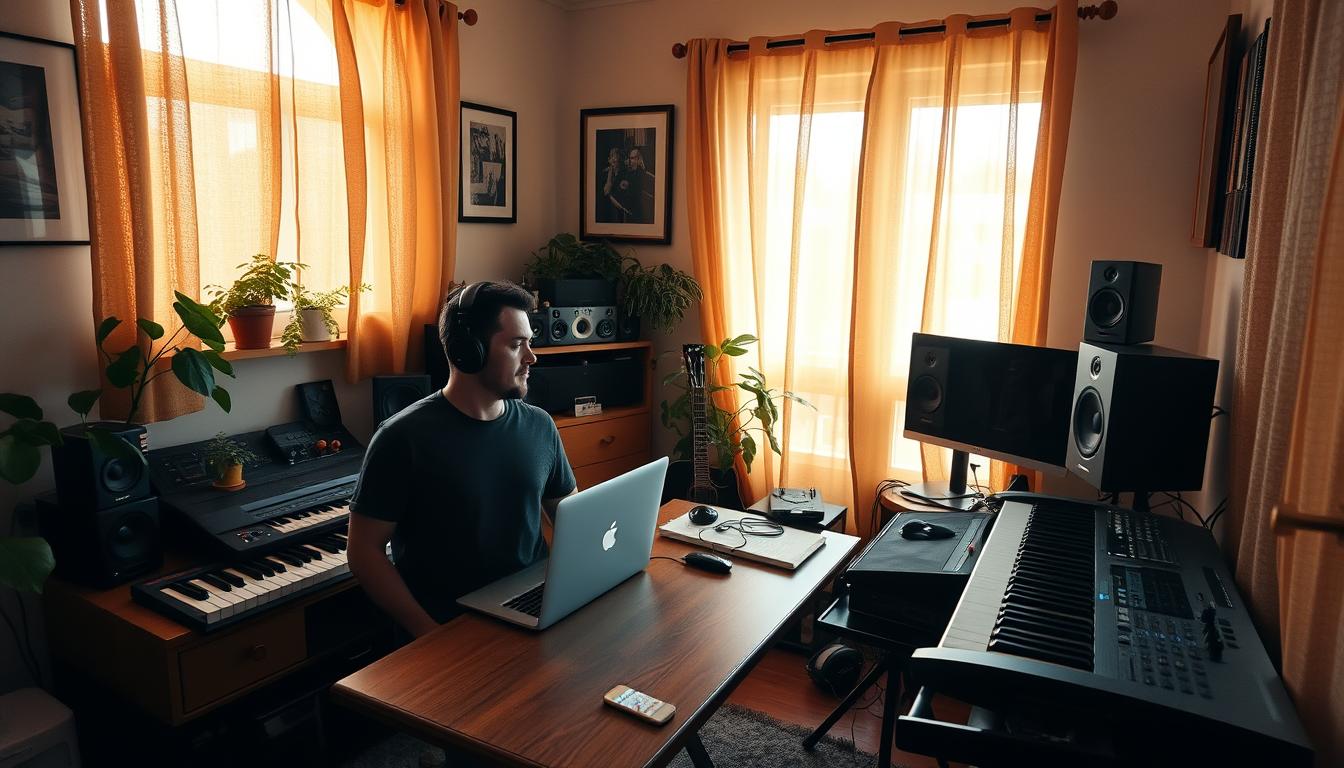
Starting your home music production journey means knowing the key hardware and software. You’ll need a few essential tools to make great music.
A computer with a 64-bit operating system is the heart of your studio. It should be powerful to handle tough music production software. Experts say this ensures your audio files are processed smoothly.
An audio interface is also key. It connects your instruments or mics to your computer, letting you record top-notch audio. You’ll also need studio monitors for accurate sound, helping you mix and master your music well.
A Digital Audio Workstation (DAW) ties everything together. This is where you create, record, and edit your music. Soundtrap is a great DAW for beginners and pros, with easy collaboration features and a huge sound library.
Choosing good home recording equipment and music production software makes a big difference. While cheap options might seem appealing, it’s important to find a balance between cost and quality for the best results.
Understanding each component’s role and picking the right digital audio workstation will help you make high-quality music at home.
Choosing the Right Genre for Your Music
Understanding different music genres is key for producers. The genre selection shows who you are as an artist and reaches your audience.
Think about what music you like and what you want to say with it. Knowing what’s popular helps you pick a genre and grow with it.
Genres appeal to different people and feelings. For example, EDM is for lively moments, while jazz is for calm, classy settings. Knowing this helps you make music for the right people.
Exploring Popular Music Genres
Popular genres include pop, rock, hip-hop, and classical. Each has its own fans and sounds. Pop is catchy and wide-reaching, while hip-hop tells stories through rhythm.
Choose a genre you love and enjoy. Your passion will make your music real and interesting to listeners.
Staying Relevant with Industry Trends
Keeping up with trends is important. It’s not just about knowing popular genres but also new ones. Being open to change keeps your music exciting.
In short, picking the right genre is complex. It’s about knowing yourself, your audience, and the music world. By thinking about these, you can make a choice that boosts your music career.
The Art of Songwriting
Songwriting is a journey that mixes personal feelings with musical skills. Using songwriting techniques can make your music more relatable and memorable.
Writing great lyrics is key. It’s about telling a story or sharing feelings in a way that listeners can connect with. To do this, you need to know how to tell stories and use vivid imagery in your words.
Song Structure and Chord Progressions
A good song usually follows a pattern like verse-chorus-verse-chorus-bridge-chorus. Knowing song structure helps create a story that keeps people interested.
Chord progressions are also important. They set the song’s mood and feel. Learning common chord progressions and trying new ones can help you create better melodies.
Playing an instrument and learning music theory can also help. It lets you try out different melodies and harmonies, making your songs richer.
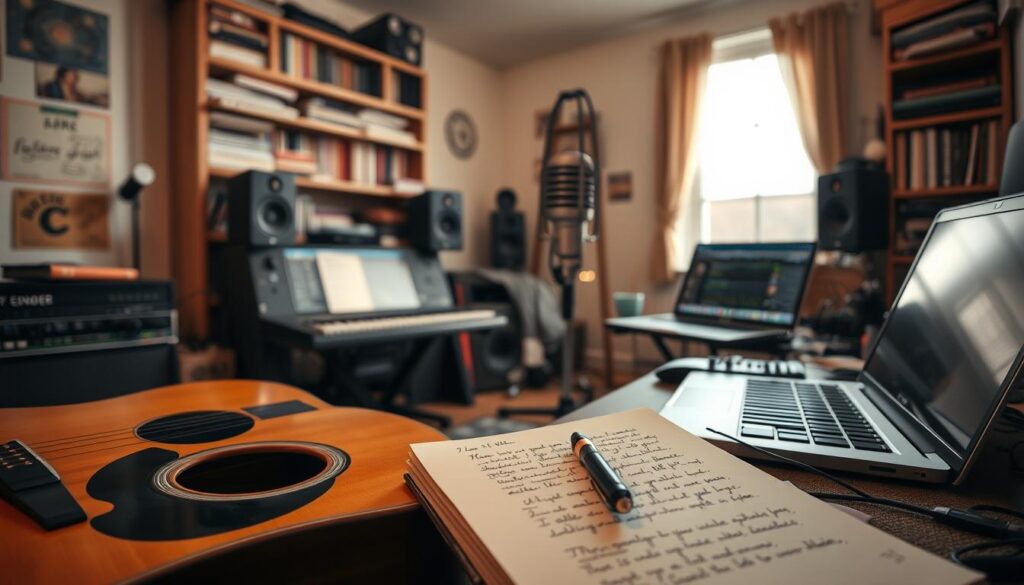
By combining lyrics, melody, song structure, and chord progressions, you can make songs that are meaningful and catchy. Remember, the best way to get better at songwriting is to keep practicing and always be open to trying new things.
Recording Techniques for Home Musicians
Getting professional-sounding recordings at home is simpler than you might think. The key is to set up your home studio setup right.
Finding the right space is key. Look for a room with little echo and reverberation. Using sound-absorbing panels can help. They reduce sound waves bouncing off walls, improving audio quality.
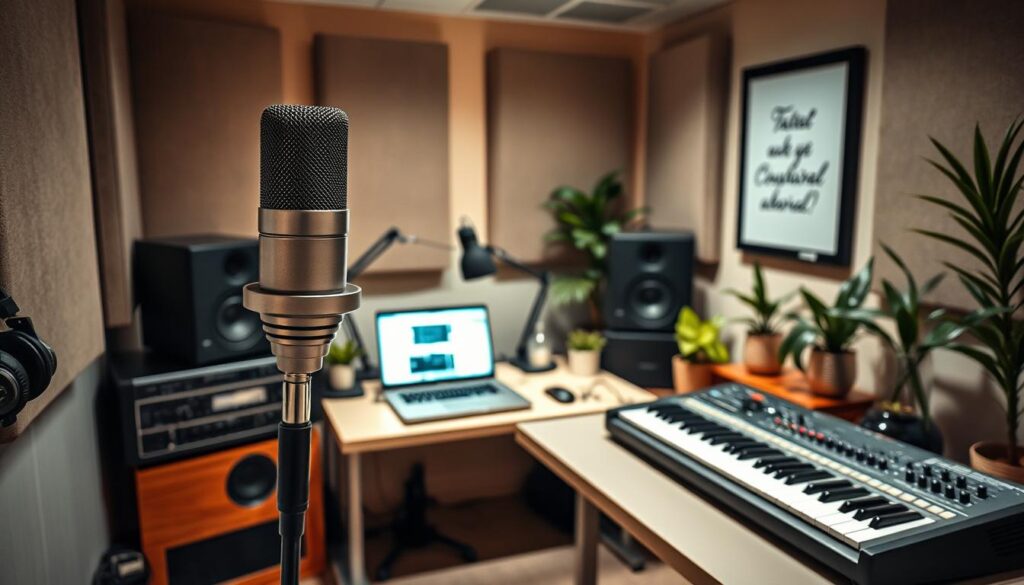
Knowing recording techniques is also important. This includes how to place your microphone and adjust your gear for the best sound. For example, a pop filter can cut down on plosive sounds in vocals. Adjusting the mic can also help capture the best sound.
Using the right software is also a game-changer. Tools like Ableton Live, Logic Pro, or FL Studio have many features to boost your music’s quality. Try out different plugins and effects to find the sound you want.
Tips for Better Recordings
To get better at recording techniques, invest in quality equipment like microphones and headphones. Also, the more you record, the better you’ll get at finding and capturing great sound.
By improving your home studio setup and mastering recording techniques, you can greatly enhance your audio quality. This will make your music sound professional and engaging.
Mixing and Mastering Basics
Mixing and mastering are key steps to make your home-recorded music sound professional. These final stages of music production involve several processes. They can make your music sound great for distribution and playback on different platforms.
Understanding Mixing means balancing levels, adjusting EQ, and using compression. It’s about making sure all parts of your track sound good together. Every instrument and vocal part should have its place in the mix.
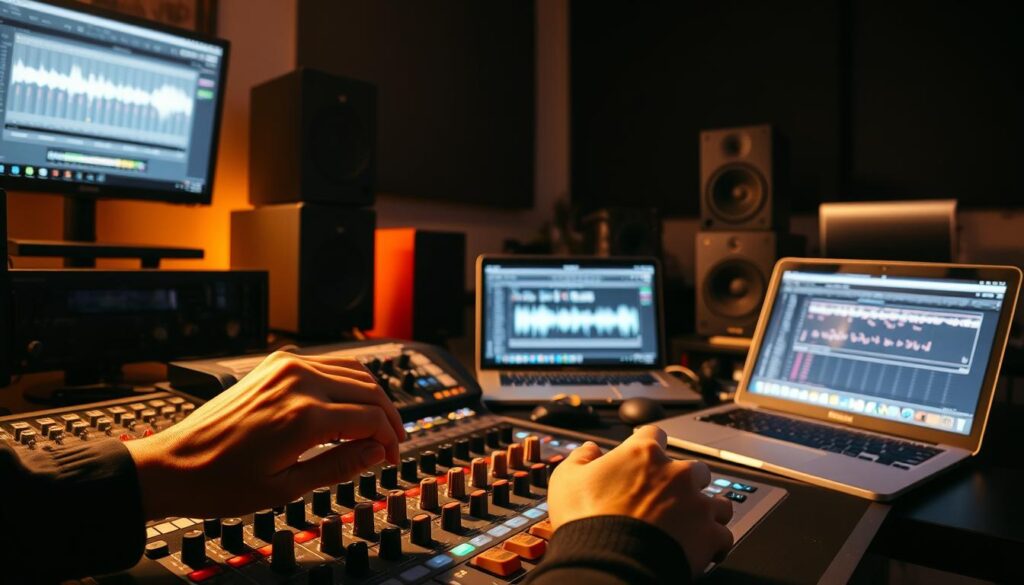
Audio mixing is an art that needs a good ear and the right tools. Software like Soundtrap helps musicians mix their tracks well. It offers many plugins and effects to improve their music.
Mastering Your Tracks
Music mastering gets your mixed audio ready for distribution. It makes the sound better, so it sounds good on any system. It also makes your music loud and clear without any distortion.
Learning the basics of mixing and mastering can greatly improve your music. It makes your music more enjoyable for listeners and helps you compete in the music industry.
Collaborating with Other Musicians Online
The digital age has changed music production a lot. Now, artists can work together from anywhere. Sites like Soundtrap and BandLab make it easy to share ideas and learn from each other in real-time.
Online collaboration has opened up new ways for creativity. Soundtrap is a cloud-based studio where many can work on a project at once. This makes the creative process faster and adds more variety to the music.
BandLab is also popular for its teamwork features. It lets artists create, share, and work on music projects together. It has virtual instruments and effects, and it helps with communication and keeping track of changes.
One big plus of online collaboration is working with musicians from all over. It brings new ideas and builds a global community of artists. By working together online, musicians can draw from a worldwide talent pool, making music that’s diverse and creative.
As the music industry keeps growing, online collaboration tools are more important than ever. These platforms are changing how musicians work together. They’re also making music production more open to artists everywhere.
Marketing Your Home-Made Music
In today’s digital world, marketing your music at home needs a mix of strategies. With many platforms out there, music distribution is easier than ever. But, getting your music seen is a big challenge.
Putting your music on big platforms like Spotify is key. Experts say, “Getting your music on the right platforms is key to reaching a wider audience.” This is where music marketing comes in, helping you stand out.
Good promoting music means knowing who you’re talking to and using social media well. A strong online presence helps you connect with fans and promote your music better.
A music industry pro says, “Networking with labels and publishers is vital for increasing your visibility in the music industry.” Building these relationships can open new doors and help you in music marketing.
“The key to successful music marketing lies in its ability to connect with the audience on a personal level.”
To do this, tell a compelling story about your music. Use social media to share your story and talk to your audience by replying to comments and messages.
Leveraging Social Media for Music Promotion
Social media is a strong tool for music distribution and promotion. Platforms like Instagram, Facebook, and Twitter let you reach people worldwide and build a dedicated fan base.
In short, marketing your home-made music needs a smart mix of distribution, networking, and social media. Knowing your audience and using the right channels can help you promote your music well and grow your fan base.
Resources for Continuous Learning
The music production world is always changing. This means producers need to keep learning. Luckily, there are many music production resources online to help.
Online courses are a great way to learn. Sites like Udemy, Coursera, and Skillshare have lots of courses. They cover everything from sound design to mastering, helping producers improve their music.
Music tutorials on YouTube and other videos are also very helpful. Experienced producers share their skills through these videos. They teach specific techniques and how to use software.
Blogs and websites focused on music production are full of useful info. They talk about new trends, software updates, and production tips. By following these, producers can stay up-to-date and inspired.
Online communities and forums are also great for learning. Places like Reddit’s WeAreTheMusicMakers and music production forums on Discord are perfect. Here, producers can ask questions, share knowledge, and learn from others.
By using these music production resources, producers can keep growing and adapting in the music industry.
Community and Networking in Music
Building a strong network in the music industry is key for success. Going to events, concerts, and workshops helps musicians meet others. This can lead to new collaborations and chances to grow their career.
Being part of a music community lets artists share their work and get feedback. It also keeps them in the loop with the latest trends. Networking can bring valuable connections, helping artists move forward in their careers.
By connecting with the music community, musicians can find new opportunities. This includes gigs, collaborations, and more. Building strong relationships is vital for lasting success in the music world.