







Choosing the right drink can be tough, 100% juice being a big choice. With many options, knowing what’s healthy is key.
The Dietary Guidelines for Americans 2020-2025 say 100% fruit juice is a good pick. It gives important nutrients that might be missing in your diet.
Drinking 100% juice from 100% fruit has many health perks. It’s a smart way to add nutrition to your diet. It helps if you can’t eat enough fruits or veggies.
Understanding the Benefits of 100% Juice
100% juice is packed with nutrients and is great for a healthy diet. It’s a smart way to get important vitamins and minerals. This is true when you can’t eat enough fruits or veggies.
100% juice comes from just the fruit or veggie, without added sugar. It’s perfect for avoiding sugary drinks. Registered dietitian Natalie Rizzo says it’s a quick way to get nutrients without much effort.
The health benefits of 100% fruit juice are many. It supports heart health, offers antioxidants, and helps with hydration. Adding 100% juice to your diet brings these benefits in a tasty and refreshing way.
In short, 100% juice is a nutritious and easy choice for boosting your diet with nutrient-dense drinks. Choosing 100% juice lets you enjoy the goodness of fruits and veggies in a simple way.
How to Read Juice Labels Effectively
Learning to read juice labels is key for those who want to add 100% juice to their diet. With many options available, knowing what to look for on labels is important. It helps you make better choices.
When picking juice from the store, look for labels that say “100% juice” clearly. This means the juice has no added sugars or preservatives. Also, check the ingredient list. Make sure a fruit or vegetable is the first and only ingredient listed.
Juice labels can be tricky because of the different terms used. It’s important to understand these terms to read juice labels well. For example, “juice drink” or “juice cocktail” usually means it’s not 100% juice. It might have added sugars or other ingredients.
Also, watch out for “not from concentrate” (NFC) and “from concentrate” labels. NFC means the juice isn’t concentrated and then reconstituted. “From concentrate” means water is removed, then added back before packaging. Both can be 100% juice, but the process can change taste and nutrition.
By paying attention to these details and knowing juice terminology, you can find the right juice for your health goals. This makes shopping for juice easier and more informed.
Popular Types of 100% Juices
Many types of 100% juice are loved by people for their health benefits. They come in different flavors and meet different dietary needs. This makes it easy for people to add them to their healthy routines.
Cranberry Juice is a top pick, known for fighting urinary tract infections (UTIs). Its special properties make it a go-to for those wanting to keep their urinary system healthy.
Tomato Juice is also popular, packed with vitamin C and lycopene. Lycopene is an antioxidant that may help prevent heart disease. So, tomato juice is great for heart health.
Pomegranate Juice is full of antioxidants and linked to heart health and fighting cancer. Its tasty flavor and health benefits make it a favorite among juice lovers.
These juices are not just tasty but also offer health perks when part of a balanced diet. Whether you want to boost your heart health, urinary tract health, or just enjoy a refreshing drink, there’s a 100% juice for you.
The Impact of Juice on Hydration
Staying hydrated is vital for our health. Drinking 100% juice can be a fun way to meet our hydration needs.
Juice is full of water, making it great for staying hydrated. 100% juice, without added sugars, is the best choice for those looking to stay hydrated while also gaining essential nutrients.
But, it’s important to watch the sugar in juice. Natural sugars are okay, but too much can add a lot of calories. It’s good to mix juice with other hydrating drinks, like water.

Adding 100% juice to your diet can help with hydration, even if you don’t like drinking water. For instance, a glass of orange juice in the morning can refresh you and help with your daily hydration and nutrient needs.
Also, different juices have different hydration levels. Juices like watermelon or cucumber juice are very good for staying hydrated.
How Juice Affects Your Health
Juice has many effects on health, both good and bad. It can add important nutrients to your diet. But, it also has some downsides.
Nutritional Benefits: Juice from 100% fruit is packed with vitamins A and C, potassium, and more. Orange juice is full of vitamin C. Prune juice is rich in potassium.
But, there are also some negatives. Juice often has a lot of sugar and not much fiber. Dr. Marion Nestle, a well-known nutrition expert, says, “Drinking juice can lead to more calories and sugar than eating whole fruits.”
“The problem with juice is that it removes the fiber and leaves just the sugar and the calories,” says
.
It’s important to drink juice in moderation. Choose 100% juice without added sugars and drink it in small amounts. Also, make sure to eat plenty of whole fruits and veggies.
In summary, 100% juice can be good for you if you know its pros and cons. Making smart choices is key.
Choosing Juice for Weight Management
For those looking to manage their weight, 100% juice can be a healthy addition to their diet. The key is to choose juices that are low in calories and rich in nutrients.
Low-sodium vegetable or tomato juices are excellent options for weight management. They tend to be low in calories and can help curb appetite, making it easier to stick to a diet. For instance, a glass of low-sodium tomato juice can be a satisfying and healthy choice.
When selecting a juice for weight management, it’s important to read the labels carefully. Look for juices that are 100% fruit or vegetable juice without added sugars or sodium. Some juices may seem healthy but contain hidden calories or preservatives.
Benefits of Low-Calorie Juices include not only their low calorie count but also their ability to provide essential vitamins and minerals. For example, juices made from leafy greens like kale or spinach are rich in antioxidants and can support overall health.
Incorporating low-calorie, 100% juice into your weight management plan can be straightforward. Start by replacing high-calorie snacks with a glass of juice or use juice as a complement to your meals to enhance nutrient intake.
Preparing Fresh Juice at Home
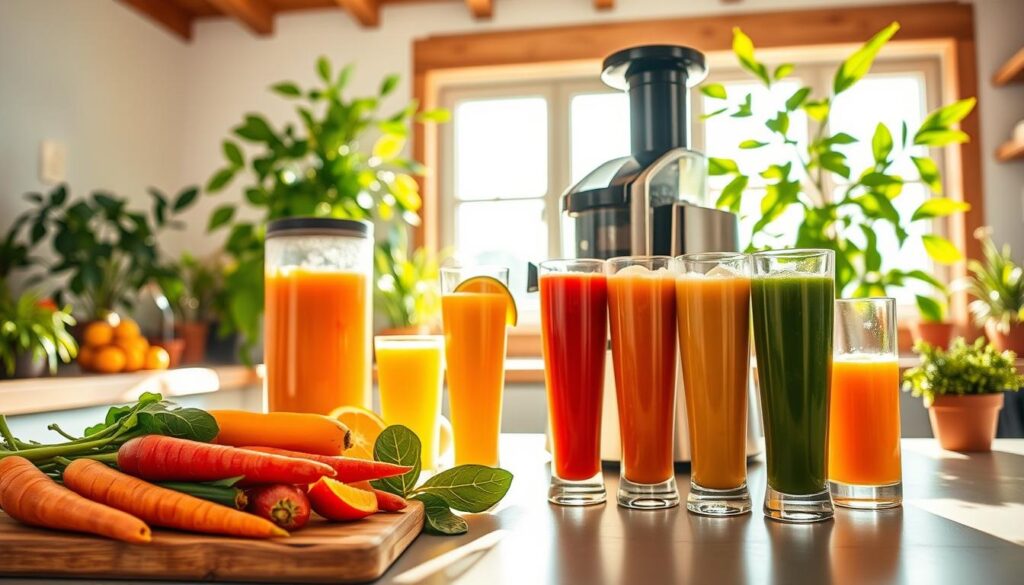
With a few simple steps, you can start making fresh juice at home. Enjoy its health benefits. Making your own fresh juice lets you choose the ingredients. This way, you avoid added sugars found in commercial juices.
To start juicing at home, you need a juicer or blender and a strainer. Pick fresh, seasonal fruits and veggies. This ensures your juice is full of nutrients.
Making homemade juice lets you try different ingredient mixes. You can find the perfect blend for your taste and diet.
By making fresh juice at home, you control your health. It’s also a cost-effective way to enjoy various juices. You don’t need to rely on store-bought options.
Incorporating Juice into Your Diet
100% juice can be a great addition to a healthy diet. It offers essential vitamins and minerals from fruits and vegetables.
To add juice to your diet in a healthy way, remember to moderate your intake. Drinking too much can lead to too much sugar, even if it’s natural.
“The key to benefiting from juice is to consume it in moderation and as part of a balanced diet that includes a variety of whole foods,” says a nutrition expert. This way, you get the nutrients you need without too much sugar.
Always pick 100% juice without added sugars or preservatives. Reading labels is key to making good choices.
Adding juice to your diet is easy. Try having a glass with breakfast or mix it with yogurt or spinach in smoothies.
By following healthy juice habits, like choosing 100% juice and watching portion sizes, you can enjoy juice’s benefits while keeping your diet balanced.
Sustainability of Juice Production
The environmental impact of juice production is a big deal for all of us. As more people want juice, the industry’s environmental footprint grows. This includes lots of energy use, water, and waste during production.
Environmental Impact of Juice Production touches many areas. From growing fruits and veggies to making and packaging juice, each step has costs. For example, water-heavy crops can use up local water, and processing and shipping add to greenhouse gases.
Choosing sustainable juice can lessen these impacts. Look for juices made close to home to cut down on emissions. Also, pick products with little or biodegradable packaging. Supporting farmers who use green methods helps too.
Also, new ways to make juice can help the environment. Some makers use less energy and green energy in their plants. Others turn waste into useful things like animal food or biofuels.
In short, juice production affects the planet, but we can make it better. By picking sustainable juice and backing eco-friendly makers, we can enjoy our favorite drinks and help the Earth.
Conclusion: Making Juice a Healthy Choice
It’s important to make smart choices when it comes to juice. Knowing the good and bad of juice helps us pick healthy options. This way, juice can be a great addition to our diet.
Opting for 100% juice is key to getting the most nutritional benefits. Paying attention to how much we drink and mixing it with other foods is also important. This helps us enjoy our favorite juices without harming our health.
Some good tips for juice include checking labels carefully, making juice at home, and thinking about where it comes from. Following these tips can make juice a fun and healthy part of our daily lives.