







Creating a safe living environment is key for every family. Every year, 33 million people get hurt by products in their homes. But, most of these injuries can be prevented.
Prevention and making homes safe can save lives. Knowing about dangers and acting early can greatly reduce risks. It’s important to watch out for common household dangers and use safety tips to keep homes safe.
Keeping your home secure is also essential. Simple steps can protect your family and stop accidents. This makes your home a safe place for everyone.
Understanding Home Safety Risks
Identifying home hazards is the first step to a safer home. Every home has risks that can cause injuries if not fixed. It’s important to address these risks.
Doctors see preventable injuries every day. They stress the need for awareness and being ready. Keep emergency numbers handy, like the fire department and poison control (1-800-222-1222).
Knowing common home hazards can lower accident risks. Hazards include slippery floors and sharp objects. Being aware is key to injury prevention.
It’s not just knowing the risks. It’s also making sure everyone knows how to avoid them. Have a plan for emergencies and share emergency numbers with your family.
By understanding and reducing safety risks, homes become safer. This effort not only protects your family but also helps the community.
Having emergency contact numbers ready is a simple but effective step. It ensures help is just a call away in emergencies.
Essential Safety Gear for Your Home
Safety starts at home. Having the right safety gear is key to keeping your loved ones safe.
Installing smoke detectors and carbon monoxide detectors on every floor is vital. They protect against fires and gas leaks, giving you early warnings. Remember to change the batteries twice a year, at daylight savings time, to keep them working.
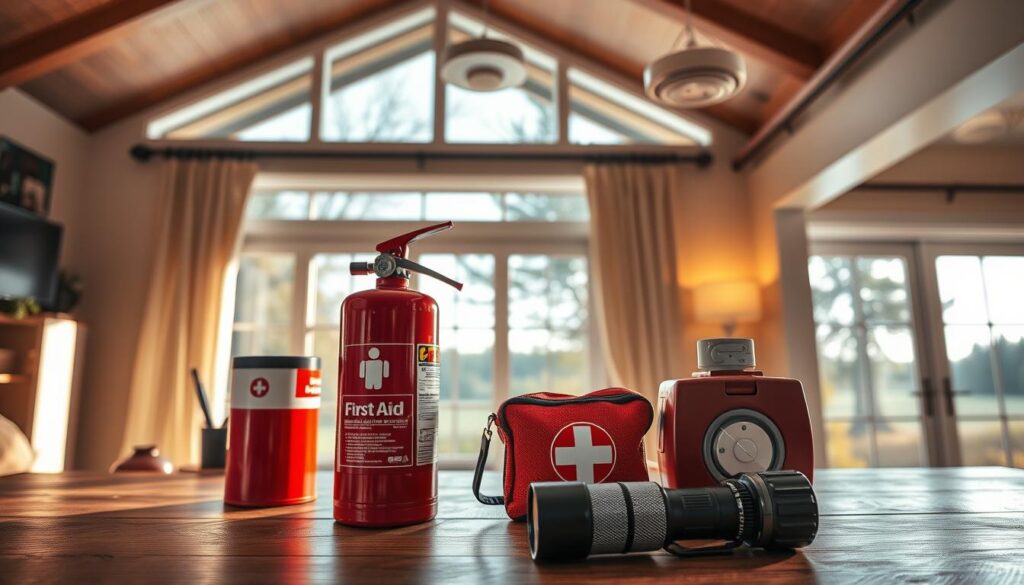
Preventing accidents is just as important as having detection devices. Clear clutter and keep paths free from tripping hazards. Simple steps like securing rugs, ensuring good lighting, and keeping exits clear can greatly reduce accident risks.
Regular checks on your safety gear are also essential. This ensures it works right and makes any needed repairs or replacements. Taking these steps helps make your home safer for everyone.
Investing in home safety equipment and taking prevention steps keeps your family safe. Being proactive about home safety prevents many dangers. It makes your home a safe place for all.
Smart Home Technology for Safety
Home safety has made a big leap with smart home technology. This innovation helps homeowners protect their homes and loved ones better than ever.
Smart home devices send real-time alerts and monitor your home. For example, security cameras let you watch your property from anywhere. You get alerts if something suspicious happens.
In emergencies, smart home devices send alerts to your phone. This way, you can act fast. Whether it’s a fire, a break-in, or another emergency, you’ll know right away.
Some important home safety technology features are:
- Real-time alerts for emergencies
- Remote monitoring through security cameras
- Smart alarms that notify you and the authorities in case of a breach
By using smart home technology every day, you make your home safer. You also feel more secure, knowing you can handle any situation that comes up.
Childproofing Your Living Space
Childproofing your home is key to keeping your child safe. Electrical safety is a major focus.
Covering Unused Electrical Sockets is a simple yet effective step. Use socket covers or tamper-resistant outlets to stop kids from sticking things in sockets. Also, keep electrical cords out of children’s reach. Use cord organizers or hide cords behind furniture to avoid dangers.
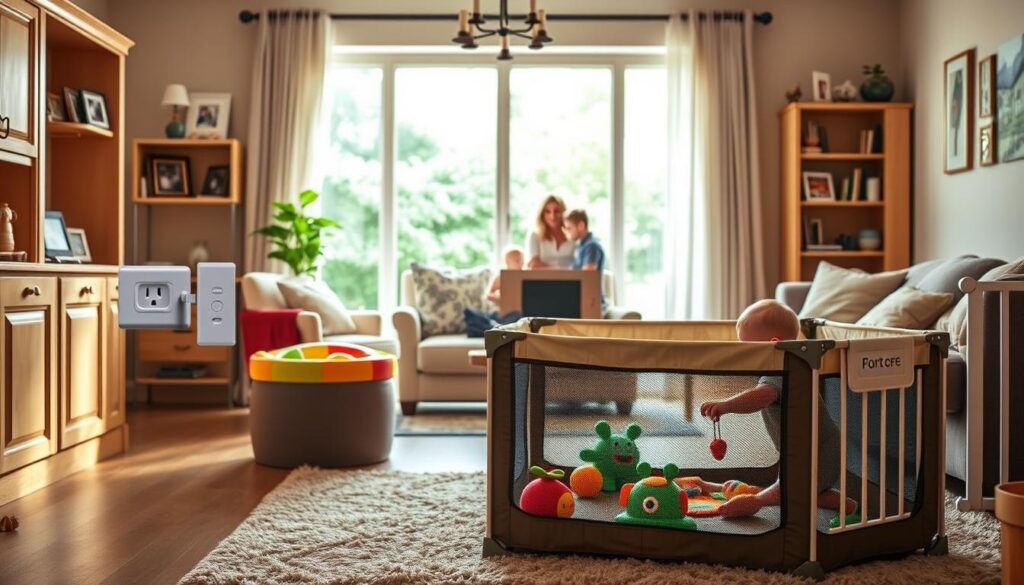
Furniture with sharp edges is a big risk for kids. Adding protective padding on the corners of such furniture can prevent injuries. Also, use safety latches and locks on cabinets and drawers to keep kids away from harmful stuff or sharp objects.
By taking these steps, you can greatly lower the chance of accidents at home. It’s about making a safe space for your child to grow and learn without risks.
Emergency Preparedness Plans
A good emergency preparedness plan is key in tough times. It’s not just about having a plan. It’s also about making sure everyone knows it and can follow it.
Choosing a meeting spot outside your home is important. It could be a mailbox or a tree in your yard. Pick something everyone can remember.
Creating a fire escape plan is also essential. Find at least two ways out of each room and pick a meeting spot outside. Post your plan on the fridge or somewhere everyone can see it.
Teach your kids to “Stop, Drop and Roll” if their clothes catch fire. Regular drills help everyone know what to do in an emergency. This reduces panic and makes evacuating safer.
Having a solid home safety plan lowers emergency risks. It’s about being ready and proactive. This way, you and your family can handle emergencies better.
Home Maintenance for Safety
Keeping your home safe is more than just making it look good. It’s about keeping it safe. Doing regular maintenance tasks can lower the chance of accidents. It makes your home a safer place to live.
One important part of home maintenance is checking heating systems, appliances, and chimneys. It’s key to have them inspected often. This makes sure they work right and spots safety risks early.
Never use kerosene or gas space heaters in unvented rooms. They can cause carbon monoxide poisoning, which is very dangerous. Always use these heaters with good air flow and follow the safety rules.
Also, it’s important to check chimneys and flues often. Creosote buildup can start fires, and bad flue setups can cause gas leaks. Keeping these in good shape is a big part of safety maintenance.
By focusing on home maintenance and following safety rules, you can make your home safer. Regular checks and upkeep don’t just prevent accidents. They also make your home a safer, more secure place.
Outdoor Safety Measures
Your home’s exterior and yard can be risky if not kept safe. It’s important to make these areas safe to avoid accidents and injuries. This is true, mainly for kids and pets who often play outside.
Keeping walkways clear is a big part of outdoor safety. Remove any clutter, toys, or gardening tools that could cause falls. Cleaning your walkways and patios often can greatly lower the chance of accidents.
Securing ladders when your pool is closed is also key. Unlocked ladders can be a big risk for kids, leading to drowning. Make sure the ladder is locked away or removed to prevent such dangers.
Checking playground equipment like swing-sets regularly is also important. Look for rust or sharp edges that could be dangerous. Fixing or replacing any damaged parts quickly is essential for a safe play area.
By following these steps, you can make your yard safer for everyone. Regular upkeep and being careful are important to keep your outdoor space safe and fun for all.
These home exterior safety tips help protect your family and visitors. They also make your property more valuable and enjoyable.
Fire Safety Tips for Homeowners
As a homeowner, taking proactive steps towards fire safety can save lives. Make sure your home has the right safety measures. This can greatly lower the risk of fire accidents.
Installing and keeping fire extinguishers in good shape is key. Place them on every floor, and in the kitchen, where fires often start. Check these extinguishers often to make sure they’re ready and easy to find.
It’s also important to store fire starters like matches and lighters safely. Keep them in a locked cabinet, away from kids. This helps prevent fires from happening by accident.
Creating and practicing a fire escape plan is essential. Your plan should have at least two ways out of each room. Also, pick a spot outside where everyone can meet after escaping. Do drills often to make sure everyone knows what to do in a fire.
By following these fire prevention tips, you can make your home safer. Regular upkeep, being aware, and being ready are the keys to avoiding fires. They also help ensure a safe escape if a fire happens.
Personal Safety While at Home
Creating a safe home starts with knowing the value of personal safety. It’s about being proactive and securing your living space.
One simple yet effective way to boost home safety is to always lock your main doors. This is true even if your neighborhood seems safe. Locking doors keeps intruders out and teaches kids about security.
Setting clear rules for kids is key to family safety. For example, kids should only go outside with their parents’ permission. This teaches kids about boundaries and helps parents know where they are.
Being alert to possible intruders is also important. Stay aware of your surroundings and watch for suspicious activities. You might also consider getting a home security system. These steps can greatly improve your personal safety and your family’s.
In summary, home safety is a team effort. It involves securing your home, setting rules, and watching out for threats. By doing these things, you can make your home safer for everyone.
Cyber Safety: Protecting Your Home Tech
Technology keeps getting better, making cyber safety more important than ever. With more devices online, threats grow. It’s key to act early to protect your digital world.
Never share your personal information on the internet. The web is full of dangers. Keeping your info private helps avoid identity theft and cyber crimes.
Keeping your devices safe is a must for home tech safety. Use strong, unique passwords and two-factor authentication. Also, update your devices and software often to stay secure.

Be careful with what you do online. Steer clear of suspicious links and downloads. Good antivirus software adds to your digital security.
“The security of your personal data is key. Being smart online and securing your devices boosts your cyber safety.”
In summary, cyber safety is complex but doable. Protect your info, secure your devices, and be careful online. This way, you keep your home tech safe and secure.
Building a Safe Community Environment
Creating a safe community is a team effort. Everyone must play a part. Simple actions can greatly improve neighborhood safety and encourage a sense of responsibility.
Being aware of our actions at home helps a lot. For example, asking smokers to smoke outside can prevent fires. Teaching kids to tell adults about matches or lighters is also key to avoiding accidents.
Doing things like turning off lights when we leave saves energy and cuts down fire risks. When we all do this, we make our community safer.
By looking out for each other, we can make our community safe and secure. This teamwork is vital for keeping our neighborhoods safe and welcoming.