







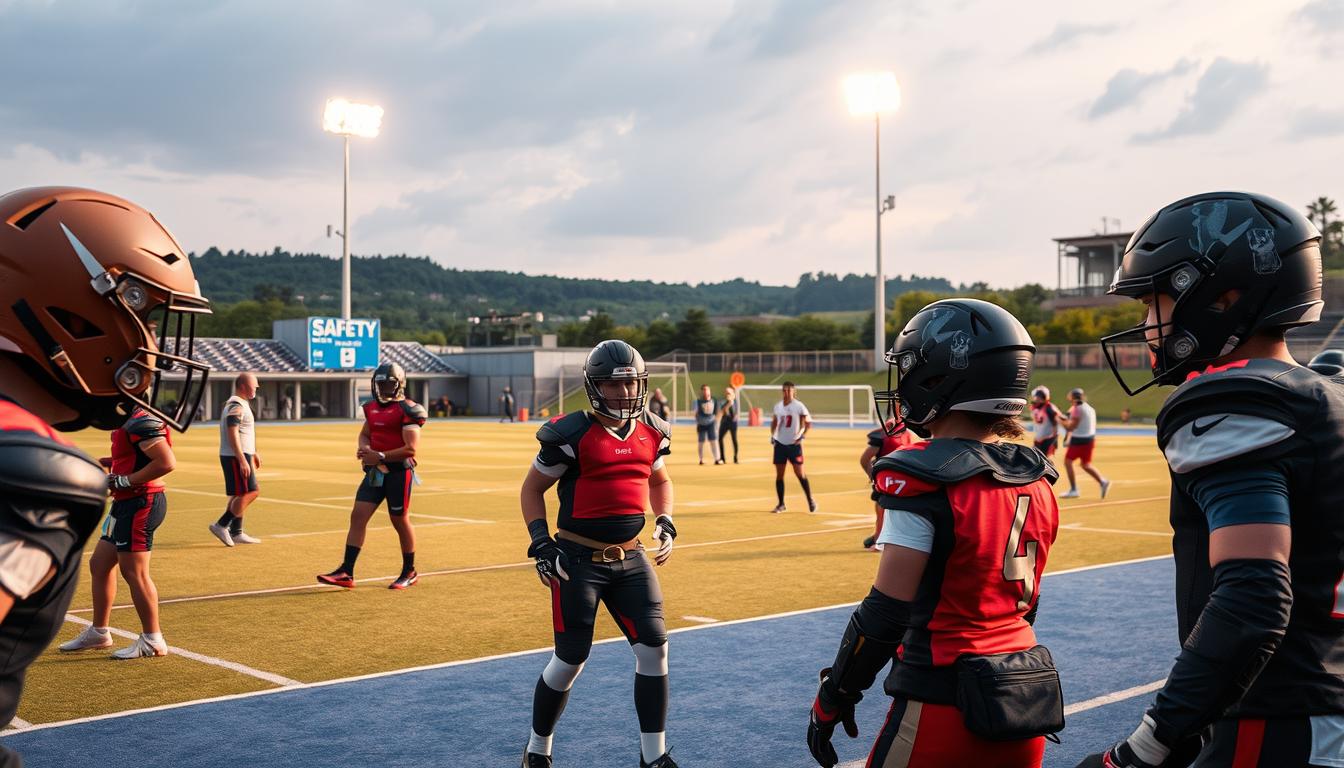
Playing sports and play activities is good for your body and mind. Johns Hopkins Medicine says sports have many benefits. But, kids can get hurt, too.
Injury prevention is key for a safe and fun time. By being careful and knowing the dangers, you can avoid injuries. This way, you get to enjoy sports more.
Putting a focus on sports safety makes the game safer. It lets players have fun without worrying about getting hurt.
Understanding Safety Play
It’s key to understand safety play to make sure kids can have fun in sports without getting hurt. Safety play includes many practices and steps to lower injury risks in sports.
The Seattle Children’s Orthopedics and Sports Medicine team stresses knowing about common spring sports injuries and how to prevent them. This way, parents, coaches, and kids can all help make sports safe and fun.
Injury prevention is a big part of safety play. It means spotting dangers, setting up safety rules, and teaching people how to play safely. This helps cut down on injuries in youth sports.
Also, making sure the playing area is safe is important. Using the right equipment and keeping it in good shape is essential. Plus, having someone watch over kids is vital to catch any problems or bad behavior right away.
Putting safety play first helps create a culture that cares about young athletes’ health. This makes sports a positive and healthy experience for kids.
Key Risks in Play Environments
It’s important to know the risks in play areas for injury prevention. This ensures everyone has a safe time.
Play areas, like playgrounds and sports fields, have dangers. These can cause injuries like concussions and ACL tears. Overuse injuries, like shin splints, are also common.
Equipment-Related Risks
Equipment in play areas can be a big risk. Poorly maintained or designed equipment can cause accidents. For example, broken playground gear can lead to falls. Bad sports equipment can cause injuries during games.
Safety experts say, “Checking play equipment regularly is key to avoiding injuries.”
“The safety of play equipment is critical. Regular checks can spot hazards before accidents happen.”

To lower these risks, safety measures are vital. This means keeping equipment in good shape and teaching users how to play safely. Supervising activities is also important.
By understanding the dangers and taking steps like regular checks, we can reduce sports injuries.
Age-Appropriate Safety Measures
It’s key to have safety rules for kids in sports. The American Academy of Pediatrics (AAP) helps us know how to keep them safe. They tell us how to make safety rules for different ages.
For little kids, safety is about equipment safety and basic skill development. It’s important to make sure play equipment fits their age and skill. For example, using soft balls and adjusting equipment height can help avoid injuries.
As kids get older, sports get more intense. The AAP says late-developing teens should avoid contact sports until they’re fully grown. This helps prevent serious injuries. Coaches and parents should check if young athletes are ready for tough sports.
“The key to safety lies in understanding the developmental stage of the child and adjusting the safety measures.” This way, we prevent injuries and create a safe place for kids to learn and grow.
For adults, safety in sports is about proper training techniques and equipment maintenance. Knowing the latest safety rules and keeping equipment in good shape is important. It helps avoid accidents.
“Safety doesn’t happen by accident.” It’s important for everyone, no matter their age, to follow safety rules. This makes sports safe and fun for all.
In summary, safety rules for different ages are vital for kids in sports. By making safety rules fit each age group, we make sports safer for everyone.
Selecting Safe Play Equipment
To play safely, picking the right safety gear and equipment is key. Players should wear helmets, mouthguards, and pads. These protect them from getting hurt.
It’s important that safety gear fits well. If it doesn’t, it won’t protect you properly. A helmet that’s too loose or tight won’t keep you safe when you fall or get hit.
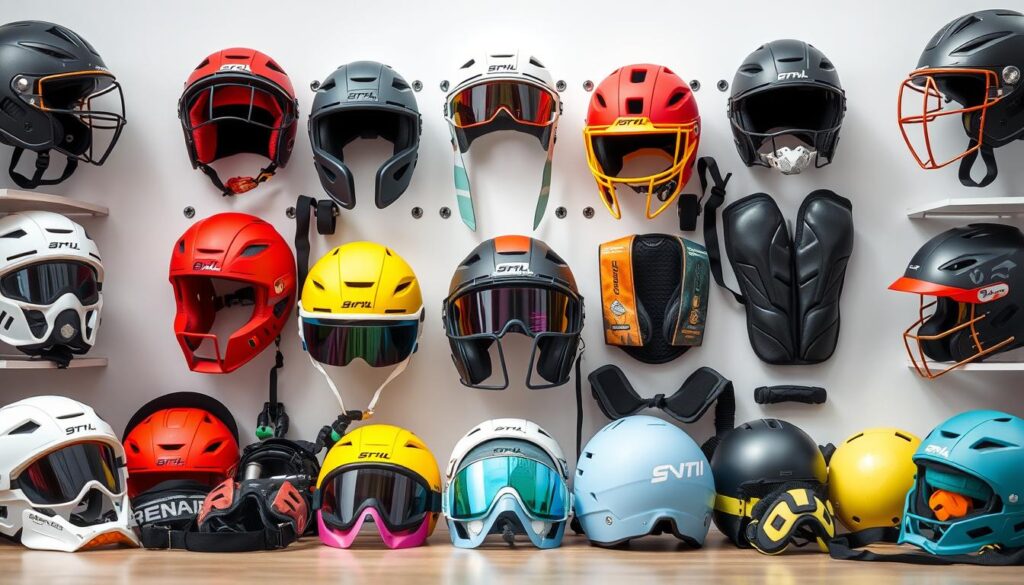
Keeping safety equipment in good shape is also important. Check it often for damage. Replace any broken parts right away. Safety experts say, “Checking and fixing safety gear often can really cut down on injury risks.”
“The right safety equipment can significantly reduce the risk of injury, making it a top priority for players.”
Choosing the best sports safety gear and keeping it in good condition helps players stay safe. This careful approach to equipment safety makes playtime safer and more fun.
Supervision and Safety
Supervision is key to keeping kids safe and preventing injuries. It means knowing what kids are doing and making sure they follow safety rules.
Coaches, parents, and trainers must watch over kids during sports. They need to be ready to step in if they see something dangerous. Good supervision can really cut down on accidents.
Supervisors also need to pay attention to what kids need. They should know if kids are ready for certain activities. This helps prevent injuries and makes play safer.
Also, supervisors should learn basic first aid and how to handle emergencies. This way, they can help if someone gets hurt. They can make the injury less serious and wait for medical help.
The Role of Safety Guidelines
To have a safe and fun time, it’s key to follow safety rules. These guidelines help avoid injuries and make sure everyone can play safely.
Good safety rules include warm-ups and cool-downs to get ready for play. They also stress hydration to avoid dehydration. Safety experts say, “Drinking enough water is key to staying safe and performing well.”
“Proper hydration is critical for staying safe and performing well.”
Also, regular equipment checks and supervision help spot and fix dangers. These steps greatly lower injury risks and make play safer for everyone.
Teaching people about safety is also vital. It helps build a culture where safety is everyone’s responsibility. This way, we all work together to prevent injuries and have a great time.
By sticking to safety rules, we can greatly reduce injury risks. This makes playtime safe and fun for everyone.
Educating Children About Safety
Safety education for kids is more than just rules. It’s about building a culture of safety awareness and prevention.
Teaching kids to be aware of their surroundings and bodies is key. It lets them report any pain or discomfort. This is a big step in preventing more serious injuries.
In youth sports, this education is even more important. Sports are great for health and growth but also come with risks. Teaching kids to spot these risks and take steps to avoid them is essential for injury prevention.
Safety education should be fun and fit the child’s age. Interactive learning makes safety lessons enjoyable and effective. This way, kids learn good habits that last a lifetime.
By teaching safety awareness and involving kids in spotting hazards, we can lower accident risks. This includes youth sports.
The ultimate goal is to make a safe place for kids to play, learn, and grow. This requires effort from parents, teachers, and the community. We must all focus on injury prevention through education.
First Aid for Play Injuries
Accidents can happen during play, and knowing basic first aid is key. Even with safety checks, injuries can occur unexpectedly.
Having a first aid kit on hand is essential. It should include bandages, antiseptic wipes, and pain relievers. It’s also important to know how to use these items.
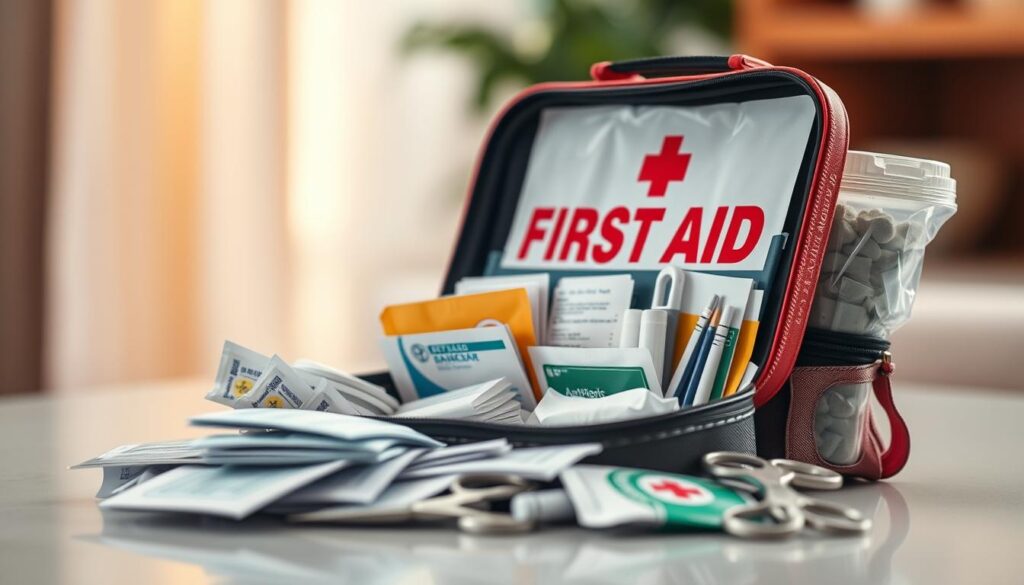
Common injuries include concussions, sprains, and cuts. For concussions, watch for signs like dizziness or confusion. If these signs last, get medical help.
Sprains need the RICE method: Rest, Ice, Compression, and Elevation. This helps them heal faster.
Injury prevention is vital. Make sure play equipment is safe and right for the child’s age. Regular checks can spot hazards.
Teaching kids about safety rules helps prevent injuries. They should know to watch their surroundings and tell an adult about hazards or injuries.
In summary, being ready with first aid and focusing on injury prevention makes play safer for kids.
Creating a Safe Play Environment
A well-designed play area can greatly lower injury risks. It’s not just about removing physical dangers. It also involves making the space feel safe and welcoming for kids.
The physical setup is key. Make sure play gear is sturdy and well-maintained. Also, keep the area around it clear of obstacles and dangers. Using soft flooring, like wood chips or rubber mulch, can help protect kids from falls.
But safety isn’t just about what you can see. It’s also about how kids feel. They need to feel safe and supported while playing. This means creating a space that’s predictable and stable. It should have clear rules and boundaries.
Safety measures are essential in play area design. Install safety gates at entrances and make sure equipment fits the kids using it. Also, post clear signs about the rules and safety tips.
Don’t forget about environmental safety. Good lighting and a clean space are vital. Regular checks help spot and fix any dangers.
By focusing on both physical and emotional safety, caregivers can make a play area that’s great for kids’ growth. This approach ensures a safe and supportive environment for children to thrive.
Community Resources for Safety Play
Community resources are key in promoting safety play. Many organizations and programs help ensure that everyone can play sports safely. This includes kids and adults.
Local sports medicine teams and healthcare providers are very important. They give medical support and teach how to prevent injuries. They also treat injuries when they happen.
Safety education programs are also vital. They teach people about safety rules, the need for proper gear, and how to handle emergencies. This makes play areas safer for everyone.
In summary, community resources are essential for safe play. With help from local sports medicine teams, healthcare providers, and safety education, we can make play safer. This way, people can enjoy sports and play without worrying about getting hurt.
Incorporating Safety Play into Activities
Safety play is more than just avoiding injuries. It’s about building a culture of safety. By adding safety steps to daily play, we can lower injury risks and make play better.
Starting with warm-ups is a key safety step. Warm-ups get muscles and the heart ready, cutting down injury chances. It’s also important to stay hydrated with water before, during, and after play to avoid dehydration.
Listening to your body is critical for safe play. If you’re tired or in pain, take breaks and rest. Remember, “Prevention is better than cure.” Paying attention to your body helps avoid overdoing it and injuries.
Safety experts say adding safety rules to play is key for injury prevention. This means knowing your surroundings, wearing the right safety gear, and following safety rules. Making safety a part of play lets us enjoy activities safely.
“The key to safe play is not just about following rules, but about creating a mindset that prioritizes safety and well-being.”
By using these strategies and focusing on safety, we can have safe and healthy play. Whether it’s sports safety or just playing, adding safety to our daily activities is vital for fun and safety.
The Future of Safety in Play
Looking ahead, innovation will keep improving sports safety. New safety gear, advanced medical care, and education will change how we keep players safe. These changes will make play safer and more fun for everyone.
Technology will play a big role in the future of sports safety. Wearable devices and predictive analytics will help spot and prevent injuries. These tools will make play safer and more enjoyable for all.
It’s important to keep up with the latest in safety play. This way, we can make sure sports safety stays a top concern. We want to provide a safe and healthy place for athletes of all ages to play.