







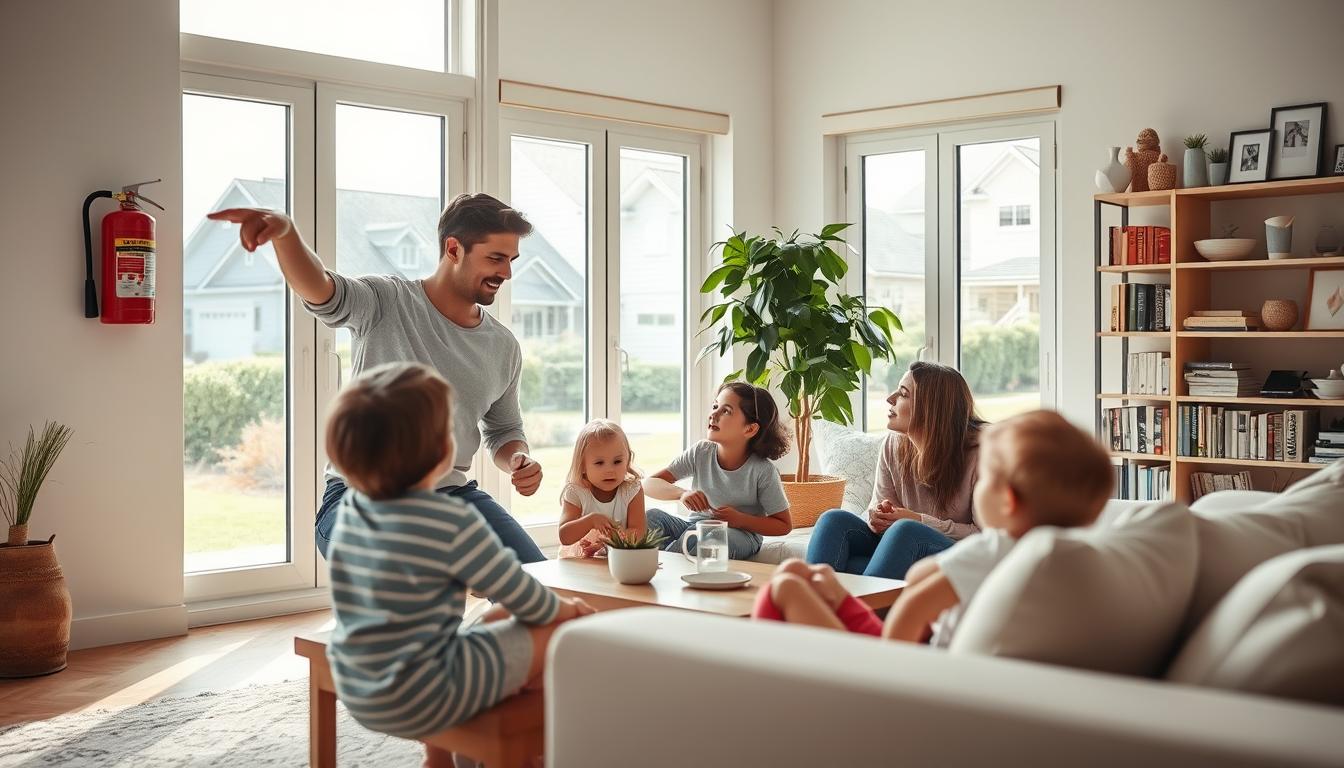
Creating a safe environment at home is key for your family’s well-being. There are many hidden dangers everywhere. It’s important to act early to prevent accidents.
Every year, 33 million people get hurt by products in their homes. But, most of these injuries can be prevented. By making your home safe and teaching your family, you can lower the risk of accidents. This makes your home a safer place for everyone.
Teaching your family about home safety is a big step in keeping them safe. By teaching them to be careful and aware, you help them feel confident in their surroundings.
Understanding the Importance of Home Safety
Every day, doctors see injuries that could have been avoided with better home safety. “Home safety is not just about preventing accidents; it’s about creating a secure environment where families can thrive,” says Dr. Smith, an emergency physician.
Creating a safe environment at home starts with simple steps. Keep emergency numbers on every phone and make sure your house number is visible from the street. This helps emergency responders and prevents confusion during emergencies.
Injury prevention is key to home safety. By identifying and reducing risks, families can lower the chance of accidents. Secure furniture and appliances, install safety gates, and keep hazardous materials out of reach.
Dr. Johnson, another emergency physician, says, “A safe home comes from conscious efforts and constant watchfulness. It’s about making safety a habit and ensuring every family member knows their role in keeping the home safe.”
By understanding the importance of home safety and taking action, families can build a safe and loving home. This environment promotes well-being and happiness for everyone.
Identifying Common Household Hazards
It’s key to spot and fix common household hazards to make your home safe.
Tripping hazards are a big risk in homes. Cluttered paths and stairs can cause serious falls. To avoid this, clean up clutter and keep these areas clear. Remember, “A cluttered space is a hazardous space.” Regular cleaning and organizing can greatly lower accident risks.
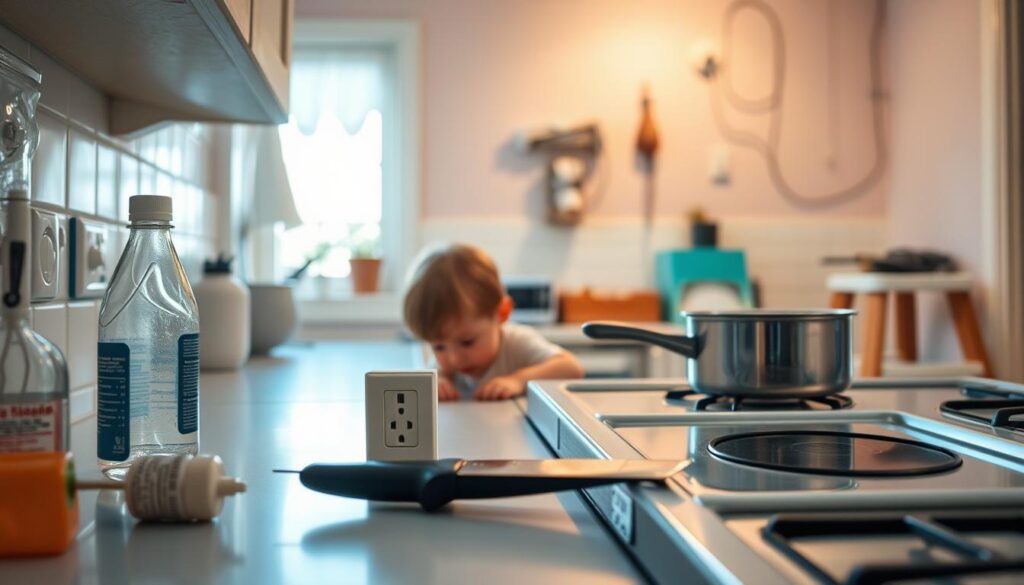
Many homes face tripping hazards. Things like loose rugs, cords, and boxes on the floor can be dangerous. To stop tripping, use double-sided tape on rugs, manage cords with organizers, and put boxes away.
“Safety is not just a precaution, it’s a way of life,” and knowing these hazards is the first step to a safer home.
Electrical Hazards
Electrical hazards are also a big worry. Issues like faulty wiring, overloaded outlets, and damaged appliances can cause shocks or fires. Check your home’s electrical systems and appliances often to spot problems early.
It’s also important to install safety devices like smoke detectors and carbon monoxide detectors on every floor. These can warn you of fires or gas leaks, giving you time to act.
By knowing these common household hazards and taking steps to fix them, you can make your home much safer.
Teaching Fire Safety in the Home
Teaching your family about fire safety can greatly lower fire accident risks. Installing smoke and carbon monoxide detectors on every floor is key. This ensures your home is protected.
But, it’s not just about installing them. You must also check if they work. Change the batteries twice a year, like when you switch your clocks for daylight savings. This simple act keeps your detectors ready.
Creating a fire escape plan is vital for fire prevention and emergency planning. The plan should show at least two exits from each room. Also, pick a spot outside where everyone can meet after escaping.
Practicing this plan often helps everyone know what to do in a fire. It cuts down panic and injury risks. Stay updated with fire safety tips to keep your home safe.
By following these steps, you make your home safer. This gives your family a secure place to live and you peace of mind.
Safe Practices for Kids in the Kitchen
Teaching kids about kitchen safety is key to avoiding accidents. The kitchen has many dangers, like sharp objects and hot surfaces. It’s important for parents to teach their kids how to stay safe.
One easy way to make cooking safer is to change how you use your stove. Turn pot handles inward or use back burners. This helps prevent spills and burns, keeping everyone safe.
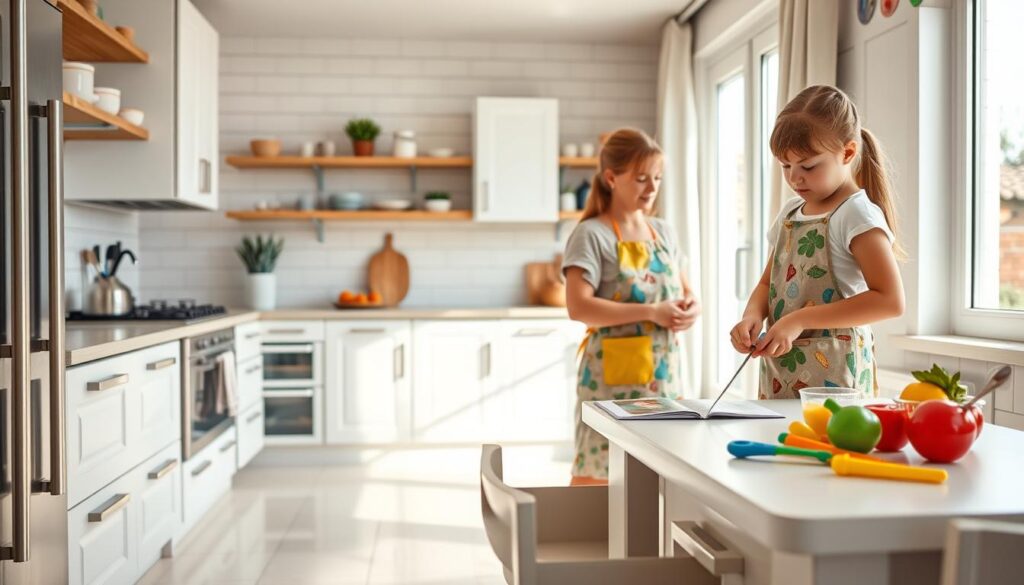
Keeping dangerous items out of reach is also vital for child safety. Store glass, sharp blades, and cleaning supplies high up or in locked cabinets. This way, kids can’t get to them easily.
Watching your kids in the kitchen is another must. Always supervise them, whether they’re helping with cooking or baking. This keeps them safe and teaches them about kitchen safety.
By following these steps, parents can make the kitchen safer for their kids. It’s about being proactive and preventing accidents. This way, kids learn safety habits and grow up in a safe environment.
Water Safety at Home
Keeping your home safe from water accidents is very important, especialy for kids. Drowning and scalding are big dangers. Knowing about these risks helps make your home safer.
Watching your kids closely is key to water safety. Never leave them alone near water, like in a bathtub, hot tub, or pool. Experts say, “Watching them closely is the best way to stop drowning accidents at home.”
“Drowning can happen quickly and quietly, often in a matter of seconds. It’s essential to be vigilant when children are near water.”
Also, make sure your water heater isn’t too hot. Keep it at 125º Fahrenheit or lower to avoid burns. This easy change can greatly lower the chance of burns.
By following these safety steps, you can make your home much safer. It’s all about being ready and taking the right steps to keep everyone safe.
Tips for Emergency Preparedness
When emergencies strike, having a plan can be a lifesaver. Emergency preparedness is more than just a plan. It’s about being ready to act fast.
Start by making sure everyone in your family knows what to do in an emergency. Have a clear escape plan and know where emergency exits are. Pick a spot outside where everyone can meet after escaping.
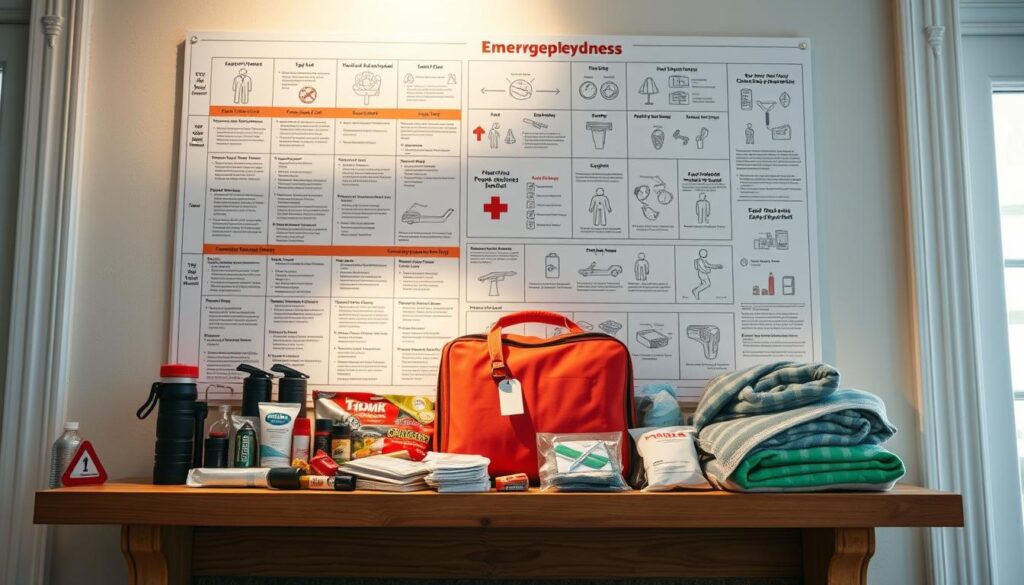
It’s also key to keep important phone numbers close. Make sure every phone has a list of emergency contacts. Include numbers for the fire department, police, doctors, ambulance, and poison control (1-800-222-1222).
Stay informed about local hazards like natural disasters. Tailor your emergency plan to these risks. Regularly practice your plan with your family to ensure everyone knows what to do.
By following these steps, you can greatly improve your family’s safety. Emergency preparedness is an ongoing effort. But with a solid plan, you can face emergencies with confidence.
Understanding Electrical Safety
Home electrical safety means knowing and avoiding electrical dangers. It’s key to stop electrical shocks, fires, and accidents. These can happen because of bad wiring, too much use of circuits, or wrong use of appliances.
To keep homes safe, we must spot and fix common electrical dangers. A big worry is exposed or damaged wiring. It can cause shocks or fires. We should check electrical cords and outlets for damage and make sure they’re installed right.
Another important thing is keeping electrical cords away from kids. Kids might touch or put cords in their mouths, leading to shock. We can stop this by keeping cords tidy and out of kids’ reach, or using cord protectors.
Also, childproofing electrical outlets is a must to avoid accidents. Using outlet covers or tamper-resistant outlets stops kids from putting things in outlets. This lowers the chance of electrical shock.
It’s also smart to watch the electrical load in your home. Avoid overloading outlets with too many gadgets. This stops overheating and cuts down fire risks. Unplugging appliances when not used also cuts down on standby power and electrical dangers.
By knowing and using these safety tips, homeowners can greatly lower the chance of electrical mishaps. It’s all about making a safe space by being proactive and taking steps to avoid electrical dangers.
Teaching First Aid Basics
Learning the basics of first aid is key for family safety. Knowing how to handle injuries and emergencies can prevent more harm.
Having a fully-stocked first aid kit is a must. It should have bandages, antiseptic wipes, pain relievers, and any needed medications.
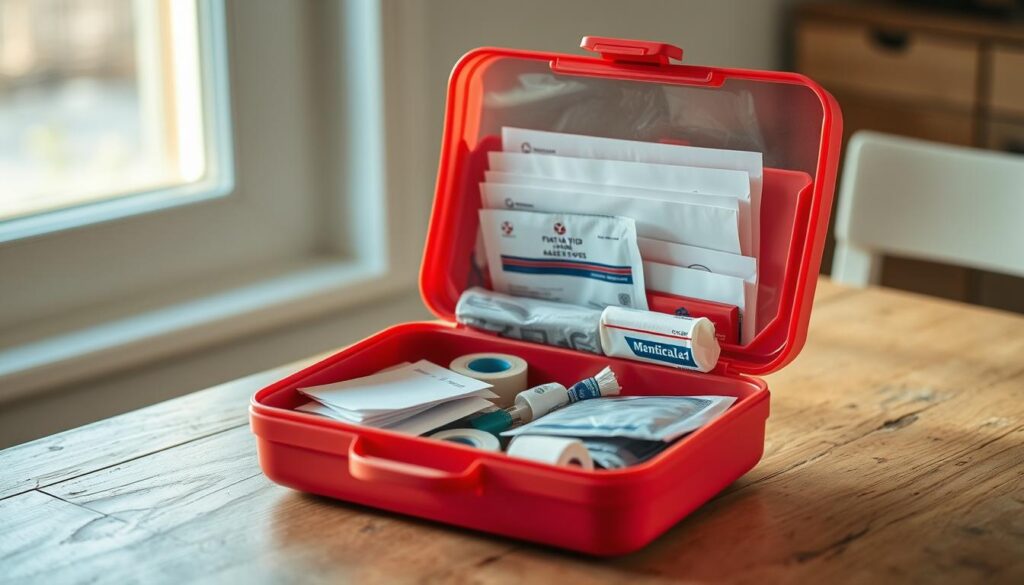
Just having a first aid kit isn’t enough. You also need to know how to use its items. Basic first aid techniques include treating cuts and scrapes, handling burns, and knowing CPR.
Teaching first aid to all family members is vital. It makes everyone ready to act in an emergency. This can save lives.
Safe Outdoor Activities
Spending time outdoors with family is fun, but safety comes first. Activities like swimming or playing on the swing set need careful thought. Each one has its own safety rules.
To keep everyone safe, make sure the area is clean. Clear walkways of toys and tools. This simple step can help avoid accidents.
Pool safety is key. Always remove ladders when not in use. This stops kids from getting in, lowering drowning risks.
Playground equipment, like swing-sets, needs regular checks. Look for rust or sharp edges. Fixing these problems keeps the equipment safe.
Follow these tips to make your outdoor space safer. Whether it’s a barbecue or a day in the yard, safety is essential.
Guidelines for Internet Safety
In today’s digital age, teaching kids about safe internet use is key. The internet is full of learning and fun, but it also has dangers, mainly for kids.
Teaching kids not to share personal info online is vital. This means their name, address, phone number, and more. It’s important to explain why this info is sensitive and how it could be misused.
It’s also important to teach kids to be careful online. They should not talk to strangers, open suspicious links, or download unknown files. If they feel uncomfortable or unsafe, they should tell a trusted adult.
Parents and guardians can help a lot by setting limits and watching what kids do online. Using parental control software and safe search engines can block bad content.
By teaching these guidelines and keeping the lines of communication open, we can keep kids safe online. Teaching them to use the internet wisely from a young age will help them stay safe as they grow up.
Promoting a Safety-First Mindset
Teaching kids to prioritize safety helps them form lasting habits. Parents can teach them to be aware of dangers and avoid accidents. This way, kids learn to stay safe.
Building a safety culture in your family is key. Make safety a big deal every day. Talk about risks and practice safety steps together. Safety drills and safety talks boost a child’s safety awareness.
It’s important to show kids what safety looks like. They learn from what you do. So, always wear seatbelts and use protective gear. Be careful around electrical items.
Explaining why safety rules matter helps kids understand. Tell them how safe actions prevent injuries. This encourages them to be proactive about safety, building a strong safety mindset.
In short, teaching kids about safety is a big job. It needs education, practice, and being a good example. By doing this, parents help their kids grow up to be safe and aware.
Resources for Further Learning
For more information on home safety, check out the Consumer Product Safety Commission and the American Academy of Pediatrics. They offer great safety resources and tips to keep families safe at home.
Visit their websites to learn about the latest safety advice. Look for guides on fire safety, electrical safety, and water safety. This will help you keep your home safe for your family.
You can also find more safety info online and through local programs. These resources focus on making homes safer and preventing accidents. Using these resources can help make your home a safer place for everyone.