








Managing household tasks can be tough, with many family members involved. It’s key to have a system that boosts responsibility and time management. This helps keep your home peaceful.
A good chore system cuts down on stress by sharing tasks fairly. It teaches kids the value of helping out. It also makes them feel responsible.
With a solid system, your family can live in a tidy, calm space. It’s about finding a routine that suits everyone. This way, household tasks get done smoothly.
What is a Chore Chart?
A chore chart is a tool for organizing household tasks. It makes it easier to assign tasks and track progress in the family.
Its main goal is to encourage everyone to work together. It clearly shows who does what, avoiding confusion and double work. It also teaches kids and others the value of helping out at home.
Chore charts come in many forms, from old-school boards to new digital apps. This lets families pick what works best for them. For example, a digital chart is great for tech lovers, while a physical one might suit those who like something they can hold.
In short, a chore chart is a key tool for household organization. It ensures tasks are shared fairly and helps build teamwork and responsibility in the family.
Types of Chore Charts
Chore charts come in many forms to meet different household needs. They help families organize their tasks better. Each type of chart has its own benefits, making it easy to find the right one for your home.
Daily chore charts are perfect for those who like things organized by the day. They help keep your home tidy by breaking tasks into daily steps.
Weekly chore charts are more popular and offer a good balance. They help plan tasks for the week, making it easier to share chores with family members.
Monthly chore charts are for tasks that don’t need to be done often, like deep cleaning. They keep track of less frequent chores, so they don’t get forgotten.
Digital vs. Physical Chore Charts
Choosing between digital chore charts and physical chore charts depends on what you prefer. Digital charts are easy to access and change. They can be shared on phones or computers, making it simple to update chores.
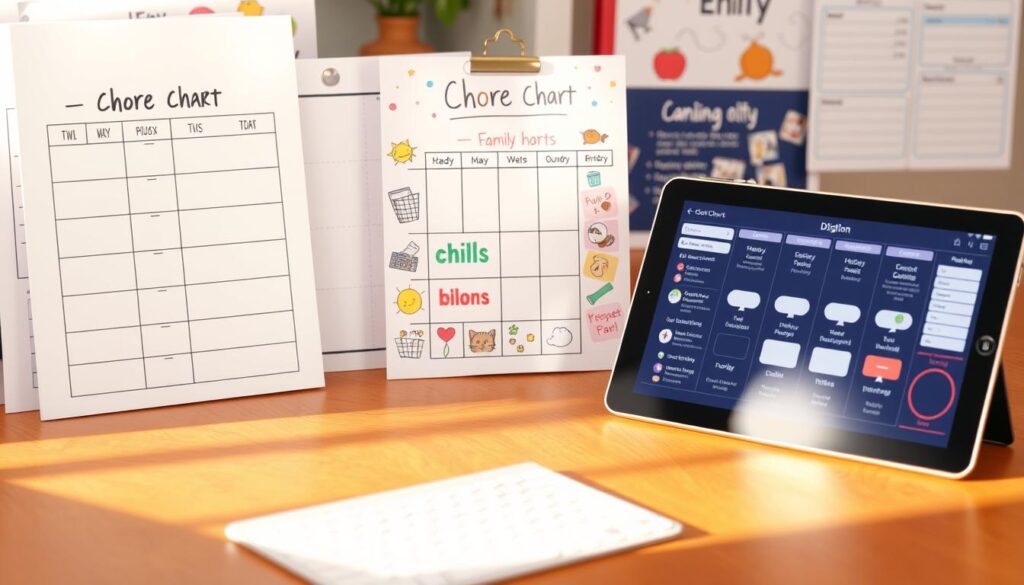
Physical chore charts are tangible and keep tasks in sight. They can be hung in common areas, reminding everyone of their chores. They’re great for families with young kids, as they make chores fun and interactive.
Choosing between digital and physical charts depends on what works for your family. Some families use both, finding a mix that suits their needs best.
Understanding the different types of chore charts helps families make better choices. This way, they can improve their organization and management at home.
Creating a Chore Chart
Making a chore chart is easy and helps manage home tasks better. First, list all the tasks that need regular doing. These include daily, weekly, and monthly chores to keep your home tidy.
Begin by writing down all the tasks. Get your family involved to make sure everyone agrees. Assigning tasks to each person helps share the work and teaches them to be responsible.
When assigning tasks, it’s important to be realistic. Think about each family member’s age and abilities. Young kids can start with simple jobs like picking up toys or helping with laundry.
Older kids and adults can handle more complex tasks, like cleaning the bathroom or mowing the lawn. Always check and change tasks as needed to keep the chart working well for everyone.
Involving Family Members
Getting everyone in the family to help with chores is key to a happy home. When everyone pitches in, the work gets spread out. This creates a team spirit.
To get family members to help, it’s important they know their part and why it matters. Rotating chores keeps things exciting and stops boredom. It lets everyone learn new things and understand how to manage the house better.
Rotating Responsibilities
Switching up chores every few months keeps things interesting. It also shows who’s good at what and who needs to work on skills. It’s a great way to find and grow talents.

By making sure everyone helps and changing up chores, you create a lively chore chart. This teamwork makes the house run better and everyone feels responsible.
Implementing the Chore Chart
To get the most out of a chore chart, it’s essential to integrate it into your daily routine. This means setting a regular schedule for tasks and making sure everyone knows their duties.
Creating routines is key for a chore chart to work well. By assigning tasks daily, weekly, or monthly, your home stays clean and organized.
Keeping an eye on progress is important. Regularly checking the chart helps you track completed tasks and see what needs work.
By watching progress closely, you can tweak the chart as needed. This keeps it effective and meets your household’s needs.
Motivating with Rewards
One great way to get family members to take chores seriously is by using a reward system. By thanking and rewarding them, you make them more eager to help out. This helps a lot in making the household work better.
There are many types of rewards to motivate family members. Young kids might like stickers or small toys. Older kids and adults might enjoy extra screen time, a later bedtime, or a fun outing. Giving them money or an allowance teaches them about money and responsibility.

It’s key to pick rewards that each person likes. For example, if a child loves reading, a new book could be a great reward. If someone enjoys cooking, a cooking class or a new kitchen gadget could be motivating.
Updating the Reward System
To keep rewards working, it’s important to update them often. As family members grow and their interests change, what motivates them might not work anymore. Regularly checking and updating rewards keeps them exciting and motivating.
Updating rewards also means changing them for achievements and milestones. For instance, after doing chores well for a while, you could give bigger or different rewards. This shows their hard work and responsibility.
Overcoming Challenges
Using a chore chart can be tough, mainly because of keeping up with it. Kids might resist, seeing it as unfair or too much work.
Addressing Resistance is key. Explain how helping out is good for everyone. Make the chart fun and let everyone help make it.
Maintaining Consistency
To keep up, establish a routine and stick to it. Use reminders or a schedule for chores. Also, update the chart when the household changes.
Make the chart a daily or weekly habit, like brushing teeth. Soon, doing chores will feel natural.
Flexibility is key. Life changes, and so should your chore chart. Adjust it for work schedule changes or unexpected events.
With these tips, you can beat common chore chart challenges. Keep a routine that helps everyone in the household.
Customizing Your Chore Chart
To get the most out of a chore chart, it’s important to make it fit your family’s needs. Customizing chore charts helps you meet your family’s unique requirements. This makes the chart more useful and fun for everyone.
Getting everyone involved in making the chart is key. This way, everyone knows their tasks and feels responsible. It also helps them feel like they own the chart.

Household needs can change for many reasons, like moving or having new family members. Adapting to household dynamics means updating the chart to keep it useful. This ensures it stays effective for your family.
For example, if you have young kids, tasks should be easy and simple. If you have elderly family members, tasks need to be adjusted for their abilities.
It’s important to check and update your chore chart often. This keeps it relevant to your family’s changing needs. By doing this, you can keep your home tidy and peaceful.
Teaching Life Skills
Using a chore chart helps people learn important life skills like responsibility and teamwork. It’s more than just a way to organize chores. It teaches how to manage time, set priorities, and work together.
One key skill is time management. A chore chart sets tasks for specific times or deadlines. This helps people plan better for their day, week, or month. This skill is vital in both personal and work life.
Teamwork and Accountability
A chore chart also boosts teamwork and accountability in families or homes. When everyone knows their tasks, it creates unity and cooperation. This teamwork environment shows the value of each person’s role and encourages them to take responsibility.
In summary, a chore chart is a great tool for teaching life skills. It covers responsibility, time management, teamwork, and accountability. These skills are essential for people of all ages.
Maintaining the Chore Chart
To keep the chore chart working well, it’s important to update and review it often. This means changing tasks as your household needs change. It also means keeping all family members involved.
Long-Term Success Strategies
For lasting success, adjust the chore chart as your household evolves. This could mean changing who does what or adding new tasks. Holding regular family meetings helps talk through any problems and make needed changes.
By regularly updating and involving everyone, you keep the chore chart effective. It promotes a sense of responsibility and teamwork. This leads to long-term success in managing household chores.