







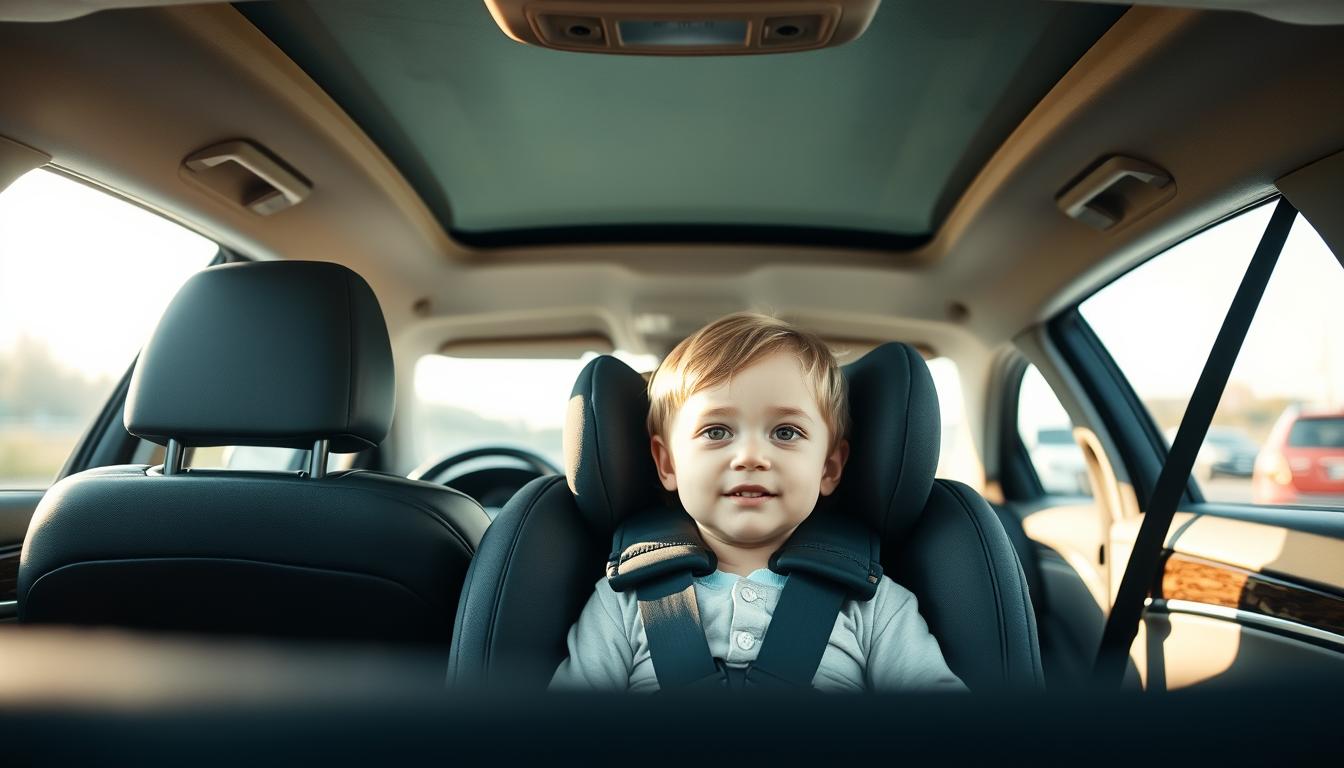
Keeping our children safe in cars is a big concern for parents. Sadly, car crashes are a major cause of death for kids aged 1 to 13.
Using car seats right is a key way to protect kids. When used correctly, these seats can greatly lower the chance of injury or death in accidents.
In this article, we’ll talk about why child safety matters. We’ll also show how to use car seats the right way. By knowing the risks and taking steps to prevent them, we can ensure our kids stay safe while driving.
Understanding Car Safety Basics
Keeping children safe in cars is very important. It starts with knowing the basics of car safety. Car safety seats protect infants and children in crashes. It’s key to pick the right seat and use it right every time.
Choosing the right car seat is a big part of car seat safety tips. The seat must fit your child’s age, weight, and height. The American Academy of Pediatrics says kids should stay in a rear-facing seat until they are at least two years old.
Child safety in vehicles goes beyond just the car seat. How it’s installed and used matters a lot. A seat not installed right can be as dangerous as not using one.
Knowing common mistakes can also help with car seat safety. Mistakes include not tightening the seat enough and not using the tether strap. Keeping the seat clean and clutter-free is also important. Avoiding these mistakes can greatly improve your child’s safety.
Learning about car safety basics is the first step to a safer ride for your child. With the right car seat and proper installation, you can lower the risk of injury in a crash.
Types of Car Seats Available
There are many car seats out there, each with its own purpose. It’s important to know the differences to keep your child safe. Car seats vary in design, age range, and size.
Infant Car Seats
Infant car seats are for newborns and small babies. They are rear-facing and used until the baby grows out of them. These seats are easy to carry, making it simple to move your baby around without waking them.
“The American Academy of Pediatrics says babies should be in rear-facing car seats until they are at least two years old or reach the seat’s weight or height limit.” This rule highlights the importance of rear-facing car seats for baby safety.
Convertible Seats
Convertible car seats can face forward or backward. They grow with your child, lasting longer than infant-only seats. They start as rear-facing seats for babies and switch to forward-facing as the child gets older.

All-in-One car seats are great because they can be used in three ways: rear-facing for babies, forward-facing for toddlers, and as a booster seat for older kids. This makes them a smart choice for parents, as you don’t need to buy different seats for each stage.
When picking a car seat, think about your child’s age, size, and the seat’s safety features. Rear-facing car seats are key for baby safety. Convertible seats and all-in-one seats offer flexibility as your child grows.
“The key to child safety in vehicles is not just the type of car seat, but also its correct installation and use.” Picking the right car seat and using it right is essential for your child’s safety on the road.
Choosing the Right Car Seat for Your Child
Choosing the right car seat for your child is important. It depends on several key factors.
When picking a car seat, think about your child’s age, size, and developmental needs. Different seats are made for different stages of a child’s life.
Infants need rear-facing seats to protect their heads, necks, and spines. As they grow, you’ll move to forward-facing seats and then to booster seats.
It’s important to read both the vehicle owner’s manual and the car safety seat manual. These guides help you install the seat right and keep your child safe.
Also, look at the car seat’s safety features, ease of installation, and comfort. Some seats have special features like impact-absorbing materials and anti-rebound bars for extra safety.
By carefully looking at these factors and following the maker’s instructions, you can pick a car seat that fits your child’s needs. This ensures they are safe on the road.
Installing Car Seats Properly
Installing car seats correctly is key to keeping your child safe on the road. You can use the car’s seat belt or LATCH system. Always read both the car manual and the safety seat manual for the right steps.
To begin, pick the right way to install. If using the seat belt, make sure it’s locked. For LATCH, find the correct points in your car. Check your manuals for exact directions.
When you’re setting it up, make sure the seat is tight. For seat belts, push down on the seat while tightening. For LATCH, tighten the connectors until it’s firm.
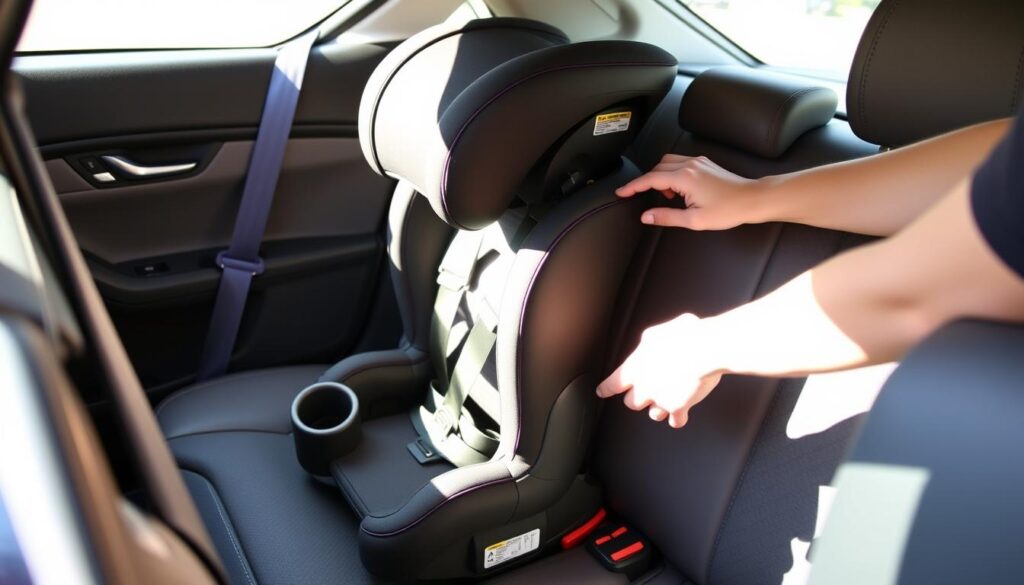
After you’ve installed it, check if the seat moves. It should not move more than an inch in any direction. If it does, you need to tighten it more.
By following these steps and tips, you can make sure your car seat is installed right. This will help keep your child safe.
Positioning the Car Seat in Your Vehicle
Keeping your child safe while driving is more than just a car seat. It’s about positioning it correctly. The American Academy of Pediatrics says all kids under 13 should ride in the back seat. It’s the safest spot in the car.
The middle of the back seat is safest because it’s far from impact zones. “The back seat is the safest place for children to ride,” highlights the need for proper car seat placement.
When you install a car seat, follow the maker’s instructions and make sure it’s tight. Right car seat placement cuts down injury risk in crashes.
Choosing the right spot in your car and following safety rules boosts vehicle safety for your child. Always check your car’s manual for tips on installing and placing car seats.
“The safest place for children to ride is in the back seat,” a statement that shows how important correct car seat positioning is.
Harnessing Your Child Correctly
Securing your child in a car seat is key to their safety. A well-harnessed child is better protected in car accidents. This is why harnessing correctly is so important.
To keep your child safe, the harness must be snug. You should not pinch any extra webbing at the shoulder. If you can, it means the harness is too loose.
Adjusting the Harness
Adjust the harness straps to fit your child well. For a rear-facing seat, the straps should be at or below their shoulders. For a forward-facing seat, they should be at or above the shoulders. The chest clip should be at the center of their chest, even with their armpits.
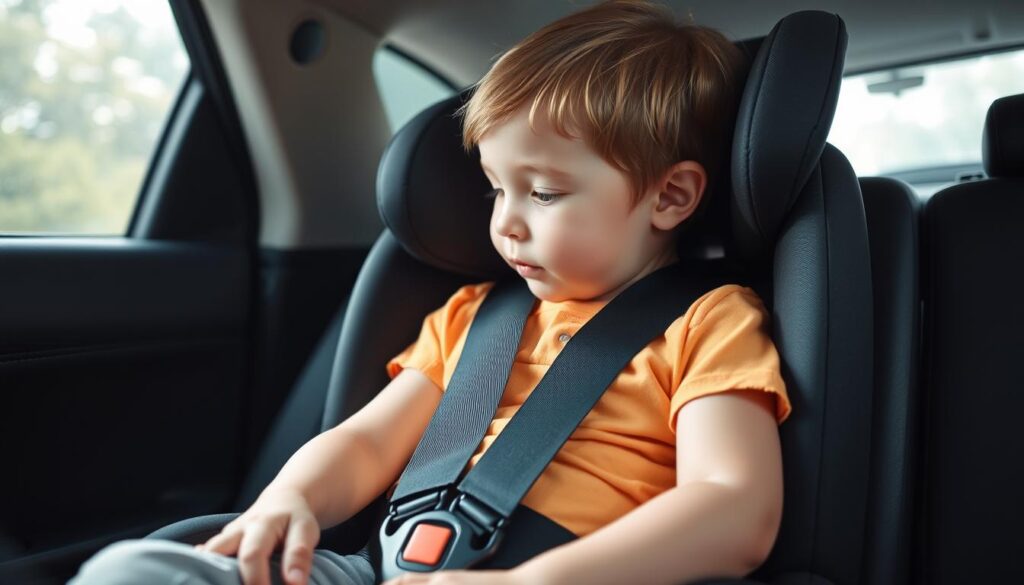
Check the harness for wear and tear often. Always follow the manufacturer’s instructions for adjustments and maintenance. Correctly adjusting and using the harness is vital for your child’s safety.
Remember, a correctly harnessed child is safer during travel.
By following these guidelines, you can ensure your child is safely secured in their car seat. This greatly improves their safety while traveling.
When to Transition to a Booster Seat
As your child grows, it’s important to know when to switch to a booster seat. They usually need a booster seat when they outgrow their forward-facing car seat with a harness.
Signs that your child is ready for a booster seat include reaching the height or weight limit of their current car seat. Always check the manufacturer’s guidelines for your car seat model.
When moving to a booster seat, make sure the vehicle seat belt fits right. The lap belt should be across the upper thighs. The shoulder belt should cross the shoulder and chest, not the neck or face.
Also, think about your child’s maturity level. They should sit correctly in the booster seat without slouching or leaning out of position during the trip.
Switching to a booster seat is a big step, but it’s vital for your child’s safety while traveling. Always follow the booster seat manufacturer’s instructions and your vehicle’s owner’s manual for the best advice.
Ensuring Safety During Travel
Safety is key when traveling, and it begins with a well-installed car seat. It’s not just about having a car seat; it’s about using it right.
Before you hit the road, do a few important checks. First, make sure the car seat is installed as the maker says and is tight in your car. Always check your car’s manual for car seat installation tips, as each car is different.
Next, make sure your child is buckled in right. The harness should be tight, with the chest clip at your child’s armpit. A well-buckled child is safer and more comfy. Also, check the car seat’s expiration date and if it’s been recalled.
Pre-Trip Checks
To boost travel safety, do these pre-trip checks:
- Look over the car seat for damage or wear.
- Make sure the car seat fits your vehicle.
- Practice putting in and taking out the car seat to feel confident.
By doing these steps and focusing on car seat safety checks, you can lower injury risks on trips. Safety is an ongoing effort that needs constant attention and care.
Keeping Up with Safety Recalls
Keeping track of car seat recalls is very important. Registering your car seat with the manufacturer is a key step. It helps you get notified about any safety issues or recalls.
Registering your car seat is easy. You just give your contact info to the manufacturer. They use it only to send recall notices and safety updates. This way, you can keep your child safe on the road.
Why Registering Your Car Seat Matters
Registering your car seat does more than just send you recall notices. It helps manufacturers find and fix safety problems faster. It’s a team effort to make car seats safer for everyone.
It’s also smart to check the manufacturer’s website for updates on your car seat. Many manufacturers send out email newsletters or post on social media. They share important safety info and recall updates.
Staying ahead of safety issues is a great way to protect your child.
In short, keeping up with safety recalls is key to your child’s safety. Registering your car seat and staying informed are simple steps. They help you avoid any safety problems with your car seat.
The Role of Car Seats in Reducing Injuries
Car seats are key in cutting down injuries and deaths in car accidents. They are a must-have for keeping kids safe while driving.
Car seat safety statistics show that kids are 71% less likely to die in a crash with a car seat. This is according to the National Highway Traffic Safety Administration (NHTSA).
Injury reduction is a big plus of using car seats right. They can lower the chance of serious injury by up to 82% for babies and 45% for toddlers. This is what the American Academy of Pediatrics found.
These numbers highlight how vital it is to use car seats and do it right. Making sure the child is in the right spot and the harness is tight is key to safety.
Car seats do more than just protect in crashes. They also teach parents and caregivers about safe travel. This helps build a safer driving culture.
Resources for Car Seat Safety
For more information on car seat safety, check out the National Highway Traffic Safety Administration (NHTSA). They offer detailed guidelines on how to install and use car seats. They also keep you updated on recalls, ensuring your child’s safety on the road.
Other reputable organizations focus on child safety and vehicle rules. They provide insights into car seat safety, helping you make the best choices for your child’s protection.
Using these resources, you can stay current with the latest car seat safety tips. This gives you peace of mind when traveling with your child.