








Keeping your skincare routine healthy starts with gentle washing. Dermatologists say to wash your face twice a day. This keeps it clean and feeling fresh.
Gentle cleansing is key to a good skin care plan. It gets rid of dirt and impurities without taking away your skin‘s natural oils.
Adding gentle cleansing to your daily routine can make your skin healthier and more balanced. This article will show why gentle cleansing is important. It will also give you tips on how to do it right.
The Importance of Gentle Skin Care
Gentle skin care is key to keeping your skin healthy. It’s not just about cleaning off dirt and makeup. It’s also about doing it without taking away your skin’s natural oils.
The skin’s natural barrier protects it from harm. Harsh skin care can damage this barrier. This can cause dryness, irritation, and even acne. So, using a gentle skin care routine is vital.
Choosing the right products is a big part of gentle skin care. You need cleansers that fit your skin type, whether it’s sensitive, dry, oily, or a mix. The importance of skincare is huge. It affects your skin’s health and how it looks.
It’s not just about the products. How you use them matters too. Be gentle when washing your skin. Avoid harsh scrubbing and rub dry instead of patting. These steps help keep your skin’s barrier strong.
In short, adding gentle skin care to your daily routine is a must. It helps keep your skin healthy and strong. By understanding the skincare importance and using gentle methods, you can greatly improve your skin health.
Understanding Your Skin Type
Knowing your skin type is the first step to a good skincare routine. Your skin type is shaped by your genes, the environment, and your lifestyle.
There are four main skin types: normal, dry, oily, and combination. Normal skin is balanced, neither too oily nor too dry. Dry skin feels tight and might look flaky. Oily skin is shiny and has big pores. Combination skin is a mix, oily in some spots and dry in others.
Characteristics of Different Skin Types
Knowing what your skin type is helps you pick the right products. For dry skin, you need moisturizers that keep moisture in. If you have oily skin, choose light, oil-free products to avoid clogged pores.
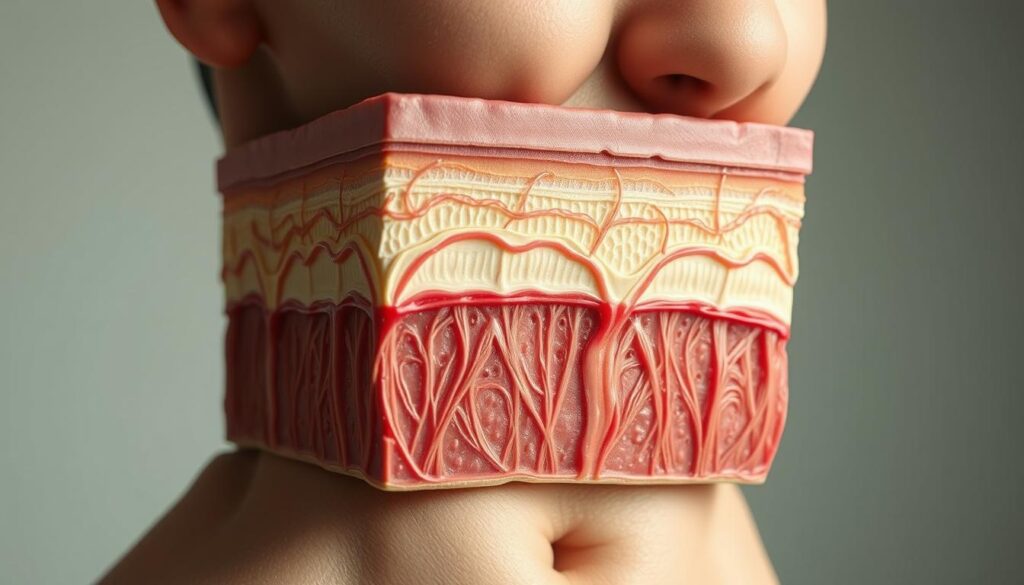
By knowing your skin type, you can choose products that meet your skin’s needs. This makes your skincare routine more effective and keeps your skin healthy.
Remember, your skin type can change due to aging, hormonal changes, or environmental factors. So, check your skin type often and adjust your skincare routine as needed.
Choosing the Right Cleanser
Finding the right cleanser is key to effective gentle cleansing. There are many cleansers out there. It’s important to know what your skin needs.
When picking a cleanser, think about your skin type. If you have dry skin, choose a moisturizing cleanser. It should keep your natural oils. For oily skin, find a cleanser that controls oil but doesn’t dry out your skin.
The ingredients in a cleanser matter a lot. Look for gentle stuff like glycerin and ceramides. They help keep your skin’s barrier strong. Stay away from harsh stuff like sulfates. They can take away your skin’s natural oils.
It’s also important to read product labels carefully. Look for products that say they’re good for your skin type. Check for “dermatologist-tested” or “hypoallergenic” labels. These mean the product is gentle and less likely to irritate your skin.
By picking a cleanser that fits your skin type and needs, you can get gentle cleansing. This keeps your skin healthy and strong.
Techniques for Gentle Cleansing
The secret to great skincare is knowing and using gentle cleansing techniques. These methods are key to keeping your skin healthy and strong.
First, always use lukewarm water when washing your face. Hot water can dry out your skin, causing irritation. Cold water might not get rid of all dirt. Lukewarm water is just right, keeping your skin clean without harming it.
Also, how you massage your cleanser matters. Use circular motions to spread it evenly and boost blood flow. This makes your skin look better. But be gentle, as rough rubbing can hurt your skin.

Don’t use harsh bar soap on your face. It’s too rough. Choose a gentle cleanser made for your skin type. There’s one out there for everyone, whether you have dry, oily, or mixed skin.
By adding these skincare techniques to your daily routine, you’ll get a clean, healthy face. Remember, washing your face should keep it healthy, not harm it.
The Benefits of Facial Cleansing
Facial cleansing is key to any skincare routine. It offers many benefits for your skin’s health. It removes dirt, debris, and excess oil. This helps prevent clogged pores and reduces acne.
Improves Skin Health: Regular cleansing keeps your skin healthy. It removes impurities that can harm your skin. This leads to a clearer and healthier look.
Enhances Skincare Product Effectiveness: Clean skin lets skincare products work better. Serums, moisturizers, and treatments do more when applied to clean skin.
Facial cleansing also keeps your skin’s natural barrier strong. It prevents irritation and sensitivity. This promotes overall skincare benefits.
Adding facial cleansing to your daily routine can greatly improve your skin. It’s a simple yet effective way to keep your skin healthy and vibrant.
Incorporating Exfoliation Wisely
Gentle exfoliation is key to keeping your skin healthy and glowing. It’s important to choose the right products. Exfoliation removes dead skin cells, unclogs pores, and improves skin texture. It’s a vital part of any skincare routine.
Exfoliation done right can be very beneficial. Ingredients like salicylic acid and glycolic acid are great for gently removing dead skin cells. They help renew your skin. Skincare experts say exfoliating regularly can make your skin smoother and brighter.

Choosing the right exfoliating products is critical to avoid harming your skin. It’s important to know your skin type and pick products that match it. For example, sensitive skin needs gentler exfoliants, while thicker skin can handle stronger ones.
Products with alpha-hydroxy acids (AHAs) or beta-hydroxy acids (BHAs) are good for exfoliating. AHAs, like glycolic acid, help remove dead skin cells. BHAs, like salicylic acid, are great for unclogging pores.
“The key to successful exfoliation is consistency and gentleness. Over-exfoliating can lead to irritation and dryness, undermining the benefits of your skincare routine.”
To add exfoliation wisely to your routine, start with a low frequency (once or twice a week). Gradually increase as your skin gets used to it. Always follow the product instructions and watch how your skin reacts.
Moisturizing After Cleansing
Locking in moisture after cleansing is key for healthy, glowing skin. Moisturizing is a big part of your skincare routine. It helps keep your skin hydrated and protects it from the environment.
After you clean your skin, it’s ready to soak up your moisturizer’s active ingredients. It’s the best time to apply a moisturizer that matches your skin type. Whether your skin is dry, oily, or a mix, picking the right moisturizer is essential.
If you have dry skin, choose a moisturizer full of emollients and humectants. These help keep moisture in. For oily skin, a light, oil-free moisturizer is best. It hydrates without clogging pores. If you have combination skin, find a moisturizer that balances hydration without being too heavy.
Adding moisturizing to your daily skincare routine boosts skin hydration. It also helps your skin’s natural barrier. This reduces fine lines and wrinkles, making your skin look smoother and more radiant.
By making moisturizing a regular part of your skincare, you get healthier, more resilient skin. This skin is better prepared to handle daily challenges.
Protecting Your Skin After Cleansing
After you clean your skin, it’s important to protect it from the environment. This step keeps your skin healthy and strong.
Sun Protection is a key part of any skincare routine. UV rays can lead to early aging, dark spots, and even skin cancer. Always use a broad-spectrum sunscreen with at least SPF 30, even on cloudy days.
Wearing protective clothes like hats and sunglasses also helps. They shield your skin from the sun’s harmful rays.
Additional Protective Measures
Protecting your skin from pollution and smoke is also important. Use products rich in antioxidants to fight free radicals that harm skin cells.
Keeping a consistent skincare routine is essential for healthy skin. Cleanse, moisturize, and protect your skin to keep it looking vibrant and healthy.
Make skin protection a daily habit. This way, you’ll enjoy long-term benefits for your skin’s health and look.
Avoiding Common Cleansing Mistakes
Many people unknowingly harm their skincare routines with common cleansing mistakes. These errors can cause skin irritation, dryness, and a dull look. It’s key to know and steer clear of these mistakes to keep your skin healthy and bright.
One big cleansing mistake is using harsh products that take away your skin’s natural oils. This can make your skin dry and irritated, worse for those with sensitive skin. It’s important to pick a gentle cleanser that matches your skin type.
Over-exfoliating is another mistake that can harm your skin. Exfoliating is good for removing dead skin cells, but doing it too much can irritate and dry out your skin. It’s best to exfoliate 1-2 times a week, based on your skin type.
Not rinsing your face well is another common error. Not getting rid of all cleanser can block pores and irritate your skin. Make sure to rinse your face well with lukewarm water and gently pat it dry with a clean towel.
Knowing these cleansing mistakes and avoiding them can help you keep a gentle cleansing routine. This routine will help your skin stay healthy and glow. Remember, taking care of your skin is not just about the products you use, but how you use them too.
Refreshing Your Routine with Natural Products
Revitalize your skincare with natural products. They are gentle and nourishing. Adding them to your daily routine can greatly improve your skin’s health.
Natural products have many benefits. They reduce irritation and nourish your skin. Look for ingredients like aloe vera, green tea, and chamomile. These are known for soothing and reducing inflammation.

To refresh your skincare routine, start with a patch test. This ensures you’re not allergic to new ingredients. Also, gradually introduce new products to avoid overwhelming your skin.
It’s also important to read labels carefully. Choose products without harsh chemicals, artificial fragrances, and dyes. This keeps your routine gentle and effective.
By using natural products and being careful with their ingredients, you can refresh your skincare. This leads to healthy, glowing skin.
When to Consult a Dermatologist
If you’re dealing with ongoing skin problems, it’s time to see a dermatologist. Issues like persistent acne, skin sensitivity, or unusual skin changes are signs you need help. A dermatologist can offer personalized skincare advice.
Experts say you should see a dermatologist if your skin problems don’t get better with over-the-counter treatments. They can give you specific advice and help you create a skincare plan that works for you.
Seeing a dermatologist helps you understand your skin better. They can recommend the best treatments and products for you. If you’re unsure about your skin or need expert advice, don’t wait to make an appointment.