






Maintaining overall health and well-being is key, and essential vitamins are vital for this.
Vitamins are substances needed for normal cell function, growth, and development. There are 13 of these nutrients essential for the body to work right. They help with various bodily functions and overall nutrition.
Knowing the importance of these nutrients helps people make better diet and lifestyle choices. This can improve their vitamin benefits and overall quality of life.
Understanding Vitamins and Their Importance
Vitamins are key to a healthy life. They are divided into two main types: fat-soluble and water-soluble. Fat-soluble vitamins like A, D, E, and K are stored in the liver and muscles. This means they stay longer in the body but can be toxic if taken too much.
Water-soluble vitamins include C and the B vitamins. They are not stored in the body and must be eaten daily. This makes them safer but can lead to deficiency if not enough is eaten. Vitamins are important because they help with energy and keeping us healthy.

Vitamins do many important jobs for our health. For example, vitamin D is essential for strong bones, and vitamin B12 helps make red blood cells. Knowing how they work helps us make better food choices and use supplements wisely.
In short, vitamins are essential for our health. It’s important to get enough through food or supplements to stay healthy and well.
The Role of Vitamins in Maintaining Health
Vitamins are key to keeping us healthy. They help our bodies work right. They support healthy teeth, bones, and skin.
Eating well is important for getting enough vitamins. They help our cells turn food into energy.
Vitamins and Metabolism
Vitamins are important for how our body works. They help turn food into energy. B vitamins, for example, are vital for staying active.

Adding different vitamins to our diet is good for us. It boosts our nutrition and health. But, we need the right amount. Too little or too much can harm us.
Eating a balanced diet with lots of vitamins is best. It helps our body get what it needs. This keeps us healthy and well.
Essential Vitamins for Daily Wellness
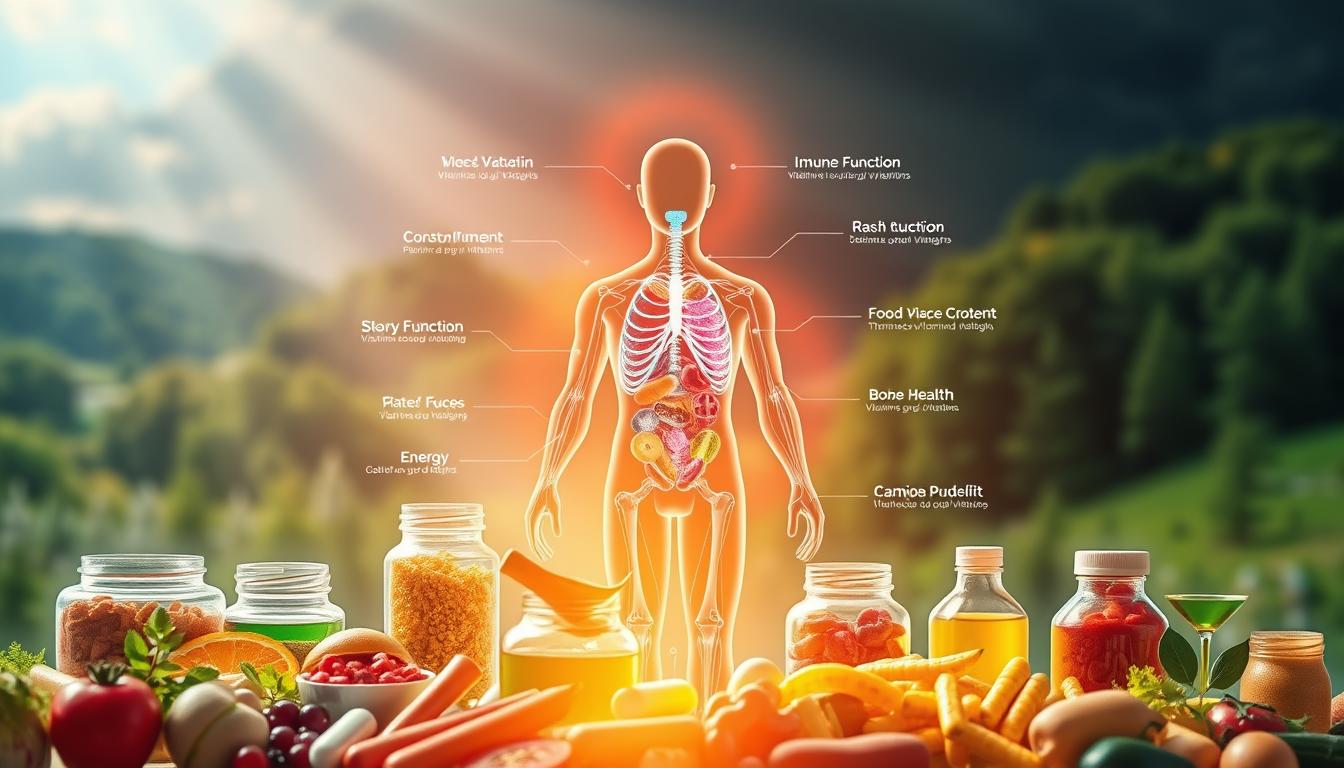
To stay healthy, knowing about essential vitamins is key. Our bodies need 13 vitamins to work right. Each vitamin has a special job in keeping us well.
The 13 essential vitamins include A, C, D, E, K, and the B vitamins. Vitamin A is important for our eyes, immune system, and skin. You can find it in sweet potatoes, carrots, and dark greens.
Vitamin C is vital for our immune system and fights off free radicals. You can get it from citrus fruits, strawberries, and bell peppers. Vitamin D helps our bones and we get it from sunlight, fortified foods, and supplements.

The B vitamins are important for energy, nerves, and heart health. They include thiamine, riboflavin, niacin, and more. You can find them in whole grains, lean meats, and leafy greens.
“A well-balanced diet that includes a variety of whole foods can provide adequate amounts of essential vitamins, supporting overall health and wellness.”
Vitamin E and vitamin K are also important. Vitamin E protects cells, while vitamin K helps with blood clotting and bones. You can find vitamin E in nuts, seeds, and oils. Vitamin K is in leafy greens and fermented foods.
Eating a variety of vitamin-rich foods is important for daily wellness. A balanced diet with whole foods ensures you get all the vitamins your body needs.
How Vitamins Affect Mood and Mental Health
Certain vitamins have a big impact on mood and mental health. Vitamins like vitamin D and B vitamins are key for good mental health. Studies show that not having enough of these vitamins can cause depression and other mental problems.
Vitamin D, known as the “sunshine vitamin,” is important for mood. Not enough vitamin D can lead to depression and seasonal affective disorder. Also, B vitamins, like B6, B9 (folate), and B12, are vital for brain health. They help with mood and thinking.

Vitamins affect mental health in complex ways. Vitamin D receptors are in parts of the brain that control mood. B vitamins help make neurotransmitters like serotonin and dopamine, which are key for feeling good.
Eating foods rich in these vitamins or taking supplements is important for mental health. Vitamin D is in fatty fish, egg yolks, and fortified dairy. B vitamins are in meat, fish, eggs, and leafy greens.
In short, vitamins are essential for mental health and mood. Knowing how important they are and making sure we get enough can help prevent mental health issues. It also helps us feel better overall.
Foods High in Vitamins
Eating a variety of vitamin-rich foods boosts your nutrition and health. A diet full of vitamins is key for keeping your body working right. It helps with energy and keeping you healthy.
Many foods are packed with vitamins. Fruits and vegetables are at the top, with spinach and kale being high in vitamin A. Fortified dairy products are full of vitamin D, and fatty fish like salmon are also good sources.
Whole grains are another great source of vitamins, like B vitamins. Foods like brown rice, quinoa, and whole-wheat bread are good for your heart and energy. Lean meats, such as poultry and pork, also have lots of vitamins, including B vitamins.
It’s easy to add these foods to your diet. Start by eating more colorful fruits and veggies. Choose whole grains over refined ones and include lean proteins. Also, don’t forget fortified foods like cereals and dairy to up your vitamin intake.
Keeping a healthy diet means eating a variety of foods. Focus on whole, nutrient-dense foods. This way, you make sure your body gets all the vitamins and nutrients it needs.
Vitamin Deficiencies: Signs and Symptoms
Knowing the signs of vitamin deficiencies is key to staying healthy. These deficiencies can cause everything from mild fatigue to serious health problems. The symptoms depend on which vitamin is missing.
Identifying Vitamin Deficiencies
Lack of Vitamin B12 is common and can make you feel tired, weak, and affect your nerves. This is often seen in vegetarians and vegans because B12 is mainly found in animal products.
Vitamin C deficiency can cause slow healing of wounds, bleeding gums, and more infections. Sailors used to get scurvy from this lack of Vitamin C on long trips.
Vitamin D deficiency is common, mainly in places with little sunlight. It can lead to bone pain, muscle weakness, and higher risk of osteoporosis. Keeping Vitamin D levels up is vital for strong bones and health.
Deficiencies in Vitamin A and Vitamin E can cause night blindness and nerve damage, respectively. Eating a balanced diet with various foods helps avoid these deficiencies.
“Nutrition is not just about eating food; it’s about nourishing your body with the right balance of vitamins and minerals to maintain optimal health.”
Addressing Vitamin Deficiencies
To tackle vitamin deficiencies, first spot the signs and symptoms. If you’re always tired, wounds heal slowly, or have other deficiency symptoms, see a doctor. They can suggest diet changes or supplements to fix the issue.
By understanding and tackling vitamin deficiencies, we can actively keep our health and wellness in check.
Supplementing with Vitamins: When and Why
Many people use vitamin supplements to fill diet gaps. It’s key to know when they’re really needed. Supplements are great for those who can’t get enough vitamins from food alone.
Pregnant women often need more folic acid for their baby’s health. People with conditions like celiac disease or Crohn’s disease might also need supplements due to poor nutrient absorption.
Choosing the right vitamin supplements is vital. Look for products from trusted makers. Make sure they’ve been tested by groups like the National Science Foundation or the International Society for Sports Nutrition.
Before starting supplements, always talk to a healthcare expert. They can tell if you really need them and how much to take. This advice is important because everyone’s nutrition and health and wellness needs are different.
In summary, vitamin supplements can be helpful for health. But, it’s important to understand their benefits and risks. By making smart choices and getting advice from doctors, people can use supplements to improve their health and wellness.
Misinformation About Vitamins
Sorting out true facts from false claims about vitamins is key. The internet and social media spread vitamin benefits and risks fast.
Many think taking lots of vitamins is safe because they’re natural. But, too much of some vitamins can harm your health. For example, too much vitamin A can cause headaches and dizziness. Also, too much vitamin B6 can damage nerves.
It’s wrong to think vitamins can cure or prevent diseases alone. Nutrition experts say vitamins should add to, not replace, a balanced diet.
Getting information from trusted sources is vital to avoid misinformation. Health experts and reliable health groups offer accurate vitamin info.
Knowing these myths and staying informed helps people make better health choices. This way, they can improve their nutrition and well-being.
Tips for Incorporating More Vitamins Into Your Diet
Eating a variety of foods rich in vitamins is key to a healthy diet. Focus on fruits, vegetables, whole grains, lean proteins, and healthy fats. These foods are packed with vitamins your body needs.
How you cook your food matters too. Steaming or stir-frying helps keep vitamins in your food. But overcooking can make you lose these important nutrients. Paying attention to your cooking methods can greatly improve your nutrition.
Supplements can also help if you’re not getting enough vitamins from food. If you’re having trouble getting enough, talk to a healthcare professional. They can advise on vitamin supplements. By choosing wisely what you eat and considering supplements, you can boost your health and wellbeing.