







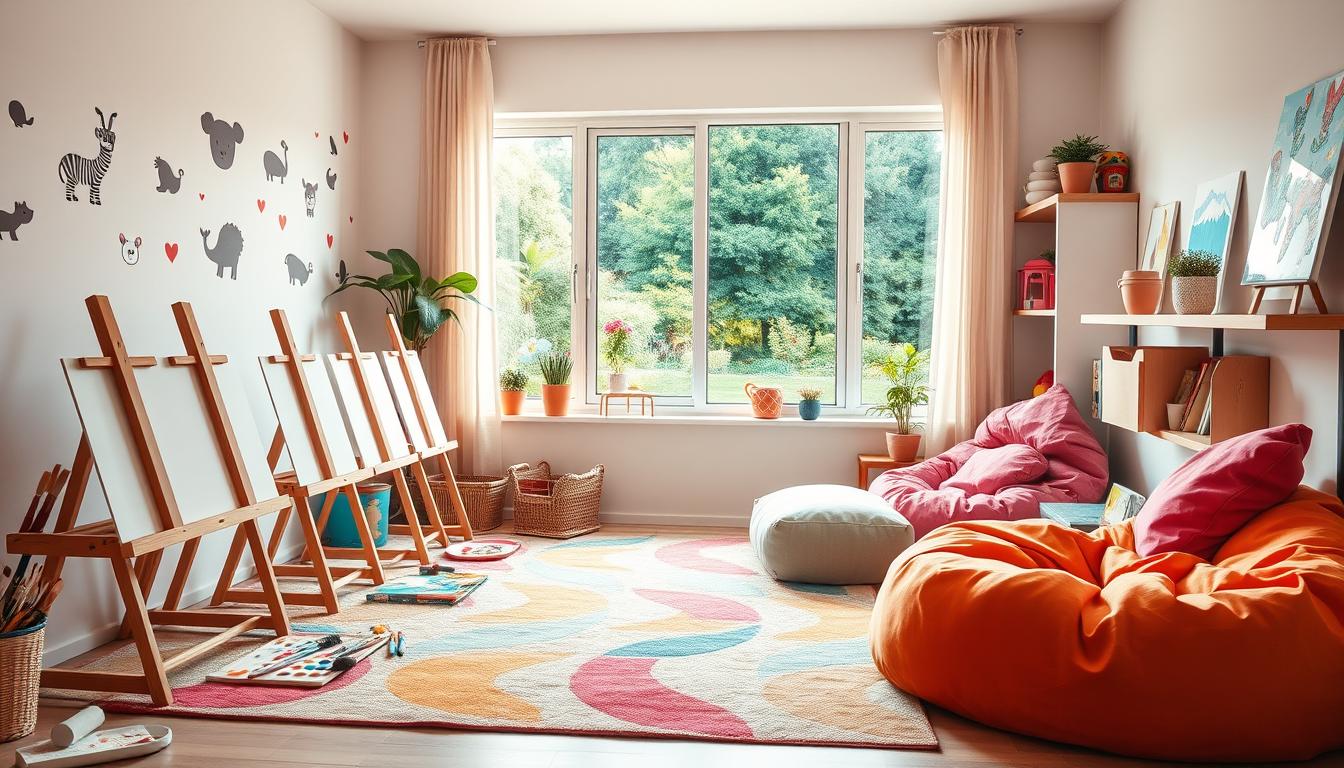
Creating a special art space for your kids can really help them grow creatively. An art corner is more than just a spot; it’s a place where dreams come to life.
By setting aside a part of a room for creative activities, you give your kids a chance to show their talents through kids’ art. This not only improves their art skills but also makes them more confident and creative.
In this article, we’ll look at the key steps to setting up an art corner. We’ll cover everything from picking the best spot to keeping the area tidy, making sure it stays a place for creative activities.
Why You Need an Art Corner in Your Home
An art corner is more than a spot; it sparks creativity and self-expression. It helps kids explore their imagination and grow their artistic skills.
One key benefit of an art corner is boosting creativity in kids. It gives them a space to try out different materials and styles. This helps them find their unique voice.
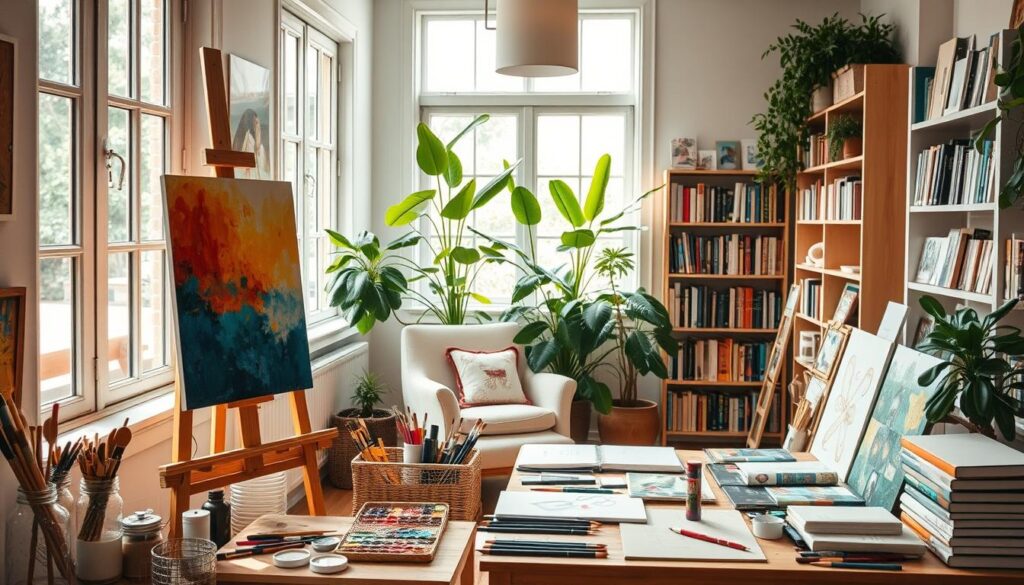
An art corner offers a structured environment for kids to create freely. This freedom boosts problem-solving skills and confidence in trying new things.
Also, an art corner makes it easy for parents to support their kids’ creativity at home. It becomes a place where the whole family can create together.
Adding an art corner to your home does more than just create a space. It nurtures kids’ creativity and gives them a valuable skill for life.
Choosing the Right Location for Your Art Corner
Finding the perfect spot for your art corner can really boost your creativity. The right space should inspire you and help you work better. It makes your artistic journey more enjoyable.
When choosing an art corner location, think about the room’s layout. A spot that’s too far away might feel lonely. But a place that’s too busy can be distracting. Balance is key to a creative space.
Lighting is a big deal in art space setup. Natural light is the best for your work. Try to place your art corner near a window for daylight. But make sure the sun doesn’t glare on your work.
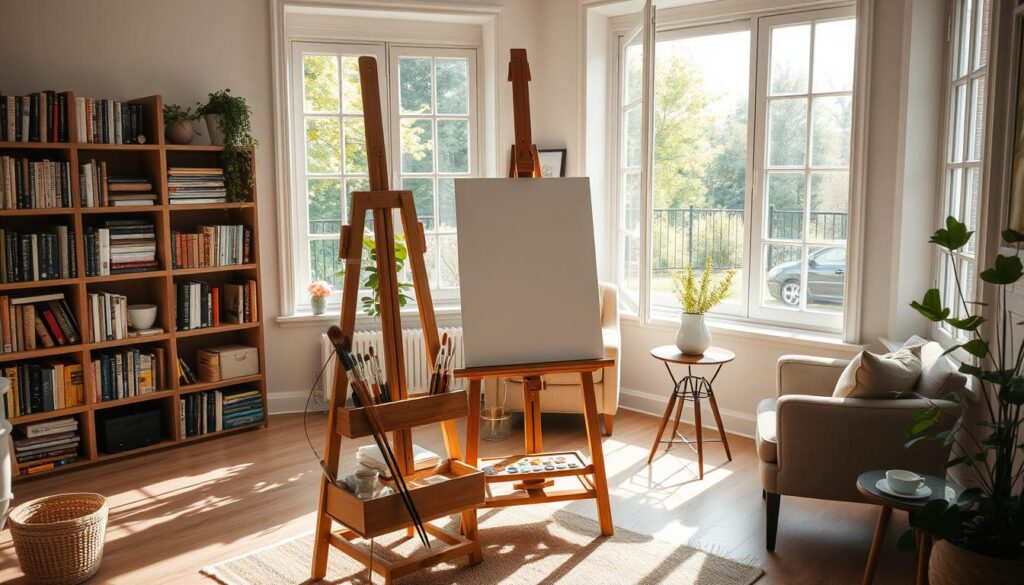
Getting to your art corner should be easy. It should be close to where you keep your art supplies. This keeps your space tidy and helps you work better.
Think about how close your art corner is to other parts of your home. You want it quiet but not too far away. Being too close to busy areas can be distracting. Finding the right spot helps you stay focused and creative.
In short, choosing the right location for your art corner takes thought. You need to consider lighting, how easy it is to get to, and how it fits into your home. By picking the right spot, you can make an art space that’s both useful and inspiring.
Essential Supplies for Your Art Corner
The right art supplies can spark creativity in kids. It turns the art corner into a place for self-expression. To make it welcoming, you need a variety of kids’ art materials.
Must-haves include paints, colored pencils, markers, crayons, and sketchbooks. Having many options lets kids try new things. For example, washable paints and markers are great for little ones. Older kids might like pastels or watercolors.
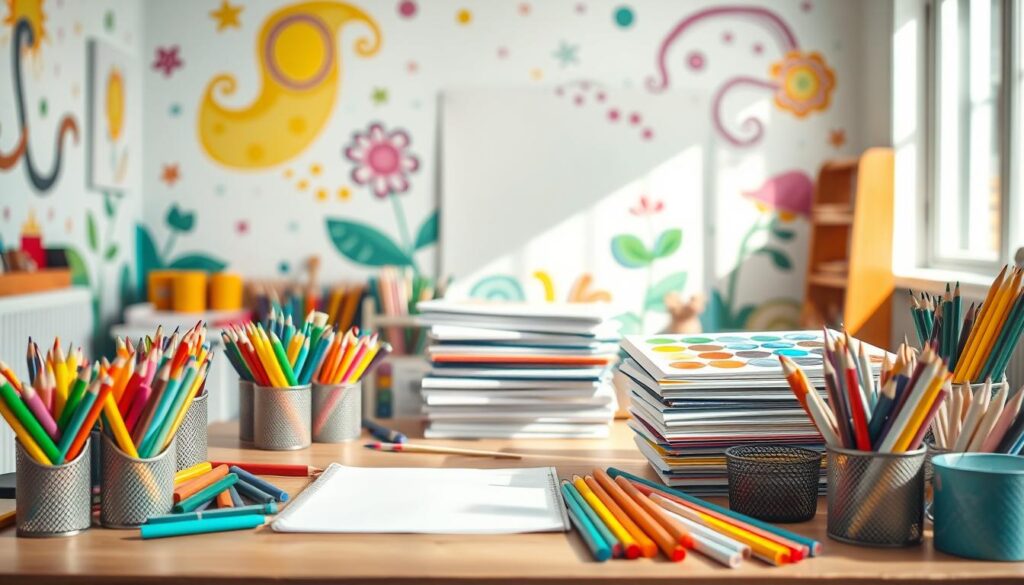
After getting the art supplies, organize them well. This makes it easy for kids to find what they need. Use bins, baskets, and shelves to keep things tidy.
Label each container so kids know what’s inside. This makes it easy for them to find what they need. You can also use dividers to group similar items, like painting supplies.
Good art corner organization keeps it clean and teaches kids to be responsible. They learn to put things back after use.
Designing Your Art Corner Aesthetically
Designing your art corner with aesthetics in mind can make your art-making experience better. An aesthetically pleasing art corner is more than just looking good. It’s about creating a space that inspires creativity and helps you work better.
A key element in designing your art corner is adding decorative elements that show your personal style. This can include artwork, sculptures, or collectibles that make your space unique. Also, using colorful storage solutions keeps your supplies organized and adds to the room’s look.
The layout of your art corner design is very important. You want a layout that lets you move easily between different areas. Think about how the home decor around you can be part of your art corner. For example, a cozy reading nook or a shelf for your favorite art pieces can make the space feel more welcoming.
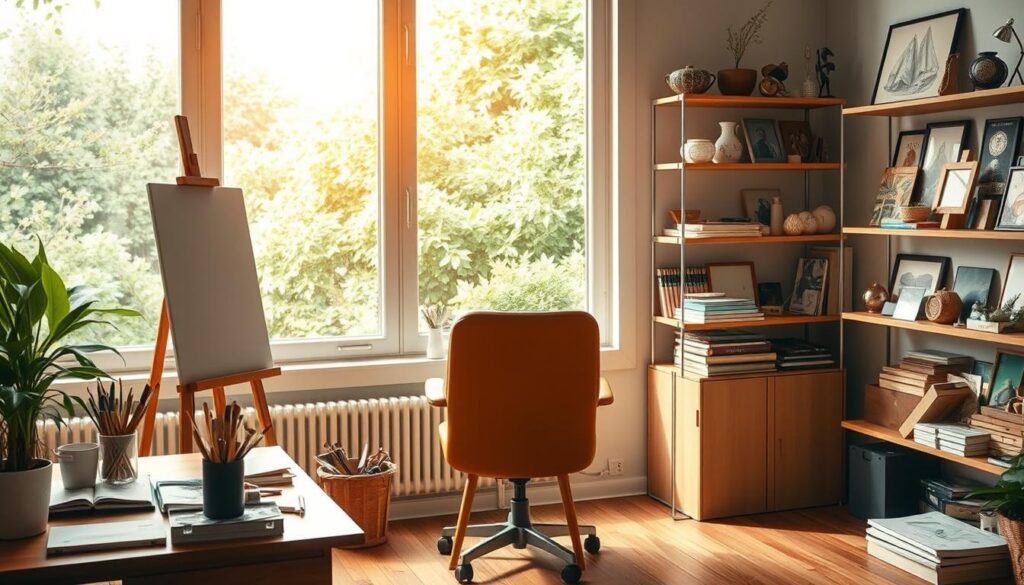
Creating an aesthetic art space means balancing function with beauty. Make sure your workspace is well-lit for your art activities. Adding plants or natural elements can also make your art corner a calming place to be.
In the end, your art corner’s design should show off your unique taste and style. By mixing function with beauty, you can make a space that inspires your creativity and adds beauty to your home decor.
Creating a Functional Workspace
To reach your artistic peak, setting up a good workspace is key. A tidy workspace boosts your productivity and sparks creativity.
A sturdy and comfy workspace is the base of a great art space. You’ll need a table or desk big enough for your projects and good lighting. Proper lighting is essential for quality work and comfort.
Keeping your art corner organized is also important. Use drawers, shelves, and cabinets for storage. Labeling your storage helps you find what you need quickly.
Optimizing Your Workspace
Think about your workflow to optimize your space. If you switch art supplies often, keep them close to save time and avoid mess.
Comfortable seating is also vital. A good chair helps you stay focused and work longer without getting tired.
By paying attention to these details, you’ll have a workspace that boosts creativity and makes art-making more fun and efficient.
Incorporating Technology in Your Art Corner
The art corner is getting a modern update with digital art tools. Technology is changing how we make art and giving kids new ways to show their creativity.
Digital art tools and software make art more fun and interactive. For example, digital drawing tablets let kids make art that’s easy to edit and share.
Software applications for digital art offer cool features. They have brushes that feel like real art and advanced editing tools. These help kids try out new techniques and styles, boosting their creativity and imagination.
Adding technology to the art corner is more than just using new tools. It’s about how these tools improve the creative process. By mixing traditional art with digital tools, kids learn to make art in new and exciting ways.
Technology also helps kids share their art and get feedback. They can post their digital art online, get comments, and see what others are making. This builds a community and keeps kids inspired to keep creating.
Inspiring Art Corner Ideas from Popular Artists
Looking into the studios of famous artists can spark our own creativity. By seeing how they set up their spaces, we learn how to create a place that boosts art inspiration and creativity.
Frida Kahlo’s studio is a perfect example. It shows how art and personal history can come together. Her colorful space, filled with Mexican folk art, can inspire kids’ art activities that are both fun and culturally rich.
Andy Warhol’s studio is another great example. It’s full of different materials and new ways to make art. Warhol’s bold approach can push kids to try out various artist ideas and mediums, like painting and printmaking.
“The main thing is to be moved, to love, to hope, to tremble, to live.” – Auguste Rodin
This quote captures the heart of an art corner. It’s not just a place to work, but a space for creativity and self-expression. Adding things that spark the imagination can help kids love art for life.
To make your art corner inspiring, fill it with lots of art supplies. Think paints, canvases, sketchbooks, and craft stuff. This way, you give your kids the chance to explore their artistic side and enjoy kids’ art activities that really mean something.
Hosting Art Time Events in Your Space
Hosting art events in your art corner can spark creativity in everyone. It turns your home into a creative hub, bringing people together.
Setting up art workshops and kids’ art activities is a fun way to bond with family and neighbors. You can offer painting classes or sculpture workshops for all ages and skill levels.
To make your art corner welcoming, think about its layout and comfort. Make sure there’s enough seating, good lighting, and storage for art supplies. This will attract both participants and onlookers.
Inspiring art corner ideas come from famous artists’ studios. They often have lots of natural light, cozy seating, and displays of their work. Adding these features to your space can spark creativity.
Making Your Art Corner Event-Ready
To host great art time events, prepare your art corner well. Set up the space for guests, have various art supplies ready, and plan your activities or workshops.
When planning kids’ art activities, think about the age and skill of your guests. Young kids might enjoy simple, mess-free projects. Older kids and adults might prefer more challenging activities like painting or pottery.
By creating a warm and engaging atmosphere, your art corner will become a favorite spot for art events and activities. It will be a place where creativity and self-expression are valued.
Maintaining Your Art Corner Over Time
To keep your art corner lively and creative for kids, regular upkeep is key. It’s important to organize the space well. This makes sure supplies are easy to find and the area stays tidy.
Setting up a cleaning routine is a good idea. Encourage kids to clean up after each art session. This teaches them responsibility and keeps the art corner looking great.
Use bins, baskets, or shelves to organize supplies. Labeling these spots helps kids find what they need quickly. It also makes them feel more independent in their art projects.
Also, check and update the art supplies and materials in the corner now and then. Adding new items or techniques can spark kids’ interest in art again. It keeps their creativity flowing.
By following these tips, your art corner will stay a place where kids love to create. It will be a space that inspires them for a long time.