







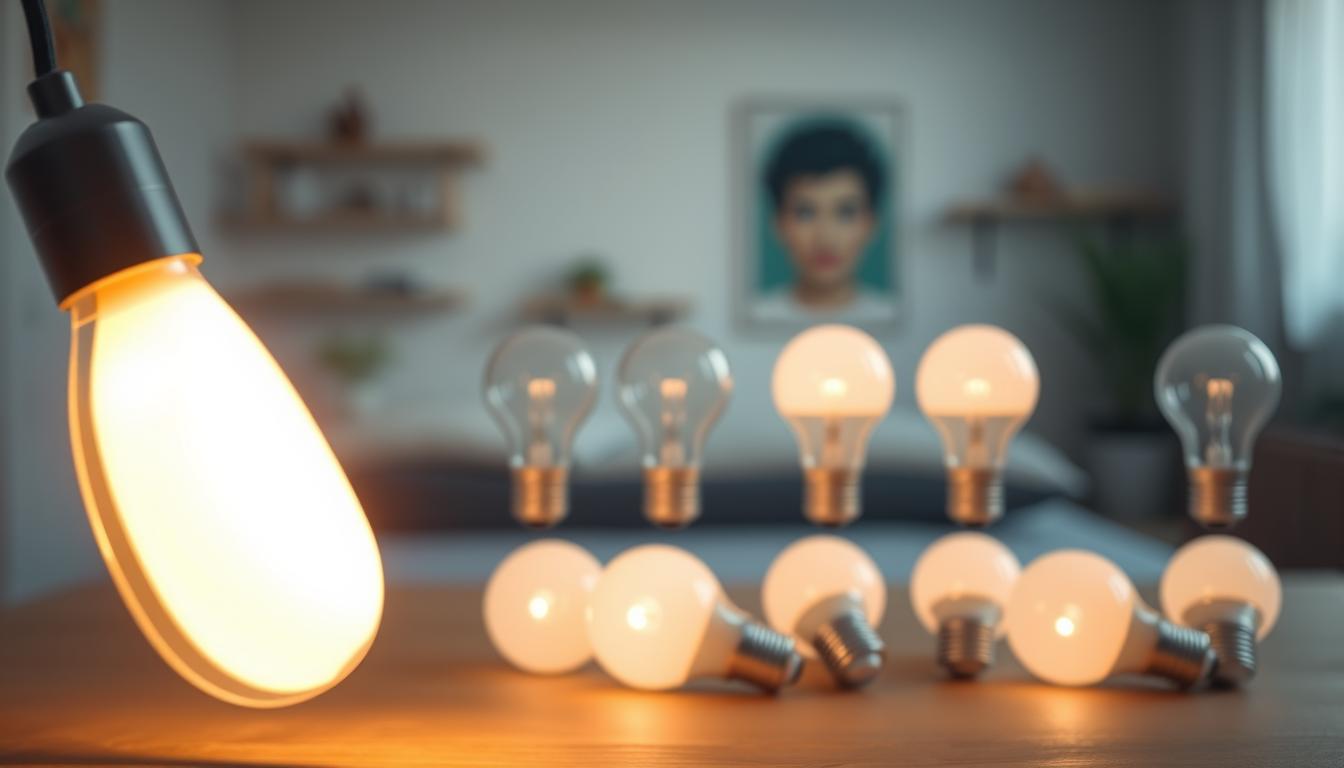
Turning off lights when not in use is a simple yet effective way to promote energy efficiency in our daily lives. The type of light bulb used and the cost of electricity play significant roles in determining the cost effectiveness of this practice.
Different types of light bulbs have varying energy consumption rates. For instance, LED bulbs are known for their energy-saving capabilities compared to traditional incandescent bulbs. By understanding the energy consumption patterns of different bulbs, individuals can make informed decisions to reduce their energy usage.
By adopting the habit of turning off lights when not needed, households and businesses can contribute to a more sustainable environment while also lowering their electricity bills.
The Importance of Energy Saving in Everyday Life
Energy saving is key in our daily lives. It helps the environment and our economy. Energy conservation is more than just saving money; it’s about being sustainable.
Turning off lights when not needed is a big step for eco-friendly people. It’s a simple way to cut down on energy use. This supports sustainability in our daily life.
Energy-saving habits lead to a greener lifestyle. For example, using less energy means less pollution. This helps fight climate change.
Energy saving also saves money. Lower energy use means lower bills. This is vital when energy costs are high and money is tight.
In short, making energy-saving a part of our daily life is vital. It helps us achieve sustainability and supports energy conservation. Simple changes can make a big difference for our future.
Simple Ways to Save Energy at Home
There are easy ways to cut down on energy use at home. One great energy efficiency tip is to switch to smart lighting. Smart bulbs and sensors can turn off lights when not needed or adjust brightness based on the time.
Changing your daily habits is another practical tip. Turn off lights, TVs, and appliances when not in use. Being aware of your energy use and trying to use less can save a lot over time.
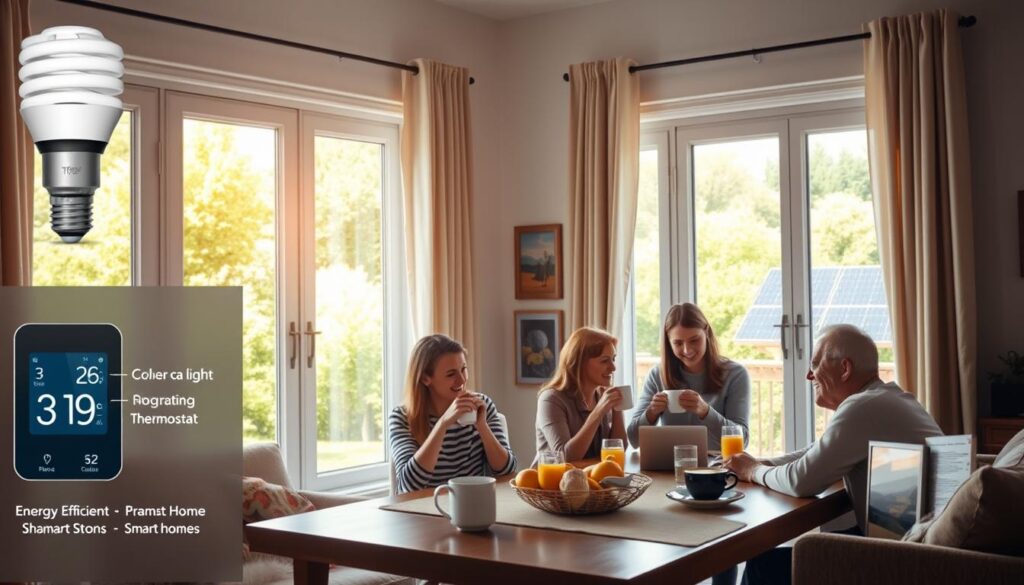
Keeping your home energy-efficient is simple. Use energy-saving appliances and make sure your home is well-insulated. Also, using power strips for electronics can stop standby power use.
By following these practical tips, you can make your home more energy-efficient. This will lower your energy bills and help the environment too.
Benefits of Turning Off Lights
Turning off lights is a simple way to save energy and lower your bills. It not only saves money but also helps the environment. By using less electricity, we reduce the need for power plants that harm our planet.
Using incandescent and halogen bulbs wastes more power than LED bulbs. Studies show that turning off lights can save a lot of energy, thanks to these older bulbs.
Turning off lights helps the environment by cutting down on greenhouse gases. These gases are big contributors to climate change. Saving energy also means we use less of our natural resources and reduce pollution from power plants.
Light bulbs vary in how much energy they use. Switching to LEDs can save a lot of energy because they’re more efficient. LEDs also last longer, so you don’t have to replace them as often.
By making it a habit to turn off lights when not needed, we help the planet. This simple action, along with using energy-saving bulbs, can save a lot of energy and money over time.
In summary, turning off lights has many benefits. It saves money and helps the environment. By choosing the right bulbs and using less energy, we can all help make the world a greener place.
How Turning Off Lights Contributes to Sustainability
Turning off lights is a simple yet effective way to contribute to sustainability. It reduces our carbon footprint and helps fight light pollution.
Light pollution is a big problem worldwide. It affects about 80% of the world’s population, harming natural habitats and biodiversity. By cutting down on unnecessary lighting, we help protect our environment and support sustainability.

Energy saving through turning off lights is easy and helps a lot. It’s a habit that, when adopted by many, can make a big difference. It also teaches us to be more mindful of how we use energy, building a community that values energy saving.
In conclusion, turning off lights when not in use is a simple action with big benefits for sustainability. It cuts down our carbon footprint and helps keep our natural ecosystems healthy, leading to a more sustainable future.
Smart Technology for Energy Saving
Smart technology has changed how we save energy at home. A big leap is in smart lighting. It lets us control and optimize our lighting use.
Smart bulbs and sensors can tell if someone is in the room. They adjust the light levels to save energy. For example, lights turn off when no one is there, saving energy.
Smart home systems let us control lights from anywhere. We can schedule when lights turn on and off. We can also see how much energy we use in real-time.
This control makes life easier and helps us save energy. Smart tech also helps us understand how we use energy. This knowledge helps us use even less energy.
As smart tech gets better, it will play a bigger role in saving energy. It’s becoming key to modern smart home systems.
Energy Saving Tips for Commercial Spaces
To cut down on energy waste in commercial areas, we need a mix of tech and changes in how we act. One easy and effective strategy is using energy-saving lights.
LED bulbs use much less power than old incandescent bulbs. They can last up to 25 times longer. This means you don’t have to replace them as often. It also saves a lot of energy over time.
Another important business energy efficiency tactic is smart lighting controls. These systems adjust light levels based on time, how many people are around, and natural light. This way, energy isn’t wasted on lights that aren’t needed.
Also, doing energy audits can help find where energy is being wasted. This can lead to making plans to use less energy.
By following these commercial energy saving tips, businesses can save on energy costs. They also help the planet. It’s a way to work better and be kinder to the environment.
The Role of Energy-Efficient Bulbs
The move to energy-efficient bulbs is key in cutting down global energy use. As we worry more about the planet, these bulbs play a bigger role.
LED bulbs and CFL bulbs are at the forefront of the energy-saving bulb market. LEDs stand out for lasting longer and using less energy than old bulbs.
Recent stats show LEDs are the top choice for saving energy and lasting longer than traditional bulbs. They’re great for homes and businesses alike.
When we look at LEDs and CFLs, both save a lot of energy. But LEDs last longer and are better for the environment. They don’t have toxic stuff like CFLs do.
Choosing energy-efficient bulbs helps cut down energy use. This helps make our future greener.
Educating Children About Energy Saving
Children are the future guardians of our planet. Teaching them about energy saving is key to a sustainable tomorrow. By learning to turn off lights and other energy-saving practices, they develop good habits early on.
Making learning about energy conservation fun and interactive is a great idea. Parents can set up a reward system to encourage kids to save energy. For example, they can give stickers for each day they remember to turn off lights.
Leading by example is also very effective. When kids see their parents saving energy, they are more likely to do the same. Explaining why these actions are important can help them understand and commit to energy conservation.
Adding energy education to school curricula can make a big difference. Schools can teach energy-saving lessons in science or environmental studies. This gives kids a deep understanding of why saving energy is important.
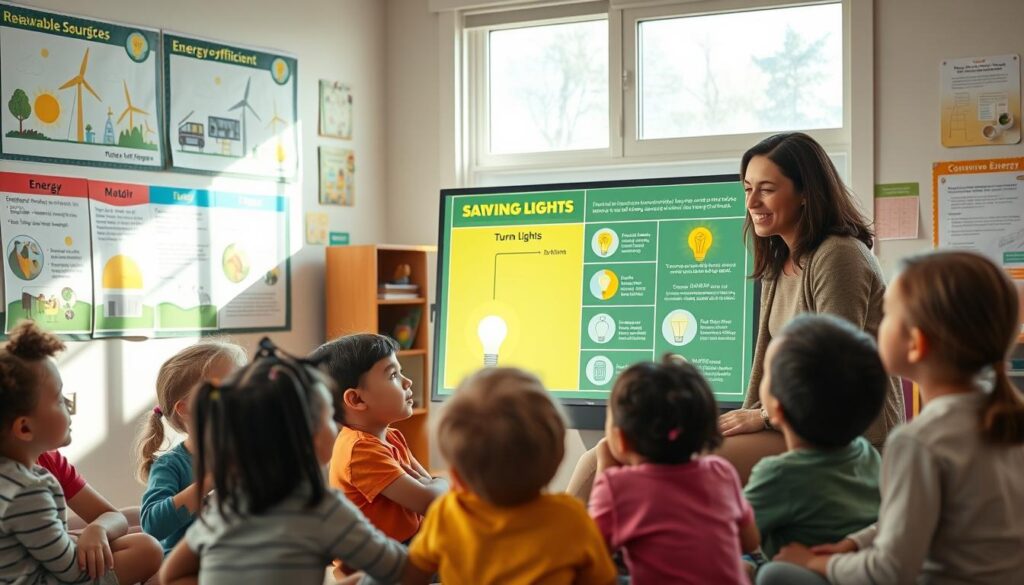
Getting kids involved in simple actions like turning off lights and using energy-efficient appliances is beneficial. These actions help the environment and can also save families money on energy costs. It’s a win-win for everyone.
Combining Energy Saving with Other Practices
By mixing energy saving with eco-friendly habits, we can live more sustainably. This not only cuts down our environmental impact but also builds a green culture in our daily lives.
One good way to add energy saving to our routines is by taking a holistic view of sustainability. This means combining saving energy with other green actions like using less water, throwing away less trash, and choosing eco-friendly products.
Simple Changes, Big Impact: Small changes in our daily habits can make a big difference in saving energy. For example, turning off lights when not needed is a simple yet powerful action. When we also use energy-efficient appliances and cut down on energy use, the effect is even bigger.
Enhancing Sustainability: Adding energy saving to our sustainable habits can boost our efforts to live sustainably. This includes actions like recycling, using public transport, or carpooling. These actions not only save energy but also lessen harm to the environment.
Also, teaching family and work colleagues about the value of combining energy saving with eco-friendly practices can increase benefits. Working together towards sustainability can have a big positive effect on our planet.
In summary, mixing energy saving with other sustainable habits is a strong way to improve our sustainability efforts. By making smart choices in our daily lives and taking a holistic view of energy saving, we can help create a greener future.
Tracking Your Energy Usage
Keeping an eye on your energy usage helps you make smart choices. It’s the first step to using less energy. This way, you can optimize your energy use.
Energy monitoring shows you where energy is wasted. You can then make changes to use less. This might mean using energy-saving bulbs or changing your daily habits.
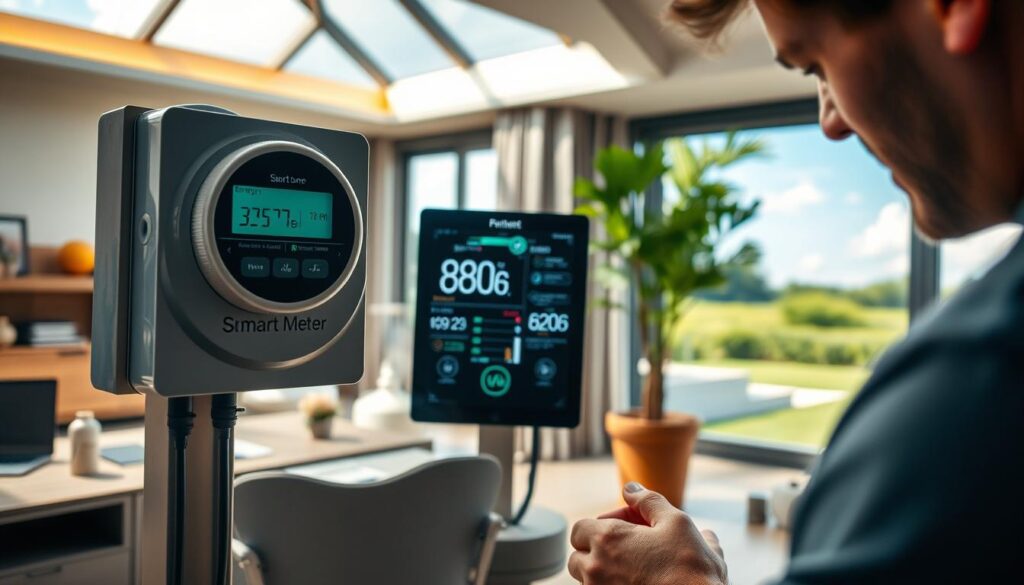
Tracking your energy use also shows how well your savings are working. By watching your energy use, you can see the good you’ve done. You’ll also find new ways to save even more.
But energy efficiency is more than just saving money. It’s also about helping the planet. By using less energy, you’re doing your part for a greener future.
In short, tracking your energy use is a simple yet effective way to save energy. With the right tools and habits, you can make a big difference in your energy use.
Community Initiatives for Energy Saving
Working together, we can cut down on energy use. Community efforts help by getting people and groups to join forces. This makes saving energy easier.
Community-Led Projects are a big help. For example, local renewable energy projects let people invest in clean energy. This cuts down on fossil fuels and builds community spirit.
Education and Awareness are key. Workshops and campaigns teach people why saving energy matters. As Jane Smith, a community leader, said,
“Empowering communities with knowledge is the first step towards a sustainable future.”
Also, collaborative efforts between local groups and businesses lead to new ideas. Community energy programs offer rewards for using less energy.
Examples of Successful Initiatives
In the U.S., many towns have started energy-saving projects. A California town has a community solar program. It lets people buy solar energy cheaply. New York City has a green building push, giving bonuses for green buildings.
These projects show what can be done. By supporting local efforts, we can make a greener future.
Conclusion: Your Role in Energy Saving
Everyone can help save energy by changing small habits every day. Turning off lights and using energy-saving bulbs are good starts. Smart technology also plays a big role in cutting down energy use.
It’s key to take personal responsibility for saving energy. Simple steps like turning off lights when not needed can really help. This action not only saves energy but also helps our planet.
By adding energy-saving habits to our daily lives, we can all make a big difference. It’s important to keep learning and teaching others about the value of saving energy. This knowledge helps us work towards a greener future.
Together, we can make the world more energy-efficient. Every little bit we do matters. By choosing to save energy, we ensure a better future for all of us.