







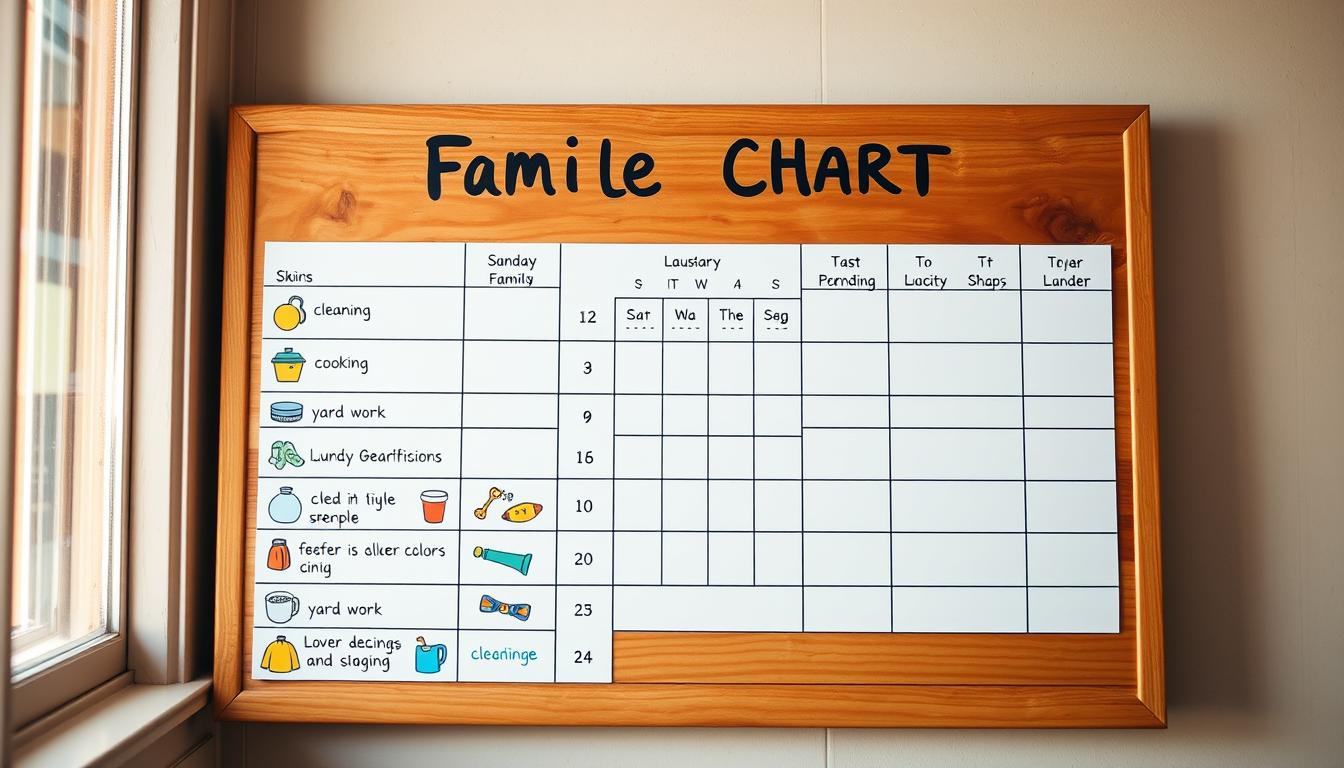
Creating a family chore chart is a great way to organize household responsibilities. It also teaches kids about responsibility.
Using a system for household chores can make parents’ lives easier. It also encourages family members to work together.
A good chore chart makes sure everyone does their part. This keeps the home clean and comfy for everyone.
When kids help with household chores, they learn important life skills. They also develop a strong work ethic.
What is a Chore Chart?
A chore chart is a visual tool that helps assign and track household tasks. It makes it easy to organize chores so everyone pitches in. This way, the household work is shared fairly.
Chore charts are great for families with kids. They teach kids about responsibility and their role in keeping the home clean. Assigning tasks to kids helps them feel important and understand their duty to the family.
Using a chore chart makes organizing tasks easier. It ensures tasks are spread out fairly among family members. This reduces the workload on one person and encourages teamwork.
Also, a chore chart can be customized for your family’s needs. It can handle daily, weekly, or monthly tasks. This flexibility helps fit the chart to your family’s schedule and needs.
In short, a chore chart is key for a more organized and united home. It helps families build a culture of responsibility and teamwork. By using a chore chart, families can work together more effectively.
Why Your Family Needs a Chore Chart
Using a family chore chart is a great way to organize tasks and build teamwork. It makes sure everyone does their part, so no one feels overwhelmed. This way, the workload is shared fairly.
A family chore chart teaches kids to be responsible. They learn to manage their time and become self-reliant. They also see the importance of helping out at home.
Having a clear chore chart also reduces household mess. When everyone knows their tasks, there’s less confusion. This leads to a more peaceful home.
Also, a family chore chart boosts teamwork. When family members work together, they grow closer. This strengthens their bond and makes the family more supportive.
In short, a family chore chart is essential for today’s families. It ensures tasks are shared fairly and teaches kids important life skills. It also helps families work together and feel united.
How to Get Started with Your Chore Chart
To start with a chore chart, first, identify the chores that need to be done. Make a detailed list of all household tasks. These include cleaning, laundry, and trash disposal.
After listing your chores, decide on the chart’s format. You can pick between a digital or physical chart. Some families like digital charts for their flexibility. Others prefer a physical chart on the fridge or in a common area.
Involving family members is key. Assign tasks based on age and ability. This spreads out the work and teaches kids about responsibility and teamwork.
By following these steps, you can make a great chore chart. It helps in organizing chores and keeps your home in order.
Types of Chore Charts
There are many types of chore charts to help with household tasks. Families can pick one that matches their lifestyle and the age of their kids.
Digital and physical charts are two main types. Digital chore charts work on phones and tablets. They’re great for families who love technology.
Digital vs. Physical Chore Charts
Physical chore charts are real and help kids remember their tasks. They can be put on fridges or in busy spots. Some like them because they can change them easily with markers or stickers.
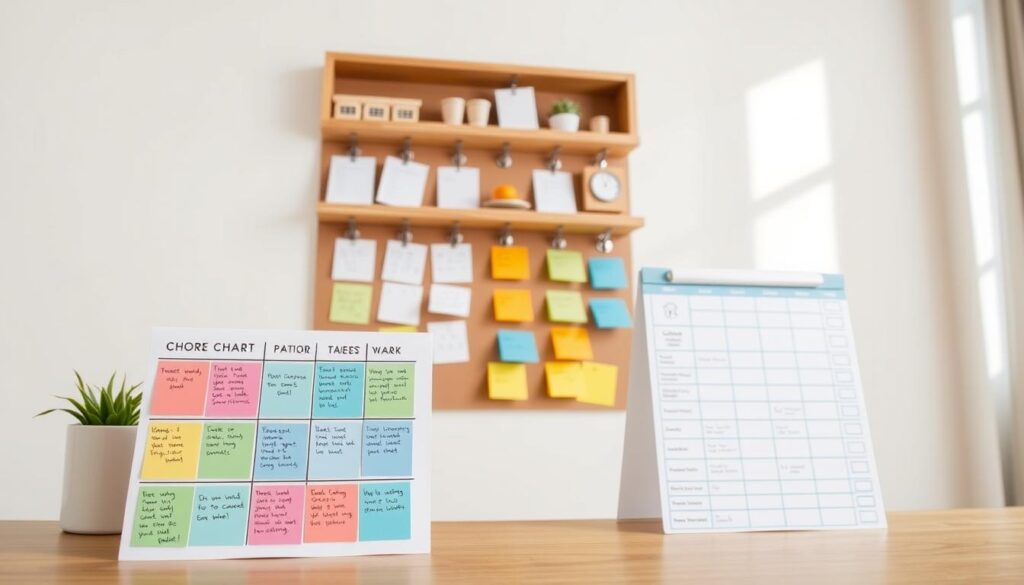
Choosing between digital and physical chore charts depends on your family. Some might use both. This way, everyone gets what they like best.
Choosing the Right Format for Your Family
Choosing the right format for your family’s chore chart is key. It should be fun, easy to use, and fit your family’s needs.
Think about your kids’ ages and your family’s lifestyle when picking a format. Young kids might like pictures or colors, while older kids might want more details. A busy family might prefer a chart that’s easy to see, like one on the fridge.
Personal preferences matter too. Some families like digital charts on phones or tablets. Others prefer physical charts on walls. Try out different formats to find what works best for you.
By picking the right format, you can make a family chore chart that helps organize chores and becomes a family habit.
Key Elements of an Effective Chore Chart
A well-designed Chore Chart is key for sharing household chores fairly among family members.
To make a good chart, several important elements need to be included. First, clear task assignments are a must. Each task should be specific, measurable, and achievable. For instance, instead of “clean the house,” tasks could be “vacuum the living room,” “wipe down kitchen counters,” and “do the laundry.”
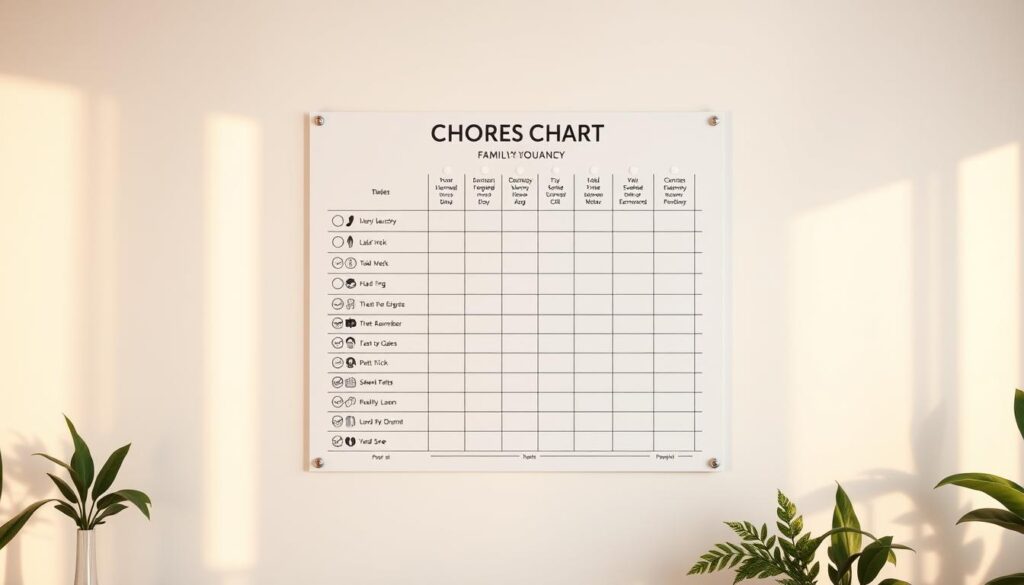
Another key element is a system for tracking progress. This could be a simple checklist or a more complex system using stickers or rewards. For families with kids, adding kids’ responsibilities to the chart helps teach them important life skills and a sense of responsibility.
Lastly, a way to reward or acknowledge task completion is essential. This could be as simple as praise or as tangible as stickers or small treats. By including these elements, a Chore Chart can be a powerful tool for keeping a harmonious and organized home.
Tips for Creating a Fun Chore Chart
Making your chore chart fun can change your family’s routine. Use colorful charts and designs that kids will love. This makes the chart more appealing and fun.
Start with a chart that lets kids be creative. Use stickers or magnets in different colors. This makes tasks more fun and lets kids feel proud of their work.
Try adding games or challenges to your routine. For example, a “chore challenge” where kids race to finish tasks first. It turns organizing chores into a game.
It’s also important to teach kids about their kids’ responsibilities. Explain why their tasks are important. This teaches them responsibility and makes them feel part of the family.
With these chore chart ideas, you can make chores fun for your kids. It encourages them to help out and makes it a team effort.
How to Implement Your Chore Chart
Introducing a chore chart to your family needs a smart plan. It’s not just about making the chart. It’s about making it a daily part of your family’s life.
Start by slowly introducing the family chore chart. Talk about why sharing household chores is important. Explain how it makes your home more organized and less stressful.
After everyone agrees, set clear rules. Make sure each person knows their job and when it’s due. It’s also important to have a regular time to check the chart and give feedback.

Being consistent is key when using the chore chart. Check the chart often to see if tasks are done on time. Be ready to change things if needed to keep things working well.
By following these steps and staying consistent, your chore chart can help manage household chores. It also helps your family work together better.
Adjusting Your Chore Chart Over Time
Changing your chore chart as your family grows is key to a happy home. As kids get older, they can take on more tasks. This helps in organizing chores better and teaches kids about responsibility and teamwork.
Being flexible is important for a good chore chart. Families change, with new schedules and needs. Updating the chart keeps it useful. For example, if a child can handle more, give them bigger tasks to feel accomplished.
Big changes, like a new job or moving, mean the chore chart needs a refresh. You might need to share tasks differently or add new ones. This keeps the household running smoothly without overloading one person.
In short, a good chore chart is essential for managing your home. It changes with your family’s needs, making sure everyone helps out. By adjusting it as needed, your family can benefit from it for years, building a strong sense of teamwork and respect.
Involving Children in Chore Choices
Letting kids help choose their chores can make them feel more in charge. By letting them pick from a list of household chores, they’re more likely to help out.
Creating a Chore Chart together is a fun way to get them involved. It teaches them about being responsible, managing time, and setting priorities.

When kids get to choose their chores, they take it more seriously. This helps them in school and taking care of themselves too.
It’s important to offer chores that fit their age and skills. Young kids can start with simple tasks like feeding pets or picking up toys. Older kids can do more, like cooking or doing laundry. Helping with household chores teaches them important life skills.
Celebrating Achievements
Recognizing and rewarding achievements boosts kids’ motivation to help out at home. When they feel their hard work is valued, they’re more likely to keep helping. This makes the household chores more enjoyable for everyone.
There are many ways to celebrate achievements with a Chore Chart. Verbal praise is a great start. A simple “thank you” or acknowledgement of their hard work can make them feel special. You can also give special privileges or rewards for doing tasks on time or reaching milestones.
Some families use a reward system where kids earn points or stars for each task. These points can be traded for rewards like extra screen time, a later bedtime, or a fun outing. This not only motivates kids but also teaches them about earning and responsibility.
Ideas for Celebrating Achievements
Here are a few more ideas to celebrate achievements with your Chore Chart:
– Host a special dinner or dessert night to celebrate a job well done.
– Create a “Chore Champion” certificate or trophy that rotates among family members as they achieve their chores.
– Plan a fun family activity or outing as a reward for consistent effort.
Celebrating achievements is more than just rewarding kids; it’s about creating a positive environment. By acknowledging their efforts, you show the value of teamwork and responsibility in your home.
Common Challenges and Solutions
Using a Chore Chart can really help with household chores, but it comes with its own set of problems. Families often find it hard to get kids to do their tasks or keep up with the routine.
One big problem is kids not wanting to do their chores. To fix this, let them help make the Chore Chart. This way, they feel more in charge and are more likely to do their tasks.
Keeping up with the routine is another challenge. To solve this, make a schedule and stick to it. Also, check and change the Chore Chart often to keep it working well.
Knowing these common problems and having ways to solve them can help families use a Chore Chart successfully. This leads to a more organized and peaceful home.