






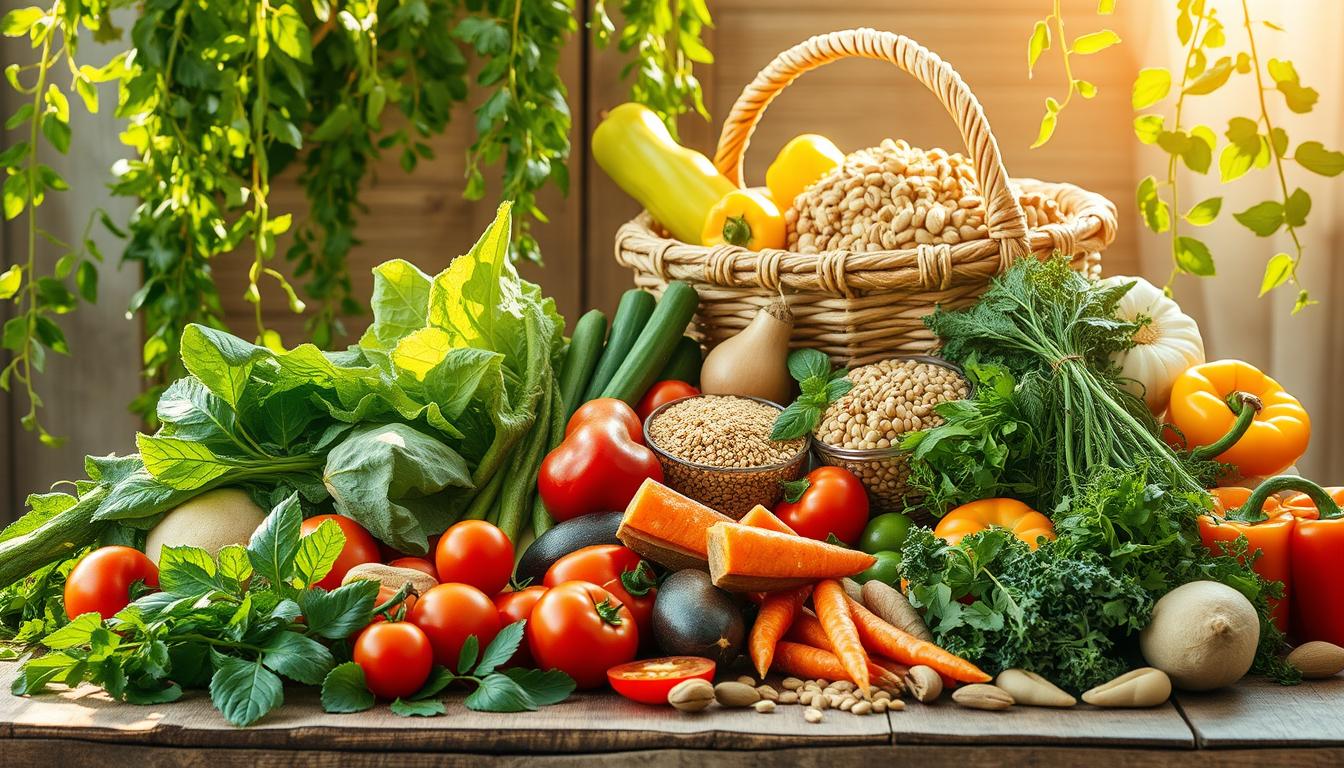
Eating a variety of foods daily is key for good health. A varied diet gives the body the vitamins and minerals it needs to work right.
Registered dietitian Carly Sedlacek says our bodies need many nutrients to stay healthy. Adding different foods to your meals helps meet this need. It supports a healthy eating lifestyle.
By mixing foods, you make sure you get the nutrients your body needs. This is the heart of a balanced diet and good health.
What is a Balanced Diet?
A diet is balanced when it has many foods from different groups. It gives the body the nutrients it needs. This helps keep you healthy and prevents diseases.
A balanced diet is important. It gives the body the nutrients, vitamins, and minerals it needs. It helps you stay at a healthy weight and gives you the energy you need.
Eating a balanced diet means focusing on nutrient-dense foods. These foods are full of good stuff but not too many calories. Good examples are fruits, veggies, whole grains, lean proteins, and healthy fats.
Developing healthy eating habits is key. This means watching your portion sizes and avoiding too much processed food. Staying hydrated is also important. Making smart food choices can greatly improve your health.
Having a variety of foods in your diet is essential. It ensures you get all the nutrients your body needs. It makes meals more enjoyable and helps you stick to healthy eating for a long time.
Benefits of Eating a Balanced Diet
Eating a balanced diet has many health benefits. It helps with weight management and disease prevention. By eating a variety of foods, you get all the nutrients you need for good health.
It’s key for maintaining a healthy weight. It helps control calorie intake and ensures you get the right nutrients. This supports your health and lowers the risk of obesity-related problems.
A balanced diet is also vital for supporting overall health. It gives your body the vitamins, minerals, and nutrients it needs. This can boost your energy and improve your overall well-being.
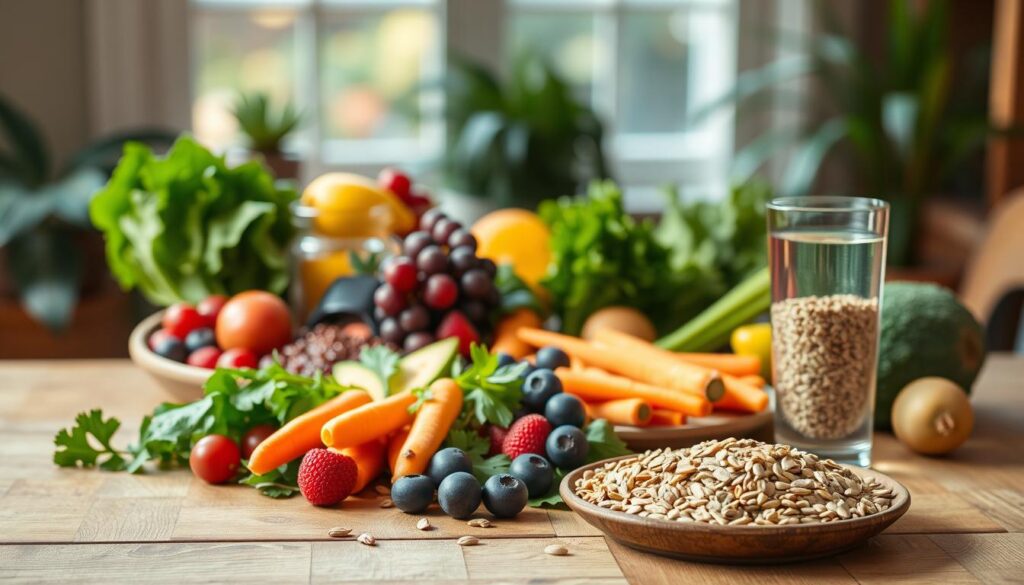
Also, a well-planned diet can reduce the risk of chronic diseases. This includes heart disease, diabetes, and some cancers. Eating a variety of foods and avoiding unhealthy fats, sugars, and sodium can lower your risk.
Good meal planning is essential for a balanced diet. It means planning meals ahead, buying the right ingredients, and cooking healthy meals. This ensures healthy eating, saves time, and reduces food waste.
In summary, a balanced diet through healthy eating and meal planning offers many health benefits. It’s a simple yet powerful step towards a healthier life.
Key Food Groups in a Balanced Diet
A balanced diet is all about knowing and using the right food groups. It’s about eating a mix of foods from different groups. This mix includes nutrient-dense foods that give your body what it needs to stay healthy.
The main food groups are fruits, vegetables, whole grains, lean proteins, and healthy fats. Each group is important for giving your body the nutrients, vitamins, and minerals it needs.
Eating a variety of foods from these groups helps your body get all the nutrients it needs. For instance, fruits and vegetables are full of vitamins and minerals. Whole grains give you fiber and important nutrients. Lean proteins help your muscles, and healthy fats are good for your heart and give you energy.
Knowing how these food groups work and adding them to your meals is key to a balanced diet. This helps keep you healthy and lowers the chance of getting chronic diseases.
The Role of Fruits and Vegetables
Fruits and vegetables are key to a balanced diet. They are full of vitamins, minerals, and antioxidants. These nutrients help keep us healthy and prevent diseases.
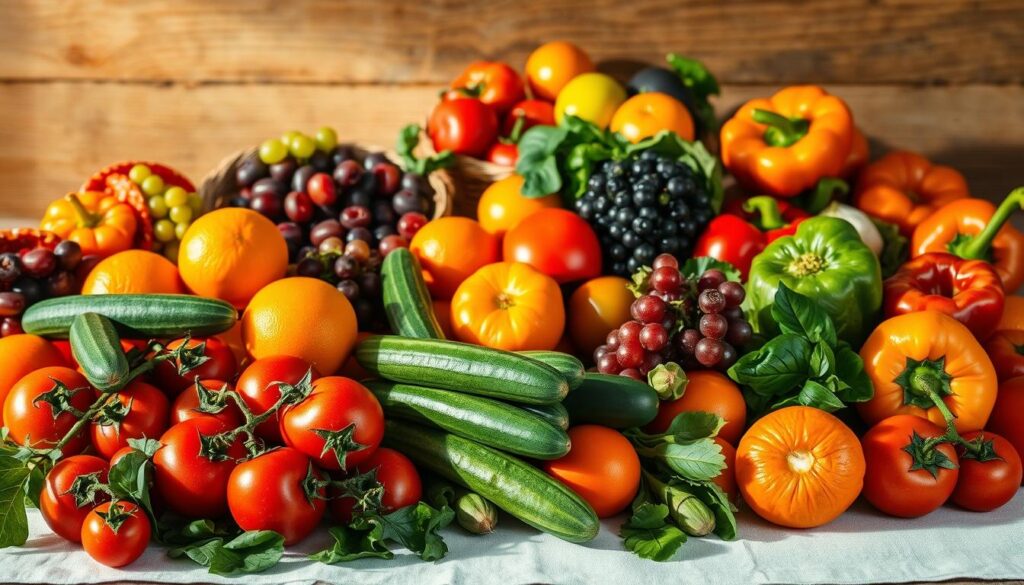
Eating different fruits and vegetables every day is good for you. They are high in fiber, which aids digestion and keeps your gut healthy. Plus, they are low in calories but packed with nutrients, perfect for weight management.
Incorporating a Variety of Fruits and Vegetables into Your Diet
To get the most from fruits and vegetables, eat a variety of them. Try to have a rainbow of colors on your plate to get lots of nutrients. Dark leafy greens like spinach and kale are great for iron and calcium. Brightly colored fruits like berries and citrus are full of vitamin C.
Begin your day with a fruit salad or add veggies to your omelette for breakfast. Snack on raw veggies with hummus or fruits with nuts. Adding fruits and veggies to your meals is easy and tasty.
For lunch and dinner, include various vegetables in your meals. Roast, grill, or sauté them to enhance their taste. Try new recipes to keep your meals exciting and fun.
By focusing on fruits and vegetables, you’re taking a big step towards healthy eating. This will help you stay well overall.
Whole Grains: A Vital Component
Whole grains are key to a healthy diet. They offer important nutrients and fiber. They are packed with vitamins, minerals, and antioxidants that help keep us healthy.
Nutritional Benefits of Whole Grains
Eating whole grains can lower the risk of heart disease, diabetes, and some cancers. The fiber in them aids digestion and keeps you full, helping with weight control.
Including a variety of whole grains in your diet is easy and tasty. Try brown rice, quinoa, whole wheat bread, and whole grain pasta for a nutrient boost.
Health experts say a diet full of whole grains can greatly reduce chronic disease risk. Just swap refined grains with whole grains in your meals.
“Eating whole grains as part of a balanced diet can lead to a healthier lifestyle.”
To make whole grains a regular part of your diet, aim for half of your grain servings. Try new recipes and products that highlight whole grains.
Incorporating Proteins Into Your Meals
Adding the right amount of protein to your meals is key for a healthy diet. Proteins help build and fix tissues in your body.
There are many protein sources, like lean meats, fish, and dairy. You can also find protein in beans, lentils, and tofu. Mixing these sources ensures you get all the amino acids your body needs.
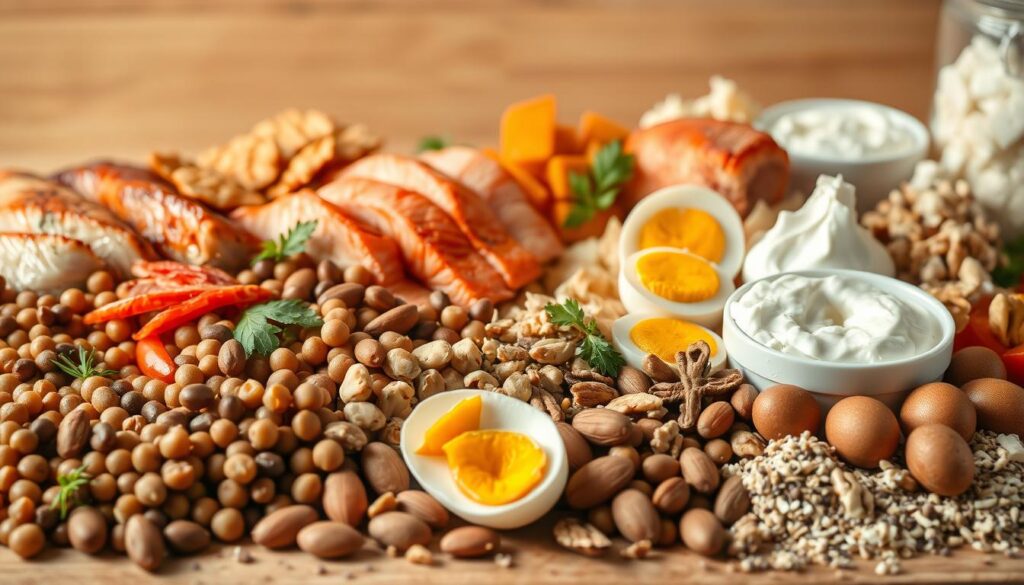
Choosing lean proteins and mixing them up is smart. For example, legumes are not just protein-rich but also full of fiber and nutrients. Nuts and seeds are also good for protein and healthy fats.
Tips for Incorporating Proteins
Start your day with a protein-packed breakfast, like eggs or Greek yogurt. Make sure to include protein in every meal and snack. This helps keep your muscles strong and supports your health.
By picking the right protein sources and mixing them in your diet, you support a balanced diet. This promotes healthy eating habits.
Healthy Fats: Not All Fats Are Bad
Healthy fats are key to a balanced diet. They help keep your heart healthy and more. Unlike bad fats, healthy fats are good for your body.
There are many types of healthy fats. Monounsaturated and polyunsaturated fats are found in foods like nuts, seeds, avocados, and olive oil. Eating these foods can lower cholesterol and boost health.
Healthy fats are great for your heart. Health experts say they can lower bad cholesterol. This can reduce heart disease risk.
“The Mediterranean diet, which is high in monounsaturated fats from sources like olive oil, has been shown to have numerous health benefits, including reduced heart disease risk.”
Healthy fats also help your brain and vitamin absorption. Nuts and seeds are full of healthy fats, protein, and fiber. They’re perfect for a balanced diet.
To eat more healthy fats, try adding avocado to salads, use olive oil for cooking, or snack on nuts and seeds. These small changes can greatly improve your health. They help you eat a balanced diet full of nutrient-dense foods.
Portion Control for a Balanced Diet
Maintaining a balanced diet is not just about eating the right foods. It also means controlling how much you eat. Portion control helps manage calorie intake and ensures you get the right nutrients.
Eating too much can lead to weight gain and health problems. Eating too little can cause nutrient deficiencies. So, finding the right balance is key.
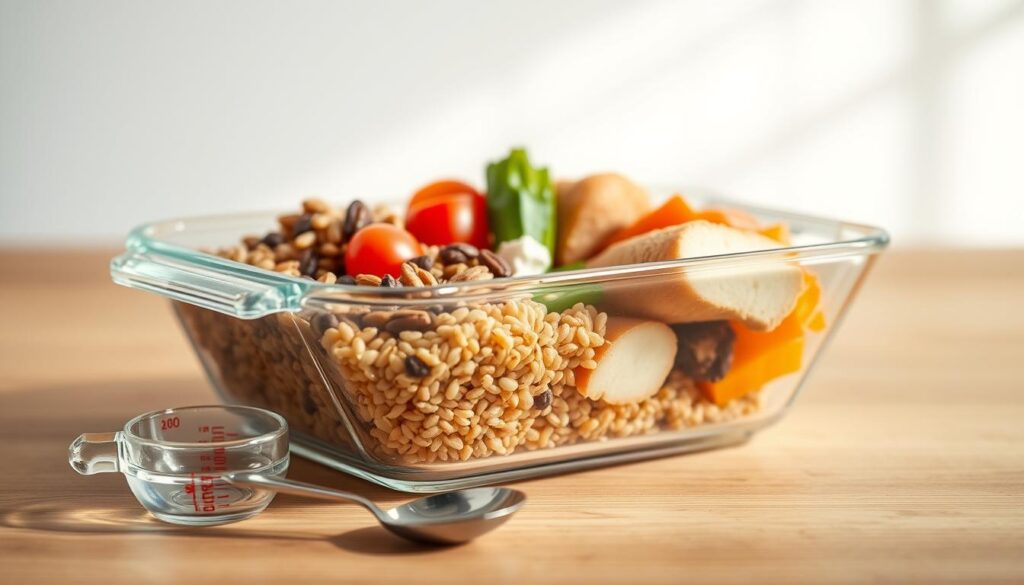
Using smaller plates and bowls can help manage portion sizes. This trick makes you eat less without feeling deprived. Also, reading food labels and knowing serving sizes is important.
Eating slowly and mindfully is another good tip. It helps your body feel full, preventing overeating. Planning meals and avoiding eating in front of screens also helps avoid mindless snacking.
By practicing portion control daily, you can keep a balanced diet. This supports healthy eating habits. It can improve your health and lower the risk of chronic diseases.
Meal Planning for Balance
Effective meal planning is key to a balanced diet. It helps people make smart food choices. By planning meals ahead, you can make sure you eat a variety of nutritious foods.
To plan balanced meals, think about your body’s nutritional needs. It’s important to include fruits, vegetables, whole grains, proteins, and healthy fats in your diet.
A good meal plan ensures you get all the nutrients you need. It’s about having the right mix of foods in each meal.
Start with breakfast, aiming for a mix of carbs, proteins, and fats. Then, plan lunch and dinner, making sure each meal is full of nutrients.
Using a meal planning strategy helps keep a healthy eating routine. This is vital for your overall health.
Common Mistakes in Achieving a Balanced Diet
Getting a balanced diet can be tough, but knowing common mistakes helps a lot. Many face challenges in keeping a healthy eating routine because of these pitfalls.
One big mistake is eating too much processed food. These foods are full of unhealthy fats, sugars, and salt. They can cause obesity and heart disease. So, it’s key to eat more whole foods like fruits, veggies, whole grains, lean proteins, and healthy fats.
Another common mistake is skipping meals. This can cause nutrient gaps and lead to eating too much later. Eating balanced meals regularly keeps energy up and supports health. Also, watch your portion sizes to not eat too many calories.
Healthy eating is more than just cutting out foods or following diets. It’s about making lasting lifestyle changes. This means knowing your nutritional needs, planning meals, and choosing foods wisely. By avoiding these mistakes and eating well, you can boost your health and happiness.
In summary, getting a balanced diet means knowing the common traps and sticking to healthy eating. By eating whole foods, having regular meals, and being mindful, you can beat these challenges and keep a healthy diet.
Tips for Maintaining a Balanced Diet
Keeping a balanced diet is more than just knowing what to eat. It’s about having a plan. Effective meal planning is key to staying on track with your diet goals.
Planning your meals ahead is a smart strategy. It ensures you eat a balanced mix of foods and saves time. Try setting aside a day for meal prep, cooking meals for the next few days.
Grocery shopping is also vital. Make a shopping list based on your meal plan to avoid impulse buys. Focus on whole foods like fruits, veggies, whole grains, lean proteins, and healthy fats.
“The way we eat is changing. People are more aware than ever of the link between food, health, and the environment.”
Healthy eating habits are important too. Be mindful of portion sizes and eat regularly to avoid extreme hunger. Also, limit processed and high-calorie foods. Staying hydrated is key, as thirst can be mistaken for hunger.
To make these tips work, consistency is key. It’s about making lasting lifestyle changes, not just following fad diets. By adding these strategies to your daily routine, keeping a balanced diet becomes easier.
Conclusion: Embracing a Balanced Lifestyle
Starting a balanced lifestyle is a journey. It means committing to healthy eating and regular exercise. It’s not just about what you eat, but also about making lasting changes.
Eating a variety of whole foods is key. This includes fruits, veggies, whole grains, lean proteins, and healthy fats. Regular exercise and controlling your portions also help a lot.
By making these habits a part of your day, you’ll see big health improvements. Choosing a balanced lifestyle means investing in a healthier, happier you.