






Proper food storage is key to keeping food safe and avoiding illnesses. Storing food right is easy and helps protect your health.
If food isn’t stored right, it can grow harmful bacteria. This can cause food poisoning. Knowing how to store food well can lower this risk a lot.
This article will cover the main points of food storage and its role in food safety. You’ll learn how to handle and store your food safely.
Importance of Safe Food Storage
Storing food safely is key to stopping harmful bacteria growth. Bad food storage can cause serious foodborne illnesses. Keeping foods chilled at proper temperatures helps prevent bacteria like Salmonella and E. coli O157:H7.
Following food safety tips is vital for food quality and safety. This means storing food right, using airtight containers, and knowing storage times. Doing this cuts down foodborne illness risks a lot.
Preventing foodborne illnesses is a big win from safe food storage. If food isn’t stored right, bacteria grow fast, causing spoilage and health risks. Knowing the importance of safe storage helps protect our health and our families’.
Making safe food storage a daily habit is easy and works well. It’s about knowing what food needs and storing it right. By doing this, we eat healthier and lower the chance of getting sick from food.
Common Food Storage Mistakes
Knowing the common mistakes in food storage helps keep food fresh. Many people accidentally make errors that cause food to spoil and go to waste.
One big common storage mistake is not putting perishables in the fridge fast enough. Leaving meat, dairy, and cooked foods out too long can cause bacteria to grow. It’s key to keep these in the fridge at 40°F (4°C) or less within two hours of buying or cooking.
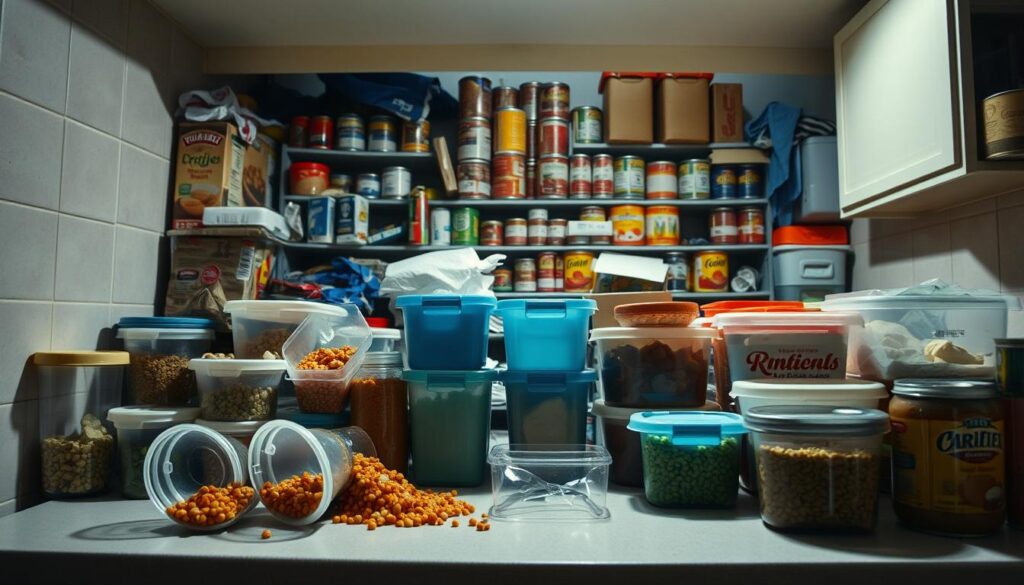
Another error is overcrowding the fridge or freezer. When there’s too much stuff, cold air can’t move well. This leads to uneven cooling and spoilage. To fix this, organize your storage to let air move around each item.
Not checking expiration dates is another big mistake in food handling. Checking food’s dates regularly helps spot items that are close to going bad. This lets you use or throw them away before they’re unsafe.
By knowing these common mistakes and avoiding them, people can better store food. This reduces waste and keeps food safe and fresh.
Best Practices for Refrigerating Foods
Keeping the right fridge temperature is key for safe food storage. Food safety rules say the fridge should be at or below 40°F (4°C). This stops bacteria from growing and keeps food fresh.
Maintaining the Right Temperature
Using a fridge thermometer is a smart move. It lets you check the temperature and adjust it if needed. Having the right fridge temperature is essential to stop food from spoiling and to lower the risk of getting sick from food.
Storing food in covered containers is another good habit. It stops cross-contamination and keeps food fresh longer. Remember, perishable foods should not stay at room temperature for more than two hours to avoid bacterial growth.
Good fridge practices not only keep your food fresh but also make your kitchen safer. By following these tips, you can make sure your food is safe to eat and stays in good condition.
Also, cleaning your fridge regularly and checking food expiration dates are important. They help keep your fridge clean and organized, which is good for food safety.
Freezing Foods Effectively
Freezing food can be a great way to keep it fresh for a long time. But, you need to know how to do it right.
First, make sure your freezer stays at 0°F (-18°C). This keeps food safe forever, even if it loses some quality. Experts say food stays safe, but it might not taste as good.
Using airtight packaging is key to keeping food fresh. It stops freezer burn and keeps food good for longer. Use freezer bags, airtight containers, or wrap food tightly in plastic or foil.
Remember, freezing stops bacteria from growing but doesn’t kill them. So, when you thaw food, bacteria can start growing again. Always handle thawed foods safely to avoid getting sick.
By following these tips for freezing foods, you can enjoy your favorite dishes for months. And they’ll stay nutritious and tasty.
Understanding Food Labels
Learning about food labels is key to knowing if your food is fresh and safe. Labels have important dates that people often get confused about.
The dates on labels, like “use by,” “sell by,” and “best by,” mean different things. “Use by” dates mostly talk about the product’s quality, not safety. But for infant formula, it’s about safety.
“Sell by” dates are for stores. They tell when to stop selling the product. It’s about managing stock, not safety or quality.
“Best by” dates suggest when to use the product for the best taste and texture. It’s not a safety date but a quality guide.
Knowing these dates can cut down on food waste. It helps use food at its best quality. By understanding labels, shoppers can make better choices.
For example, knowing “use by” dates are about quality can guide you. Use your senses to check if food is good to eat after that date. Smell, sight, and taste can tell if it’s spoiled.
Storing Dry Goods Correctly
To keep your pantry organized and your dry goods fresh, follow simple storage guidelines. Dry goods include canned goods, pasta, cereals, and nuts. Storing these items properly is key to keeping them fresh and lasting longer.
First, store dry goods in a cool, dry place. Avoid areas near heating vents, ovens, or direct sunlight. Moisture is another enemy of dry goods, so keep the storage area dry and well-ventilated.
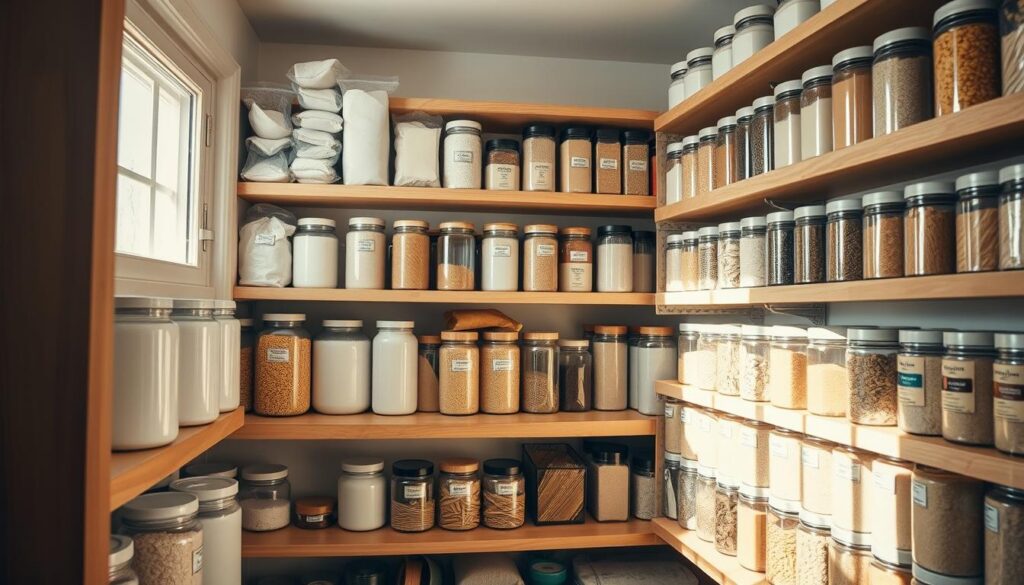
Keep dry goods away from chemicals and cleaning supplies. These can contaminate food and be harmful if eaten. Always store dry goods in their original packaging or transfer them to airtight containers to keep them fresh and pest-free.
Regularly check your stored dry goods for signs of spoilage or damage. Look for expired items, pest infestation, or packaging damage. Rotate your stock to use older items before they expire.
By following these tips, you can keep your pantry organized and enjoy fresh, healthy dry goods. Effective dry goods storage and pantry organization save space and make meal planning easier and more efficient.
The Role of Meal Prep in Storage
Meal preparation is key to keeping food safe and stored right. It helps prevent spoilage and contamination. By making meals ahead, you can store them properly.
Good meal prep means planning meals with ingredients that last long. Think canned goods, frozen veggies, and dried legumes. It’s also important to handle ingredients safely to avoid contamination.
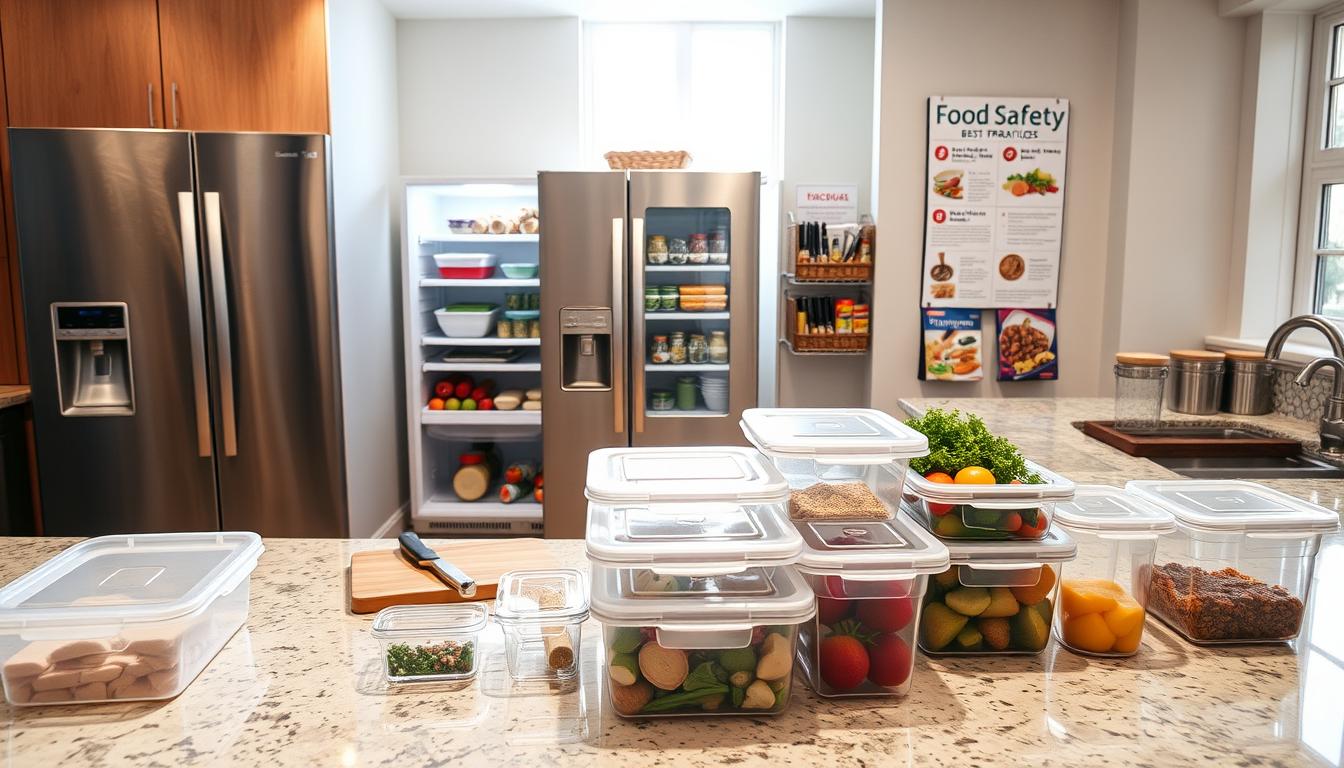
After making meals, store them in airtight containers. This keeps food fresh and stops bacteria from growing. Remember to label containers with the date and what’s inside.
Meal prep and safe storage together mean you can enjoy healthy meals. You’ll also cut down on waste and lower the chance of getting sick from food.
Smart Storage Solutions for Small Spaces
Optimizing your kitchen’s storage is key to a stress-free cooking experience. This is a big challenge for those with small kitchens. But, with the right strategies, you can keep your kitchen clutter-free and efficient.
Using vertical space is a smart way to maximize storage in small kitchens. Installing shelves or racks up to the ceiling can greatly increase storage. This keeps your countertops clear and uses space above your cabinets well.
Optimizing Refrigerator and Freezer Space is also important. Stackable containers and baskets help keep your fridge and freezer organized. Labeling these containers makes your storage system even more efficient.
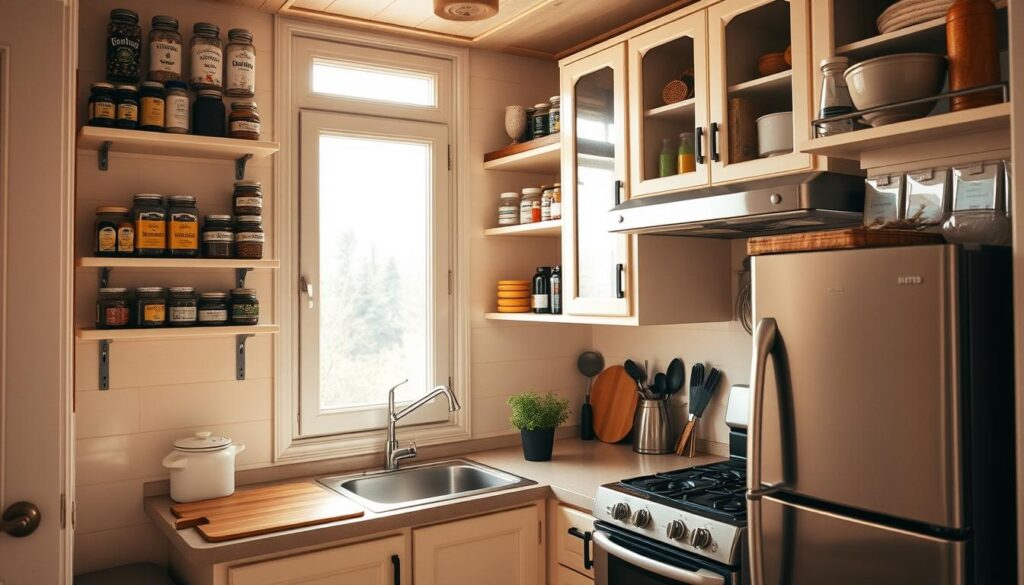
Choosing the right storage containers is also vital. Airtight, durable, and easy-to-clean containers are best. They keep food fresh longer and make your kitchen look tidy.
For small kitchens, multi-functional storage solutions are great. For example, a cart with drawers and shelves adds counter space and storage. It’s a versatile addition to any small kitchen.
By using these smart storage solutions, small kitchen owners can enjoy a more organized and efficient cooking space. It’s about making the most of your space and choosing solutions that meet your needs.
Eco-Friendly Food Storage Options
The world is moving towards sustainable living, and eco-friendly food storage is key.
Using reusable containers is a simple way to go green. These containers are made from sustainable materials. They can be used many times, cutting down on single-use plastics.
Beeswax wraps are also a great choice for food storage. They are biodegradable and reusable. Plus, they keep food fresh naturally.
There are more sustainable materials for storage too. Options include bamboo, recycled plastics, and natural fibers.
Choosing eco-friendly storage helps reduce our environmental impact. It’s a small step towards sustainable living that can make a big difference.
The Importance of Labeling
Effective food labeling keeps your kitchen tidy and cuts down on waste. It helps you use up older food before it goes bad. This way, you avoid throwing away good food.
Labeling food is more than just keeping things neat. It’s also about staying safe. Knowing what’s in your fridge or freezer helps you avoid bad food. This is very important for leftovers, which can get lost in the fridge.
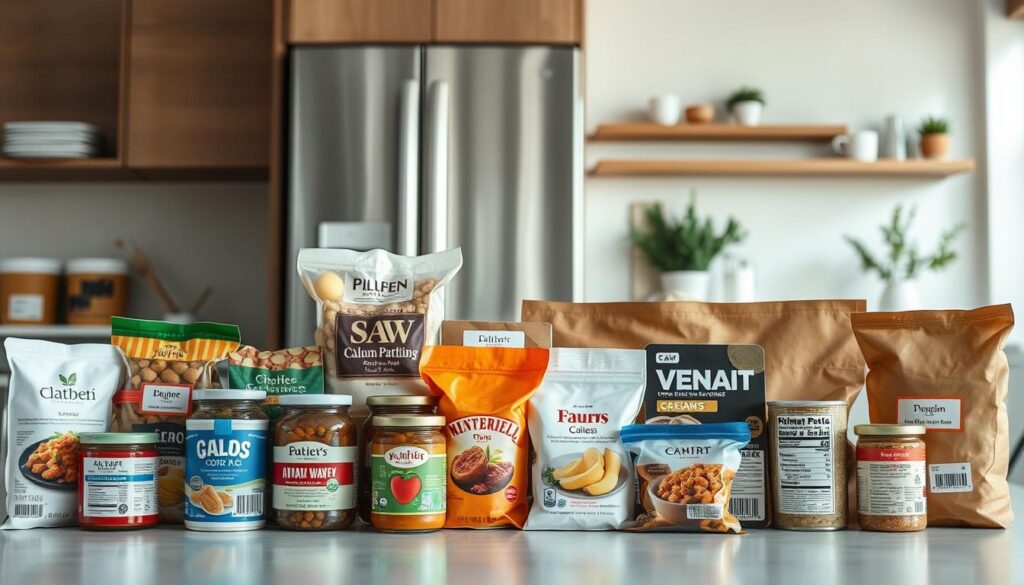
To start labeling your food, use labels or markers. Mark the date and what’s inside. For frozen meals, use labels or bags that can handle freezer temperatures. This simple step makes your kitchen run better and keeps you safe from food sickness.
Labeling also saves you time and money. It helps you plan meals better and avoid buying things you already have. This way, you can make the most of what you have.
By making labeling a part of your daily routine, you keep your kitchen organized. You also help the environment by reducing food waste.
Seasonal Food Storage Tips
Seasonal food storage is key for those who buy in bulk or save seasonal produce. The right storage methods keep food fresh and full of nutrients.
Canning is a top way to save seasonal produce. Canning heats food to kill bacteria and seals it in airtight containers. It’s great for fruits, veggies, and meats.
Freezing is another good method. Freezing keeps food’s texture and nutrients by stopping microorganisms. It’s important to freeze quickly and keep it at 0°F (-18°C) or below.
Dehydrating is also popular for saving seasonal produce. It removes water to stop bacteria growth. Dehydrated foods last long and are easy to use in many recipes.
Using these tips, people can enjoy their favorite seasonal foods all year. It also helps reduce food waste.
Signs of Spoiled Food
Knowing the signs of spoiled food is key to keeping food safe. Spoiled food can lead to serious health issues, like food poisoning. A strong, bad smell is a big warning sign.
Look out for mold, sliminess, or odd textures too. Green or black mold on bread or fuzzy growth on leftovers means it’s time to throw them away. If food feels slimy or is softer than usual, it’s breaking down from bacteria.
Also, watch for unusual colors or tastes. If you’re not sure if food is good, it’s safer to throw it away. Staying alert to spoiled food helps keep your meals safe and healthy.