







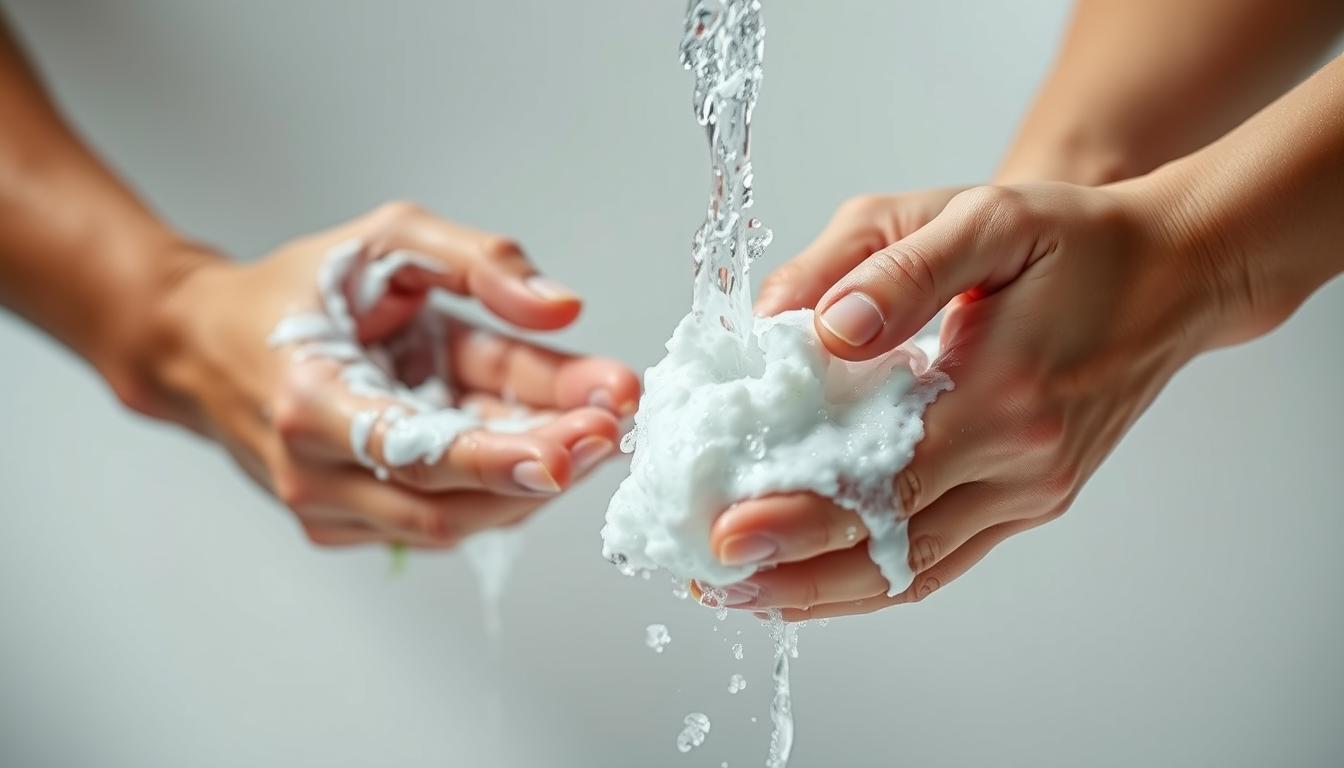
Washing your hands is a simple yet effective way to stay clean and prevent illness. Proper handwashing technique means using soap and water, then drying your hands well.
It’s important to wash your hands often, like before cooking and after using the bathroom. This helps lower the chance of getting sick and spreading germs.
Knowing how to wash your hands right is key in today’s world. Good hygiene is essential for our health. In this article, we’ll explore the best handwashing practices to keep your hands clean.
Importance of Handwashing
Washing your hands often is a key way to stay healthy. Germs can spread through touching contaminated surfaces or people. When you touch your face with unwashed hands, you let germs in.
Handwashing is a strong defense against many infections. Using soap and water reduces germ transfer to your face or others. This habit is essential in places like schools and hospitals.
The importance of handwashing goes beyond personal health. It helps stop illnesses from spreading in communities. Good hand hygiene helps protect the weak and reduces illness costs.
Adding handwashing to your daily life is a simple yet powerful way to fight germs. It greatly benefits both your health and the health of those around you.
When to Wash Your Hands
Knowing when to wash your hands is key to staying healthy. Handwashing is a simple yet powerful way to stop germs and diseases from spreading.
There are important times to wash your hands to keep clean. Before and after certain activities, it’s essential. For example, wash your hands before preparing food to avoid contamination. Also, wash them after handling raw meat, poultry, or seafood to prevent cross-contamination.
Before and After Certain Activities
Wash your hands before eating to avoid ingesting germs. It’s also important to wash them after using the toilet to remove germs. Washing your hands after blowing your nose, coughing, or sneezing helps stop respiratory viruses from spreading.
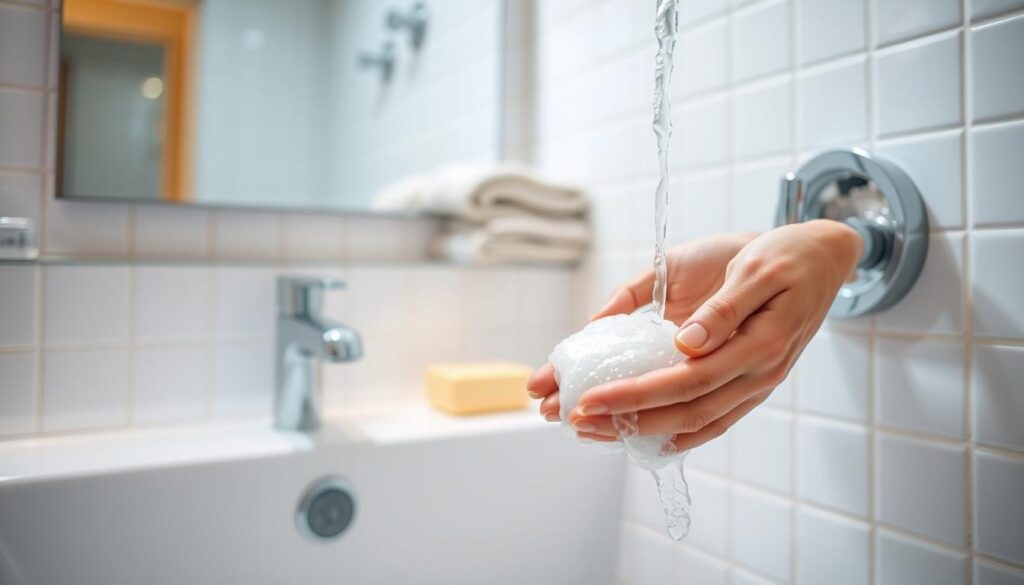
Other key times to wash your hands include after touching animals or their waste, after being in contact with someone who is sick, and after touching garbage. Washing your hands at these times can greatly reduce your risk of getting sick and spreading germs.
By making handwashing a part of your daily routine at the right times, you help keep your hands clean. This contributes to a healthier environment for everyone around you.
Gathering Your Materials
Effective handwashing starts with the right materials. You need clean, running water and soap to wash your hands properly. Warm or cold water works just as well.
“Clean, running water is essential for effective handwashing,” health experts say. Soap is also key. It breaks down dirt and germs on your hands.

Soap comes in two types: liquid and bar. The important thing is to clean your hands well with soap and water. Proper handwashing materials are vital for maintaining hygiene.
“Handwashing is one of the most effective ways to prevent the spread of illnesses.”
Getting the right handwashing materials is the first step to good hand hygiene. Make sure you have soap and clean, running water ready whenever you need to wash your hands.
The Handwashing Technique
Learning the handwashing technique is key to keeping yourself clean and stopping germs from spreading. Begin by wetting your hands under clean, running water.
Then, use enough soap to cover your hands. The soap you choose should be fresh and right for washing hands.
Make a lather by rubbing your hands together. This spreads the soap over all parts of your hands, like the backs, between fingers, and under nails.
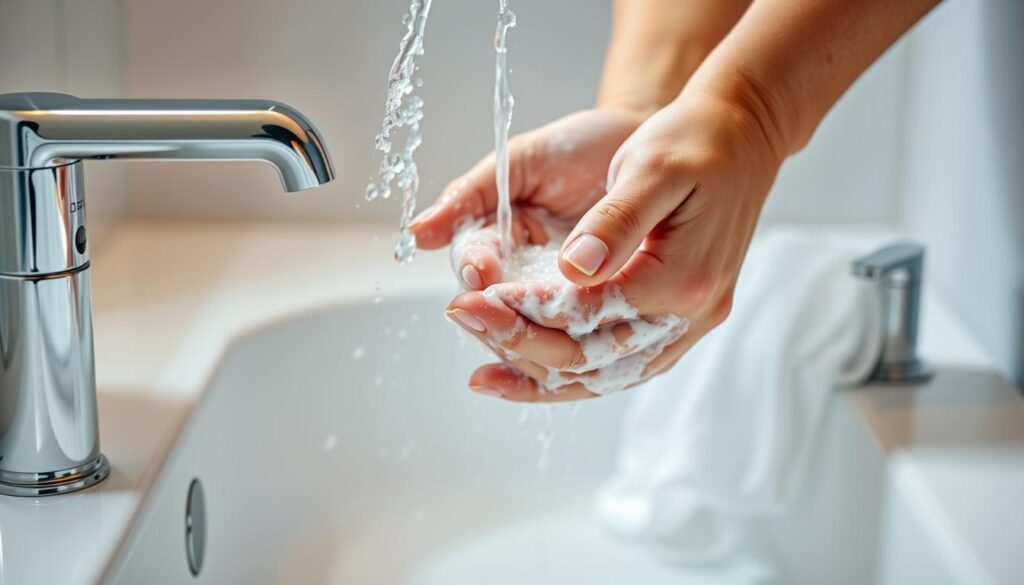
Scrub your hands for at least 20 seconds. This long enough to get rid of all germs. You can sing a short song or count to 20 to make time go by.
After scrubbing, rinse your hands well under clean water. Make sure the water isn’t too hot or cold, as it might be uncomfortable.
Handwashing is a simple way to prevent germs. Paying close attention to the right steps can greatly lower germ spread.
Rinsing and Drying
Rinsing your hands is as important as washing them. It makes sure all soap is gone. After scrubbing your hands well, rinse them under clean, running water.
This step is key because soap residue can irritate your skin. It can also leave harmful chemicals behind. Effective rinsing makes sure your hands are clean and germ-free.
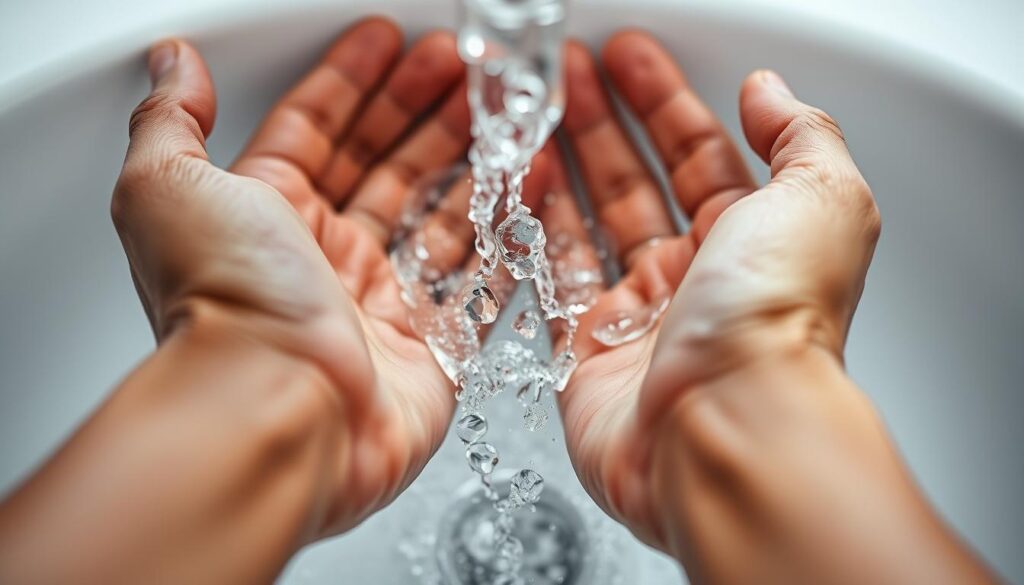
Drying your hands is just as important. Germs spread more easily from wet hands. So, it’s important to dry them completely. You can use a clean towel or an air dryer.
Proper hand drying stops germs from spreading and keeps your skin healthy. By rinsing and drying right, you’re keeping your hands clean. This is good hand hygiene.
Handwashing for Kids
Handwashing is more than a habit for kids; it’s a key skill. Teaching them to wash their hands right is vital for their health and cleanliness.
Making handwashing fun can help kids form good habits. Using songs or timers ensures they wash for 20 seconds, which is needed to clean their hands well.
For little ones, showing them how to wash hands and explaining why it’s important is effective. It’s also good to make handwashing a routine activity, like before meals or after using the bathroom.
By making handwashing fun and engaging, parents and caregivers can help kids develop a lifelong habit. This habit is key for their health and well-being.
Hand Sanitizers: A Safe Alternative?
When you can’t wash your hands, hand sanitizers are a good choice. They are key in our daily lives, mainly when soap and water are not around.
Effectiveness of Hand Sanitizers
Not all hand sanitizers work the same. To fight many germs, they need to have at least 60% alcohol. This is key to killing many pathogens, making them a good alternative to handwashing if used right.
Using hand sanitizers right is important. Make sure to cover all your hands with it and rub them until they’re dry. This way, your hands get properly cleaned. Hand sanitizers are not a full replacement for soap and water, but they help a lot when you’re on the move.
In short, hand sanitizers are a safe and good choice when you can’t wash your hands with soap and water. Just make sure they have at least 60% alcohol and use them correctly.
Common Handwashing Mistakes
Effective hand hygiene is often undermined by common mistakes made during the handwashing process. Understanding these errors is key to improving hand cleanliness and preventing the spread of illnesses.
One of the most prevalent handwashing mistakes is not washing hands long enough. The Centers for Disease Control and Prevention (CDC) recommend washing hands for at least 20 seconds. Rushing through this process can leave hands inadequately cleaned.
Another hand hygiene error is not using enough soap. Soap is essential for breaking down and removing germs from the skin. Using insufficient soap can lead to ineffective hand cleaning.
Not drying hands properly is also a significant mistake. Moist environments can foster the growth of bacteria, making it important to dry hands thoroughly, including between the fingers.
By being aware of these common handwashing mistakes, individuals can take steps to correct their hand hygiene practices. This will ultimately enhance their health and reduce the risk of infection.
Encouraging Handwashing in Your Community
It’s important to promote handwashing in your community for public health. Sharing educational materials and supporting handwashing campaigns helps a lot. This way, everyone can help make hand hygiene a common practice.
Workplaces can also help by making handwashing easy and encouraging it. They can provide good handwashing facilities and teach employees how to wash their hands right. This helps keep everyone healthy and stops illnesses from spreading.
Handwashing is a team effort. It needs everyone’s help, from individuals to organizations and communities. Together, we can make our environment healthier and promote the importance of hand hygiene.