







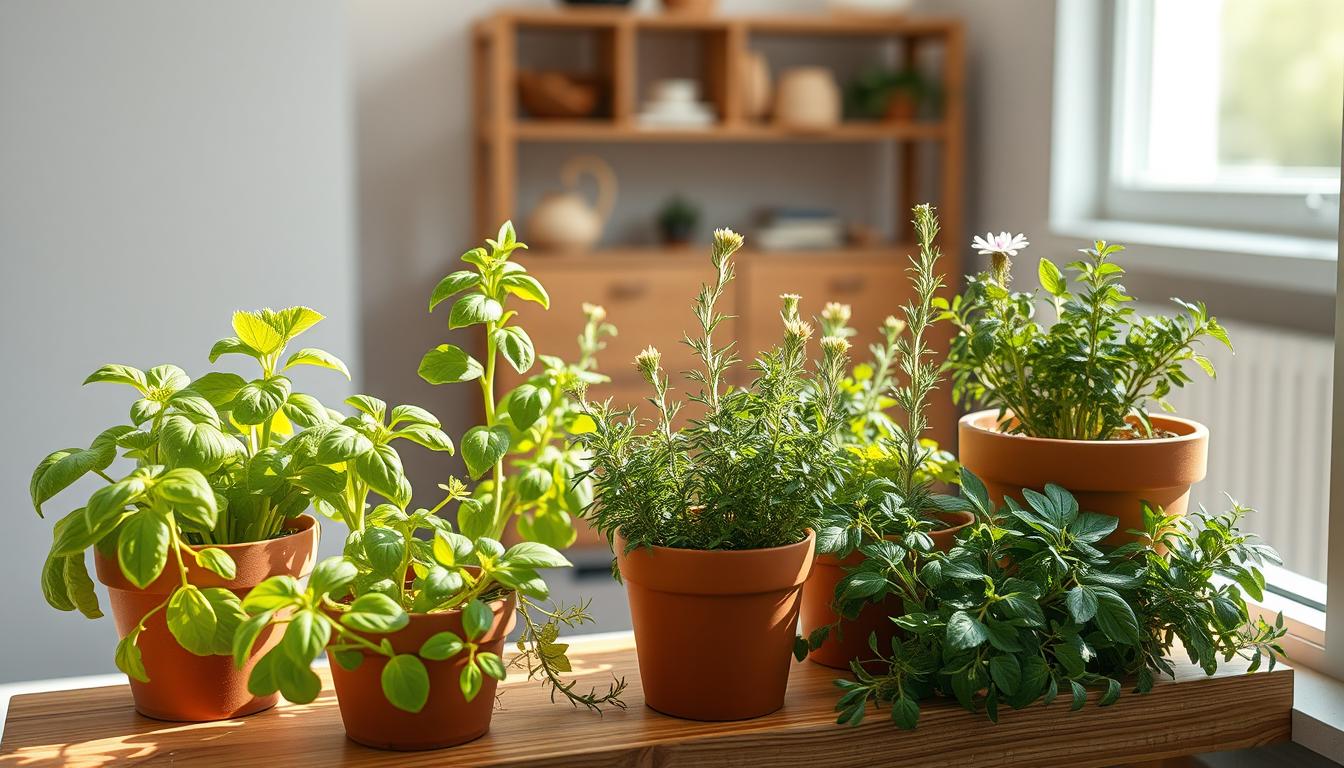
Starting your own indoor herb gardening is easier than you think. With small pots, you can create a thriving herb garden right in your kitchen.
You can start by planting herbs from seed or by buying healthy plants from your local store. Both ways are rewarding, letting you enjoy fresh flavors all year.
Growing your own herbs indoors adds freshness to your cooking. It also brings greenery into your home. It’s a simple and fulfilling way to improve your cooking.
Why Choose an Herb Garden Indoors?
Indoor herb gardening has many benefits for gardeners of all levels. It’s perfect for both beginners and experienced gardeners. Having an herb garden indoors lets you enjoy fresh herbs all year.
One big advantage of indoor herb gardening is how space-efficient it is. Herbs don’t need much room, making them great for small kitchens or apartments. This means you can grow many herbs, even in tiny spaces.
Indoor herb gardens are also easy to tend and harvest. This makes it simple for gardeners to keep their gardens up to date. It ensures a steady supply of fresh herbs.
Having an herb garden indoors also means you always have fresh herbs nearby. You can just walk into your kitchen or living area to pick what you need. This saves you from having to go to the store or use dried herbs.
Also, indoor herb gardening is for everyone, no matter your skill level. Whether you’re new to gardening or have lots of experience, growing herbs indoors is rewarding. It adds freshness and flavor to your cooking.
Essential Herbs for Indoor Gardening
Indoor herb gardening offers a wide range of options. Some herbs are better suited for indoor conditions than others. It’s key to pick herbs based on their growth needs, cooking uses, and how easy they are to care for.
Basil is a favorite for indoor gardens because it’s versatile and easy to care for. It needs lots of light and regular watering. Mint is also good for indoor gardens, growing well in partial shade. But, mint can spread, so it’s best kept in its own pot.
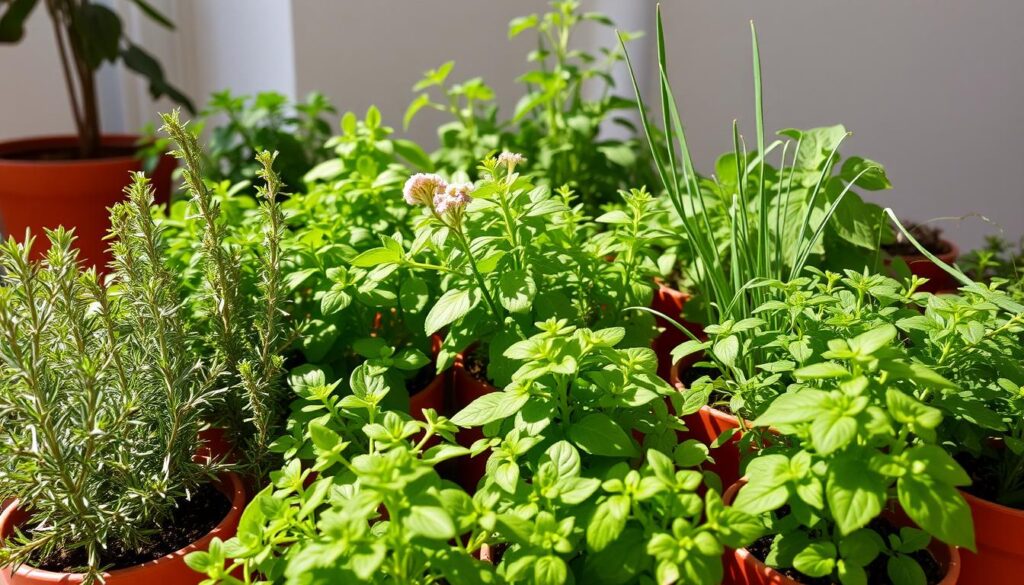
Other essential herbs for indoor gardening include chives, rosemary, thyme, and oregano. Chives need little care and add a fresh onion taste. Rosemary loves sunlight and well-drained soil. Thyme is easy to care for and prefers well-drained soil. Oregano is easy to care for and adds depth to many dishes.
When picking herbs for your indoor garden, think about your space’s conditions. Consider the light and temperature. Choosing the right herbs for your space ensures a thriving garden all year.
Characteristics and Uses
Knowing each herb’s characteristics and uses helps in choosing the right ones for your garden. Herbs like basil and mint are great for cooking and add a nice scent to your home.
Ideal Indoor Potting Conditions
Herbs grown indoors need specific potting conditions to flourish. Getting these conditions right is key. One of the most critical factors is ensuring the soil drains well.
Soil Requirements are vital for indoor herb gardening. Many herbs, like those from the Mediterranean, need loose, fast-draining soil. This prevents waterlogged soil conditions. A mix designed for indoor plants, with peat moss or coconut coir for moisture and perlite or sand for drainage, is ideal.
As René Lys, a noted horticulturist, once said, “The right soil mix is the foundation of a healthy indoor garden.” This highlights the importance of choosing the right soil composition for your herbs.
“The art of gardening is a never-ending journey, and the soil is your canvas.”
Container Tips are also key. Using a container with a drainage hole is essential. This prevents water from accumulating in the soil. Such a simple feature can greatly reduce the risk of root rot and other waterlogged soil problems.
When choosing a container size, it’s better to err on the side of caution and start small. This allows the herb to grow into the container without becoming too wet. Most herbs prefer being slightly root-bound, which encourages vigorous growth.
By focusing on these key aspects of indoor potting conditions, you can create an optimal environment for your herbs. Whether you’re growing basil, rosemary, or thyme, the right soil and container conditions will help ensure a healthy and productive indoor herb garden.
Location, Location, Location
Choosing the right spot for indoor herbs is key. Most herbs need lots of sunlight to grow well.
Most herbs require 4 to 6 hours of sunlight to grow and thrive. The direction of your windows affects how much sunlight your herbs get.
South- or West-Facing Windows
For herbs like rosemary and basil, south- or west-facing windows are best. These windows get direct sunlight all day, helping these herbs grow strong.
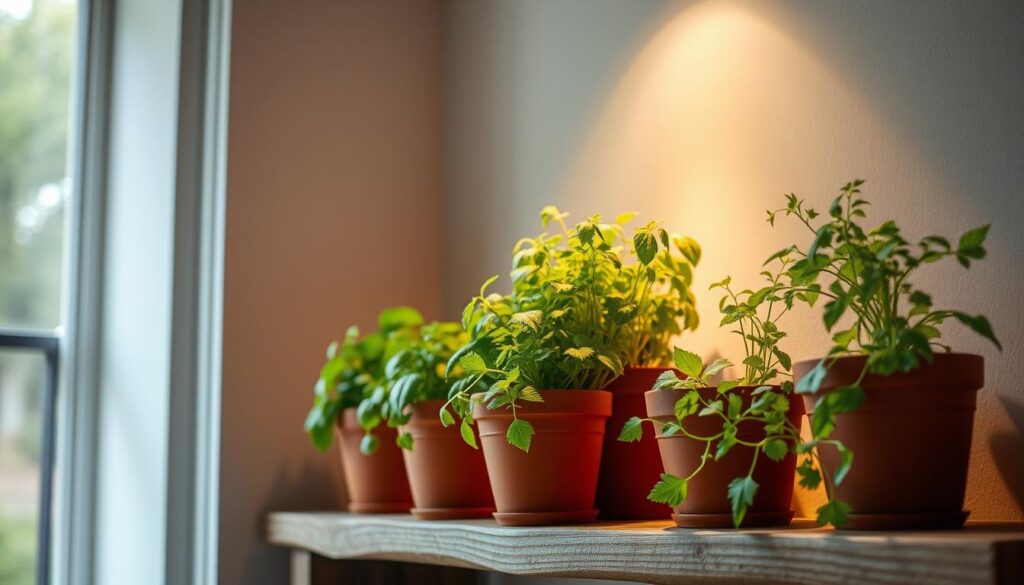
If your windows don’t get direct sunlight, grow lights can help. They let you grow many herbs, even in little light.
Watering Your Indoor Herb Garden
Learning to water your indoor herbs is key to a healthy garden. Each herb needs a different amount of water. Knowing what each needs is vital for their health.
Mediterranean herbs like rosemary and thyme need careful watering. They like moist soil but not too wet, more so in cooler months. Basil, on the other hand, likes its soil consistently moist. Too much water can harm them, causing root rot and other issues, mainly in cooler weather.
To prevent too much water, check the soil often. Stick your finger into the soil up to the first knuckle. If it’s dry, it’s time to water. Watering in the morning helps plants drink it all day, reducing disease risks.
“The way to keep herbs healthy is to mimic their natural habitat as closely as possible, including their watering needs.”
Don’t let your plants get too dry either. It can stress them out, making them grow less and taste less good. Finding the right balance is essential. Use pots that drain well to stop water from pooling in the soil. By understanding each herb’s needs and adjusting your watering, your garden will flourish.
By using these watering tips, you’ll grow a vibrant indoor herb garden. The secret to great herb care is to pay close attention and be ready to adjust as your plants grow.
Fertilizing Indoor Herbs
Fertilizing your indoor herbs is key to keeping them healthy and green. Like all plants, they need nutrients to thrive. Fertilization gives them these essential nutrients.
Why Fertilize Indoor Herbs? Fertilizing boosts their growth, flavor, and scent. Without enough nutrients, herbs can become weak and less useful in cooking.
How often to fertilize depends on the fertilizer type and herb needs. Usually, fertilizing once or twice a month with a liquid houseplant fertilizer is best. This helps them grow steadily without getting too much.
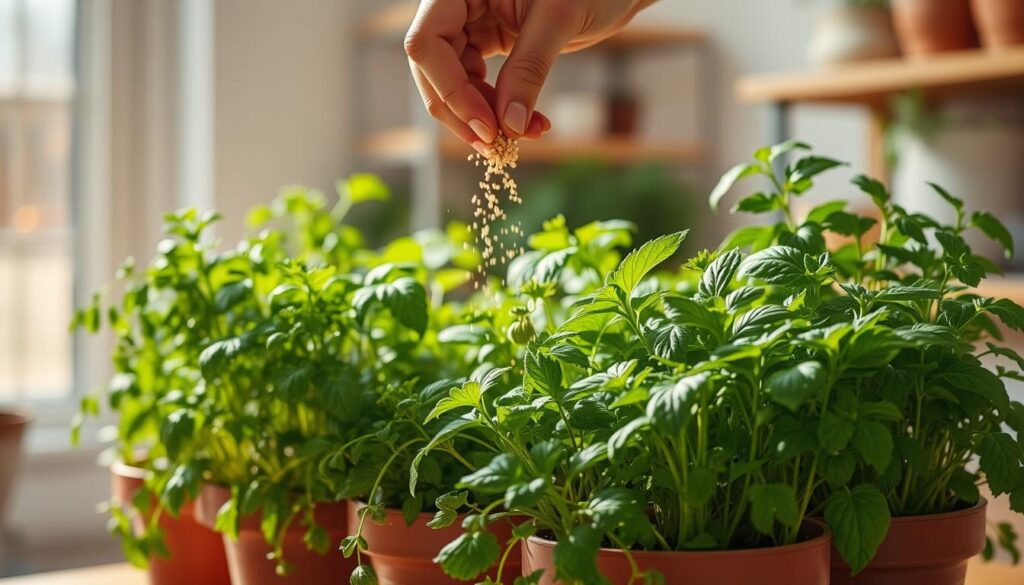
Choosing the Right Fertilizer is vital for your herbs’ health. A balanced, water-soluble fertilizer is often the best choice. It gives a wide range of nutrients. Some herbs need special nutrients, so knowing their needs is important.
For most herbs, a general-purpose houseplant fertilizer is fine. But, if you have heavy feeders like basil or mint, they might need more frequent feeding.
By following these tips on fertilizing indoor herbs, your garden will stay healthy and productive all year.
Pest Management for Indoor Herbs
Even with the best care, indoor herbs can face pests like spider mites and mealybugs. It’s key to check them often to spot problems early.
Common Indoor Herb Pests: Indoor herbs can get hit by several pests, including:
Spider mites: These tiny, spider-like bugs can turn leaves yellow or bronze.
Mealybugs: Mealybugs are small, white, cottony bugs that suck plant sap.
Aphids: Aphids are small, soft-bodied bugs that live on herb stems and leaves.
To tackle these pests, using pest control methods is vital. Neem oil and insecticidal soap are good choices. They fight infestations without harming the plants.
“The key to successful pest management is early detection and intervention. Regularly inspecting your indoor herbs can help prevent pest issues from becoming severe.”
Being proactive and using the right pest control can keep your indoor herb garden healthy and growing well.
Harvesting Your Herbs
Regular harvesting is key to making your herb plants grow more leaves. By pinching off leaves or cutting off more as needed, you enjoy your herbs and help them grow well.
Benefits of Regular Harvesting
Harvesting your herbs often has many benefits. It makes the plants bushier and stops them from flowering. As gardening expert, Carol Klein, once said, “The more you pick, the more you get.” This way, you always have fresh herbs all season long.
“The secret of a bountiful herb garden lies in regular harvesting and proper care.”
Different herbs need different harvesting methods. For example, basil and mint grow more by pinching off the top leaves. But rosemary and thyme grow by cutting off the stem tips.
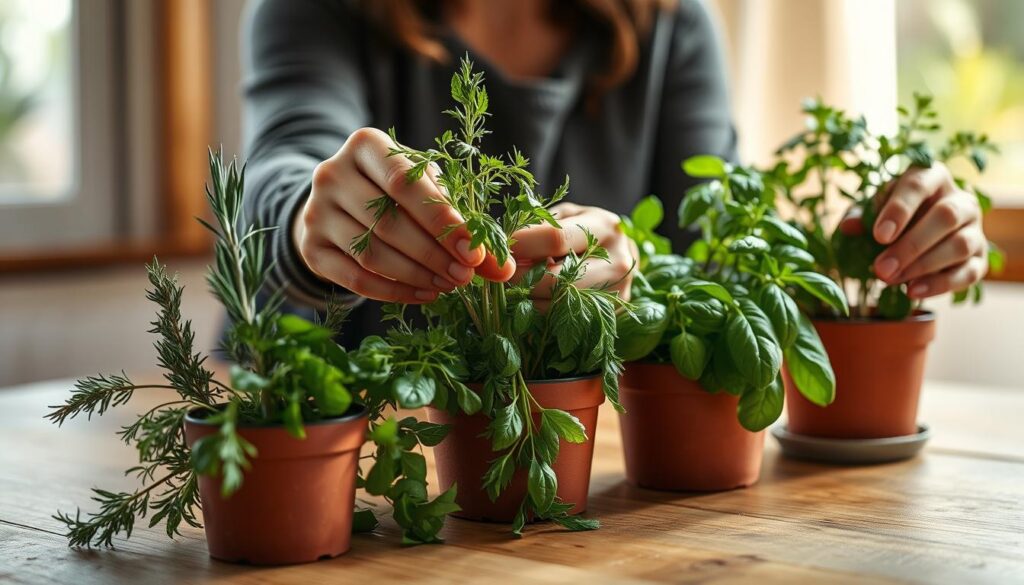
When it comes to herb harvesting, timing is key. Harvest in the morning, after the dew dries but before it gets hot. This keeps the herbs’ flavor and smell fresh.
In indoor herb gardening, harvesting the right way is important. It keeps your herbs looking good and growing back. Regular harvesting gives you fresh herbs and keeps your plants healthy.
Cooking with Your Homegrown Herbs
Harvesting your own herbs is just the start. Now, let’s learn how to use them in cooking for great flavor and aroma. Fresh herbs from your garden can make your dishes taste better and add a personal touch.
Using your own herbs in cooking means you get the best taste and smell. You can use them in many dishes, like soups, salads, sauces, and marinades. The trick is to know how to use them right in your recipes.
Enhancing Flavors with Fresh Herbs
Fresh herbs like basil, rosemary, and thyme can make your food taste richer. For example, adding fresh basil to pasta sauce or using rosemary in roasted meats can really boost the flavor. Homegrown herbs are fresher and taste better than dried or store-bought ones.
When using fresh herbs, add them at the right time to keep their flavor and smell. Delicate herbs like parsley and cilantro are best added near the end. Hardier herbs like rosemary and thyme can go in earlier.
Cooking with your homegrown herbs is more than just following recipes. It’s about trying new things and finding creative ways to use these fresh ingredients. Whether it’s a simple salad or a complex sauce, fresh herbs can really make a difference.
Expanding Your Indoor Herb Garden
As you get better at indoor herb gardening, you might want to try new herbs or ways to grow them. Growing more herbs can be exciting and rewarding. It lets you discover new tastes and smells.
Trying new herbs is a great way to grow your collection. You could add lemongrass or Thai basil for a unique flavor. Or, you could try different types of herbs you already have, like sweet or purple basil.
Propagating herbs is another good way to grow your garden. Herbs like mint and oregano can be easily grown from cuttings or division. This not only adds to your collection but also keeps your plants healthy.
To handle more herbs, think about using tiered shelves or hanging planters. These can help you use your space better. With these tips, you can have a big and varied herb garden, even in a small space. And you’ll always have fresh herbs to add to your cooking.