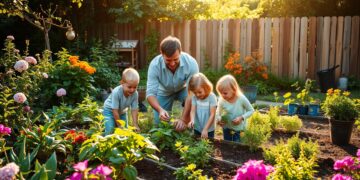







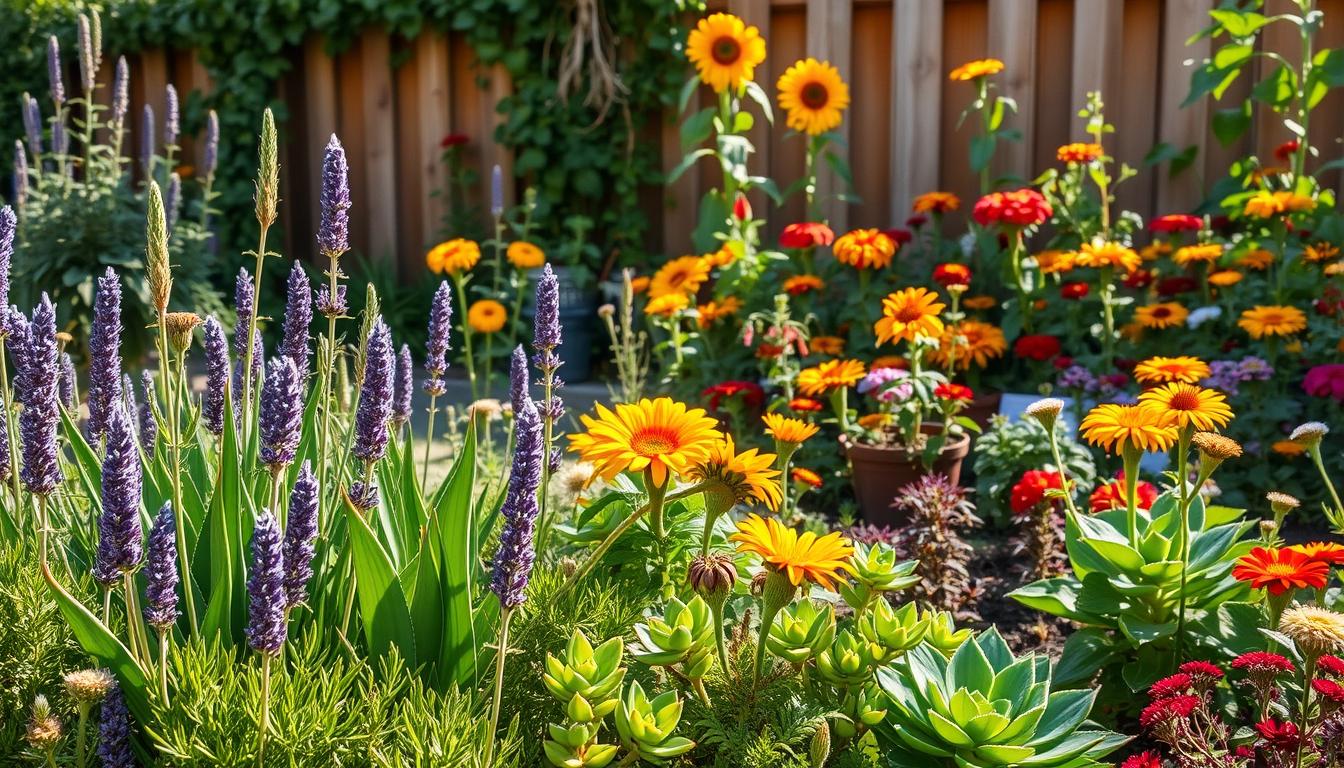
Turning your outdoor area into a lush oasis is easier than you might think. Backyard gardening is a rewarding hobby. It makes your home look beautiful and gives you a peaceful place to relax.
Gardening is fun for everyone, no matter your age or skill level. By picking easy-to-grow plants, you can enjoy backyard gardening without stress.
With the right plants and a little care, you can make a lively and growing garden. It will make your outdoor time even better. You can grow flowers, herbs, or veggies, depending on what you like.
Why Gardening is Beneficial for Everyone
Gardening is more than just a hobby. It’s a way to boost your mental and physical health. The therapeutic benefits of gardening are well-documented. Many gardeners say it helps them feel less stressed and happier.
Gardening also has physical perks. Digging, planting, and weeding can make your heart healthier and stronger. Gardening can be a form of moderate exercise. It’s great for staying active.
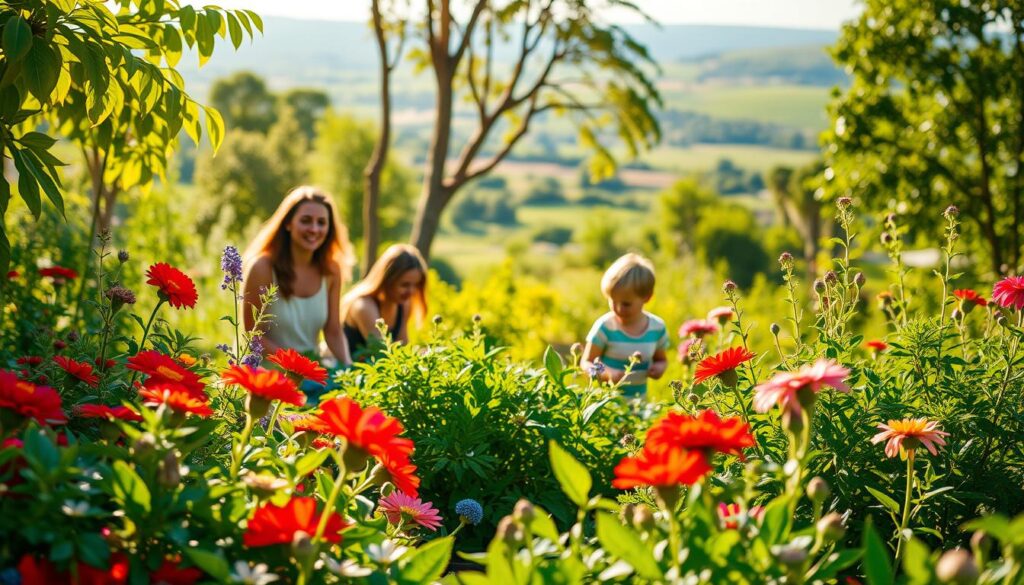
Gardening greatly affects mental health. Caring for plants and seeing them grow can make you feel proud and accomplished. As one gardener said,
“Gardening gives me a sense of purpose and helps me stay grounded.”
This feeling is shared by many who find peace in gardening’s quiet, methodical tasks.
Gardening can also be a social activity. You can join a local gardening club or share tips with neighbors. This can help fight loneliness and improve mental health.
Adding gardening to your life can greatly benefit your physical and mental health. Its many advantages make gardening a popular choice for improving well-being.
Choosing the Right Plants for Your Space
Finding the right plants is key to a thriving garden. It matters whether you have shade or a dry spot. The right plants can make a big difference in their growth and survival.
In shaded areas, some plants do well in low light. Ajuga and Caladium are great choices. They are hardy and add color and texture to shaded spots.
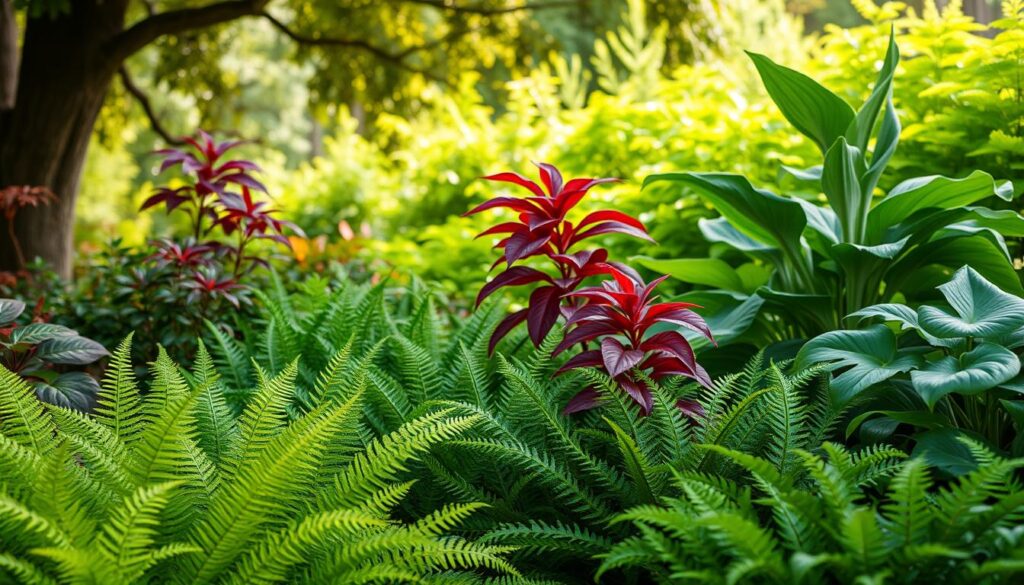
Busy or new gardeners should look into low-maintenance plants. Sedum is a good example. It needs little care and can survive with less water, perfect for dry areas.
When picking plants, think about your local climate and soil. Choosing plants that fit your garden’s conditions means less care. This makes gardening more enjoyable.
By picking the right plants, you can have a beautiful and easy-to-care-for garden. This approach makes gardening simple for everyone, no matter their experience.
Essential Gardening Tools for Beginners
For those new to gardening, having the essential gardening tools is key for a good start. Gardening is a rewarding hobby that lets you connect with nature. It’s also a chance to enjoy what you grow.
The first tool every beginner needs is a good quality trowel. A trowel helps with digging small holes, mixing soil, and more. It’s a versatile tool that makes gardening easier.
Another must-have is a pair of gardening gloves. They protect your hands from thorns, prickles, and dirt. Plus, pruning shears are needed for trimming and shaping plants. They help plants grow healthy and look good.
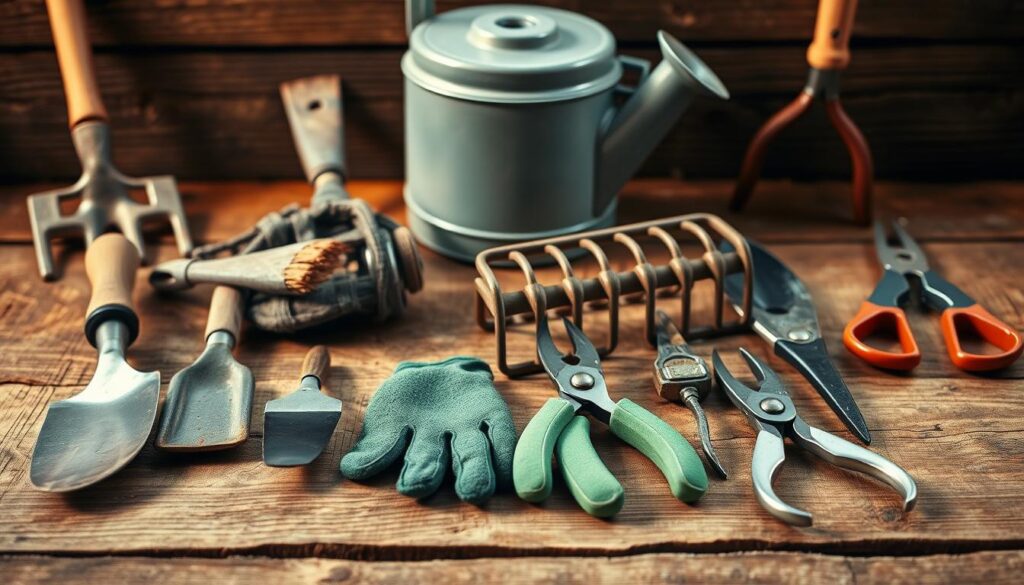
Other beginner gardening tools include a garden fork for turning over soil, a rake for leveling, and a watering can or hose. Having these essential gardening equipment makes gardening tasks easier and more fun.
Good quality tools might seem pricey at first, but they’re worth it. They last longer and work better. As you keep gardening, you’ll find more tools you need. But starting with these basics is a great start.
Planting Techniques for Effortless Growth
Starting your garden right is key to effortless growth. Knowing how to plant seeds and seedlings is essential. This ensures your plants start strong, leading to a healthy garden.
Soil Preparation is a must before planting. Make sure the soil drains well and is full of nutrients. You might need to test your soil and add compost to improve it.
For seed planting, the depth and spacing matter a lot. Each seed type has its own needs. Plant seeds at a depth of two to three times their width, and space them right to avoid crowding.
Seedling Care is also vital. Seedlings need gentle handling to protect their roots. Plant them at the same depth as their pots, and water well after planting. Keep the soil moist but not too wet during their early growth.
With these planting techniques and the right care, your garden will flourish with little effort. Proper spacing, soil prep, and after-planting care are the secrets to effortless growth.
Caring for Your Garden: Maintenance Tips
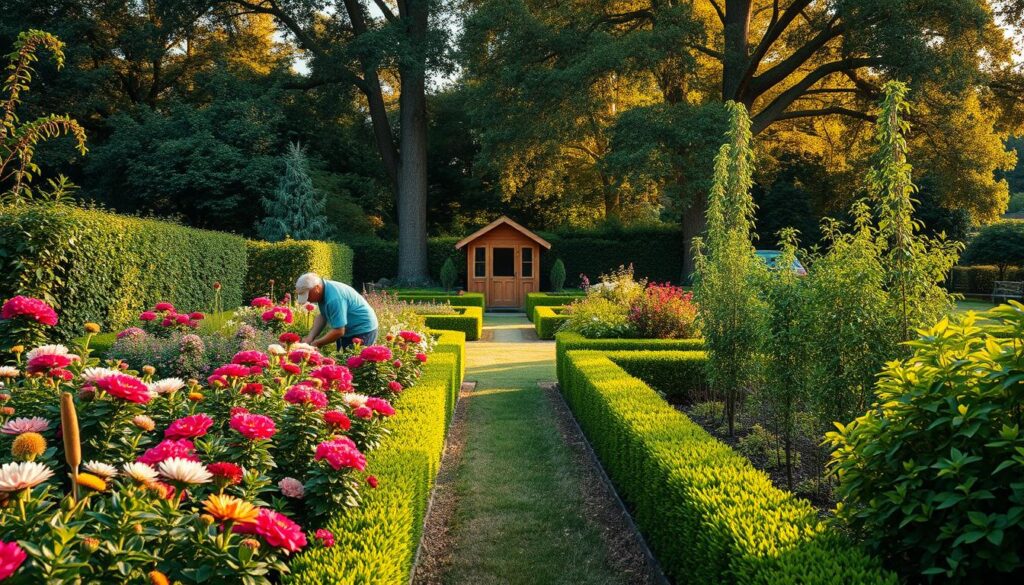
The secret to a lush, thriving garden is in the right maintenance. Regular care keeps your garden healthy and vibrant all year.
Proper watering is key in garden maintenance. Too much water can harm your plants as much as too little. Know how much water your plants need. Most gardens need 1-2 inches of water each week, from rain or irrigation.
Check the soil moisture by inserting a finger into the soil up to the knuckle. This tells you when it’s time to water.
Fertilizing is also vital for plant growth. Organic fertilizers like compost or manure are great. They release nutrients slowly and improve soil. Fertilize once during the growing season, but follow the package instructions to avoid overfertilizing.
Pruning and Pest Control
Pruning is another important task. It removes dead or diseased branches, promoting healthy growth. Prune during the dormant season to reduce stress. Use clean, sharp tools and disinfect them between cuts to prevent disease spread.
Pest control is also critical. Opt for organic methods over chemical pesticides. Encourage beneficial insects like ladybugs and lacewings. They eat common pests. Use neem oil or insecticidal soap for infestations.
As gardening expert says, “The best time to plant a tree was 20 years ago. The second best time is now.” Starting pest control early can prevent big problems later.
By following these garden maintenance tips, you can enjoy a thriving garden. Regular care and attention ensure your garden stays healthy and vibrant.
Seasonal Gardening: What to Plant When
To keep your garden thriving, it’s essential to know what to plant during each season. Seasonal gardening is about understanding the unique opportunities and challenges presented by each time of year.
Spring planting is a busy time for gardeners, with warm-season crops like zucchini and cucumbers being planted as soon as the soil has warmed up. This is also a great time to plant flowers like tulips and daffodils.
Summer planting continues with more warm-season crops, and it’s also a good time to plant heat-tolerant plants like tomatoes and peppers. As summer progresses, start thinking about fall planting.
Fall and Winter Planting
As the weather cools, fall planting becomes a priority. This is an excellent time to plant cool-season crops like broccoli, kale, and spinach. These plants thrive in the cooler temperatures and can tolerate light frosts.
Winter planting varies by region but generally includes planting bulbs like garlic and tulips, which will bloom in the spring. In warmer climates, winter is a good time to plant cool-season crops.
By understanding the planting schedule for each season, you can enjoy a diverse and thriving garden throughout the year. Whether you’re a seasoned gardener or just starting out, seasonal gardening is a great way to stay engaged with your garden and enjoy the changing seasons.
Creating a Garden Layout that Works
Creating a good garden layout needs careful thought. A well-designed garden makes your outdoor space look better. It also helps your plants grow well.
When you plan your garden design, think about how big the plants will get. This includes their height and how wide they spread. It helps prevent plants from getting too close together. It also makes sure each plant gets enough sunlight and air.
“A garden is a love song, a duet between a human being and Mother Nature.”
This quote shows how important harmony is in garden design. To get harmony, group your plants based on their growth habits.
Key Considerations for Backyard Gardening
Good backyard gardening is more than just planting. It’s about making a complete outdoor space. Things like soil type, sunlight, and how easy it is to get around are key to a successful garden.
By designing your garden layout well, you can make a beautiful and useful outdoor area. It will meet your needs and make gardening more enjoyable.
Common Gardening Mistakes to Avoid
Even with the best intentions, gardeners can make errors that impact their garden’s health and productivity. Understanding these common gardening mistakes is the first step towards creating a thriving garden.
One of the most prevalent issues is improper watering, which includes both overwatering and underwatering. Overwatering can lead to root rot and other problems, while underwatering can cause stress to the plants, making them more susceptible to disease and pests.
Soil preparation is a critical step that is often overlooked. Poorly prepared soil can lack the necessary nutrients and drainage, hindering plant growth. To avoid this, gardeners should test their soil type and amend it as necessary with organic matter like compost.
By being aware of these common gardening mistakes and taking steps to avoid them, gardeners can significantly improve the health and productivity of their gardens. Proper care and attention to detail can make a substantial difference in the overall success of a garden.
Resources to Enhance Your Gardening Skills
Learning new things is key for gardeners. Using gardening resources keeps you up-to-date with the latest gardening tips and trends.
Joining online gardening groups is a great idea. You can meet other gardeners, share tips, and learn from their experiences. These groups often have valuable advice on gardening.
There are many websites, forums, and social media groups focused on gardening. They have lots of information like tutorials, videos, and articles. You can find tips on gardening techniques, plant care, and garden design.
By using these online resources and joining gardening communities, you can improve your gardening skills. You’ll create a beautiful garden that adds joy and beauty to your outdoor space.