








Maintaining personal hygiene is key for your health and happiness. It means keeping your body clean to protect you from infections.
Good body cleanliness stops illnesses like gastroenteritis, colds, flu, and COVID-19. By staying clean, you lower your chance of getting sick.
So, knowing how important personal hygiene is, is critical. It’s a simple yet powerful way to stay healthy and stop diseases from spreading.
Understanding Hygiene: What It Means for You
Hygiene is more than just being clean. It’s a key part of our daily lives. Personal hygiene means taking care of our bodies in many ways.
Personal hygiene covers a lot, like bathing, washing hands, and brushing teeth. These actions are not just for looking good. They are essential for our health and happiness.
Keeping good hygiene helps stop illnesses from spreading. Simple hygiene habits in our daily lives can greatly lower the chance of getting sick.
Key Aspects of Personal Hygiene
Important hygiene habits include regular baths or showers and washing hands often. This is key, like after using the bathroom and before meals. Also, don’t forget to brush and floss your teeth regularly.
By knowing and following these hygiene practices, we can improve our health. We also feel more confident and live better lives.
The Importance of Personal Hygiene
Personal hygiene is key in stopping diseases from spreading. It’s a basic part of our daily lives that keeps us healthy. By keeping clean, we protect ourselves and others from getting sick.
Good personal hygiene is vital because it helps stop you from getting sick. It also stops you from spreading germs and diseases, as healthdirect notes. This is very important in places like schools, workplaces, and public transport, where germs can spread fast.
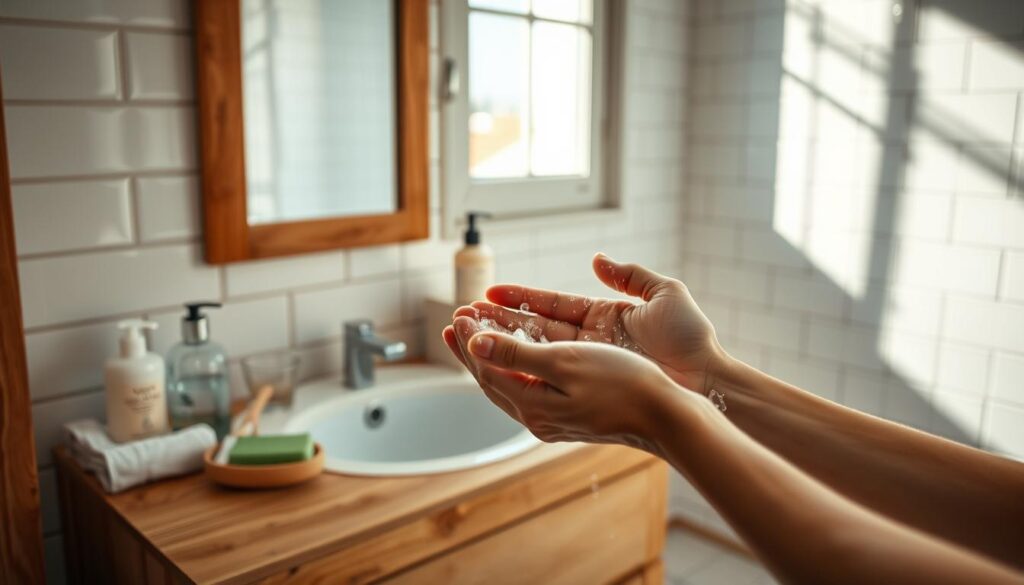
Good hygiene means washing hands often, showering, brushing teeth, and wearing clean clothes. These habits are essential for preventing illnesses and keeping us healthy.
The importance of hygiene goes beyond personal health to public health. When many people stay clean, it helps everyone stay healthy. This is very important for people who are more at risk, like the elderly, young kids, and those with weak immune systems.
In short, personal hygiene is a big part of disease prevention. By knowing its value and making hygiene a part of our daily life, we can lower the risk of getting sick. This helps make our community a healthier place.
Daily Routine for Optimal Hygiene
Keeping up with good hygiene habits can make you feel more confident and healthy. A daily routine helps you stay consistent. It ensures you don’t forget important hygiene steps.
Being consistent is vital for good hygiene. By adding hygiene practices to your daily routine, you avoid dirt and bacteria. This includes brushing your teeth, washing your hands, and showering every day.
To keep up with your routine, make it a habit. Start with a schedule you can follow every day. Use reminders or keep your hygiene products where you can see them.
Make your hygiene routine fun. Use scented soaps or shower gels you enjoy. Or, listen to music while you shower. This makes the routine more enjoyable.
Experts say sticking to a routine is key for good hygiene. It boosts your physical and mental health. A regular hygiene routine can also lower stress and anxiety about personal cleanliness.
Hand Hygiene: A Vital Practice
Washing your hands is a simple yet powerful way to fight germs. Hand hygiene is key to our daily routine. It helps stop illnesses from spreading.
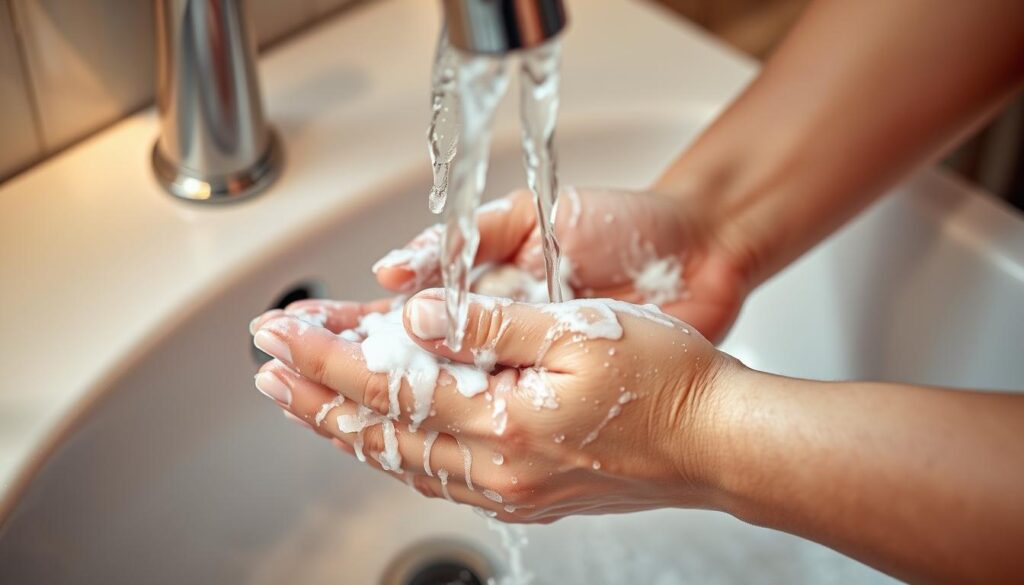
Healthdirect says, “Washing your hands often stops germs from making you sick.” This shows how important hand washing is. We should do it before eating and after using the bathroom.
When to Use Hand Sanitizer
Hand washing with soap and water is best. But, hand sanitizer is good when you can’t wash your hands. Use it when soap and water are not around.
Hand hygiene is not just for our health. It also helps keep communities safe from infections. By washing our hands often, we help everyone stay healthy.
To keep your hands clean, wash them right. Use soap, rub all surfaces, and rinse well with clean water. This cuts down germ spread a lot.
Oral Hygiene: Keeping Your Smile Bright
Good oral hygiene is key to avoiding dental problems. Brushing your teeth twice a day is a must. Use a soft toothbrush and fluoride toothpaste, as health experts advise.
To brush right, hold your toothbrush at a 45-degree angle. Point it towards your gum line. Move it in small circles, covering all tooth surfaces. Brush for at least two minutes for a deep clean.
Flossing every day is also vital. It removes food and plaque from between teeth and under the gums. A toothbrush can’t get there.
Using mouthwash can kill bacteria and make your breath fresh. Regular dental visits are also important. They help catch and treat problems early.
By following these steps, you can keep your smile shining. Good oral hygiene is more than a pretty smile. It’s about your health too.
Body Hygiene: More than Just a Shower
Body hygiene is more than just taking a bath or shower. It includes many practices to keep your body clean. Healthdirect says that bathing helps prevent infections and body lice. But, other hygiene practices are just as important.
Keeping clean, like in moist areas like underarms and genitals, is key. Proper care of these areas stops bacterial and fungal infections. This keeps your body clean overall.
For underarms, using an antiperspirant or deodorant controls sweat and smell. Wearing clean clothes, after sweating or exercising, is also vital.
Genital hygiene is about gentle cleansing. Mild soap and water are best. Harsh products can upset the natural balance and cause irritation.

Don’t forget about foot hygiene. Washing feet daily and drying them well, between the toes, stops fungal infections like athlete’s foot.
Adding these habits to your daily routine boosts your body hygiene. It also improves your health and well-being.
Skincare Hygiene: Caring for Your Skin
Learning about skincare hygiene can change how you care for your skin health. It’s not just about looking good. It’s about keeping your skin healthy through good care and hygiene.
Washing your body is key to avoiding skin irritation and getting rid of bacteria that cause body odor. Health sources agree. This is a basic part of skincare, showing the need for a routine that includes cleaning and moisturizing.
A good skincare routine is more than just washing your face. It means knowing your skin type and picking the right products for it. Whether your skin is dry, oily, or a mix, the right products help keep it healthy and prevent problems like acne and dryness.
Skincare hygiene also means how you handle your skincare products. Keeping your hands clean before applying products, using clean towels, and storing products in a cool, dry place are all important. They can greatly affect your skin health.
Adding these habits to your daily routine can make your skin healthier and more resilient. It’s about building long-term habits for your skin’s health, not just quick fixes.
By focusing on skincare hygiene and a thoughtful skincare routine, you can enjoy healthy, vibrant skin. This not only makes you look better but also improves your overall health.
Food Hygiene: Keeping Your Meals Safe
Maintaining proper food hygiene is key for a healthy life. It stops food from getting contaminated, which lowers the chance of getting sick from food. Healthdirect says, “The germs that cause many diseases can be passed on by handling contaminated food.” This shows how important safe food handling is.
To keep your meals safe, follow the right food handling and preparation steps. Wash your hands well before touching food. Make sure all utensils and cooking areas are clean. Also, store food at the right temperatures. Food safety helps keep you and others healthy.

Storing food right is a big part of food hygiene. Keep raw and cooked foods apart to avoid mixing germs. Always check when food expires and store it in sealed containers. This helps a lot in avoiding foodborne illnesses.
Also, watch the temperature of food storage and cooking. Bacteria grow fast in temperatures between 40°F to 140°F (4°C to 60°C). So, refrigerate perishable foods fast and cook food to the right temperature. This makes sure it’s safe to eat.
In summary, keeping food hygiene involves safe handling, proper storage, and correct cooking. Following these steps helps lower the risk of getting sick from food. It also helps make our community healthier.
Mental Hygiene: Caring for Your Mind
Taking care of your mental health is as vital as washing your hands. Your mental state greatly affects your physical health and hygiene.
Mental hygiene means doing things that keep your mind healthy. It’s about feeling good, managing stress, and staying happy.
Being aware of your thoughts and feelings is key. Mindfulness and meditation help you stay balanced. It’s about being present and accepting your emotions without judgment.
Living a healthy lifestyle is also important. Eating right, exercising, and sleeping well are all good for your mind. Exercise, in particular, can help with anxiety and depression.
“A healthy mind is as important as a healthy body. Taking care of your mental health is a vital part of overall hygiene.”
Having good friends and family is also vital. They offer support and help you feel less alone.
Doing things that make you happy is another part of mental hygiene. Hobbies, creative activities, or nature walks can boost your mood.
In summary, mental hygiene is a big part of being healthy. By focusing on your mental well-being, you can live a better life. This balance is key to overall health.
The Role of Hygiene in Preventing Disease
Good personal hygiene is key to stopping germs and diseases. By following proper hygiene, people can lower their chance of getting sick. Healthdirect says good hygiene stops illnesses from spreading.
Hygiene is a big part of keeping diseases away. It includes washing hands often, taking care of teeth, and keeping skin clean. These habits help keep us healthy and also help others stay well.
Knowing how important hygiene is helps make our community healthier. By focusing on hygiene, we can fight off diseases and improve everyone’s health.