








As parents, we all want to help our kids through tough times. But, jumping to solutions without understanding the problem can actually hurt more than help.
Parents often think they know what’s best. And sometimes, they do. But it’s just as important to take a step back and truly listen to what our kids are thinking.
This way, we can improve effective communication and support our kids’ growth. When kids feel heard, they’re more likely to share their thoughts. This builds a stronger, more trusting bond between us.
The Importance of Listening to Children
Listening to children opens a door to understanding their needs and feelings. This act of active listening is key for building trust and a strong connection with them.
When we listen to children, they feel understood and validated. This helps them calm down. Feeling heard makes them less likely to act out in frustration. Compassionate listening gives them a sense of security and comfort.

The value of listening is huge. By focusing on them, we show we value their thoughts and feelings. This builds a positive and supportive relationship, encouraging them to share more.
Active listening means not just hearing words but understanding the emotions behind them. It’s about being fully present and showing we care about what they say.
Using compassionate listening practices helps create a safe space for children to share their feelings. This strengthens the bond between parents and children. It also helps children learn to manage their emotions better.
Understanding Child Development
The journey of child development is greatly influenced by how parents listen to their children. It’s not just about growing physically. It’s also about emotional and psychological growth.
Emotional intelligence is key in child development. It’s shaped by how parents talk to their kids. Active listening helps children learn to understand and manage their feelings.

Listening to children makes them feel heard and understood. This feeling is essential for their emotional development. When they feel listened to, they tend to develop better emotional control.
Parents are very important in helping their child’s emotional intelligence. They need to be attentive and responsive. This means understanding the emotions behind their words, not just what they say. By doing this, parents help their children deal with complex emotions.
If we don’t listen actively, we might offer solutions that don’t fit. This can stop a child from learning to solve problems and be emotionally strong. So, parenting strategies that focus on listening are very important for a child’s growth.
Creating a Safe Space for Conversation
Starting a culture of open communication means making a safe and non-judgmental space for your child. This space lets your child share their thoughts and feelings without fear. It’s a place where they can be themselves without worry.
To make this space, be easy to talk to and understanding. Effective communication is more than just listening. It’s about being fully there for your child. So, turn off your phone and look at them.
Tell your child they can express feelings in many ways. They can drawing, dancing, writing songs, or journaling. These methods help kids who find it hard to talk. They give your child ways to share feelings in a good way.
“The way we talk to our children becomes the way they talk to themselves.” – Peggy O’Mara
Creating a safe space also means watching how you react to your child. Always be supportive and understanding. Don’t be dismissive or critical. This makes your child feel heard and builds trust and open communication.
Using these tips, you can make a place for effective communication. It lets your child share freely. This makes your bond stronger and helps them grow in important ways, like managing emotions and expressing themselves.
Techniques for Effective Listening
To truly understand your child, you need to master the art of deep listening. This means not just hearing their words. It also involves paying attention to their tone, emotions, and body language.
Deep listening is about creating a safe and non-judgmental space. Here, your child feels comfortable expressing themselves. It’s a skill that requires patience, empathy, and understanding.
One of the key techniques for effective listening is to give your child your undivided attention. This means putting away distractions like your phone or TV. Also, make eye contact with your child.
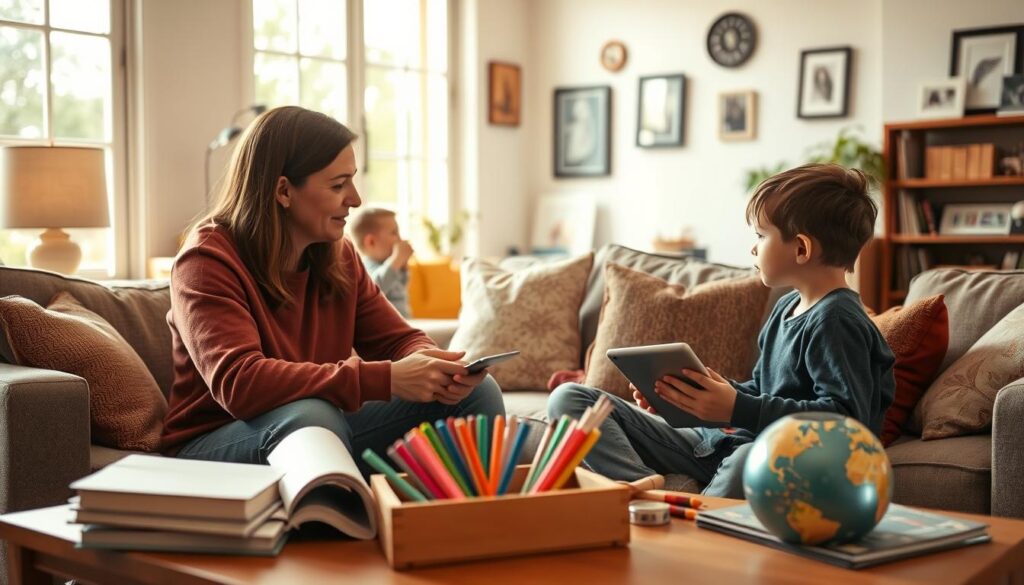
Another important aspect is to practice empathy. This involves acknowledging your child’s feelings and showing them you understand their perspective. By doing so, you can help your child feel heard and validated.
Effective listening also involves being aware of your own emotions and biases. It’s essential to remain open-minded and non-judgmental when listening to your child. Even if you disagree with their views, stay open.
By incorporating these techniques into your daily interactions with your child, you can strengthen your relationship. You can also help your child develop essential communication skills.
Recognizing Non-Verbal Cues
Children often show their emotions and intentions through non-verbal cues. This includes body language and facial expressions. It’s key to understanding these cues for better communication and a stronger bond with your child.
Non-verbal cues can tell you a lot, just like words. For example, a child might say they’re okay but cross their arms. This shows they might be feeling defensive or closed off. Paying attention to these signals helps you understand their feelings better.

Developing emotional intelligence means recognizing and understanding these cues. It’s about noticing the emotional nuances that aren’t always spoken.
To get better at noticing non-verbal cues, try to be more observant when you’re with your child. Look at their posture, the tone of their voice, and their facial expressions. These can give you clues about their feelings and needs.
By becoming more aware of non-verbal communication, you can meet your child’s needs better. This helps build a more open and supportive relationship.
Responding to Your Child’s Thoughts
It’s not just about hearing what your child says. It’s about understanding their feelings too. When they feel heard, they open up more. This deepens your connection with them.
It’s important to validate your child’s emotions. You don’t have to agree with them, but show that their feelings matter. For example, if they’re upset, say, “You seem really upset about this. It can be really frustrating.” This shows you care and understand.
Empathy is keyin making your child feel heard. It’s about seeing things from their point of view. This makes them feel safe to share their feelings with you.
Don’t rush to fix your child’s problems right away. While it’s natural to want to help, it can feel dismissive. Instead, focus on understanding and validating their emotions. This helps them grow emotionally strong and learn to handle their feelings.
Being empathetic and validating strengthens your bond with your child. It also helps them develop important life skills. It shows them you’re there to support them, not just to solve their problems.
Overcoming Common Barriers to Listening
Listening is a complex process that faces many challenges. Stress and distractions can greatly reduce our ability to listen well.
Stress is a big obstacle to listening. When stressed, our minds are filled with worries, making it hard to focus on our child. Using relaxation techniques like deep breathing can help us listen better.
Distractions also play a big role. Today’s world is full of distractions, from technology to constant notifications. Creating a quiet space for talking with your child can improve your listening.
To beat these barriers, we need to be aware of our surroundings and our thoughts. This means making physical changes, like turning off the TV, and mental ones, like staying present.
Strategies for Effective Listening include being mindful, setting aside time to talk, and paying attention to body language. By using these methods, parents can overcome listening barriers and build a stronger bond with their child.
Listening and Learning
Compassionate listening helps create a positive learning space for kids. It lets them feel secure and trusted, which is key for learning well.
The Connection Between Listening and Learning
Listening is more than just hearing words. It’s about getting the emotions and needs behind them. When kids feel heard, they tend to be more engaged and eager to learn.
As Dr. Jane Smith, a child development expert, says, “Compassionate listening makes a safe space for kids to learn and understand their world.”
“The art of listening is essential to every effective relationship. The truly great listener is a person of great power and influence.”
Practicing compassionate listening boosts a child’s learning experience. It helps not just in school but also in social and emotional growth.
Fostering a Love of Learning
When kids feel heard, they start to love learning. This positive feedback makes them more confident to try new things.
Creating a Supportive Learning Environment
A supportive learning space is vital for kids’ growth. With compassionate listening and care, parents help their kids become curious and lifelong learners.
Conclusion: Fostering a Lifelong Habit of Listening
Creating a culture of listening in families is key for kids’ emotional and psychological growth. By teaching kids to listen, parents help them become empathetic and well-adjusted. This habit lasts a lifetime.
Good parenting is more than just meeting a child’s basic needs. It’s about making them feel heard and understood. This listening culture boosts kids’ relationships and happiness.
Let’s work to raise a generation of kids who feel truly heard and understood. This way, we can help them become better listeners. They’ll build stronger, more meaningful relationships as they grow.