







Many people aim to build strong muscles, whether they’re athletes or fitness fans. Eating the right amount of protein is key to achieving this goal.
A high-protein diet is suggested for boosting muscle growth. It gives muscles the needed building blocks. The daily protein need is about 0.8 grams per kilogram of body weight. But, this can change based on how active you are and your fitness goals.
If you’re active or want to build muscle, you might need more protein. This helps with muscle development and keeping muscles healthy.
What is Protein and Why is it Important?
Protein, made up of amino acids, is key for building and fixing muscles. It’s the main building block for muscle tissue. This makes it very important for people who want to grow their muscles or keep their health good.
The importance of protein is clear. It gives the body the amino acids it needs for muscle growth and repair. Without enough protein, the body can’t build or fix muscles. This shows how important protein is for muscle development.
Amino acids, which are part of protein, are essential for many body functions. They help make new proteins, which is needed for muscle growth and repair after working out or getting hurt. So, knowing about protein and making sure you get enough is key for anyone wanting to improve or keep their muscle health.
Types of Protein Sources
Protein is key for our bodies and comes from many sources. You can find it in animal and plant-based foods. Knowing about these sources helps us make better food choices.
Animal proteins are called complete proteins because they have all nine amino acids we need. Foods like meat, poultry, fish, eggs, and dairy are full of protein and other important nutrients like iron and vitamin B12.
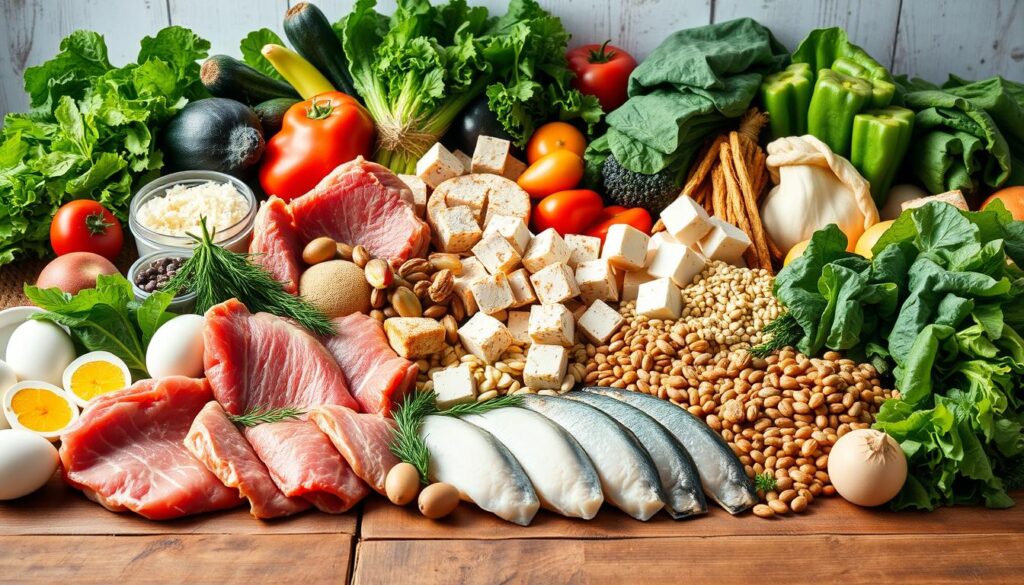
A complete protein has all the amino acids we need. On the other hand, an incomplete protein is missing one or more amino acids. Many plant-based proteins, like beans and nuts, are incomplete. But, they’re not bad for you.
Eating different plant-based proteins helps get all amino acids. For example, eating whole grains with legumes or nuts with seeds gives you all the amino acids. This way, vegetarians and vegans can get enough protein without animal products.
In summary, both animal-based and plant-based proteins are important in a healthy diet. Knowing the difference between complete and incomplete proteins helps us choose the right proteins. This ensures we get all the nutrients we need.
Recommended Daily Protein Intake
The amount of protein you should eat daily depends on your activity level and fitness goals. Knowing your daily protein intake is key to building muscle and staying healthy.
The Recommended Dietary Allowance (RDA) for protein is 0.8 grams per kilogram of body weight for most adults. But, individual protein requirements can vary a lot. This is due to factors like activity level, age, and health or fitness goals.
For example, athletes or those wanting to build muscle might need 1.2 to 2.2 grams of protein per kilogram of body weight. Finding out your exact protein RDA is important for your health and fitness.
Talking to a healthcare professional or a registered dietitian can guide you. They can help you figure out the right daily protein intake for your goals.
Benefits of Eating Protein for Muscle Development
Protein is key for growing muscles, backed by science. Eating enough protein, along with working out, boosts muscle strength and size.
Protein is essential for muscle repair and growth. When you work out, your muscles get stressed and tiny tears happen.
Protein helps a lot with muscle protein synthesis (MPS). MPS is important for fixing and growing muscles. It’s best to eat protein after working out to help muscles.
“Protein is not just about building muscle; it’s about maintaining overall muscle health.”
This quote shows protein’s big role in muscle health, not just growth. Knowing this helps you make better diet and workout choices.
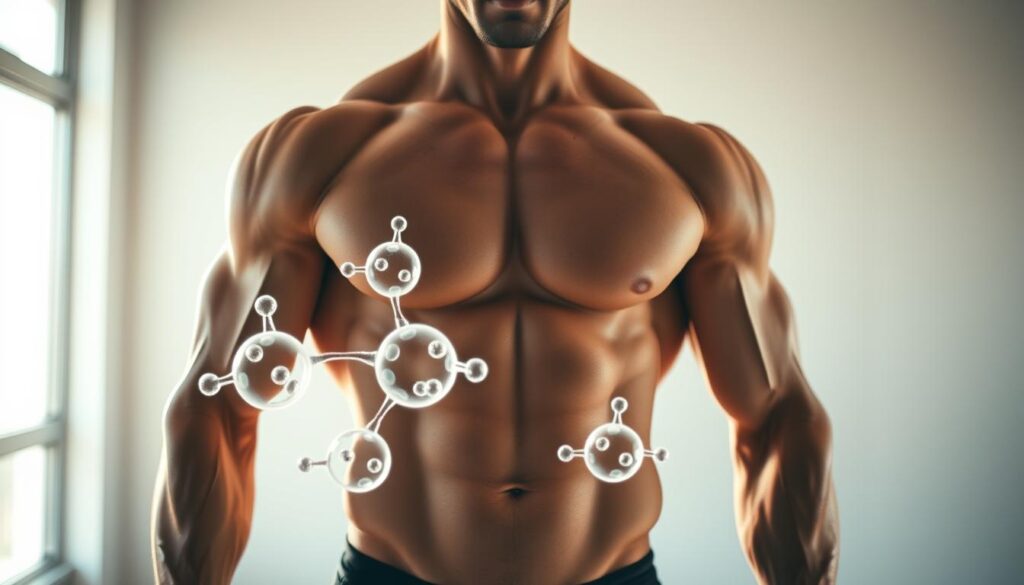
In short, protein has many benefits for muscles. It helps grow and strengthen muscles and keeps them healthy. Adding protein to your diet can help you reach your muscle-building goals.
How to Incorporate More Protein into Your Diet
A high-protein diet is more than just eating more. It’s about choosing the right protein-rich foods and planning your meals. Start by looking at what you already eat and find ways to add more protein.
Eating protein-rich foods at every meal is a smart move. Include lean meats, fish, eggs, dairy, legumes, and nuts. Try scrambled eggs with spinach and whole-grain toast for breakfast.
Adding protein supplements like shakes can also help, for those with tight schedules or special diets. But, pick supplements with no added sugars or artificial stuff.
Meal planning is key for a high-protein diet. Plan your meals ahead to get enough protein all day. Make meals in bulk, pack protein snacks, and watch your portion sizes.
Remember to drink plenty of water and listen to your body’s nutritional needs. Increasing protein intake should fit into a balanced diet. Make sure to eat a variety of fruits, veggies, and whole grains too.
The Best Protein-Rich Foods
To build and repair muscles, eating a variety of protein-rich foods is key. These foods fall into two main groups: animal-based and plant-based. Each group has its own benefits and nutritional values.
Animal-based proteins are complete because they have all nine essential amino acids. These are found in lean meats like chicken, turkey, and beef. Fish and eggs are also good sources. Dairy products, such as milk, cheese, and yogurt, are high in protein and calcium. Calcium is important for muscles and bones.
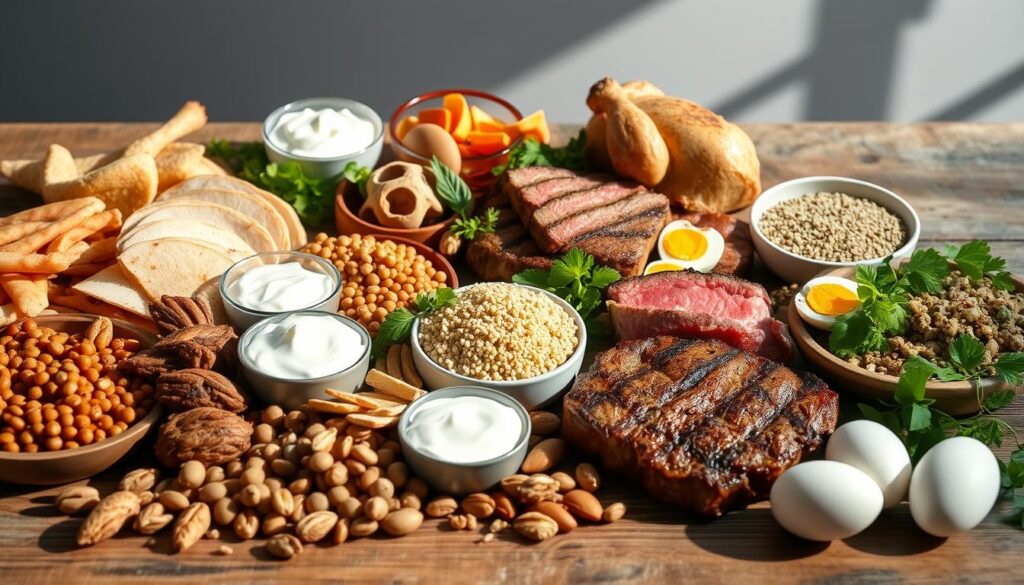
Plant-based proteins are varied and include legumes like lentils, chickpeas, and black beans. These are not only protein-rich but also full of fiber and vitamins. Nuts and seeds, like almonds and chia seeds, are also good for protein. Grains like quinoa and farro are complete proteins, great for plant-based diets.
A nutrition expert says, “A diet with both animal and plant proteins is best for muscle growth and health.” You can easily add these foods to your meals. For example, start with eggs and whole-grain toast for breakfast. Have a salad with chickpeas and chicken for lunch. For dinner, try grilled salmon with quinoa and veggies.
“The key to maximizing muscle growth is not just about consuming enough protein, but also about consuming the right types of protein at the right times.”
Knowing about different protein-rich foods and how to use them can help you reach your fitness goals. It also supports your overall health.
Protein Timing: When to Eat Protein
Protein timing is key in fitness, helping the body build and repair muscles. Eating protein at the right times boosts muscle growth and recovery.
Protein timing is important because it gives muscles the right building blocks at the best times. Studies show that eating protein before and after workouts is very helpful.
A pre-workout protein shake can give amino acids during exercise, reducing muscle damage. A fitness expert says, “Eating protein before a workout can lessen muscle soreness and boost performance.”
“The strategic consumption of protein, around workouts, is key for muscle growth and recovery.”
Post-workout protein is also essential for muscle recovery. It fixes muscle fibers damaged during exercise, aiding growth. The best time for post-workout protein is within 30-60 minutes after exercise.
While daily protein intake is more important, timing can add extra benefits to your fitness routine. It’s all about when you eat protein.
The Role of Protein in Weight Management
Protein is key in managing weight, affecting satiety and muscle preservation. Eating enough protein makes you feel full longer. This helps avoid overeating and aids in losing weight.
Protein is also vital for keeping muscle when losing weight. When you eat fewer calories, your body might use muscle for energy. But, enough protein stops this, keeping your muscles while you lose fat.
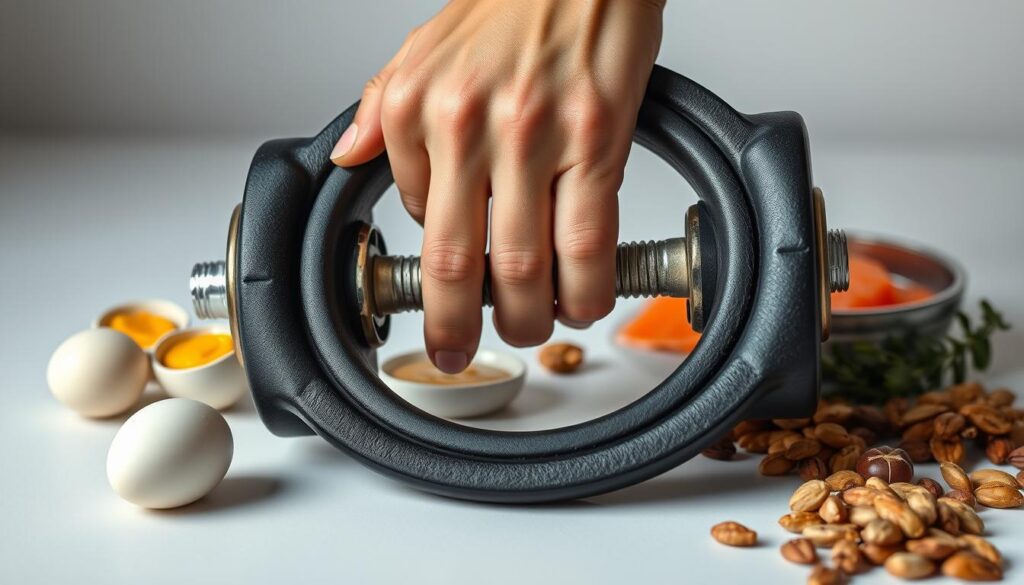
A high-protein diet for weight loss does more than just curb hunger. It also keeps your muscles and metabolism up. This is important for keeping weight off over time, as muscles help with metabolism.
Adding protein-rich foods to your diet is easy. Choose lean meats, fish, eggs, dairy, and plant-based foods like beans and lentils. Making smart food choices helps you use protein for better weight control.
Knowing how protein helps with weight management lets you make better diet choices. This way, you can reach your weight loss goals more easily.
Common Misconceptions About Protein
There’s a lot of wrong information about protein out there. It’s time to clear up the confusion. Many people don’t know the truth about protein in their diet. This is because of protein misconceptions spread by different sources.
One big protein myth is that eating too much protein harms your kidneys. But, many studies show that for healthy people, eating more protein doesn’t hurt their kidneys. It’s important to understand the difference between cause and effect when looking at protein’s health impact.
Some think eating a lot of protein makes your bones weaker because it takes away calcium. But, research says that eating a lot of protein can actually help your bones if you also get enough calcium. This shows why a balanced diet is key, not just focusing on one food.
Others worry about the high-protein diet risks for certain health problems. It’s true that people with kidney or liver disease should talk to their doctor about protein. But for most, a balanced high-protein diet is safe and good for health and building muscle.
In short, it’s important to trust reliable sources when choosing what to eat. By knowing the truth and debunking protein myths, people can make smart choices about protein. This way, they can enjoy the benefits of a healthy, balanced diet.
Potential Risks of Excessive Protein Consumption
Protein is key for building muscles, but too much can harm health. A diet too rich in protein can strain the body, mainly for those with health issues.
One big worry is how too much protein affects the kidneys. A high-protein diet may increase the risk of kidney damage in people who are already at risk. This is because the kidneys have to work harder to process the extra protein.
Dehydration is another risk with high protein intake. The body needs more water when it breaks down protein. If you don’t drink enough water, you can get dehydrated.
Also, a diet too full of protein might not have enough of other important nutrients. If you eat too much protein, you might not get enough of other nutrients. This could lead to deficiencies over time.
Some high-protein diets are also high in saturated fats and low in fiber. This can raise the risk of heart disease and affect your digestion.
To avoid these risks, it’s important to balance your protein intake. Make sure your diet is varied and includes many nutrient-rich foods.
Combining Protein with Other Nutrients
To support overall health and fitness goals, it’s key to mix protein with other essential nutrients. A balanced diet that includes protein, healthy fats, and complex carbs is vital for optimal health.
A well-rounded diet gives the body all the nutrients it needs. Protein is key for muscle growth and repair. Healthy fats help the heart and give lasting energy. Complex carbs fuel workouts and help in recovery.
When planning your diet, focus on more than just protein. Make sure you get the right mix of nutrients. Complex carbs like whole grains, fruits, and veggies give fiber, vitamins, and minerals. Healthy fats in nuts, seeds, avocados, and olive oil are important for vitamin absorption and health.
A nutrient balance is essential for fitness goals and overall health. Mixing protein with healthy fats and complex carbs creates a diet that supports muscle growth, energy, and health. This balanced approach leads to a sustainable and healthy lifestyle.
In conclusion, while protein is important, it should be part of a balanced nutritional plan. Understanding the need to combine protein with other nutrients helps make better dietary choices. This supports health and fitness goals.
Conclusion: Emphasizing Protein for Healthy Muscles
Getting enough protein is key for keeping muscles healthy and reaching fitness goals. Knowing how protein works and adding it to your meals helps grow muscles and boosts health.
It’s not just about eating protein-rich foods. It’s about choosing the right ones for your diet and fitness goals. Protein is vital for fixing and growing muscles.
With the right knowledge on protein sources, daily needs, and when to eat it, you can plan a diet that supports muscle health. Making protein a priority in your diet can greatly improve muscle health and fitness.