







Improving indoor air quality is key for a healthy home. A simple way to do this is by opening windows to let in fresh air. Stale air can harm our health, carrying pollutants and moisture that cause problems.
Opening windows helps reduce indoor air pollutants. This makes our homes healthier. It also makes our living space more comfortable and safe.
Let’s look at how opening windows can make a big difference in the air we breathe indoors.
The Importance of Fresh Air in Your Home
Bringing fresh air into our homes is key for a healthy living space. Fresh air gives us the oxygen our bodies need to work right.
When we breathe in fresh air, our respiratory system works better. This is because fresh air is full of oxygen. This oxygen is then sent to our cells, helping our body functions.
On the other hand, stale air lacks oxygen and has more carbon dioxide. By opening windows and letting in fresh air, we get rid of stale air. This reduces carbon dioxide and other pollutants.
The health benefits of fresh air are many. It not only helps our lungs but also boosts our overall health. It makes the air inside our homes cleaner.
In short, fresh air is vital for our health. By knowing its value, we can make our homes better ventilated. This supports a healthier life.
Common Sources of Stale Air
Knowing where stale air comes from is key to keeping your home air fresh. Stale air can make your home feel cramped and unhealthy. It’s also bad for your health.
Sources of Indoor Pollutants
Indoor pollutants are a big reason for stale air. They can come from cooking fumes, heating systems, and human activity. Cooking, like using gas stoves or frying, releases harmful particles and gases.
Heating systems that burn fuel also pollute the air. They release harmful gases like carbon monoxide and nitrogen dioxide. Plus, using personal care products and cleaning supplies can add to the air pollution.

To fight these pollutants, it’s important to find and fix their sources. Keeping your heating systems in good shape, using exhaust fans while cooking, and picking low-VOC products can help. This can lower the amount of indoor pollutants.
By tackling the sources of stale air, homeowners can make their indoor air much better. This makes your home healthier and more comfortable to live in.
When to Open Windows for Fresh Air
To enjoy fresh air, knowing when to open your windows is key. Seasonal considerations are important in deciding the best times.
In warmer seasons, opening windows can cool your home naturally. This reduces air conditioning needs and boosts energy efficiency. Natural ventilation uses the breeze to cool your space.
In winter, opening windows might seem odd, but it can be good. On mild days with clean air, a short window opening can improve ventilation indoors.
But, finding the right balance is essential. Opening windows in extreme weather can waste energy. So, knowing the outside temperature and air quality is vital for enjoying fresh air without losing energy efficiency.
In summary, paying attention to timing and weather can help you enjoy fresh air. This keeps your home comfortable and energy-efficient.
Benefits of Cross-Ventilation
Cross-ventilation brings many benefits, like better airflow and less energy use. It works by opening windows on opposite sides of a room or building. This creates a natural air flow that boosts ventilation.
This method is great when the weather is mild. It means you don’t need to use air conditioning as much. So, cross-ventilation can save a lot of energy and help the environment.
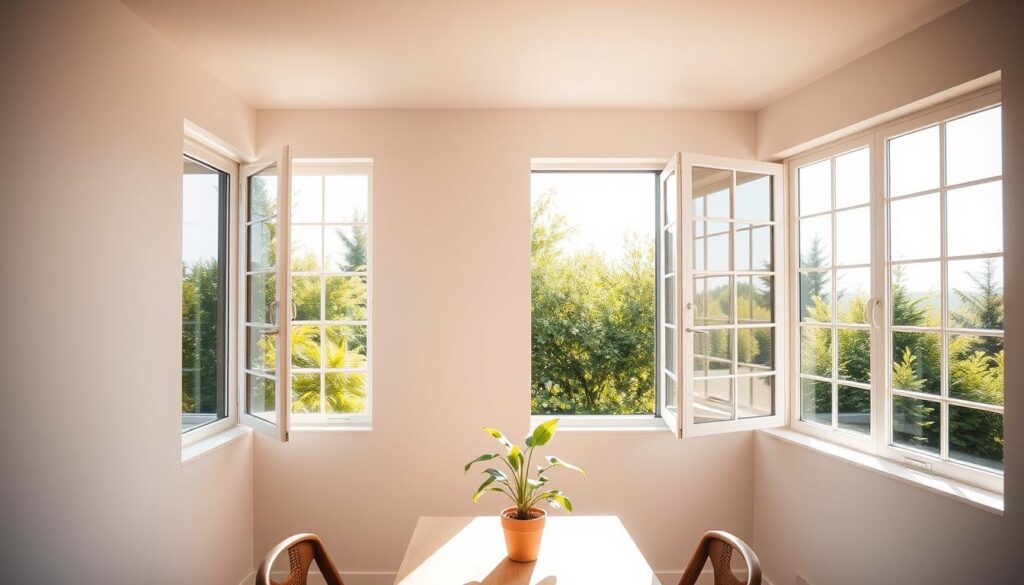
One big plus of cross-ventilation is it makes the air inside better. It lets in fresh air and takes out stale air. This helps get rid of pollutants and moisture indoors.
To make cross-ventilation work well, think about your home’s layout and where the windows are. It’s best to open windows on opposite sides of a room or floor. This simple trick can really improve ventilation and make your home feel cleaner and more comfy.
Also, you can use fans to move air around or install vents for better airflow. This is helpful in places where you can’t open windows.
Fresh Air and Allergies
Improving indoor air quality can help a lot with allergies. For many, allergies make life hard every day. But, by letting in fresh air and using simple steps, people can cut down on indoor allergens.
One easy way to better air is by opening windows. This lets in fresh air and reduces allergens like dust mites, pet dander, and mold spores. Cross-ventilation is great because it brings in new air while pushing out old air.
Using air purifiers also helps get rid of indoor allergens. These devices filter out particles and contaminants, giving allergy sufferers some relief. When picking an air purifier, choose one with a HEPA filter. These filters catch even the tiniest allergens.
By mixing fresh air with air purifiers, people can make their indoor air much better. This not only makes life more comfortable but also makes homes healthier.
Utilizing Fans for Fresh Air Flow
Using fans can make your home feel fresher. They help spread the air that comes in through open windows. This makes your living spaces feel more even.
Different fans work well in different places. Ceiling fans are great for big rooms. They work best when windows are open, creating a cool breeze.
Floor fans are easy to move around. They’re perfect for areas needing focused air flow. You can use them to push out old air or bring in new air.
Experts say good ventilation is essential for a healthy home. Fans are a simple way to improve this. By picking the right fan for your space, you can make your home feel fresher.
“Fans are not just for hot weather; they can be used year-round to improve air circulation.”
Fans can also save you money. They make your home cooler in summer and warmer in winter. This might mean you use less air conditioning and heating.
Fresh Air Techniques for Specific Rooms
Every room in your home faces its own air quality issues. This means each room needs its own ventilation solution. Kitchens and bathrooms, for example, deal with moisture and pollutants, making them special cases for keeping air fresh.
Kitchens face challenges from cooking fumes and moisture. To tackle this, installing a range hood that vents outside is a good move. Also, opening windows while cooking helps get rid of pollutants.
In bathrooms, moisture can cause mold and mildew. Using an exhaust fan during and after showers helps cut down moisture. Leaving a window open or using a dehumidifier also boosts air purification.
Bedrooms and living areas need their own ventilation plans. Opening windows during cooler times brings in fresh air without losing heat. Fans can also help move air around, improving room-specific ventilation.
By using these methods, homeowners can make their indoor air much better. It’s also important to keep vents clean and check for blockages to ensure air purification works well.
Fresh Air Myths and Misconceptions
Opening windows for fresh air is a simple habit, but it has myths and misconceptions. Many think fresh air solves all indoor air quality problems. But, the truth is more complex.
One myth is that opening windows is always good. But, outdoor air quality matters a lot. In polluted areas or during pollen season, it can bring more pollutants inside.
Another myth is that fresh air fixes all indoor air issues. While ventilation is key, it’s not enough. Indoor air can be polluted by cooking fumes, cleaning products, and building materials. Opening windows might not solve these problems.
Temperature is also important. Opening windows in extreme weather can waste energy and make your home uncomfortable. It’s important to find a balance between fresh air and a comfortable indoor climate.
Knowing these facts helps homeowners make better choices about fresh air. By understanding myths and misconceptions, people can use fresh air more effectively. They can combine it with other strategies for a healthier home.
Creating a Fresh Air Routine
Creating a routine that includes fresh air can greatly improve your home’s air quality. This makes your living space healthier for you and your family.
A good fresh air routine is more than just opening windows. It’s about knowing when and how to let fresh air in. For example, opening windows when it’s cooler can cut down on air conditioning use and save energy.
Cross-ventilation is key in a fresh air routine. By opening windows on opposite sides, you create a cool breeze. This boosts air circulation and cuts down on the need for fans or air conditioning.
Using ventilation systems also helps improve indoor air quality. Exhaust fans in kitchens and bathrooms get rid of stale air and moisture. This makes your home feel fresher.
To make fresh air a part of your day, set reminders to open windows at certain times. You can also link ventilation systems with your smart home devices. This makes sure you always have fresh air.
By adding these habits to your daily routine, you can keep your home air fresh and save energy. This improves your home’s indoor air quality.
The Role of Indoor Plants
The air in our homes and offices can be polluted. But indoor plants offer a natural fix. They clean the air by removing pollutants and adding oxygen, making them great for any room.
Some indoor plants are better at cleaning the air than others. Spider plants, snake plants, and peace lilies are top choices. They’re good for the air and easy to care for, perfect for anyone.
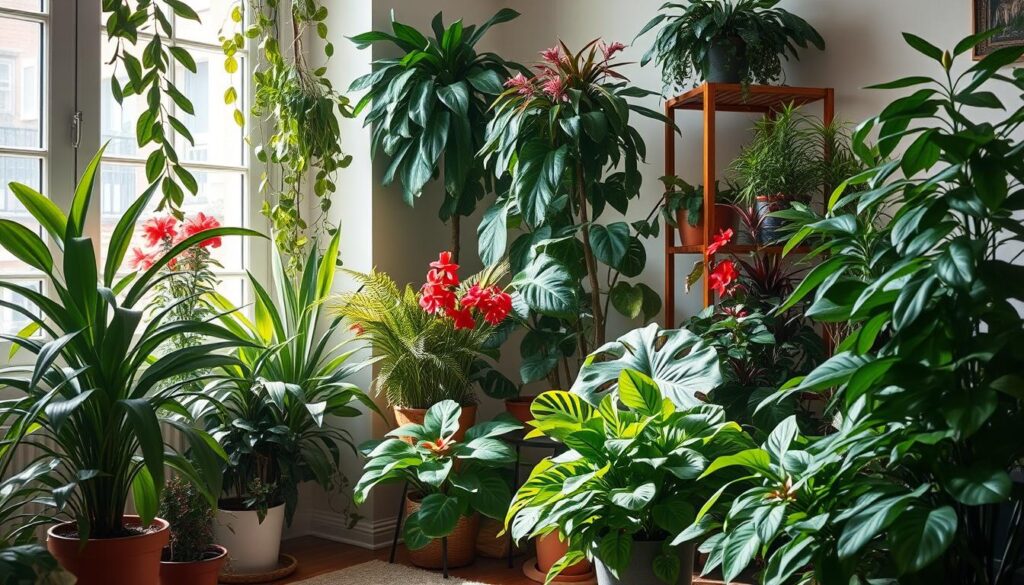
When picking indoor plants for air purification, think about your space. Lighting, temperature, and humidity matter for plant health and air cleaning. Some plants need lots of light, while others do well in the dark.
Tips for Choosing the Right Indoor Plants
To get the most air cleaning from indoor plants, pick ones that fit your space. Talking to a local nursery or gardening expert can help find the best plants for you.
Adding the right indoor plants to your home or office makes it healthier and nicer. They improve air quality and add beauty to your space.
Smart Home Ventilation Solutions
Smart home ventilation systems are changing how we keep our air clean. They offer advanced ways to make our homes fresher. These systems help improve air flow and cut down on pollutants.
Key Benefits of Smart Home Ventilation
Smart home ventilation systems are great for improving air quality. They use heat recovery ventilators and air purifiers. This reduces indoor pollutants and allergens.
When picking a smart home ventilation system, think about energy efficiency, noise, and compatibility. Heat recovery ventilators save energy by using heat from exhaust air.
Smart ventilation systems also work well with other smart home tech. For example, they can team up with your smart thermostat. This optimizes air quality and temperature.
Getting a smart home ventilation system makes your home healthier and fresher. It might even save you money on energy. As technology gets better, we’ll see even more cool solutions.
Conclusion: Embracing Fresh Air Every Day
Adding fresh air to our daily lives can greatly boost our health and comfort. It’s important to know how indoor air quality affects us. Simple steps like opening windows and using fans can make our homes healthier.
Stale air can be a problem, and fresh air is key for those with allergies. Using smart home systems and opening windows at the right times can improve air quality. This makes our homes better places to live.
By making fresh air a daily habit, we can feel better physically and mentally. It’s time to make fresh air a top priority. Start enjoying the many benefits it brings to our lives.