







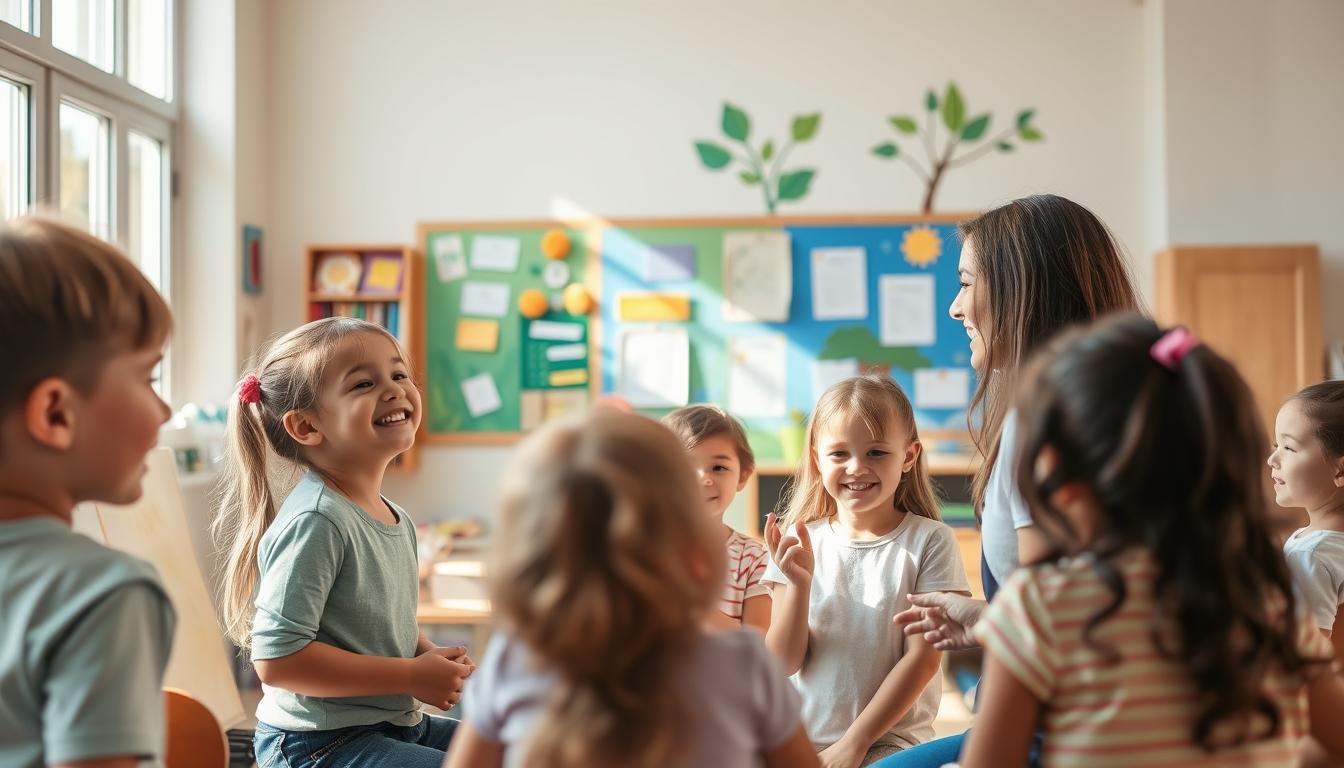
Praise is a powerful tool for encouraging good behavior in children. By acknowledging their positive actions, parents and caregivers can nurture their confidence and sense of self.
Effective praise techniques play a significant role in child development. They help children develop a positive self-image. This encourages them to repeat good behavior. Using praise as a form of positive reinforcement can have a lasting impact on a child’s behavior and overall development.
By understanding the importance of praise and how to use it effectively, parents and caregivers can create a supportive environment. This environment fosters healthy growth and development.
Understanding Positive Reinforcement
Positive reinforcement is key in behavioral psychology. It helps create good behavior. It works by rewarding a behavior with something pleasing, like praise, making it more likely to happen again.
The power of positive reinforcement comes from linking good behavior with a positive outcome. This method is often used in child psychology to promote good actions and avoid bad ones.
Parents and caregivers can use positive reinforcement to guide children’s behavior. It’s not just about rewarding good actions. It’s also about setting up an environment that supports positive behavior.
The science behind positive reinforcement is simple. It says that if a behavior is followed by something pleasing, it will happen more often. This makes positive reinforcement a strong tool for changing behavior.
The Role of Praise in Behavior Modification
In the world of behavior modification, praise is a strong tool for encouraging good behavior in kids. It’s a positive way to make kids want to do the same thing again. This is because praise makes them feel good about what they did.
Using praise the right way can make a big difference. It helps create a positive space where kids want to act well. It’s key to give real and specific praise to get the best results.

Praise can change behavior in many ways. For example, saying “good job” can make kids want to keep doing it. It also helps by focusing on better actions when kids do something wrong.
To make praise work best, it should be immediate, specific, and real. Quick praise links the praise to the action. Specific praise tells kids exactly what they did right. Real praise makes kids feel like it’s truly meant.
By using praise every day, parents and caregivers can really shape a child’s behavior. This helps in child development and makes a supportive environment. Praise is a powerful way to encourage good behavior and make kids feel valued.
Types of Praise that Work Best
Praise is a powerful tool in shaping behavior. But not all praise is created equal. Its effectiveness depends on its sincerity and specificity.
Specific praise is more effective than general praise. It clearly communicates what behavior is being reinforced. For example, saying “I appreciate how you helped your friend” is more impactful than just saying “Good job.”
Research shows that sincere praise has a lasting effect on behavior modification. When praise is genuine and heartfelt, it creates a positive environment. People are more likely to repeat the desired behavior.
The Impact of Sincerity in Praise
The sincerity of praise is key to its effectiveness. Insincere or generic praise can have a negative effect. It can lead to distrust or diminished motivation.
To maximize praise’s impact, it should be both specific and sincere. This approach encourages good behavior. It also builds trust and reinforces positive actions.
Strategies for Implementing Positive Reinforcement
To encourage good behavior, it’s key to know the strategies behind positive reinforcement. It’s important to think about timing and consistency when using positive reinforcement.
Timing is very important. Rewards given right after the good behavior are most effective. For example, praising a child right after they finish their homework helps them learn to do homework on time.
Consistency is also very important. It helps build good habits over time. Parents and caregivers should have a consistent routine. This ensures that good behaviors are always rewarded.
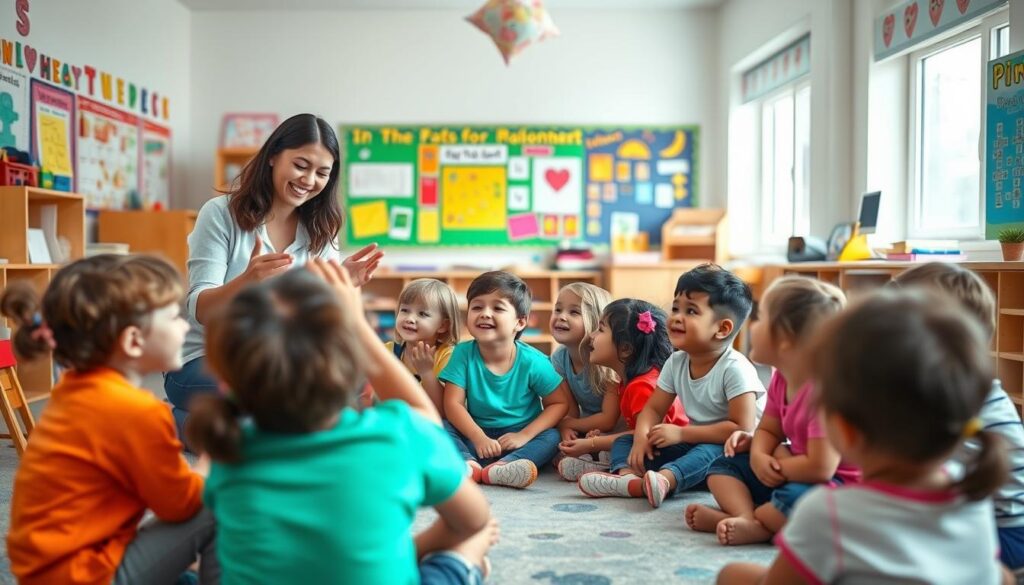
Here are some tips for using positive reinforcement. Set clear expectations and be specific with your praise. Also, change the rewards to keep them exciting. For example, instead of just saying “good job,” say “I really appreciate how you finished your homework without being reminded.” This makes the praise more meaningful.
By using these positive reinforcement strategies, parents and caregivers can help children behave well. This helps them grow into responsible and well-behaved people.
Age Considerations in Positive Reinforcement
As children grow, their reactions to praise change. Adapting praise to a child’s age is key for effective positive reinforcement. Different stages of development need different strategies.
Younger kids love clear, immediate rewards. They do well with stickers or simple “well done” comments. These rewards boost their motivation to behave well.
Teenagers, on the other hand, might prefer more subtle praise. They value their independence and might see too much praise as fake or embarrassing. A quiet nod or a kind word can mean a lot to them.
Knowing these age considerations helps parents and teachers use praise better. It’s not just about giving praise, but making sure it fits the child’s age and needs.
Also, adapting praise means knowing each child’s personality and needs. Some kids prefer private praise, while others like being recognized in front of others.
By adjusting our praise based on these factors, we can help kids behave well at any age. This creates a supportive space for them to grow and learn.
Common Mistakes to Avoid
Using praise effectively is more than just saying “good job.” It requires understanding the pitfalls that can make praise less meaningful.
One big mistake is overpraising. While praising is meant to encourage good behavior, too much praise can backfire. When praise is given too often, it loses its specialness and meaning to the child.

Another mistake is insincerity. Praise that’s not real can be spotted by kids, leading to distrust. It’s key to be specific and genuine when praising. Focus on the effort or behavior, not just giving general praise.
To steer clear of these common mistakes, be careful with your praise. Be specific, praise effort more than talent, and make sure your praise is real and about something the child can control.
By knowing these pitfalls and using praise thoughtfully, caregivers can boost positive reinforcement. This creates a better environment for kids to grow and thrive.
Measuring Effectiveness
It’s important to check how well praise works. This helps us see if it’s really helping. We can then know if our praise is making a difference.
Observing Behavioral Changes is a key way to see if praise is working. We watch for changes in behavior. For example, if someone starts doing more of what we want them to do.
We also need to change our praise if it’s not working. Maybe we need to use different praise or give it more often.
Continuous assessment helps us make our praise better. This way, we keep encouraging good behavior.
The Influence of Environment on Reinforcement
A well-designed environment can make positive reinforcement more effective. The place where people work or live greatly affects their behavior. It shapes how they react to positive reinforcement strategies.
Creating a supportive environment is key. It’s not just about the physical space. It’s also about the emotional and psychological feel of the place. A supportive environment makes people feel safe and trusted. This makes them more open to positive reinforcement.
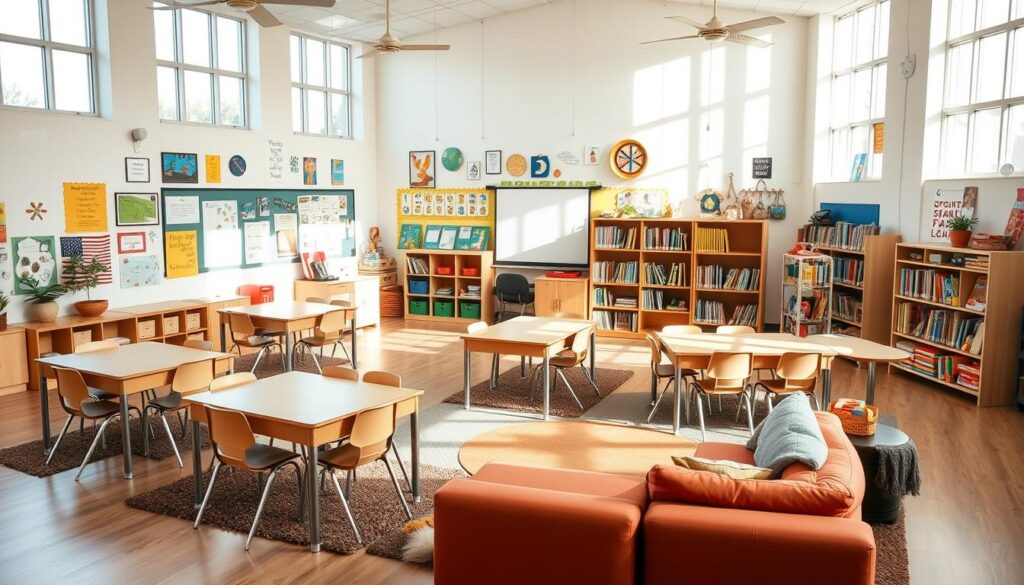
To make a positive environment, think about a few important things. Clear communication and positive role models are important. Also, remove distractions or negative things that might get in the way of reinforcement.
By focusing on a supportive and conducive environment, reinforcement works better. This leads to lasting changes in behavior. It also results in a more positive outcome overall.
Positive Reinforcement in the Classroom
Positive reinforcement is a powerful tool for teachers. It encourages good behavior and boosts academic results. By using positive reinforcement, teachers can make learning more supportive and productive.
Effective Teacher Strategies include recognizing and rewarding good behavior. This can be done through verbal praise, tangible rewards, or special privileges. It’s important to make sure the reinforcement is immediate, consistent, and meaningful to students.
Using a mix of verbal and non-verbal reinforcement is very effective. For example, a teacher might praise a student for their effort or use stickers or stars on a chart. This not only motivates the student but also sets a good example for the class.
Implementing Positive Reinforcement
To use positive reinforcement well, teachers first need to know what behaviors they want to encourage. This could be anything from participating in class discussions to doing homework on time. Then, they can create a reinforcement plan that fits their students’ needs and likes.
Teachers must also be consistent with positive reinforcement. Being consistent helps students understand what’s expected and what they’ll get for their actions. This creates a fair and predictable learning space.
Teachers should also keep checking and changing their reinforcement strategies as needed. As students grow, their responses to different rewards can change. So, it’s important to keep assessing and adjusting teacher strategies for lasting success.
Leveraging Technology for Reinforcement
Using digital tools in our daily lives can change how we encourage good behavior. Many apps and platforms have been made to help with positive reinforcement.
Technology lets us track progress and behavior right away. Digital reward systems give instant feedback. For example, apps like ClassDojo and Remind help teachers see how students are doing and give feedback quickly. This makes classrooms more positive.
Technology also makes learning personal. Adaptive learning software changes its level based on how well you do. This makes learning better for everyone.
Another big plus is that digital tools are easy to get to. With smartphones and tablets everywhere, digital reinforcement systems are always within reach. This makes it simpler to keep up with reinforcing good behavior.
In short, using technology and digital tools can really help with positive reinforcement. They give feedback right away, make learning personal, and are easy to get to. Technology is a strong tool for encouraging good behavior.
Real-Life Examples of Successful Positive Reinforcement
Positive reinforcement works well in many areas, like parenting and education. It shows how it can help encourage good behavior.
A study on classroom management found that positive reinforcement helps a lot. Teachers who praised and rewarded students saw less trouble. Parents also saw better behavior in their kids with positive reinforcement.
Even in tough situations, positive reinforcement can make a big difference. For example, a program helped kids with autism improve their social skills. They learned to interact better with others.
These examples and studies show how powerful positive reinforcement can be. By using these strategies, we can encourage good behavior and reach our goals.