







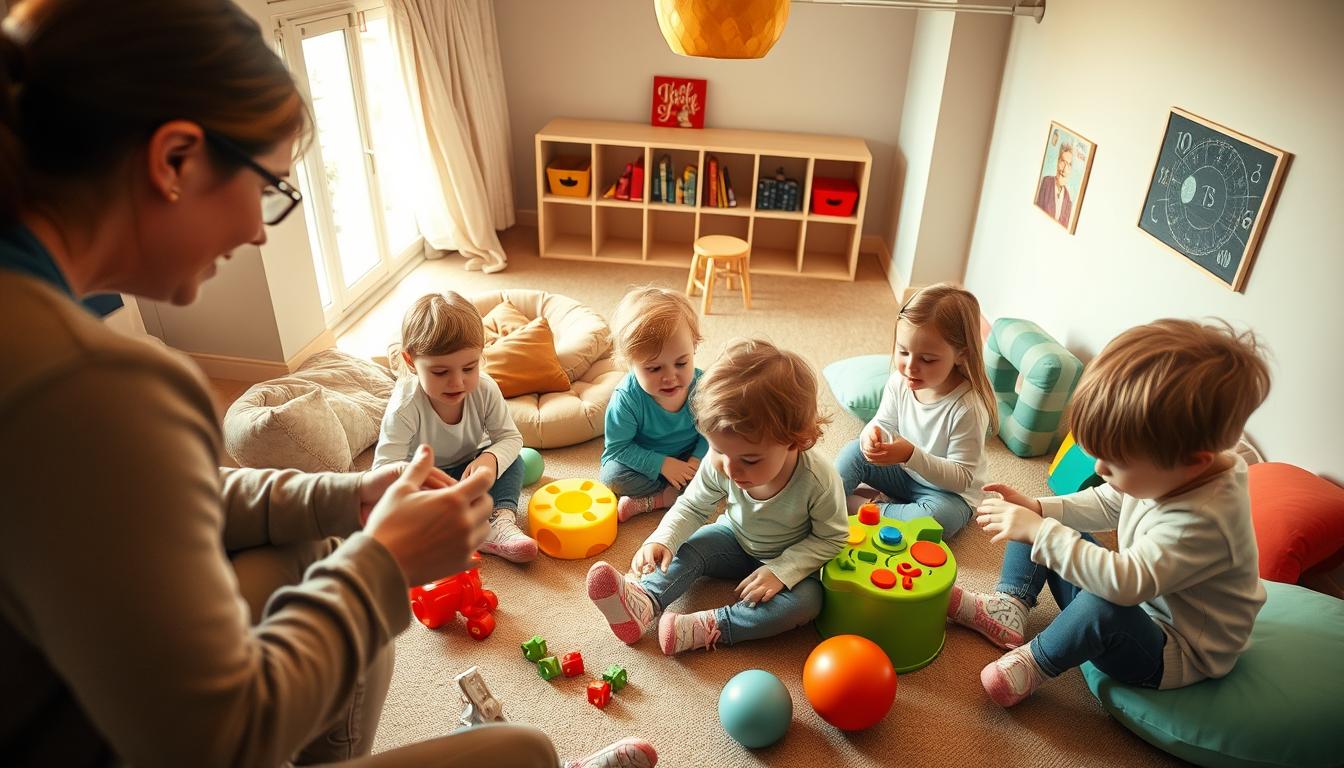
Playdates are key for a child’s social growth, helping them emotionally and socially. As a parent, setting up a playdate can be fun. But, it needs planning to make sure everyone has a good time.
Safe and enjoyable playdates take thought. You must consider the kids’ ages, interests, and safety.
With a few parenting tips, you can make playdates fun and engaging. This article will cover how to organize successful playdates. We’ll give you the tools to make these events enjoyable and stress-free.
Understanding the Importance of Playdates
Playdates are more than fun for kids; they’re key for learning life skills. They offer a chance for social and emotional growth. Kids get to play with friends in a safe setting.
At playdates, kids learn essential social skills like talking, working together, feeling for others, and solving problems. These skills help them in all future social situations and emotional health. They learn to deal with different people, share, and solve conflicts.
The playdate benefits go beyond just playing together. They help kids grow emotionally, making them more confident and resilient. Parents also get to see how their kids interact with others, gaining insights into their child’s development.
Playdates can be designed to help with specific child development areas. Group activities can improve teamwork skills. One-on-one playdates can focus on deeper, personal connections.
In short, playdates are essential for a child’s growth. They help kids develop social skills and enjoy many playdate benefits. Parents can support their child’s growth by understanding the value of playdates.
Setting Guidelines for Safe Playdates
Safe playdates start with setting clear guidelines and expectations for both kids and parents. This step makes sure everyone has fun and stays safe.
Before the playdate, it’s key to communicate effectively with your child and the other parents. Talking about the plan, rules, and any special needs or concerns helps avoid confusion. It makes the experience smooth for everyone.
One important parenting tip is to get your child ready for the playdate. Tell them what to expect, how to behave, and how to play with others. This helps them feel more confident and less anxious.

Setting expectations means talking about playdate safety rules with your child. This includes staying in safe areas, not talking to strangers, and being kind. It’s also smart to pick a meeting spot in case someone gets lost.
Also, talking with the other parents is very important. Discussing allergies, medical issues, or special needs helps keep everyone safe. It’s good to share contact info and talk about what to do in emergencies.
By following these parenting tips and focusing on setting expectations, parents can make playdates safer. This effort not only keeps kids safe but also helps them have fun and learn important skills.
Choosing the Right Location for Playdates
Finding the perfect spot for a playdate is key. It makes the day fun for kids and parents. Many things need to be considered to make sure everyone has a good time.
Home Playdates vs. Public Playdates
Deciding between a home playdate or a public spot like a park is important. Home playdates are safe and easy to manage. But, you need to make sure your home is ready for kids.
Public playdates offer a new place to explore. They’re easy to set up but might be less safe.
Think about the kids’ ages and what you want to do when picking a place. Young kids might like a home playdate. But older kids might enjoy a park more.
The best playdate spot is one that everyone likes. It should be safe and fun for all.
Inviting Friends for Playdates
Setting up a playdate is more than just picking a date. It starts with inviting the right friends. For older kids, ask them who they play with most at school. You can also get recommendations from their teacher.
When inviting friends, consider your child’s preferences. This ensures they feel comfortable and excited. It’s also important to let the other parent or caregiver know about the invitation.
Good social etiquette is key in playdate invitations. A polite and clear invitation sets a positive tone. Whether it’s a phone call, text, or digital invitation, be considerate of their schedule and preferences.
As a parenting tip, be open to reciprocal invitations. Keep communication friendly and respectful with other parents or caregivers.
Being thoughtful in inviting friends for playdates makes the experience positive and enjoyable for your child and their friends.
Planning Engaging Activities
Planning fun activities is key for a great playdate. Playdates help kids learn social skills, be creative, and use their imagination. They offer a chance for kids to play in different ways.
Playdates can include structured play and unstructured play. Structured play has rules and goals, like board games and puzzles. It teaches kids discipline and teamwork. Unstructured play lets kids explore and be creative without rules.
Unstructured play boosts creativity and imagination. Dr. Stuart Brown said, “The opposite of play isn’t work; it’s depression.” This shows play’s role in kids’ emotional and mental growth. But, kids with ADHD or neurodiversity might need help with unstructured play.
Parents can mix structured and unstructured play. Start with a game or craft, then move to free play. Watching what kids like helps keep them interested.
“Play is the highest form of research.” – Albert Einstein
This quote shows play’s value in learning. By choosing fun activities, parents make playdates both enjoyable and educational.
Ensuring Safety During Playdates
Playdate safety is a big deal that needs careful planning. Parents should first check their homes for dangers. This means looking for sharp objects, making sure heavy furniture is safe, and covering electrical outlets.
Childproofing is key to keeping kids safe. It helps prevent accidents and reduces risks.

Watching over kids is also very important. Parents should always keep an eye on their children, even when they’re playing or using things that could be dangerous.
Setting clear rules is another must. This helps kids know what’s expected of them during playdates. Parents can also do more to make their homes safer.
For instance, they can lock away harmful substances and cleaning products. They should also put up safety gates at stairs and make sure windows are locked and safe.
By being careful and aware of dangers, parents can make playdates much safer. This makes sure kids have a good time and parents can relax, knowing their kids are safe.
Managing Different Age Groups
Playdates can be tricky when dealing with different ages. For babies and toddlers, it’s more about adults chatting while kids play together. This way, everyone has fun without feeling overwhelmed.
Younger kids need playdates with parents you know. This makes it easier to keep things safe and fun for everyone. As kids get older, playdates can include more activities that fit their age.
Age-specific playdates are great for kids to play with others their own age. But, mixing ages can teach older kids about responsibility and caring for others.
When planning playdates with different age groups, think about the youngest kids first. Make sure older kids know they need to watch out for the little ones.
Good parenting tips for these playdates include being flexible and ready for anything. Also, pay attention to what all the kids need. This way, everyone has a good time.
Handling Conflicts Among Kids
It’s important to solve conflicts during playdates to keep things fun for everyone. Young kids are learning to share and take turns. This means they often get into fights during playdates.
Teaching kids to share and try different things can reduce fights. Positive reinforcement is key in teaching good behavior. When kids share or take turns, saying “good job” helps them want to do it more.

Teaching kids how to solve problems is also vital. You can do this by acting out different situations. It helps them learn to express their feelings and find solutions that work for everyone.
For example, if two kids are fighting over a toy, you can suggest they take turns. Or find another toy that both like. This not only solves the fight but also teaches important social skills.
Creating a space where kids feel like sharing and understanding is important helps a lot. This way, playdates become more fun for everyone. It also helps kids grow socially and emotionally.
Assessing Playdate Success
Knowing what makes a playdate success can make your child’s playtime better. After a playdate, take time to think about it with your child.
Make sure you and your child are calm before talking. This helps you figure out what went right and what didn’t. It gives you parenting tips for the next playdate.
Talking about the playdate with your child shows their view on the fun, the other kids, and the whole day. This chat is key to evaluating playdates and seeing how your child is doing socially.
By checking how playdates go, you can spot what needs work. Then, you can make changes for the next time. This helps your child grow socially and emotionally.
Resources for Parents Organizing Playdates
Planning successful playdates needs careful thought, knowing about child growth, and the right tools for parents. At Kiddi Kollege, a family-owned, accredited early learning center, we get how key it is. We aim to create a place where quality education meets each child’s unique needs.
For playdate help, check out local parenting groups and online forums. They share tips from seasoned parents and childcare experts. Also, websites and blogs on child development can spark ideas for fun playdate activities.
Using these resources and learning about child development helps parents plan great playdates. It boosts kids’ social and emotional growth. Plus, it builds a community among parents.