







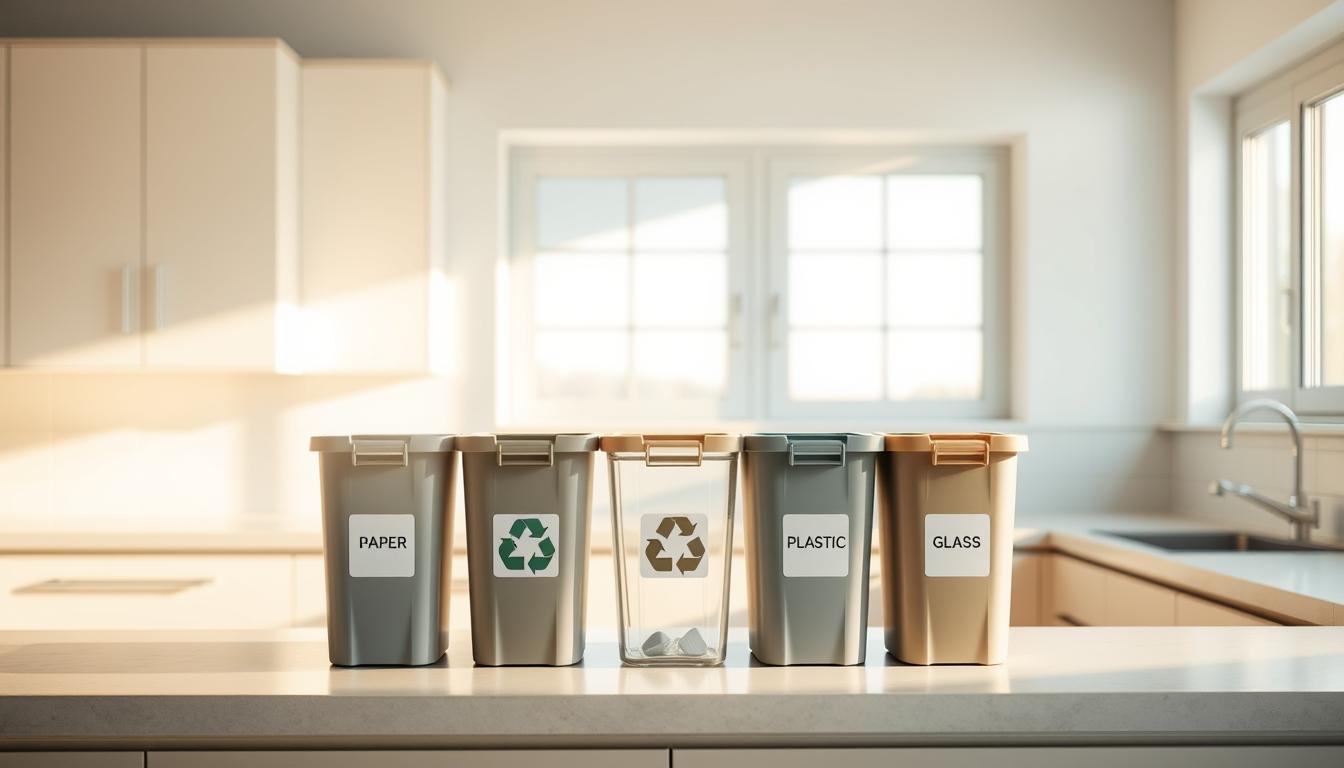
Starting an efficient waste management system at home is easy. Just put recycling bins in the kitchen. This simple act helps keep your home clean and organized.
Adding kitchen recycling to your routine is a big step towards a greener home. It’s about choosing to sort waste properly. This makes recycling a breeze for everyone.
Having a special place for recycling bins makes recycling a habit. It becomes a natural part of your day. This small action can make a big difference in living sustainably.
The Importance of Recycling in the Kitchen
Recycling in your kitchen helps a lot. It cuts down on waste and supportssustainable living. Recycling is more than a habit; it’s a choice for a greener planet. It reduces landfill waste, which means less greenhouse gases and less climate change.
An eco-friendly kitchen makes recycling easy. With recycling bins, everyone can help. This small step can make a big difference, saving resources and reducing pollution.
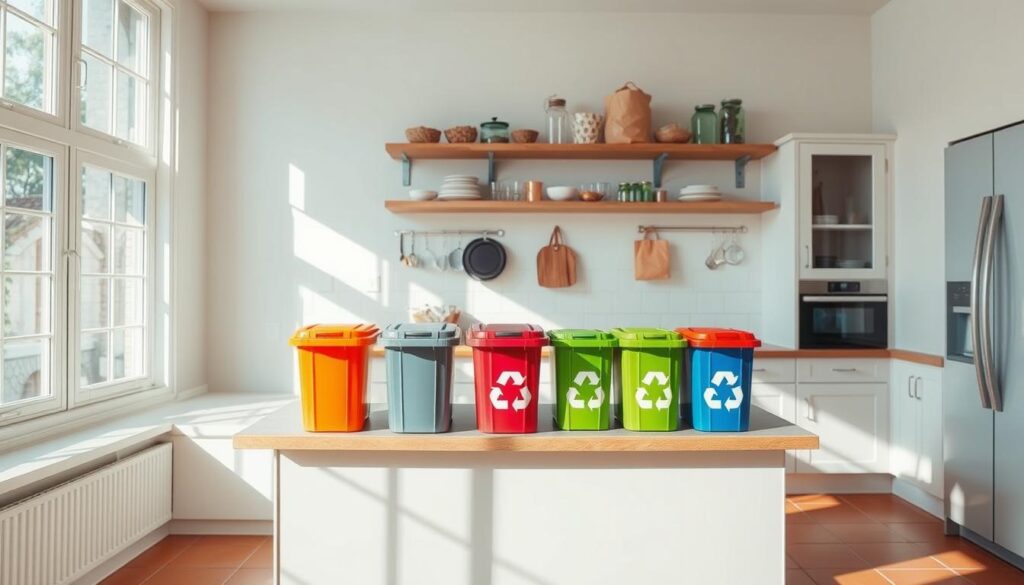
Recycling also teaches your family about caring for the planet. It’s a chance for kids to learn about recycling’s role in protecting our environment. It builds a sense of teamwork and responsibility.
Recycling also saves money for communities. It cuts down on waste disposal costs and can even make money from recyclables. Plus, it saves energy and water, and cuts pollution.
To get the most from recycling, make sure you do it right. Sort recyclables, clean them, and join local recycling programs. This way, you help create a better world for all of us.
In short, recycling in your kitchen is easy and beneficial. By recycling regularly, you help the planet and live more sustainably. It’s a simple way to make a big difference.
Choosing the Right Recycling Bins for Your Kitchen
The journey to a more sustainable kitchen starts with choosing the right recycling bin storage solutions that fit your needs.
When selecting kitchen recycling bins, several factors come into play. The size of your household, the types of waste you generate, and the available space in your kitchen are key.
Considerations for Selection
Durability is a key factor; you want kitchen recycling bins that can withstand daily use. Ease of cleaning is also important, as it encourages regular maintenance and hygiene.
The material and design of the bins also matter. Some prefer bins made from eco-friendly materials. Others look for designs that match their kitchen decor.
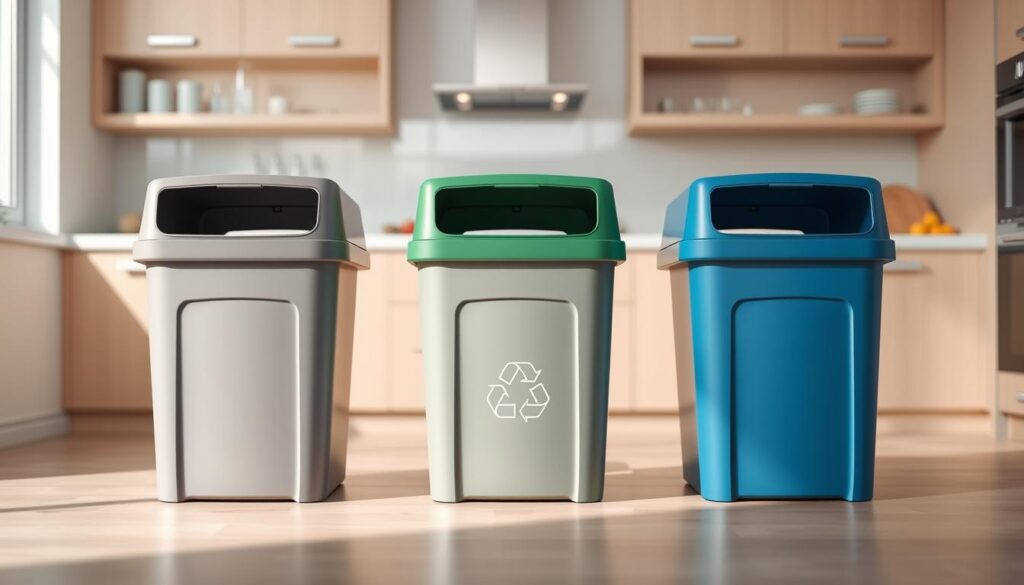
Effective waste sorting is helped by bins with separate compartments or clear labeling. This makes recycling easier and teaches household members about proper waste disposal.
By carefully considering these factors, you can choose recycling bin storage that enhances your kitchen’s functionality. It also contributes to a more sustainable lifestyle.
Best Locations for Your Kitchen Recycling Bins
Placing recycling bins in your kitchen wisely can boost your recycling habits. It’s important to make recycling easy for everyone at home.
Putting a recycling bin under the sink is a smart move. It’s in a spot that’s not in the way but easy to reach. Plus, it uses space that’s often ignored.
Another good spot is a corner of the kitchen. Corners are often unused and great for recycling bins. If you have a corner cabinet or carousel, it’s perfect.
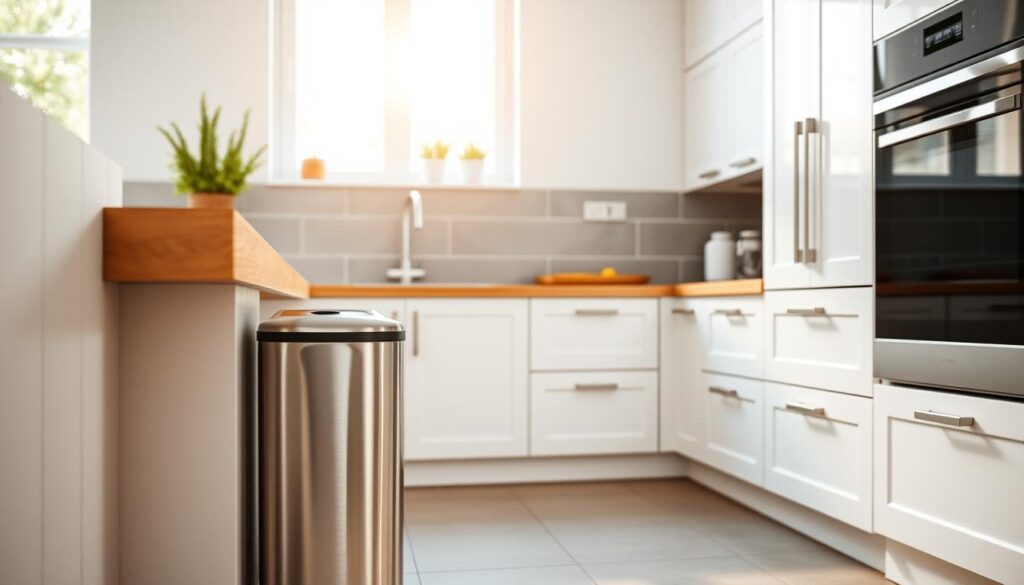
Experts say, “Recycling bins should be in easy spots to keep recycling a habit.” Think about your kitchen’s flow and where recycling fits in.
“Making recycling easy and convenient is the first step towards making it a habit.”
Choosing the right spot for your recycling bins can really help your recycling efforts. Think about your kitchen’s layout and your habits to find the best place.
Organizing Your Kitchen Recycling Stations
To make your kitchen recycling better, you need a well-organized recycling station. A messy recycling area can cause confusion and mess up your recycling plans.
Labeling and Signage are key to keeping your recycling station tidy. Clear labels on recycling bins tell everyone what can and can’t be recycled. Use easy-to-read fonts and color-coding to tell different recyclables apart.
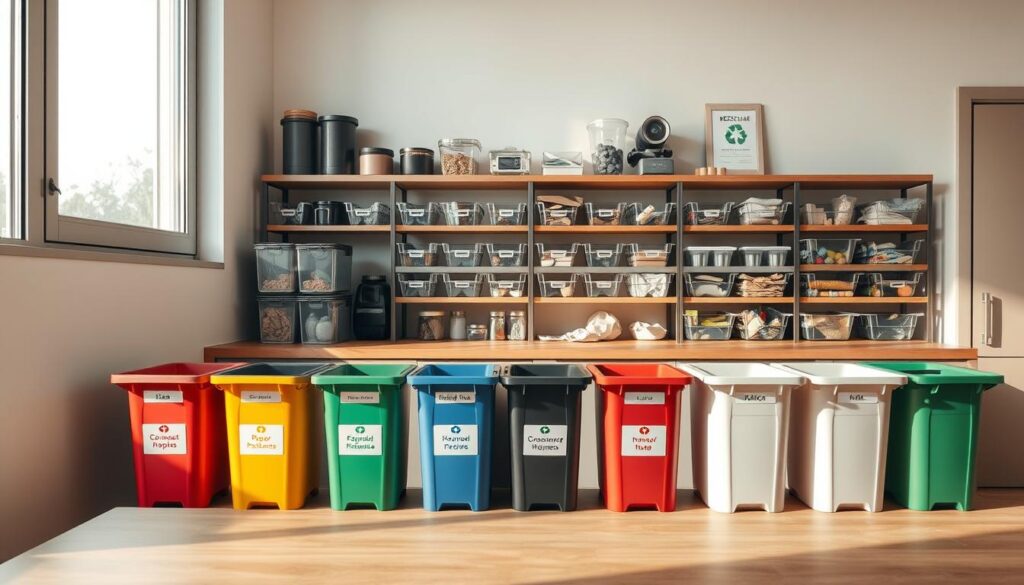
Good recycling organization means placing recycling bins in the right spots. Put them near the kitchen sink or in a recycling corner. This makes it easier to recycle and keeps things simple.
Maintaining Cleanliness
Cleaning recycling bins and the area around them is important for a clean kitchen. Make a plan to clean and sanitize the bins regularly. Keep the area around them neat too.
With these steps, you can have a kitchen recycling station that works well. It will help you manage waste better in your home.
Creative Ideas for Recycling Bin Placement
Starting with smart recycling bin spots in your kitchen is key. Built-in recycling bins are a top choice. They blend into your cabinetry, keeping things tidy and functional.
For tight spaces, hidden storage solutions are a lifesaver. Try pull-out recycling bins in cabinets or under the sink. They save room and keep things neat, making your kitchen more organized.
Multi-compartment recycling stations are another smart idea. They let you sort plastics, papers, and glass all in one spot. This makes recycling easier and more efficient.
“The simplest actions are the most powerful. Recycling is not just about saving the planet; it’s about making a difference in our daily lives.”
For a unique touch, try DIY recycling bin solutions. Use old furniture or containers to make your own bins. It’s eco-friendly and adds a personal flair to your kitchen.
Lastly, placing recycling bins in your kitchen island or pantry is both useful and stylish. It makes recycling a part of your daily routine, encouraging everyone to get involved.
Maintaining Cleanliness Around Recycling Bins
To keep your kitchen pest-free and fresh, it’s key to keep your recycling bins clean. This means regular cleaning and good hygiene to stop bacteria and odors.
Regular Cleaning Tips: Clean your recycling bins often, more so after throwing away food or messy stuff. Use mild soap and warm water to clean off any leftovers. Make sure they dry completely before putting new bags in.
Regular checks on your recycling bins can spot problems early. Look for pests or mold to fix issues fast.
Adding good waste management practices to your daily routine boosts kitchen hygiene. This makes your kitchen cleaner and helps the environment too.
Educating Family Members on Recycling Practices
Teaching your family about recycling is key to a greener home. By learning about recycling, everyone can help the planet. This builds sustainable habits for your family and the community.
To begin kitchen recycling education, get your family involved in setting up recycling. Show them what can be recycled and how to prepare it. It’s a chance to teach kids about their environmental impact.
Being consistent is important for good family recycling practices. Make recycling a regular part of your chores. Encourage everyone to join in. Together, you can live more sustainably and help the environment.
Check and update your recycling habits often. This keeps everyone interested and helps your household stay green.
Community Resources for Recycling Education
Community resources are key in teaching us about recycling. They help us understand why recycling is important and how to do it right. Local governments and groups offer many programs and materials to teach us.
Local recycling centers are a big help. They give guided tours and materials that explain recycling. By visiting, we learn how our recyclables are used and the good we do.
Many places also have workshops and seminars on recycling and being green. These events teach us about recycling tips, new recycling tech, and how to cut down on waste. They’re a chance for us to share our knowledge and ideas too.
“Education is the key to changing behaviors and fostering a culture of sustainability. By providing accessible and engaging educational resources, we can empower our communities to take action on recycling and environmental conservation.”
Local governments and green groups also make educational stuff like brochures and posters. These have recycling tips for our area. They help us recycle right.
To really make a difference, we need to use these resources. By doing so, we improve our recycling and help make our community more sustainable.
In short, community resources are vital for teaching us about recycling. With local programs, educational materials, and getting involved, we can work towards a greener future.
Staying Informed About Recycling Guidelines
Recycling practices can change over time. It’s important to stay updated on recycling guidelines in your area. Having the right recycling bins and organizing your recycling stations are key steps in recycling effectively.
To stay updated, check your local government’s website or sign up for newsletters. Many communities offer workshops or online resources to teach the latest recycling practices.
By staying informed, you can adapt to changes in recycling regulations. This helps you contribute to a more sustainable environment. It benefits your household and supports the community’s recycling efforts.