






The kitchen is often seen as the heart of the home. But, it can be dangerous if precautions are not taken.
Sharp objects, hot surfaces, and electrical appliances make accidents likely. Knowing these hazards is key to avoiding injuries and making cooking safe.
Simple steps can make a big difference. Keeping the kitchen clean and organized is one. Being careful with cooking precautions and following basic kitchen safety rules also help a lot.
This article will show why kitchen safety is so important. It will also give tips on how to keep your cooking space safe and fun.
Understanding Kitchen Hazards
The kitchen is often called the heart of the home. But it’s full of dangers that can make cooking risky. Knowing these dangers is the first step to staying safe.
Some big common kitchen hazards are sharp knives, hot surfaces, and slippery floors. These can cause serious injuries if not handled carefully. Sharp knives can cut you, and hot surfaces can burn you.
As Julia Child once said, “The only time to eat diet food is while you’re waiting for the steak to cook.” This shows how tempting cooking can be. But, it’s important to stay focused to avoid accidents.
Electrical hazards are also a big worry in the kitchen. Faulty appliances or using electrical devices near water can cause electrical shocks. Make sure to use appliances as directed and keep them away from water to lower this risk.
“Prevention is better than cure.” This saying is very true for kitchen safety. By knowing and understanding the dangers, we can take steps to prevent accidents.
To make your kitchen safer, it’s key to know the hazards and take steps to avoid them. Be aware of your surroundings, wear protective gear, and keep your kitchen clean and organized.
Fire Safety Tips for Cooking
Keeping your kitchen safe from fires is very important. Fires, like grease fires, can happen when cooking with oil. They are a big risk.
To stay safe, always be careful while cooking. Keep a safe distance from flammable things. Never leave cooking alone, as this can lead to fires.
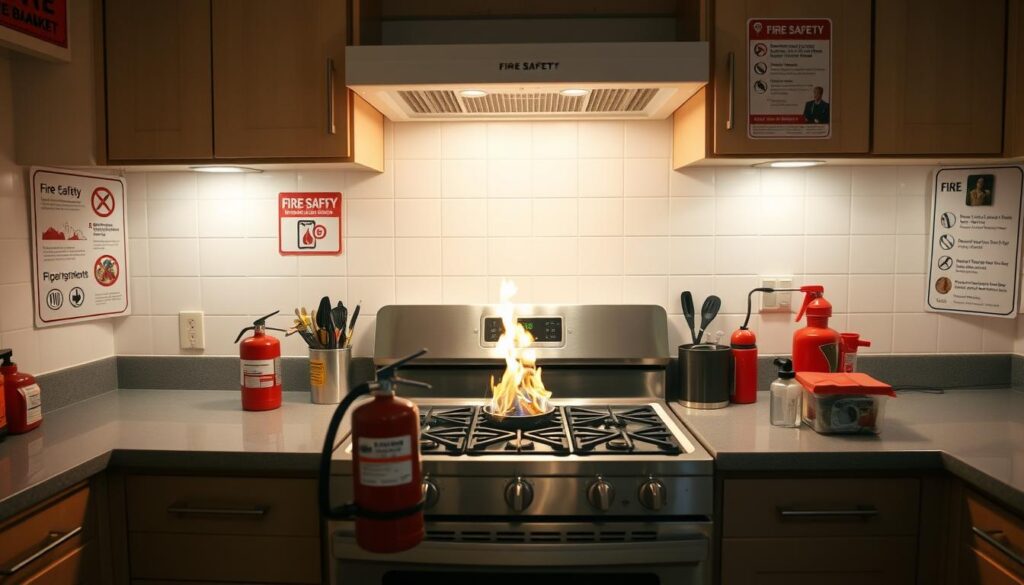
If a grease fire starts, know how to act. Never use water to put out a grease fire, as it can make the fire worse. Use a fire extinguisher rated for grease fires or baking soda instead.
Using Baking Soda to Extinguish Grease Fires
Baking soda is great for putting out grease fires. It smotheres the fire by taking away oxygen. To use it, just pour a lot of baking soda over the fire, covering it all.
If the fire is big or you’re not sure what to do, get out and call the fire department. Keeping your kitchen clean and well-maintained also helps prevent fires.
By knowing about fire safety and being proactive, you can lower the chance of kitchen fires. This makes cooking safer for everyone.
Knife Skills and Safety
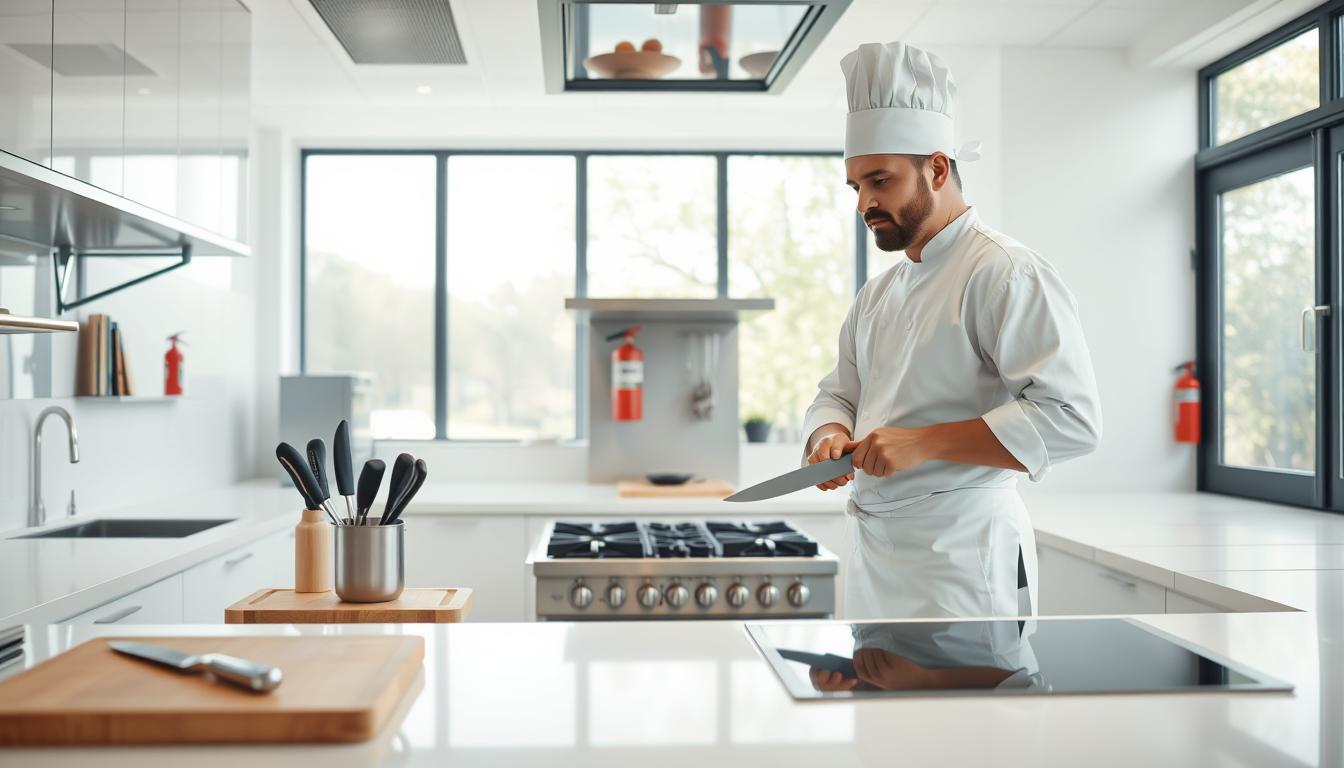
Proper knife handling is key to avoiding accidents and keeping the kitchen safe. Learning knife skills makes cooking better and safer. It also lowers the chance of getting hurt.
Keeping your knives sharp is a basic part of knife safety. A dull knife is harder to use and might slip, leading to accidents. Sharpening your knives often keeps them sharp and safe.
Using the right cutting technique is also important. Hold the knife firmly and place your fingers on the sides of the blade. Always curl your fingers under to avoid getting cut.
Safe Cutting Practices
For better kitchen safety, follow safe cutting habits. Always cut away from your body and use a stable surface. Never cut towards yourself.
By mastering knife skills and following safe cutting practices, you can greatly reduce kitchen accidents. Safety in the kitchen begins with the tools and how we use them.
Safe Food Handling Practices
Safe food handling is more than just following rules. It’s about keeping everyone who eats your food safe. A key part of this is stopping cross-contamination.
Cross-contamination happens when bacteria move from one food to another. This can happen through utensils, cutting boards, or hands. To avoid this, keep raw meat, poultry, and seafood away from foods you can eat right away. The USDA says, “Separating foods is a top way to stop cross-contamination.”
“The single most important thing you can do to prevent foodborne illness is to wash your hands properly and frequently.”
Washing your hands with soap and water for 20 seconds is key. Do this before and after touching food, and after touching raw meat, poultry, or seafood. Also, clean surfaces and utensils often to keep your kitchen clean.
Keeping food clean also means storing it right. Make sure food is in covered containers and the fridge is below 40°F (4°C). By following these safe food handling practices, you lower the chance of getting sick from food.
In short, safe food handling is about separating foods, washing hands often, and keeping your kitchen clean. By doing these things, you make sure your kitchen is safe and healthy for everyone.
The Role of Personal Protective Equipment
To avoid accidents, wearing personal protective equipment in the kitchen is key. Kitchen safety is a must, and the right gear can lower injury risks.
Aprons are simple yet effective. They keep clothes clean from stains and splatters. Some aprons even have pockets for utensils or extra protection.
Oven mitts are vital for avoiding burns. They let you handle hot dishes safely. Also, use pot holders or trivets to protect countertops from heat.
Wearing closed-toe shoes and avoiding loose clothing is also important. Loose clothes can catch fire or get stuck in appliances, which is risky.
By using personal protective equipment while cooking, you boost kitchen safety. This makes cooking safer and more enjoyable.
Managing Allergens in the Kitchen
Managing allergens in the kitchen is key to keeping everyone safe. Foods like nuts, shellfish, and dairy can cause serious reactions. It’s important to handle them carefully.
To begin, you need to identify possible allergens in your ingredients. Read labels well and know which foods can trigger allergies. After finding these allergens, use separate tools and cooking areas for each.
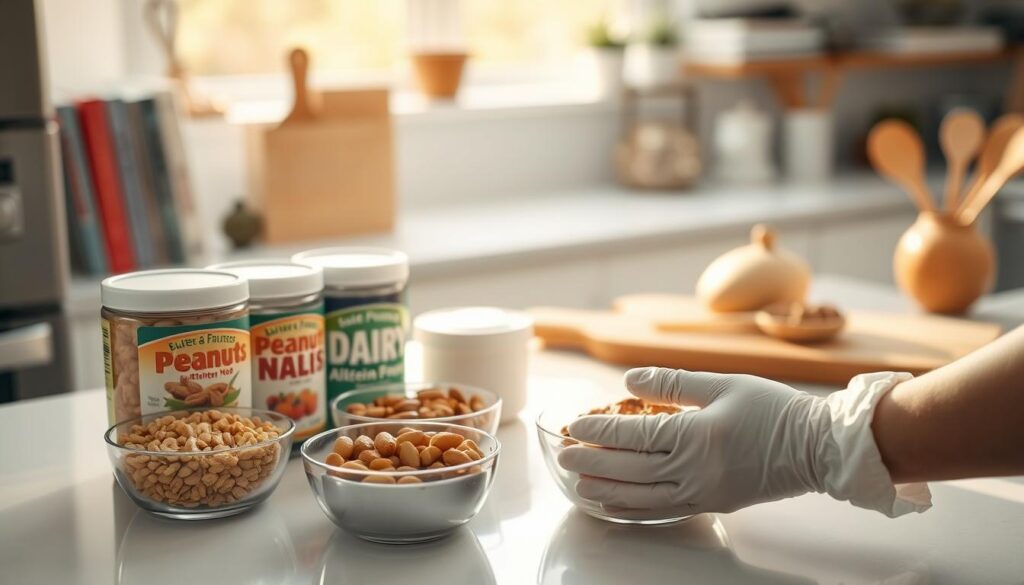
It’s also vital to label and store ingredients correctly. This helps you keep track of what you have and avoid using allergens by mistake. Cleaning surfaces and tools well after use also helps prevent cross-contamination.
By following these steps, you make your kitchen safer for everyone. It’s not just about avoiding legal or health problems. It’s about making your cooking safe and welcoming for all.
Emergency Preparedness in the Kitchen
Having a plan for kitchen emergencies can greatly reduce risks. It’s not just about having the right tools. It’s also about knowing how to act quickly in an accident.
A first aid kit is a key part of kitchen emergency prep. It should have items for minor injuries like cuts and burns. Make sure to check the kit often to keep supplies fresh.
Knowing basic first aid techniques is also vital. Learning how to treat burns, stop bleeding, or do the Heimlich maneuver can save lives. Taking a first aid course is a great way to learn these skills.
Having a plan for big emergencies like fires is also important. This includes smoke detectors, knowing how to use a fire extinguisher, and a clear escape route. Practice this plan with everyone in the kitchen to ensure they know what to do.
Emergency prep in the kitchen is more than just reacting to accidents. It’s about making a safe space that lowers risks. By being proactive and prepared, we can greatly reduce serious injuries and make cooking safer.
Safe Food Storage Techniques
Preventing foodborne illnesses starts with safe food storage practices. Keeping food stored right is key for kitchen safety. It stops harmful bacteria and other germs from growing.
It’s vital to refrigerate or freeze leftovers quickly. This stops bacteria from spreading and keeps your kitchen safe. Also, labeling leftovers with the date they were stored helps you keep track of how long they’ve been in the fridge or freezer.
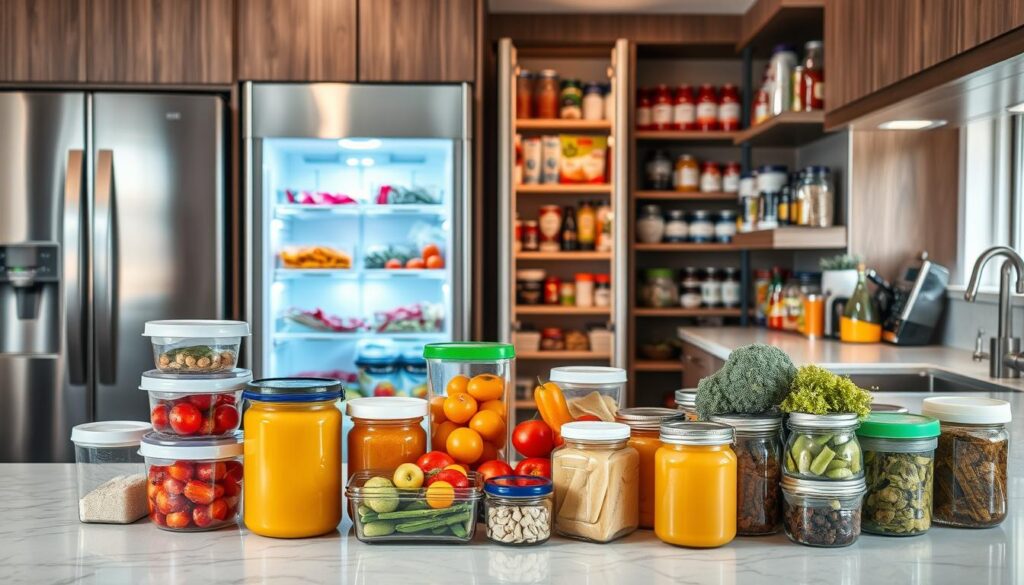
For a clean kitchen, store food in airtight containers. This keeps food fresh and stops cross-contamination. Also, cleaning your fridge and freezer often is important. It makes sure expired or bad food is thrown away right.
Tips for Safe Food Storage
Here are some more tips for safe food storage:
– Store raw meat, poultry, and seafood on the bottom shelf of the fridge. This stops juices from dripping onto other foods.
– Keep your fridge at 40°F (4°C) or below, and your freezer at 0°F (-18°C) or below.
– Use shallow containers for food. This lets it cool fast and stops bacteria from growing.
By following these cooking precautions and safe food storage tips, you can lower the risk of foodborne illnesses in your kitchen.
Child Safety in the Kitchen
Keeping children safe in the kitchen is a big job. The kitchen is full of dangers, like sharp objects and hot surfaces. It’s important to be careful.
Watching over kids in the kitchen is key. Safety experts say constant supervision stops accidents. It’s not just about watching; it’s also about teaching them safety.
Teaching kids about kitchen safety can be fun. Explain the risks of sharp knives and hot stoves in a way they get. Educational approaches include showing them safe ways to cook and letting them help with simple tasks.
“A safe kitchen is achieved through a combination of safety measures and awareness.”
Securing dangerous items and using safety devices like stove guards helps. It’s also important to teach kids about kitchen safety rules.
Creating a Safe Environment
To make a safe kitchen for kids, start by removing or securing hazards. Lock away cleaning supplies and medicines. Teach kids how to act safely in the kitchen.
By following these steps and staying alert to kitchen safety, we can lower the risk of accidents. Parents and caregivers play a big role in keeping kids safe.
Avoiding Cross-Contamination
Keeping your kitchen safe is key, and that means stopping cross-contamination. This is when bacteria move from one food to another. It can happen through touching or using the same tools and surfaces.
Separating raw meat from other foods is a big step in stopping cross-contamination. Use different cutting boards, utensils, and containers for raw meat, poultry, and seafood. It’s also important to label and date leftovers and stored foods so they’re used safely.
“The biggest risk factor for foodborne illness is cross-contamination. It’s vital to keep raw meat, poultry, and seafood separate from ready-to-eat foods.”
To lower cross-contamination risks, keep your kitchen clean. Sanitize surfaces often, wash your hands a lot, and clean all tools and equipment after use.
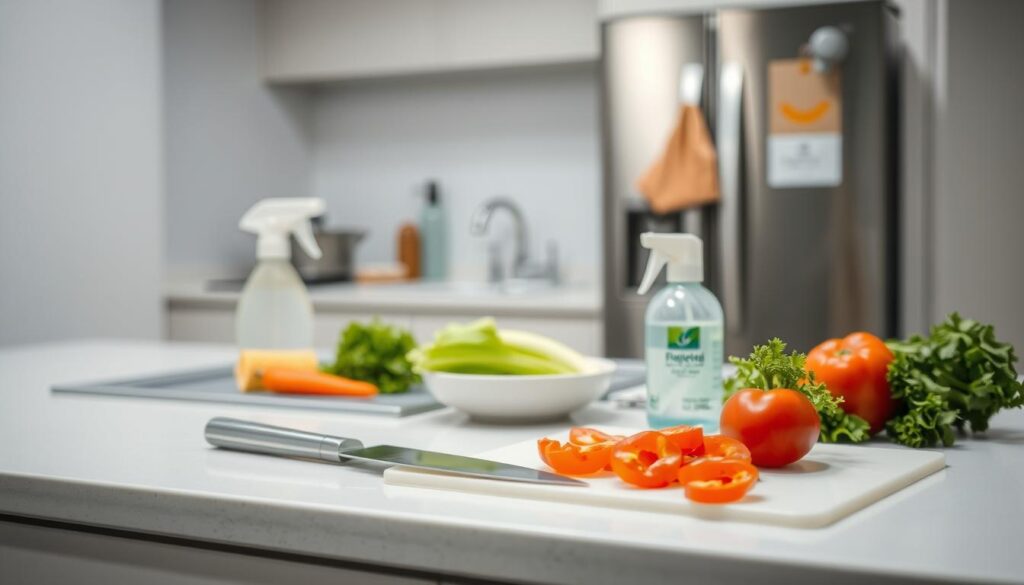
By following these steps, you can greatly lower cross-contamination risks in your kitchen. This helps keep you and your family safe from health problems.
Kitchen Appliance Safety
Keeping your kitchen appliances safe is key to avoiding accidents. Make sure all electrical appliances are used and cared for correctly. This can greatly lower the chance of accidents happening.
Safe Usage Practices
It’s important to follow the maker’s instructions for each appliance. Check your appliances often for any damage or wear. Underwriters Laboratories says sticking to safety standards is essential for safe use.
“Kitchen appliance safety is not just about following rules; it’s about creating a culture of safety in the kitchen.”
Maintenance and Cleaning
Keeping appliances clean and in good shape is critical. Regular cleaning stops grease and food buildup, which can cause fires. Also, make sure appliances are installed right and used as they’re meant to be.
When using kitchen appliances, remember to always be careful. Never leave cooking alone, and have a fire extinguisher ready. Taking these cooking precautions seriously can really help prevent accidents.
By focusing on kitchen appliance safety and following these tips, homeowners can make their kitchens safer. This ensures a safer place to cook for everyone.
Final Thoughts on Kitchen Safety
Keeping your kitchen safe is a constant effort. It needs focus and a dedication to safe habits. By knowing the dangers and taking steps to avoid them, you can lower the chance of accidents and injuries.
It’s key to prioritize cooking safety. Simple precautions can greatly improve your safety. This includes being careful with fire, using knives correctly, handling food safely, and knowing about allergens.
By making these habits part of your cooking, you make your kitchen safer. Always be alert and keep checking your safety steps. This helps prevent accidents and makes cooking safer for everyone.