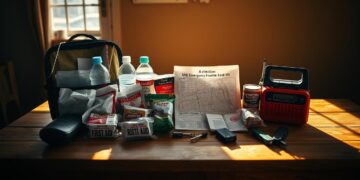






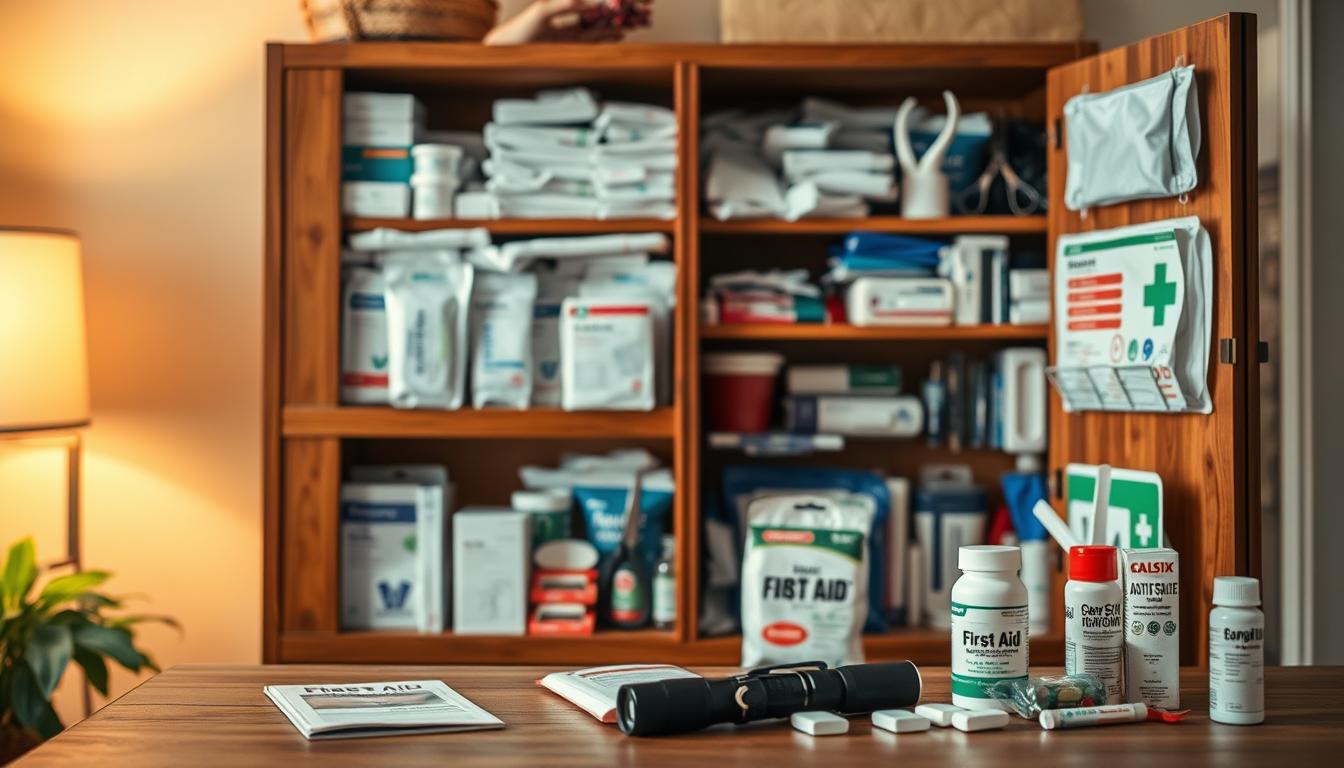
Being ready for emergencies is key for home safety. The American Red Cross says a good first aid kit is vital for emergency preparedness. Having the right stuff can help a lot with minor injuries and stop bigger problems.
In this article, we’ll show you how to make a first aid kit for your home. You’ll find out what must-have items to include and how to update your kit. This way, you’ll always be ready for emergencies.
Understanding the Importance of a First Aid Kit
A first aid kit is more than just a box of medical supplies; it’s a lifeline during medical emergencies. The American Red Cross says it lets us act fast in emergencies. We can care for injuries like cuts, scrapes, and burns right away.
Having a first aid kit at home helps you treat minor injuries quickly. This can stop them from getting worse. It helps in emergency response, cuts down infection risk, and speeds up healing.
First aid training is key too. It teaches us to use the kit’s items right. Knowing how to treat common injuries is vital in a medical emergency. It’s not just about having supplies, but knowing how to use them.
In short, a first aid kit is essential for home safety. It shows we’re ready for the unexpected. It makes us confident in handling emergencies.
Essential Items for Your First Aid Kit
Knowing what to include in your first aid kit is key. A good kit should have many first aid supplies for different emergencies.
The Mayo Clinic Staff says to include basic items like adhesive tape and elastic wrap bandages. Also, nonstick sterile bandages are important for wound care and preventing infections.
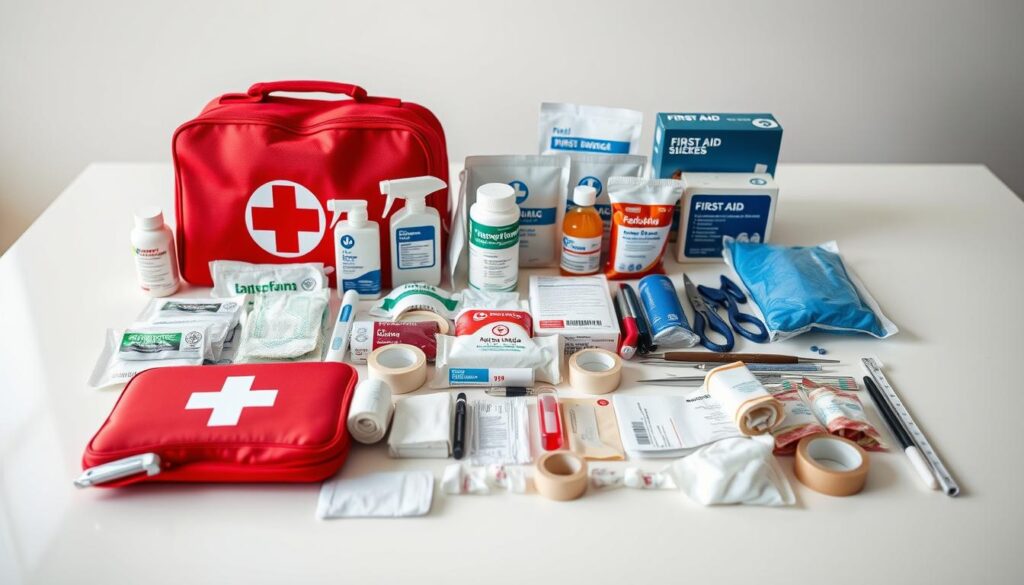
For wound care, the right materials are essential. You’ll need bandages of different sizes, gauze pads, and antiseptic wipes. These help clean and dress wounds well.
Basic Supplies for Common Injuries
For cuts and scrapes, you need items to stop bleeding and protect the wound. Here are some:
Adhesive bandages in various sizes
Gauze pads for applying pressure
Antiseptic wipes for cleaning the wound
Elastic wrap bandages are great for sprains and strains. They provide support and compression.
With these first aid supplies in your kit, you’ll be ready for minor medical emergencies at home.
Choosing the Right Container for Your Kit
A good container makes your first aid kit easier to use. When picking a container, think about a few important things. These ensure it fits your needs well.
The size of the container is key. It should hold all your first aid items but not be too big. The American Red Cross says kits come in various sizes. Choose one based on how you’ll use it and who it’s for.
Portability matters a lot. A kit that’s easy to carry is great for travel or outdoor activities. Look for containers with handles or backpack-style kits for better portability.
The durability of the container is also important. It should handle different environments and keep your supplies safe. A waterproof or water-resistant container is a good choice.
Think about storage options too. A well-organized kit is easier to use. Look for containers with compartments or dividers to keep things tidy.
In short, picking the right container for your first aid kit is about size, portability, durability, and storage. By choosing wisely, your kit will be both useful and simple to use.
Building a Family First Aid Kit
Creating a family first aid kit is key to keeping your loved ones safe and healthy. A good kit helps you handle emergencies and care for injuries until help arrives.
When making a family first aid kit, think about what each family member needs. This includes personal medications for emergencies.
Including Personal Medications
Personal medications are a must in your family first aid kit. This might include epinephrine auto-injectors for allergies, inhalers for asthma, or other needed prescription drugs.
The Red Cross suggests that a family first aid kit for four should have items like absorbent compress dressings and antiseptic wipe packets. Make sure your kit fits your family’s specific needs, including any health conditions or allergies.
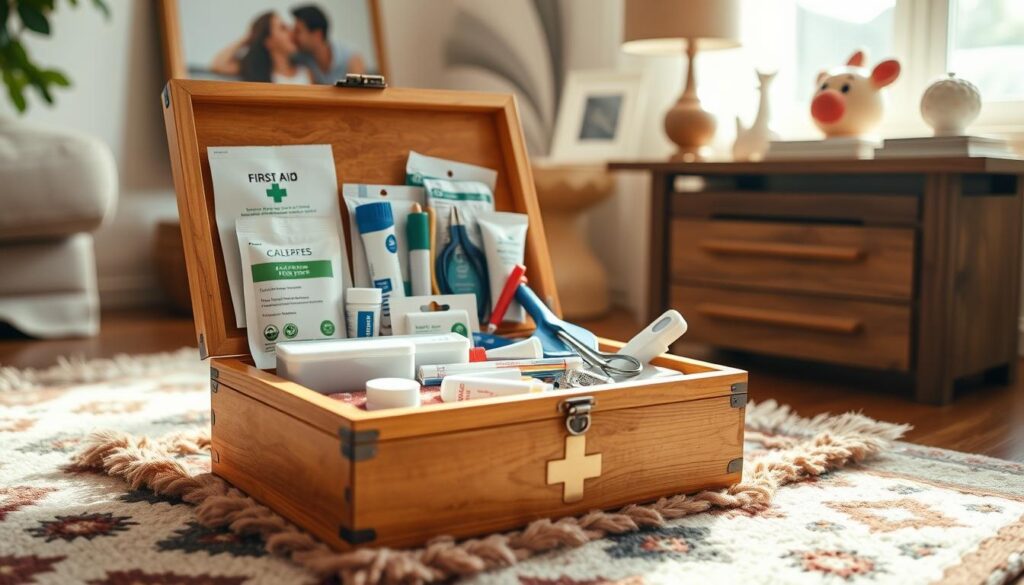
Your family first aid kit should be easy to find and in a handy spot. This makes it simple to act fast in emergencies and give the right care.
With a well-stocked family first aid kit, you boost your emergency preparedness. You create a safe and healthy space for your family.
Items for a Basic First Aid Kit
Knowing what to put in a basic first aid kit is key for emergencies. A good kit can give basic first aid and stop small injuries from getting worse.
Janakiram Dirisina says hand sanitizer, latex-free gloves, and antiseptic wipes are must-haves. Hand sanitizer stops the spread of germs. Latex-free gloves protect against infections. Antiseptic wipes clean and disinfect small cuts and scrapes.
Also, a basic kit should have bandages, gauze pads, and medical tape. Bandages cover and protect wounds. Gauze pads can apply pressure or soak up blood. Medical tape keeps bandages or gauze in place. Pain relievers like acetaminophen or ibuprofen can ease pain and lower fever.
Other medical supplies include antiseptic ointment for minor cuts and scrapes, and antihistamines for allergic reactions. It’s smart to add any personal meds that family members might need in an emergency.
With these items, your basic first aid kit is ready for emergencies. Always check your kit to make sure everything is good to use and not expired.
Advanced Supplies for a Comprehensive Kit
A basic first aid kit is a good start, but a more advanced kit is better for serious injuries.
A detailed first aid kit should have advanced medical tools. The Mayo Clinic Staff suggests items like a breathing barrier or surgical mask, instant cold packs, and hydrocortisone cream. These are key in emergencies.
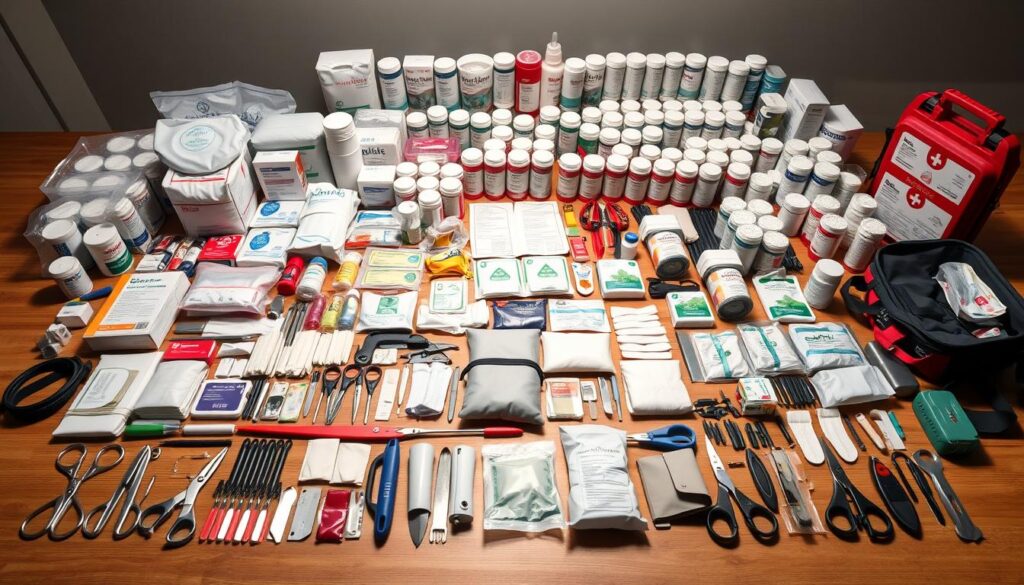
Don’t forget to add splints to keep injured limbs stable, tourniquets for severe bleeding, and medications like pain relievers and antihistamines. These items boost the care you can offer.
Enhancing Your Kit with Advanced Supplies
Building a detailed kit means thinking about your family’s needs. If someone has a medical condition, add special items for them.
Other advanced items to think about include:
Medications: Pain relievers, antihistamines, and any emergency meds your family might need.
Splints: To keep injured limbs from getting worse.
Tourniquets: For stopping severe bleeding in emergencies.
With these advanced items, your first aid kit can handle many situations. This gives you peace of mind and could save lives.
First Aid Kit Checklists
To keep your first aid kit in top shape, regular checks are essential. The American Red Cross suggests checking it often. This ensures it’s fully stocked and that nothing has gone bad.
Making a first aid checklist is easy and boosts your emergency readiness. Begin by listing everything in your kit. This includes bandages, antiseptic wipes, pain relievers, and any medications you might need.
Regular checks help spot expired or used items that need to be replaced. It’s also a chance to update your kit for your family’s changing needs.
“Check the kit regularly. Check expiration dates and replace any used or out-of-date contents.” The American Red Cross highlights the critical role of kit maintenance and supply management.
Keeping a detailed checklist ensures your first aid kit is always ready. You should regularly check the kit, replace any items that are no longer good, and make sure everything is within its usable date.
Adding a first aid checklist to your routine is simple. Just set a reminder every six months to check your kit. This habit keeps your kit in great shape and gives you confidence that you’re ready for anything.
Where to Store Your First Aid Kit at Home
Having a first aid kit is key, but where you store it matters a lot. The Mayo Clinic Staff says keep it where you can get to it fast but not where kids can. This makes it safe and easy to use.
Think about where accidents happen most at home. You might want a kit in the kitchen for burns and cuts. Or in a hallway for quick access.
Key Considerations for Storage:
The spot should be dry and cool to keep supplies good. Don’t put it in wet places like bathrooms or where sunlight hits, like windows.
It’s important to be easy to find. Make sure everyone knows where the kit is. This helps you act fast when you need to.
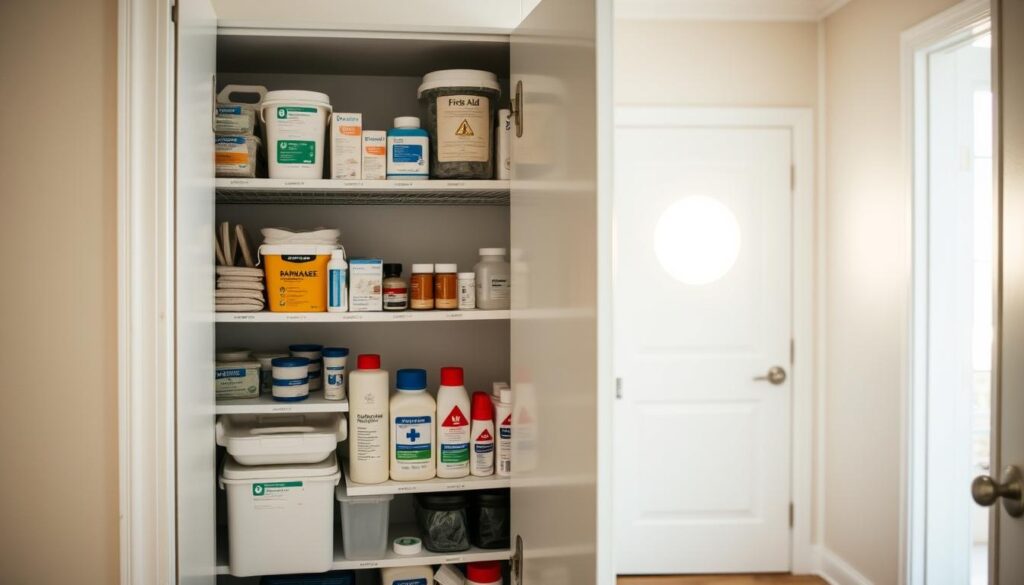
Also, think about other spots around the house. Like a garage or workshop, where tools can cause accidents.
Choosing the right spot for your first aid kit makes your home safer. It helps you be ready for emergencies.
Teaching Family Members First Aid Basics
Teaching family members first aid basics helps them respond well in emergencies. This makes your home safer and teaches family members to be responsible. The American Red Cross has many resources, including classes for kids to learn first aid.
First aid training for everyone in your household boosts your emergency response skills. It’s key to learn basic first aid, like cleaning wounds, CPR, and using defibrillators.
Family education on first aid goes beyond just learning techniques. It builds a culture of safety and readiness. By getting all family members involved in first aid training, you make sure everyone knows what to do in an emergency.
Resources from the American Red Cross are very helpful. They have programs for different ages, making it easy to teach your family first aid basics.
Upgrading Your First Aid Kit
To keep your first aid kit effective, it’s important to check and update it often. The Red Cross advises checking your kit regularly. This ensures it stays relevant and useful.
When you check your kit, look at the expiration dates of supplies. Replace any used or damaged items. Also, think about any new members in your household. For example, having a new baby or pet might mean you need to add certain items to your kit.
When you upgrade your kit, think about the emergencies you might face. Also, consider the specific needs of your family members. You might need to add items for allergic reactions or update medications. Don’t forget to include personal care items for family members with special needs.
By regularly checking and updating your first aid kit, you’ll be ready for emergencies. You’ll be able to provide the best care when it’s needed.
When to Replenish Your First Aid Kit
To keep your first aid kit working well, you need to know when to restock it. It’s important to check it often. This makes sure it’s always ready for emergencies.
The Mayo Clinic Staff says it’s key to check your first aid kit regularly. This helps you replace used or expired items. It’s all about being ready for emergencies and keeping your kit in top shape.
Make checking your first aid kit a regular task. Do it every few months. Look for expired items, damage, or anything that’s running low. Replace anything that’s no good or has been used.
By keeping your first aid kit full, you’re always ready for emergencies. This focus on kit maintenance is vital. It helps you stay prepared for unexpected situations, supporting your supply replenishment plan.
Resources for First Aid Training
Getting first aid training is key to improving your emergency skills. It gives you confidence in treating injuries. The American Red Cross has great courses to teach you how to act in emergencies.
These classes cover everything from basic first aid to advanced medical topics. This means you’ll know how to handle many situations. By getting trained, you can really help your community and family.
Ready to boost your emergency skills? Sign up for a first aid course. With the right training, you’ll be able to care for people in emergencies. This makes the world a safer place.