







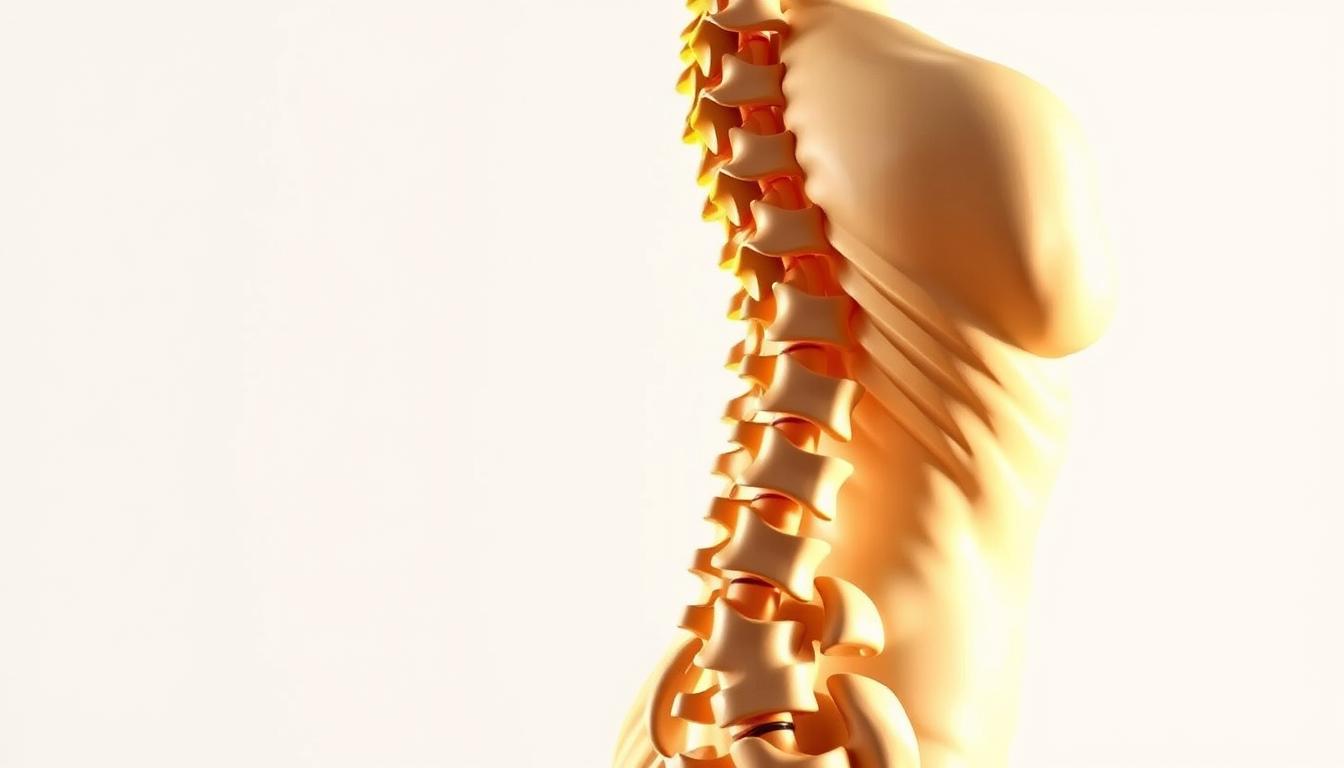
Keeping your healthy back is key for feeling good. A healthy spine helps your body move and do daily tasks. It’s very important for your health.
Good posture helps avoid back pain. Back pain can really hurt your life. When your spine is right, your muscles and joints don’t get hurt as much.
A healthy spine is essential for your spine health. Knowing how to keep your back healthy can lower back pain risks. It also makes you feel better overall.
Understanding Posture and Its Importance
Knowing the value of posture can greatly affect your health. Good posture is more than looks; it keeps your healthy back and stops back pain.
Good posture spreads your weight evenly, putting less stress on your joints. It also lets you breathe better, as your chest can fully open. This can boost your health and lower anxiety.

Keeping your healthy back is tied to good posture. Standing or sitting right lessens back muscle and joint strain. This cuts down back pain risk, which is key for your health.
Adding good posture habits to your day can really help. It’s not just about standing straight; it’s about living a way that keeps your healthy back and lowers back pain risk.
Common Causes of Poor Posture
In today’s world, it’s key to know why poor posture happens. The average American sits for nine hours a day. This sitting habit greatly affects our posture.
Sitting for long times weakens our back and belly muscles. This weakness makes our spine curve in bad ways. This leads to poor posture.

Standing for long periods can also cause posture problems. It’s important to keep the spine’s natural curves while standing. Make sure to stand with weight evenly on both feet and avoid locked knees.
Ergonomics is very important in avoiding poor posture. Having a good workspace setup helps a lot. This means using chairs with lumbar support and keeping computer monitors at eye level.
It’s also key to take breaks and stretch. Simple moves like shoulder rolls and neck stretches help. Short walks can also keep muscles from getting too tired.
Knowing why poor posture happens and making small changes can greatly help. These steps can improve our spine health and overall health.
Identifying Your Posture Type
Knowing your posture type is key to fixing back pain. Start by checking your posture when you stand and sit.
When you stand, make sure your ears, shoulders, hips, knees, and ankles are in line. This line helps spread your weight evenly and eases muscle strain.
To check your standing posture, stand against a wall with your feet apart. If you’re right, your head, shoulders, and buttocks should touch the wall. When sitting, keep your lower back slightly curved and your shoulders back, not slumped.
Remember to watch your posture all day. Regular exercise can make your core stronger and improve your posture. Being mindful of your posture can lower back pain risks and boost your health.
Benefits of Good Posture
Good posture is more than just standing tall. It has many health benefits. Keeping your back and spine healthy is key to well-being, and good posture helps a lot.
One big advantage of good posture is better breathing. When you stand or sit straight, your lungs can expand more. This means you take in more oxygen, which is good for your health.
Physical Benefits
Good posture also eases muscle and joint strain. It keeps your spine aligned, lowering back pain and other issues. This is great for people who sit a lot or do heavy lifting.

Good posture also boosts mental health. Standing tall can make you feel more confident and ready for challenges. It can also lower anxiety and improve your mood.
Increased Confidence and Reduced Anxiety
Good posture can make you feel more confident. Standing tall shows self-assurance and makes you feel capable. It also reduces anxiety, leading to a more positive life outlook.
In conclusion, good posture offers many benefits. It improves your Healthy Back and Spine Health and boosts mental well-being. By focusing on good posture, you can greatly enhance your life quality.
Exercises to Improve Posture
Exercises that focus on building core strength are essential for standing tall and ensuring a healthy back. Regular exercise, like activities that strengthen your core, is key to good posture. A strong core makes it easier to sit and stand straight, which is good for your spine.
Yoga and Pilates are top choices for improving posture. They strengthen your core, improve flexibility, and balance. Adding yoga and Pilates to your routine can greatly enhance your posture.
Yoga and Pilates for Better Posture
Yoga and Pilates are low-impact exercises that focus on controlled movements and breathing. They engage your core, improve spinal alignment, and enhance posture. Regular practice can lead to significant improvements in your ability to maintain good posture.
Exercises like planks, bridges, and yoga poses target the core and back. For example, the “cat-cow” stretch in yoga helps flex and extend the spine. Pilates exercises, like the “hundred,” strengthen the abdominal muscles.
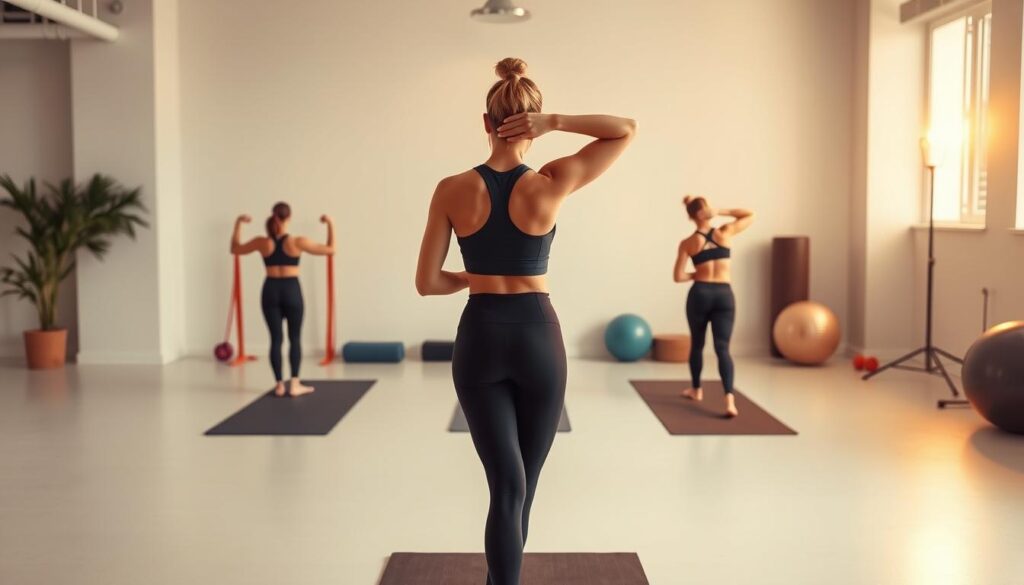
By committing to a regular exercise routine with yoga and Pilates, you can strengthen your core. This improves your posture and contributes to a healthier spine. It’s about making a long-term commitment to your spinal health and overall well-being.
Ergonomic Tips for Home and Office
Creating an ergonomic workspace is key for good posture and less back pain. Both home and office spaces can be made better for your spine and health.
Chair height is a basic part of an ergonomic setup. Make sure your feet are flat on the floor, with knees and hips even. This keeps your lower back’s natural curve, easing spine strain.
Monitor Positioning is also vital. Your monitor should be right in front of you, 20-25 inches away. It should be at a height where you look slightly down. This prevents neck strain and supports good posture.
Standing desks are becoming more popular for their health perks. If you stand a lot, a standing desk mat can ease foot and leg strain. Switching between sitting and standing helps keep your posture right and lowers back pain.
Additional Ergonomic Tips
Keep your keyboard and mouse close to avoid reaching, which strains shoulders and back. Good lighting reduces eye strain. Using a document holder keeps papers at eye level.
With these ergonomic tips, your workspace will be more comfortable. This supports your spine and lowers back pain risk.
Integrating Good Posture into Daily Life
Good posture is more than just standing straight. It’s about making healthy habits a part of your daily routine. By making a few simple changes, you can greatly improve your posture and health.
One great way to support good posture is to stretch and move regularly. Whether you’re at work or watching TV, getting up to stretch every 30 minutes helps. It can lower the chance of poor posture.
Try using a standing desk in your daily routine. Standing while you work can strengthen your core and improve your posture. Switching between sitting and standing can also cut down back pain.
Being mindful of your posture in daily activities also matters a lot. Noticing how you sit, stand, and move helps you build better habits. By adding these habits to your daily life, you’ll enjoy the perks of good posture. These include less back pain and better overall health.
Posture Correction Tools and Devices
In today’s world, many posture correction tools and devices can help you have a healthier back.
Good posture is key for a healthy spine. The right ergonomic accessories can make a big difference. An ergonomic chair is a great way to support your back. It helps keep your back straight by supporting your lower back.
The lumbar roll is another helpful tool. It keeps your lower back in its natural curve. This can help ease back pain and improve your posture, which is great for people who sit a lot.
“Good posture is the key to a healthy back, and using the right tools can make all the difference.”
Supportive pillows are also good for posture, even when you’re sleeping. They help keep your spine straight, which can prevent back pain in the morning. Choose a pillow that supports your neck and head without being too hard or too soft.
Adding these ergonomic accessories to your daily life can greatly improve your posture. It can also lower your risk of back pain. With a few simple changes and the right tools, you can stand taller and feel better.
“The way we sit, stand, and move affects our overall health. Using posture correction tools is a proactive step towards a healthier back.”
Seeking Professional Help
If you have ongoing back pain or notice your spine isn’t as flexible, get help fast. A healthcare expert can find and fix problems early. This way, you avoid more serious issues later.
A spine specialist or orthopedic doctor can give you advice on better posture and easing pain. They might suggest exercises, physical therapy, or other treatments just for you.
Getting help early can really boost your spine’s health. If you’re worried about your back pain or posture, don’t wait. See a doctor right away.