







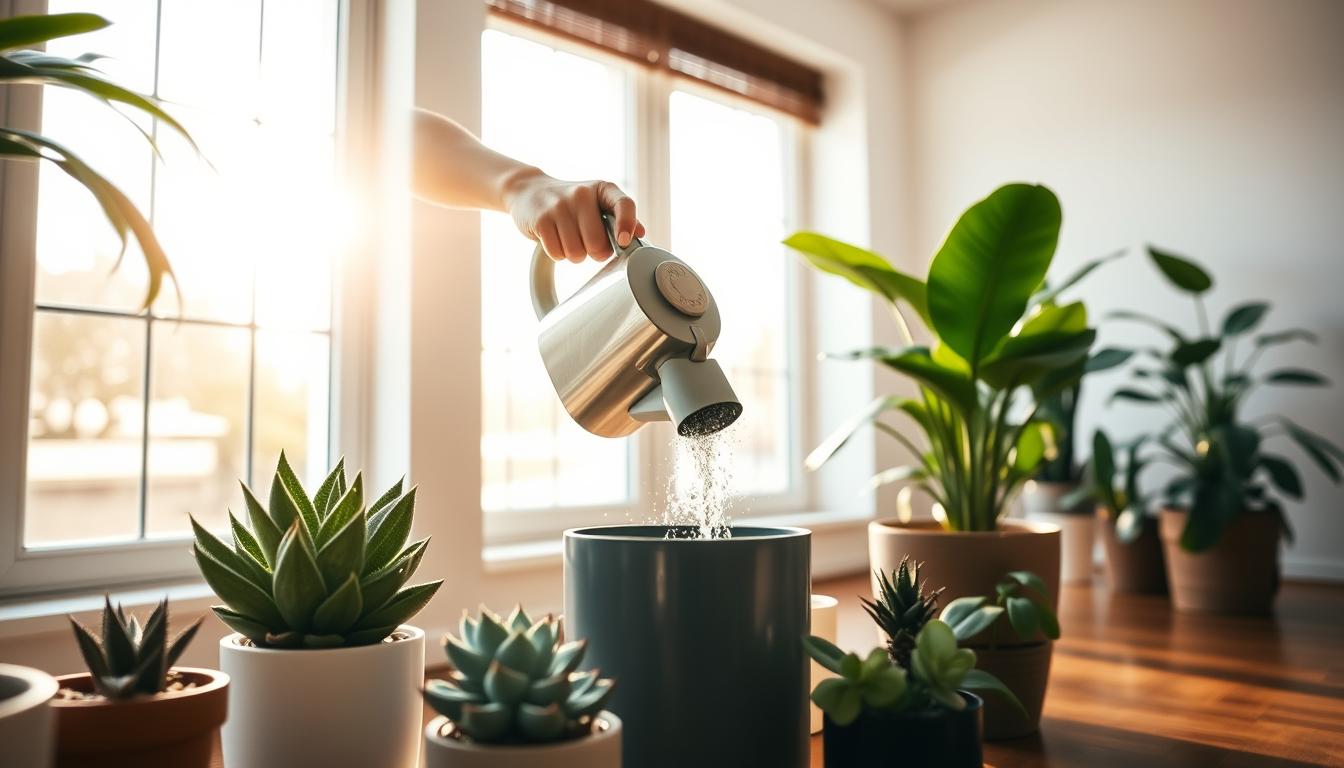
Proper watering is key for indoor plants to thrive. Too little or too much water can harm them. This can lead to various issues.
Too much water can rot the roots. Not enough can cause dehydration and slow growth. Knowing how to water is vital for houseplants.
By following a few simple tips, you can water your indoor plants just right. This will help them grow strong and live longer.
Understanding Houseplants and Their Needs
Knowing what your houseplants need is essential for a healthy indoor garden. Each plant type has its own set of needs. These needs are shaped by things like light and pot size.
Succulents can hold a lot of water, making them good at surviving without much water. They need less water than other plants. Tropical plants, on the other hand, need more water and humidity to do well.
“The right amount of water is key for houseplants to live. Overwatering is a big reason why indoor plants die.”
It’s important to understand these differences. This helps you give your plants the best chance to grow well.
The size of the pot also affects how often you need to water. Bigger pots hold more water, so you might not need to water as often. Smaller pots dry out faster, so you’ll need to water them more.
By knowing the different needs of houseplants and adjusting your care, you can create a beautiful indoor space. This space can add joy and peace to your home.
Choosing the Right Houseplants for You
Finding the perfect houseplants for your home is key to a great indoor garden. When choosing houseplants, think about your lifestyle and your home’s conditions. It’s important to consider light and how much care you can give.
Light is a big deal when picking houseplants. Some love bright, direct light, while others do better in dim, indirect light. For example, if your home gets little natural light, try low-light houseplants like Chinese Evergreen or Pothos. But if your space gets lots of sunlight, succulents and cacti are perfect.
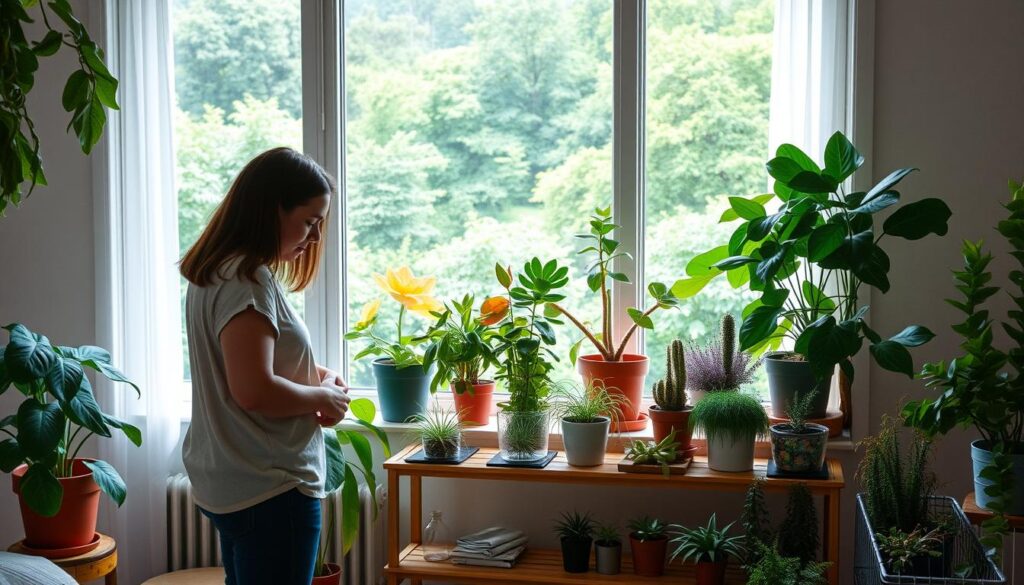
Don’t forget about your care routine. If you often forget to water, go for plants like Snake Plants or ZZ Plant. They can handle neglect. If you love to care for your plants, you can pick from a variety that needs more water and food.
By thinking about these things and using indoor gardening tips, you can make a beautiful indoor garden. It will add joy and freshness to your home. Whether you’re new to gardening or have experience, the right plants can change your indoor gardening journey.
Essential Care for Houseplants
The secret to great houseplant care is finding the right mix of watering, lighting, and nutrients. Knowing these key points is vital for keeping your plants healthy and strong.
Watering Requirements
Watering is super important for houseplants. Too much water can cause root rot, while too little can stress the plant. Check the soil by sticking your finger in it up to the first knuckle. If it’s dry, it’s time to water.
How often you water depends on the plant type, soil, and where it’s kept.
Lighting is also key. Each plant needs different light levels, from bright to low. Putting a plant in the right light can really help it grow well. For example, succulents need lots of light, while Chinese Evergreen prefers it dimmer.
Nutrient Requirements
Along with watering and lighting, giving the right nutrients is important. Fertilizers provide plants with essential nutrients that soil might not have. Using a balanced fertilizer during the growing season helps plants grow and bloom.
By paying attention to watering, lighting, and nutrients, you can make a great home for your houseplants.
Watering Houseplants: General Guidelines
Watering your houseplants right is key to their health. It’s not just about pouring water; it’s about knowing what your plants need.
Checking Soil Moisture is a must. Stick your finger into the soil up to the first knuckle. If it’s dry, it’s time to water. If it’s moist, wait a bit before checking again.
Don’t overwater your plants. Too much water can cause root rot and harm your plants. Make sure your pot has holes for drainage.
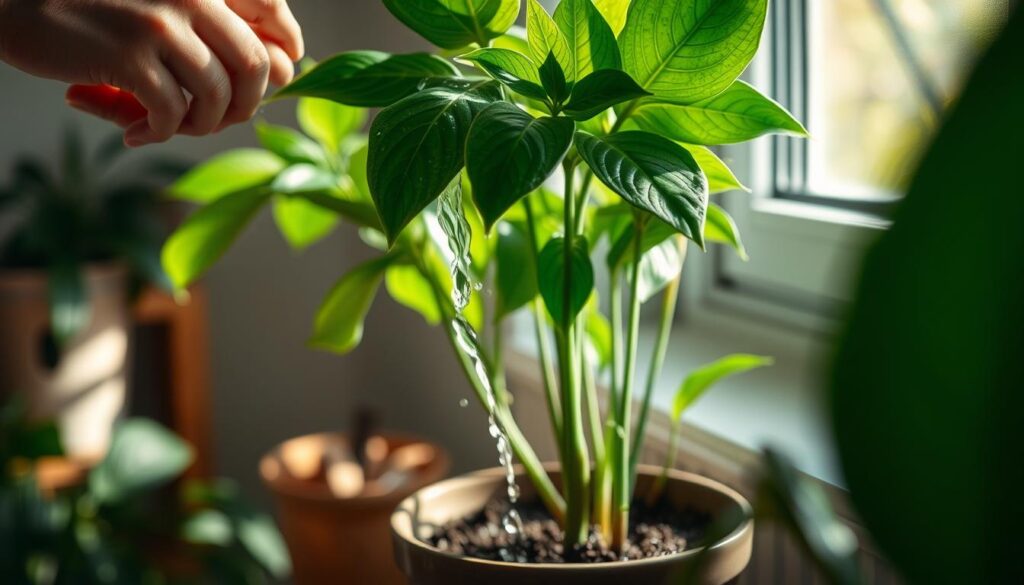
The best times to water are in the morning or early afternoon. This lets plants soak up water all day. Evening watering can lead to fungal diseases because plants stay wet overnight.
By following these tips, you can keep your houseplants healthy and thriving.
Different Watering Techniques for Houseplants
To keep your houseplants healthy and thriving, learning various watering techniques is key. Each plant has its own needs. Knowing these can greatly affect their health and growth.
Top watering is a common method. It involves pouring water directly onto the soil. This spreads water evenly and can remove salts from the surface. But, it’s important to watch out for too much water.
Bottom watering is another good choice. It means placing the pot in a water tray. The plant absorbs water through the holes. This method keeps the soil moist and prevents overwatering. It’s great for plants that don’t like wet leaves.
There are more watering techniques to try, like self-watering pots or a watering schedule. Each has its own benefits. The right one depends on the plant and its home.
By trying out different watering techniques, you can find the best way for your plants. This ensures they get the right moisture to grow well.
Tools and Equipment for Watering Houseplants
Having the right tools is key for taking care of houseplants. The right watering tools can greatly help keep your plants healthy.
A watering can is a basic but essential watering tool. It lets you control how much water you give. This helps avoid overwatering and makes sure the soil is moist all over.
Moisture meters are also very helpful. They check the soil’s moisture levels. This tells you exactly when your plants need water.
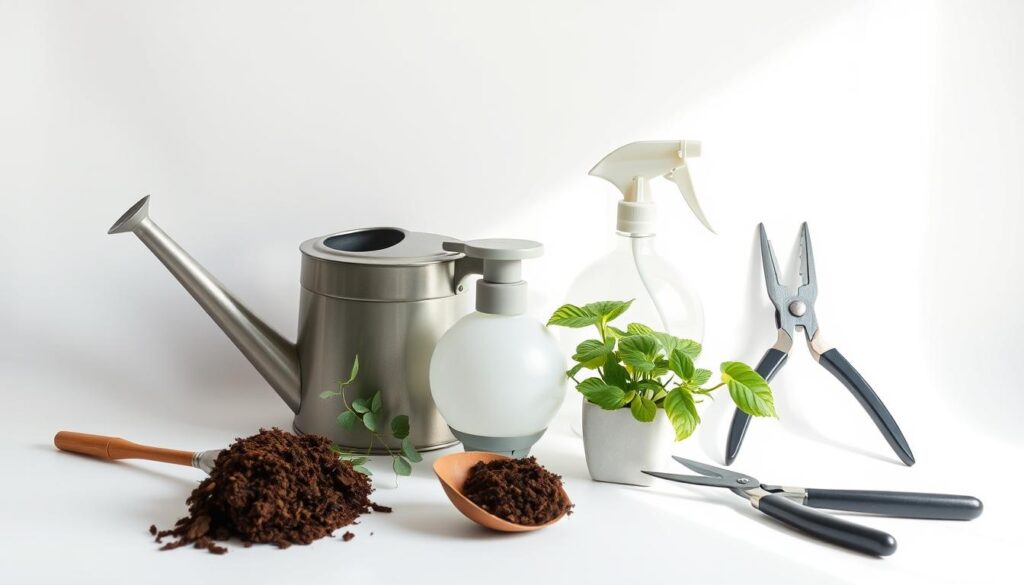
Other plant care equipment can also help with watering. For example, self-watering planters are great for busy people. They let plants get water when they need it.
Watering globes are useful too, mainly for plants that like steady moisture. They slowly release water into the soil as it dries. This keeps the soil just right.
Using these watering tools and plant care equipment makes watering easier. It helps your houseplants get the right amount of moisture.
Dealing with Common Issues in Houseplants
Growing houseplants can be a joy, but it’s not without its challenges. Even with the best care, houseplants can sometimes develop problems. These problems can be concerning for any plant enthusiast.
One of the most common issues houseplant owners face is overwatering. This happens when the soil is too wet for too long. It causes the roots to rot. Signs include yellowing leaves, soft and mushy stems, and a decline in health.
To correct overwatering, stop watering immediately. Let the soil dry out slightly. In severe cases, repotting in fresh, dry soil may be needed.
On the other hand, underwatering is also a problem. It occurs when the plant doesn’t get enough water. This can cause stress, leading to leaf drop or stunted growth. Symptoms include dry, crispy leaves and consistently dry soil.
To address underwatering, adjust your watering schedule. Make sure the soil stays moist but not waterlogged.
Besides watering issues, other common problems include pests, nutrient deficiencies, and extreme temperatures. Regularly inspecting your plants and maintaining a consistent care routine can help prevent many of these issues. For instance, using well-draining soil and pots with good drainage holes can help prevent overwatering.
Understanding your houseplants’ specific needs is key. Researching each plant species’ requirements can help you tailor your care. This reduces the chance of common problems. By being proactive and attentive, you can enjoy healthy, thriving houseplants that bring beauty and joy to your home.
Seasonal Care for Houseplants
Changing how you care for your houseplants with the seasons is key to their health. Each season has its own challenges and needs for your plants.
Understanding Seasonal Changes
In spring and summer, plants grow fast and need more water and food. But, in fall and winter, they grow slower and need less of both.
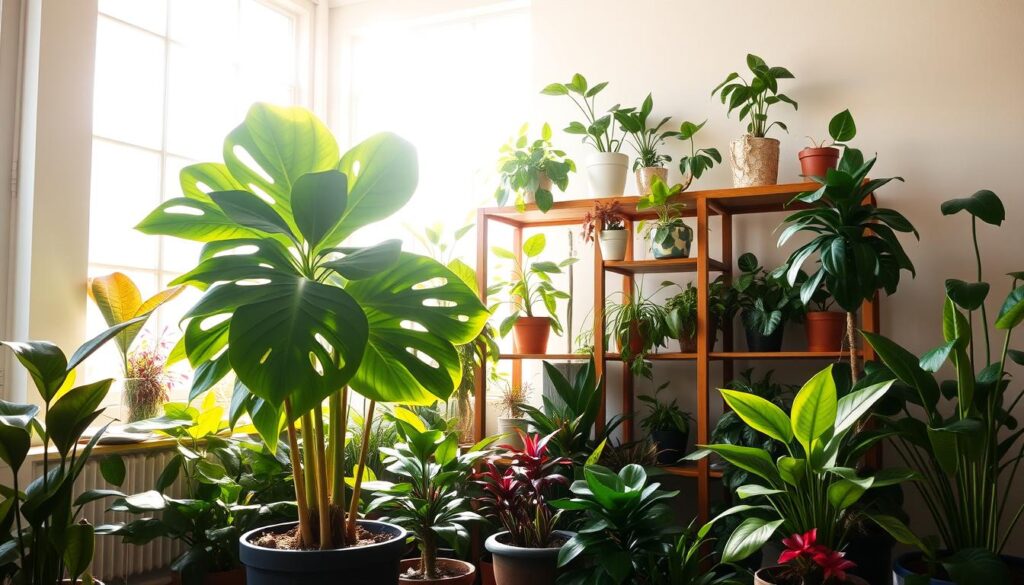
In spring and summer, you’ll need to water your plants more often. But, in fall and winter, watering less helps avoid root rot and other problems.
Seasonal Fertilization
Fertilizing your plants should also change with the seasons. In spring and summer, when they’re growing fast, regular fertilizing is good. But, in fall and winter, when they’re not growing as much, you can cut back on fertilizing.
Pruning and Grooming
Pruning your plants also changes with the seasons. Prune them when they’re actively growing to keep them looking good and healthy.
By adjusting your care to match the seasons, your houseplants will stay healthy and flourish all year.
Creating a Houseplant Watering Schedule
To keep your houseplants thriving, it’s key to make a personalized watering schedule. You need to know what each plant needs. This includes the soil type, climate, and the season.
A watering schedule prevents you from watering too much or too little. These mistakes can harm your plants. By making a schedule for each plant, you ensure they get the right moisture.
Begin by watching how your plants react to water. Check the soil moisture by sticking your finger in it. Then, adjust how often you water based on this. Think about the houseplant care routine as a whole. This includes humidity and light.
For instance, plants in well-draining soil might need more water. Plants in denser soil might need less. Also, plants in warmer places or during the growing season need more water. Plants in cooler places or during the dormant season need less.
By making a watering schedule that considers these factors, you can give your houseplants the care they need. This approach helps you create a houseplant care routine that works well and saves time.
The Importance of Humidity for Houseplants
Humidity is key for houseplants, affecting their growth and health. Many houseplants come from places with high humidity, unlike our homes.
To keep your plants happy, you need to manage the humidity around them. Assessing the humidity needs of your plants is the first step. Some, like ferns and orchids, love humid air. Others, such as succulents, prefer it drier.
If your plants need more humidity, there are ways to help. You can group plants together to create a humid spot. Or, use a humidifier during dry winter months when the air gets dry.
Misting is another trick, but do it carefully to avoid fungal diseases. Also, place plants on trays filled with water and pebbles. The water evaporating will make the air more humid.
Getting the humidity right can really help your plants. With a few easy changes, your houseplants can grow well, with lush leaves and bright flowers.
Final Thoughts on Houseplant Care
Caring for houseplants can be very rewarding. It brings life and beauty to your home. By understanding and meeting your plants’ needs, you can keep them healthy and long-lasting.
Houseplant care is more than just watering. It needs attention to detail, the right tools, and flexibility. By following the tips in this article, you’re on your way to becoming a great houseplant caregiver.
For your final tips, keep an eye on your plants and adjust your care as needed. Don’t be afraid to try new things. With patience and practice, you’ll give your houseplants the best care. This will make your home and life better.