




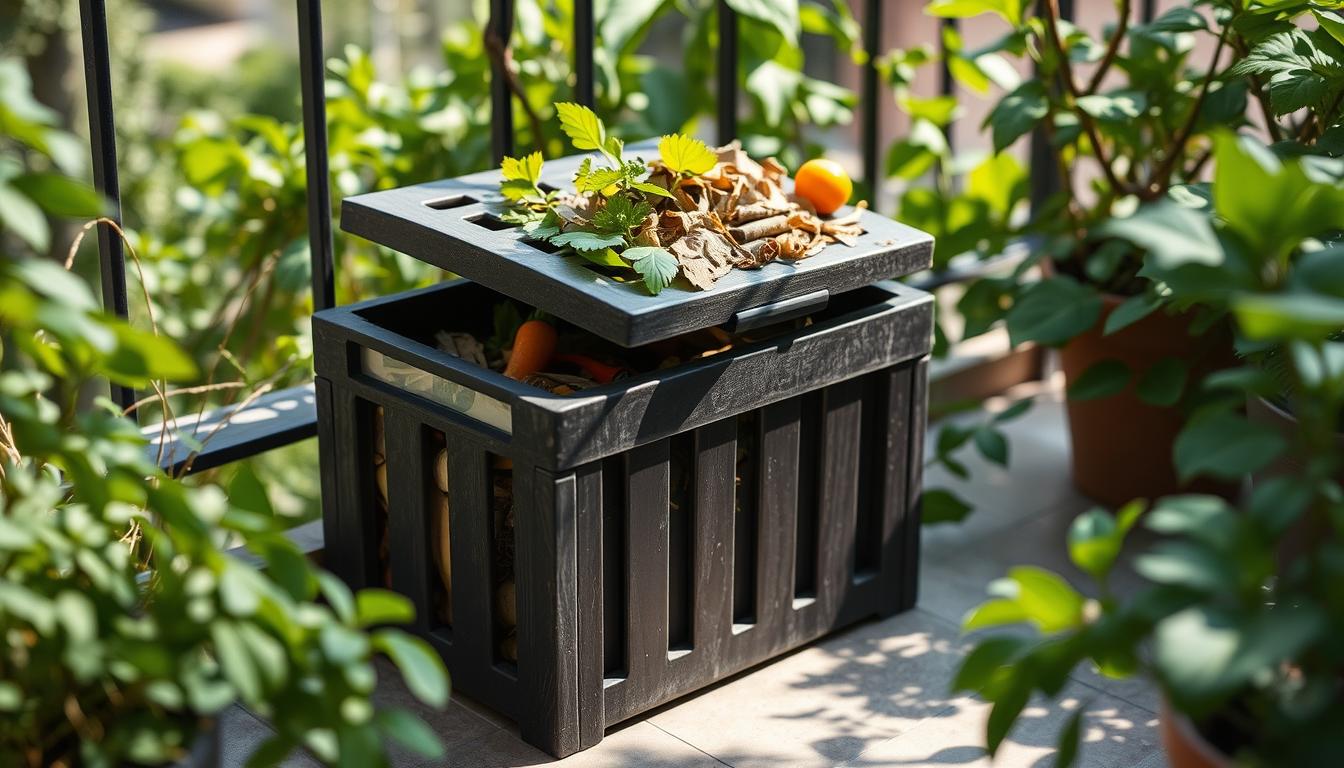
Starting a small compost bin is easy and rewarding. It helps you become more sustainable and lower your carbon footprint.
Composting turns organic waste into nutrients. These nutrients make your soil better, turning trash into treasure for your garden.
This practice reduces waste and makes your soil rich in nutrients. It boosts your garden’s health and productivity.
It’s a simple step towards a greener lifestyle. Starting small makes it easy for everyone to join in.
What is Composting?
Composting is the process of turning organic materials into a nutrient-rich soil amendment. It’s a key part of sustainable gardening.
The composting process uses microorganisms to break down organic matter. This makes the soil better for plants and increases its fertility. It’s a natural way to recycle nutrients and reduce the need for synthetic fertilizers.
Microorganisms are essential in decomposition. They turn complex organic materials into simpler forms. This releases nutrients that plants can use. This is why compost is so good for gardening.
The decomposition process depends on several factors. These include oxygen levels, moisture, and the carbon-to-nitrogen ratio of the organic matter. Keeping these factors balanced is important for effective composting.
By understanding composting, gardeners can make a soil amendment that helps plants grow. It also improves soil biodiversity and supports sustainable gardening.
Why Start a Small Compost Bin?
Starting a small compost bin can make a big difference. It helps reduce landfill waste and improve soil health. This is great for both the planet and your garden or indoor plants.
One key benefit of composting is cutting down on landfill waste. We throw away a lot of organic stuff like food scraps and yard trimmings. Composting these items means less waste in landfills.
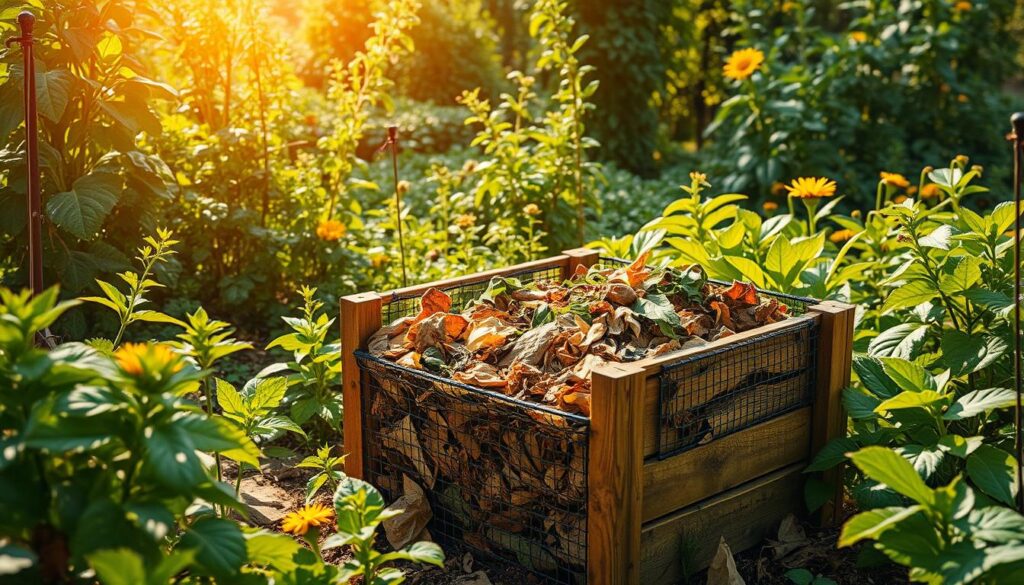
Composting also makes soil better. It adds nutrients and helps soil hold water and air. This makes plants healthier and more resistant to diseases.
Composting is also good for your wallet. It cuts down on the need for expensive fertilizers and saves on waste disposal costs. Plus, it’s easy for anyone to start, no matter the size of their garden or living space.
In short, starting a small compost bin is easy and beneficial. It reduces landfill waste and improves soil health. It’s a simple step towards a greener, more sustainable life.
Getting Started: Essential Supplies
Starting to compost needs some basic but important composting equipment. First, pick a good compost bin. It’s the key to your composting journey.
Choosing a compost bin involves a few key points. The bin’s size is critical. It must hold a lot of organic waste but not be too big for your space.
Considerations for Selecting a Compost Bin
When picking a compost bin, remember a few things. Airflow is key for composting. It helps break down waste faster and keeps smells away. Look for bins with good airflow or add some yourself if needed.
Also, think about accessibility. A bin that’s easy to open and turn makes composting simpler. Some bins have tumblers or removable sides, which are very helpful.
The bin’s material is also important. Plastic bins are common and easy to clean. Wooden bins blend better into gardens. Your choice depends on your needs and likes.
By picking the right compost bin and getting other essential supplies, you’re ready for successful composting.
What to Compost: A Quick Guide
Successful composting starts with the right mix of ingredients. It’s all about layering green materials and brown materials to make a soil amendment full of nutrients.
Green materials are high in nitrogen. Think kitchen scraps, grass clippings, and manure from animals that eat plants. These are wet and packed with nutrients.
Brown materials are high in carbon. This includes dried leaves, straw, and shredded newspaper. They’re dry and add the carbon needed for composting.
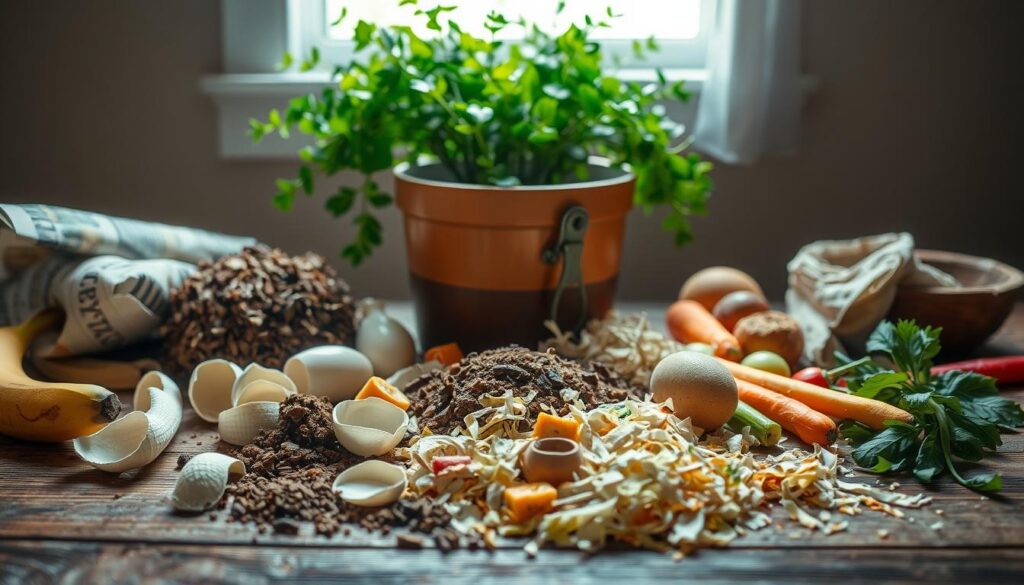
To get it right, mix green materials and brown materials in the right amounts. Aim for 2/3 brown materials and 1/3 green materials.
Other good composting ingredients are coffee grounds, eggshells, and shredded cardboard. With the right balance, you’ll get a compost that’s great for your garden.
Setting Up Your Compost Bin
The first step in composting is setting up your bin. It’s key to do it right for efficient composting.
Choose a spot for your bin that’s well-ventilated and easy to get to. Make sure it’s not too close to your house to avoid odors or pests. Place it on a level surface, like soil, for better microorganism access.
Then, start layering materials in the bin. Begin with a 4-6 inch layer of coarse stuff like twigs or straw. This helps with airflow and drainage. Next, add a layer of green materials like kitchen scraps or grass clippings, followed by brown materials like dried leaves or shredded newspaper. Keep alternating layers, ending with brown on top.
It’s important to keep the right mix of green and brown materials. Aim for 2/3 brown and 1/3 green. This balance helps your compost decompose well without being smelly or attracting pests.
Adequate airflow is also key. Regularly turning your compost helps it decompose faster. Also, keep an eye on moisture, aiming for dampness like a damp sponge. Too much water can make it soggy and smelly, while too little slows down decomposition.
By following these steps, you’ll be on your way to making nutrient-rich compost for your garden.
Maintaining Your Compost
To get the most out of your compost bin, regular maintenance is key. This involves a few simple tasks. They ensure your compost remains healthy and effective.
First, turning your compost regularly is important. This helps to aerate the pile. It speeds up the decomposition process and prevents bad smells. Try to turn your compost every few days, depending on its size and what’s in it.
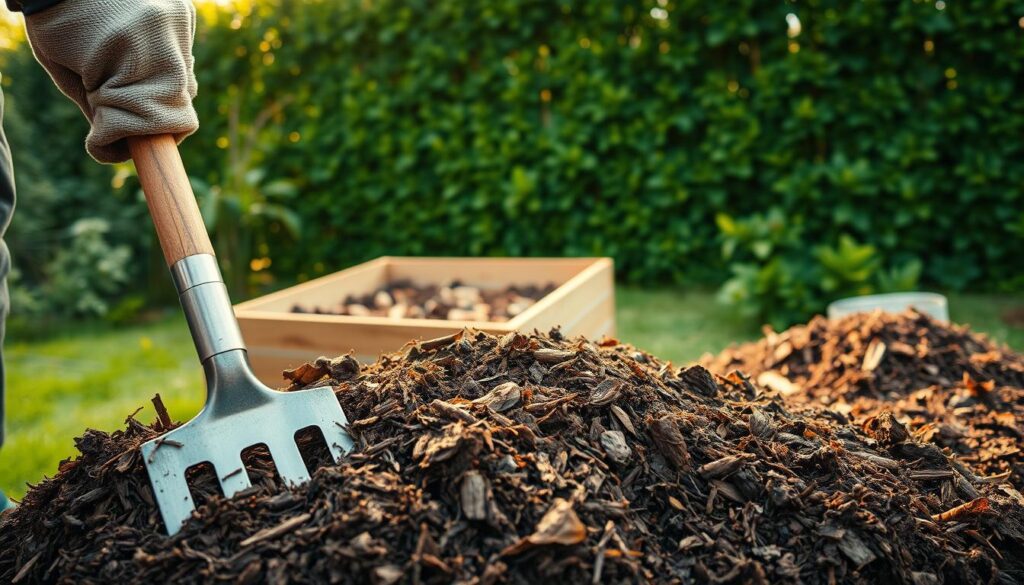
It’s also important to watch the moisture levels. Your compost should be moist, like a damp sponge. If it’s too dry, decomposition slows down. If it’s too wet, it may smell bad.
Adequate airflow is another key factor. Make sure your compost bin has enough ventilation. This keeps oxygen flowing, which is needed for the microorganisms that break down the organic matter.
By following these simple compost care tips, you can keep a healthy compost bin. It will produce rich, nutrient-dense compost for your garden.
Composting Methods: Which is Best?
Composting methods vary a lot. The right choice depends on space, waste type, and personal taste. Whether you have a small garden or a big backyard, knowing the different techniques is key. It helps manage waste and make nutrient-rich soil.
There are many composting methods to look at. Each has its own good points and downsides. Compost bins are great for keeping pests away and keeping warm. They’re perfect for city gardens or those who like things tidy.
Compost piles are simple and cheap. They work well for lots of organic waste. But, they might attract pests if not watched over. It’s important to turn them often and keep them aerated to avoid bad smells.
Compost tumblers make composting easy and fast. They’re good for small spaces or if you have trouble moving around. They make it easier to turn and aerate the compost.
Comparison of Composting Methods
When looking at composting methods, cost, space, upkeep, and how fast it works are important. For example, bins and tumblers cost more than piles. But, they keep pests out and look better.
Choosing a composting method depends on your situation and what you value most. Knowing the good and bad of each helps you pick the best one for you. This is true whether you’re an experienced gardener or just starting.
Composting in Small Spaces
You can compost even with little space. Vermicomposting is a great method for city folks. It helps turn waste into soil that’s good for plants.
Compact composting solutions are made for small areas. They let anyone compost, no matter the size of their outdoor space. Options include small bins and vermicomposting, which uses worms to break down waste.
Small space composting cuts down on waste in cities. It turns food scraps and other organic stuff into compost. This compost makes soil better for plants.
Starting to compost in small spaces needs the right tools. Compact compost bins come in many sizes. They fit in kitchens or on balconies. Look for bins that control odors, keep pests out, and are easy to clean.
Urban composting also means getting creative. Vermicomposting is a top choice for small spaces. It uses red wiggler worms to eat waste, making nutrient-rich compost.
Using compact composting helps make cities greener. Whether you have a balcony or a kitchen counter, there’s a composting solution for you.
Using Your Compost: Tips and Tricks
Now that your compost is ready, it’s time to give your garden a nutrient-rich boost. Using compost right is key to better soil health and plant growth.
Applying compost correctly is important. Start by mixing it into the soil. Use 2-4 inches of compost for every 6-8 inches of soil. This improves soil structure and fertility.
One big garden benefit of compost is supporting healthy plant growth. It’s full of nutrients and microbes that help plants do well. It also helps the soil hold water better, so you don’t have to water as often.
When using compost, think about the plants you’re growing. Some, like veggies and flowers, love compost. Others, like succulents, might need less. Knowing what your plants need helps you use compost better.
To get the most garden benefits, use compost as mulch or top dressing. It keeps moisture in, stops weeds, and keeps soil temperature right. Adding compost to your gardening routine makes your garden more sustainable and strong.
Common Composting Mistakes to Avoid
To keep your compost bin healthy, it’s key to avoid common mistakes. Many people, even those who compost a lot, make errors. These mistakes can hurt the quality of your compost.
One big mistake is adding the wrong things to your compost bin. Foods like meat, dairy, and oils can attract pests and smell bad. Also, weeds with seeds can grow in your compost and spread to your garden.
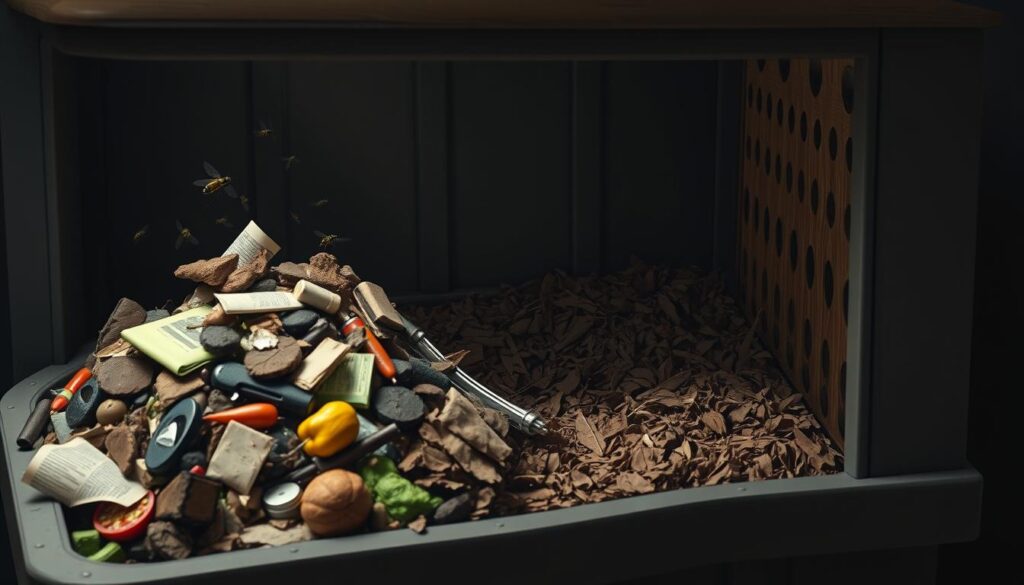
Not taking care of your compost is another big error. You need to turn it regularly. This helps everything break down evenly and prevents bad smells.
It’s also important to watch the moisture level. Your compost should be like a damp sponge, not wet. Too much water can cause problems, while too little slows things down. Troubleshooting these issues early can save a lot of trouble.
Knowing these common mistakes and how to avoid them can help you keep your compost bin healthy. Regular checks and a bit of knowledge can make your composting successful.
Frequently Asked Questions
Composting FAQs help you understand how to turn waste into soil. Starting your composting journey can raise many questions.
One common question is what can be composted. You can compost many organic materials like kitchen scraps and yard trimmings. But, avoid meat, dairy, and oily foods as they attract pests.
Many also wonder how to keep a compost bin in good shape. It’s important to have the right mix of materials, keep it moist, and turn it regularly. This ensures successful composting.
Troubleshooting is another big concern. If your compost smells bad, it might be too wet or have too many green materials. If it’s too dry, it won’t break down well. Making these adjustments can fix common problems.
Knowing the answers to these questions can make your composting better. You’ll create a nutrient-rich soil amendment for your garden.
Resources for Further Learning
If you want to learn more about composting, there are many resources out there. The United States Environmental Protection Agency (EPA) has detailed guides on composting. These guides include tips on reducing waste and making nutrient-rich soil.
Online tutorials and workshops are also available. You can find them on platforms like Coursera and Udemy. They offer hands-on experience and expert advice on composting methods and maintenance. For those who like books, “The Rodale Book of Composting” is a great resource. It provides in-depth information on composting techniques and how to solve common problems.
Local gardening clubs and online forums are also good places to find more information. Here, people can share their experiences and learn from others. By exploring these resources, you can keep improving your knowledge and skills. This helps in making our environment more sustainable by managing waste and conserving soil.