







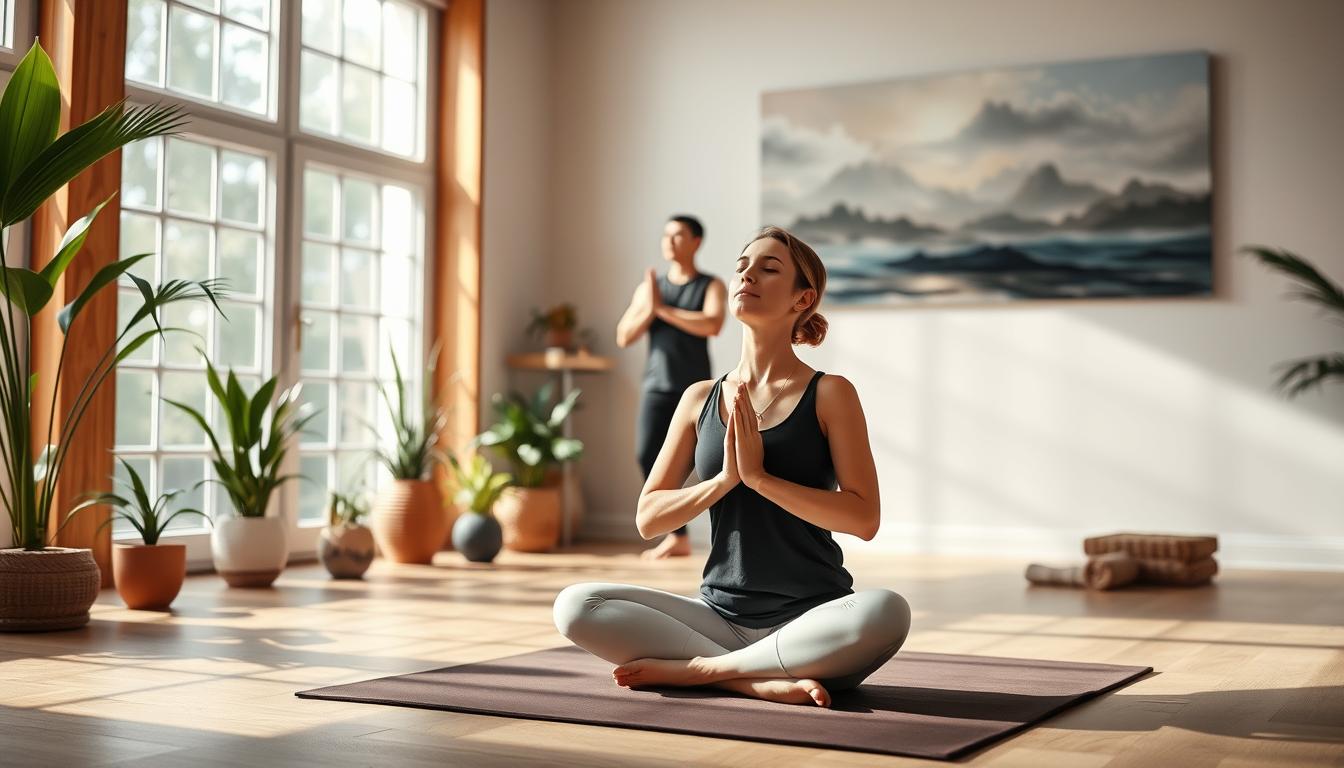
At the core of yoga lies the blend of stretching and breathing techniques. This mix fosters a state of balance and calm.
The role of breath in yoga is vital, as it’s essential for movement and life. “Breath is to yoga what water is to a fish: essential for movement and life force.” This shows how important breathing techniques are for achieving relaxation and mindfulness.
By combining these elements, people can boost their well-being. They can also develop a deeper sense of calm and focus. Regular yoga practice improves flexibility, reduces stress, and enhances body and mind awareness.
What is Yoga?
Yoga is a practice that combines body, mind, and spirit. It uses stretching and controlled breathing. It started in ancient India as a way to improve physical, mental, and spiritual health.
Many think yoga is just about physical poses. But it’s more than that. It includes breathing techniques, meditation, and physical postures. These help with overall health and wellness. It believes that body, mind, and spirit are connected, and balancing them leads to well-being and peace.
Breathing is key in yoga. Yoga breathing, or pranayama, is different from regular breathing. It aims to gather prana or energy and relax the body. This breathing calms the mind, lowers stress, and gets the body ready for meditation or poses.
Yoga also involves physical postures, or asanas. These postures strengthen, flex, and balance the body. When done with controlled breathing, they prepare the body and mind for meditation and relaxation.
Yoga is more than poses or breathing. It’s about being mindful and aware every day. Regular practice helps people become more aware and clear. This leads to a more balanced and fulfilling life.
The Importance of Stretching in Yoga
Yoga stretching is more than just flexibility. It’s about linking breathing with movement. This connection between breath and stretch makes yoga more effective, deepening the bond between body and mind.
The third source highlights the importance of breathing with movement in yoga. It suggests exhaling when bending forward and inhaling when opening the chest. This breathing technique maximizes the stretch’s benefits, releasing tension and improving flexibility.
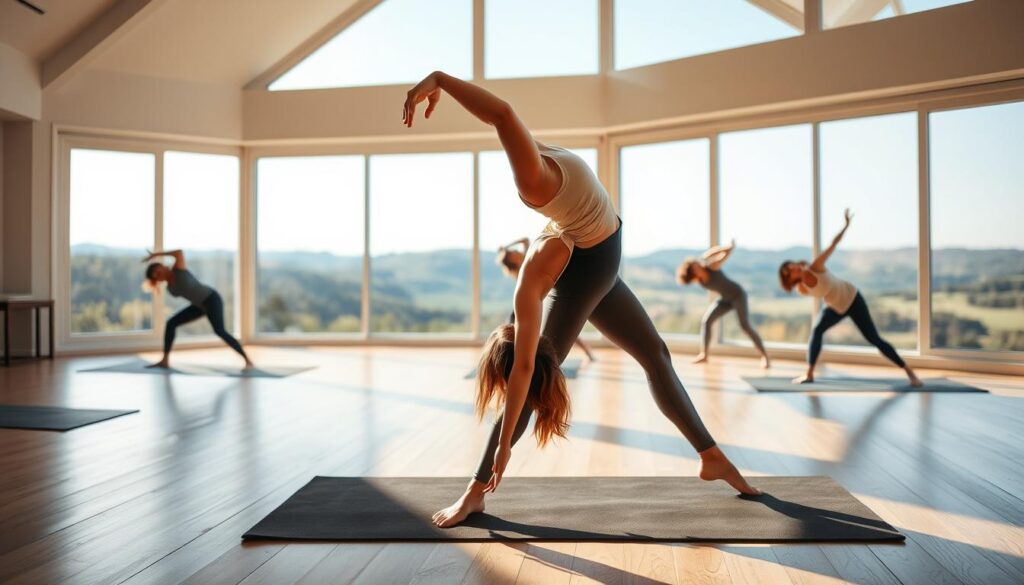
Stretching exercises in yoga boost flexibility, lower muscle tension, and improve health. Regular practice enhances range of motion, posture, and overall health.
Adding yoga stretching to your routine benefits both body and mind. It reduces stress and anxiety, and also improves balance and coordination. This leads to a better quality of life.
In summary, stretching exercises in yoga are essential. They increase flexibility, reduce muscle tension, and promote overall well-being. Yoga stretching is a key part of a complete yoga practice.
Breathing Techniques in Yoga
The art of breathing is key in yoga. It affects both physical poses and mental calm. Breathing techniques calm the mind, balance the body’s energy, and prepare it for meditation.
Deep Belly Breathing, or diaphragmatic breathing, is a basic technique. It uses the diaphragm to improve oxygen and carbon dioxide exchange.
Deep Belly Breathing
Deep belly breathing uses the diaphragm for full lung expansion. It promotes relaxation and lowers stress. To do it, sit or lie down, place hands on belly and chest, and breathe in deeply through the nose. Let the belly rise as the diaphragm goes down.
Yoga practitioners say,
“The breath is the bridge between the body and the mind.”
This shows how breathing techniques balance physical poses and mental calmness.
Other important techniques include Box Breathing and Alternate Nostril Breathing. Box breathing involves breathing in for four counts, holding for four, exhaling for four, and holding again for four. Alternate nostril breathing closes one nostril and breathes in through the other, then exhales through the other nostril. Both promote balance and calmness.
Regular practice of these techniques can greatly reduce stress and anxiety. It improves overall well-being. Yoga’s breathing techniques are timeless, guiding us to inner peace and relaxation.
Yoga for Beginners
Yoga for beginners is about building a foundation for a lifelong practice. It improves physical, mental, and emotional health. As a beginner, it’s important to start with the basics and be patient with your progress.
When starting yoga, finding the right class is key. Look for classes labeled “beginner-friendly” or “gentle yoga.” These classes focus on foundational poses and breathing techniques. Many yoga studios offer introductory classes or workshops for newcomers.
Understanding basic yoga poses is essential. Start with simple poses like Mountain Pose, Downward-Facing Dog, and Child’s Pose. As you get more comfortable, you can try more complex poses. Practicing at home with videos or guided tutorials is also helpful.
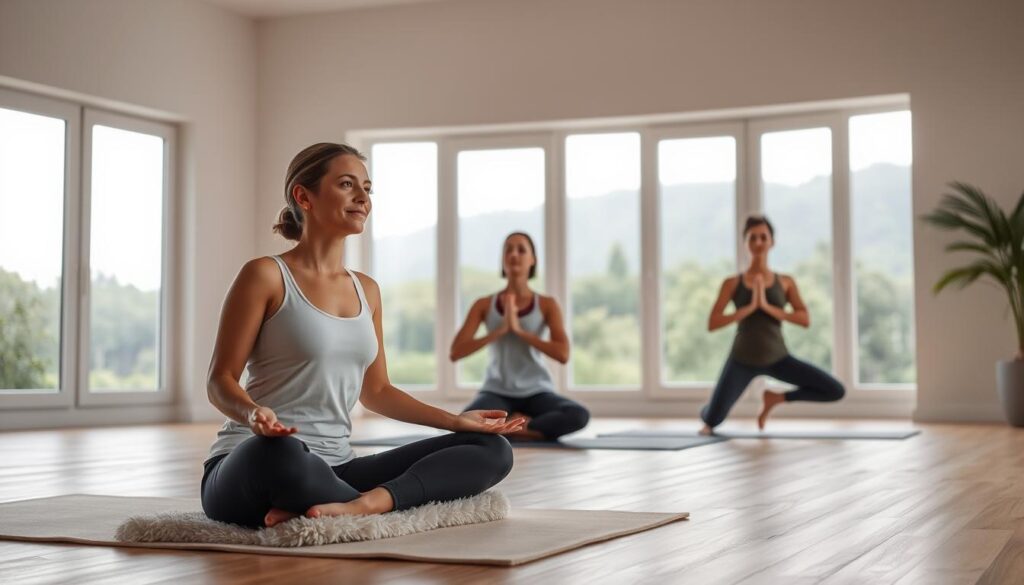
Incorporating breathing techniques into your practice is vital. The third source suggests focusing on coordinating your breathing with the teacher’s instructions. This helps achieve a meditative state and maximizes yoga’s benefits.
For beginner yoga practices, start slow and be consistent. Even a short practice each day is more beneficial than a long practice once a week. Listen to your body and rest when needed. Yoga is about both physical postures and mental well-being.
Lastly, view yoga as a journey, not a destination. It evolves with you, providing different benefits at different stages of your life. With regular practice, patience, and the right guidance, yoga can enrich your daily routine.
Intermediate Yoga Practices
Intermediate yoga is for those who have learned the basics and want to get better. You need to know the basics of yoga, like poses, breathing, and meditation.
At this level, you’ll try harder poses that test your strength, flexibility, and balance. Poses like Scorpion Pose (Vrschikasana) and Eagle Pose (Garudasana) need physical strength and focus.
Breathing techniques get more complex too. You’ll learn Alternate Nostril Breathing and Breath Retention. These help calm your mind, reduce stress, and improve your well-being.
Exploring Different Yoga Styles
Intermediate yogis can try different yoga styles to find their favorite. Styles like Vinyasa Flow, Ashtanga, and Iyengar Yoga focus on different things like flow, alignment, and intensity.
Vinyasa Flow yoga links breath with movement, moving smoothly from pose to pose. It’s great for your heart, energy, and flexibility. Iyengar Yoga, on the other hand, emphasizes precise alignment and using props. It helps with posture, balance, and physical alignment.
Getting better in yoga is not just about mastering poses. It’s also about understanding yoga philosophy and applying it in your life. By pushing yourself and trying new things, you’ll enjoy yoga’s many benefits, like better health, clearer mind, and spiritual growth.
Yoga for Stress Relief
Yoga combines physical postures, breathing, and meditation to help manage stress. It’s shown to reduce anxiety and improve well-being. Regular practice can lead to a more relaxed state.
Breathing Techniques for Stress Relief: Yogic breathing is key in yoga for stress relief. Ujjayi (Ocean Breath) and Bhastrika (Bellows Breath) calm the mind and lower stress. These techniques can greatly reduce stress levels.
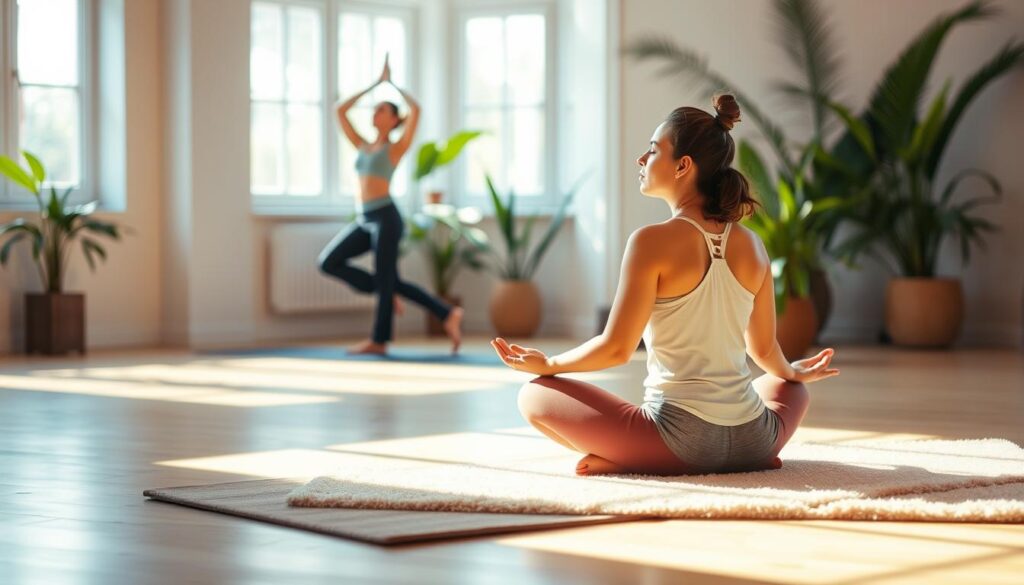
Yoga Poses for Relaxation: Some yoga poses are great for stress relief. Child’s Pose (Balasana), Downward-Facing Dog (Adho Mukha Svanasana), and Legs Up The Wall Pose (Viparita Karani) relax the body and calm the mind. Adding these poses to your practice can help manage stress better.
Meditation and Relaxation: Meditation is vital in yoga for stress relief. It reduces anxiety and brings calm. Guided Meditation and Mindfulness Meditation are great for managing stress.
Adding yoga to your daily routine can be a powerful stress management tool. It offers a holistic way to achieve balance and peace in life. Yoga’s breathing, postures, and meditation can help you find inner calm.
Yoga and Physical Well-Being
Yoga is known for its many physical benefits, boosting overall health. Regular practice can lead to big improvements in physical health.
Yoga improves flexibility, strength, balance, and heart health. Adding yoga to your routine can bring these benefits to life. Improved flexibility is a big plus, as yoga increases motion range and cuts down stiffness.
Enhanced strength is another plus, as yoga poses work many muscles, building strength over time. Yoga also boosts balance by challenging the body’s balance and improving how it feels its position.
Yoga helps heart health by lowering stress and improving blood flow. Some yoga styles, like Vinyasa Flow, offer a workout for the heart, improving heart health even more.
Studies show yogic breathing can lower blood pressure and improve core strength. These benefits add to overall physical well-being, making yoga a complete practice for body and mind.
Regular yoga practice can greatly improve health. Yoga’s mix of physical poses, breathing, and meditation makes it a full way to achieve physical well-being.
Yoga for Specific Populations
Yoga isn’t a one-size-fits-all practice. It can be customized for different groups. This flexibility makes yoga beneficial for many people.
Yoga for Children
Yoga is great for kids, helping with their physical, emotional, and mental growth. A rhyming yoga lesson makes it fun and easy for them to learn. It teaches them yoga poses and boosts their focus and coordination.
Yoga for Seniors
Yoga can be adjusted for seniors, improving their flexibility and balance. Gentle yoga can lower the risk of falls and boost their health. Chair yoga lets seniors practice while seated or using a chair for support.
Adaptive Yoga for Individuals with Specific Needs
Adaptive yoga is for those with health conditions or special needs. It’s customized to fit their abilities and needs. For instance, adaptive yoga for individuals with disabilities makes poses accessible and safe.
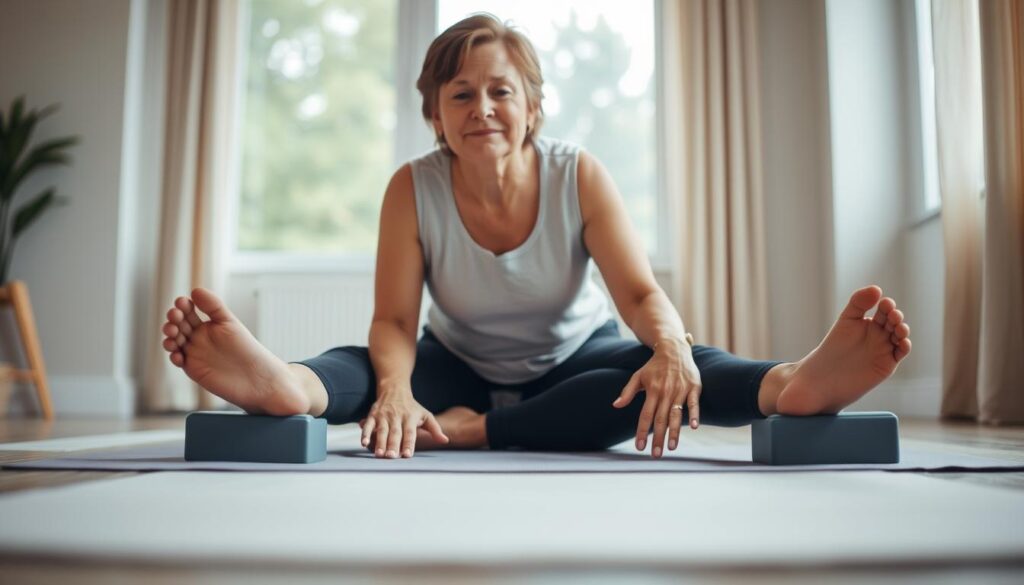
Customizing yoga for different groups lets everyone enjoy its benefits. These range from better physical health to improved mental well-being.
Incorporating Yoga into Daily Life
Yoga is more than just a practice; it’s a lifestyle. It can be easily added to your daily activities. This change can greatly improve your overall well-being.
Starting is easy with a regular yoga routine. You don’t need to spend hours. Just a few minutes each day can help. Start with simple poses and breathing exercises at home or during your lunch break.
Mindfulness is a big part of yoga. It’s about being present and aware. This can reduce stress and improve focus. You can practice mindfulness while doing everyday things like eating or walking.
You can also add yoga to your daily tasks. Take deep breaths before a meeting or stretch after sitting for a long time. The goal is to make yoga a part of your life.
Improving your breathing practice can enhance your yoga. Focus on your breath throughout the day. It helps you stay calm and centered, even when things get tough.
Yoga in your daily life is a journey, not a goal. It’s about making small changes for big improvements. With time and effort, you’ll see the many benefits yoga offers.
Yoga Retreats and Workshops
Attending a yoga retreat or workshop can change your practice. These programs let you dive deep into yoga. You learn from experts and meet others who love yoga.
Yoga retreats are all about immersing yourself in yoga. You spend days or weeks in a peaceful place. It’s great for those wanting to really understand yoga.
Benefits of Yoga Retreats and Workshops include learning new techniques and getting feedback. You also join a community of yogis. Many programs add meditation and healthy food for your well-being.
Going to a yoga retreat or workshop can rejuvenate your practice. You’ll feel refreshed and inspired when you get back home. It’s perfect for beginners or those wanting to grow their practice.
Deepening Your Yoga Practice through these programs is rewarding. It helps you overcome challenges, try new things, and find a community of yogis.
Tips for Staying Motivated in Your Yoga Journey
To stay motivated in yoga, set achievable goals and track your progress. Regular practice boosts your physical health and mental focus. This helps keep you motivated.
Joining yoga classes or workshops connects you with others who share your interest. This creates a supportive community. Being around like-minded people helps you stay committed.
Consistent practice and a supportive environment boost your motivation. Adding yoga to your daily routine brings balance to your life. It improves both your physical and mental health. Staying motivated is essential to enjoy these benefits and continue your yoga journey.