







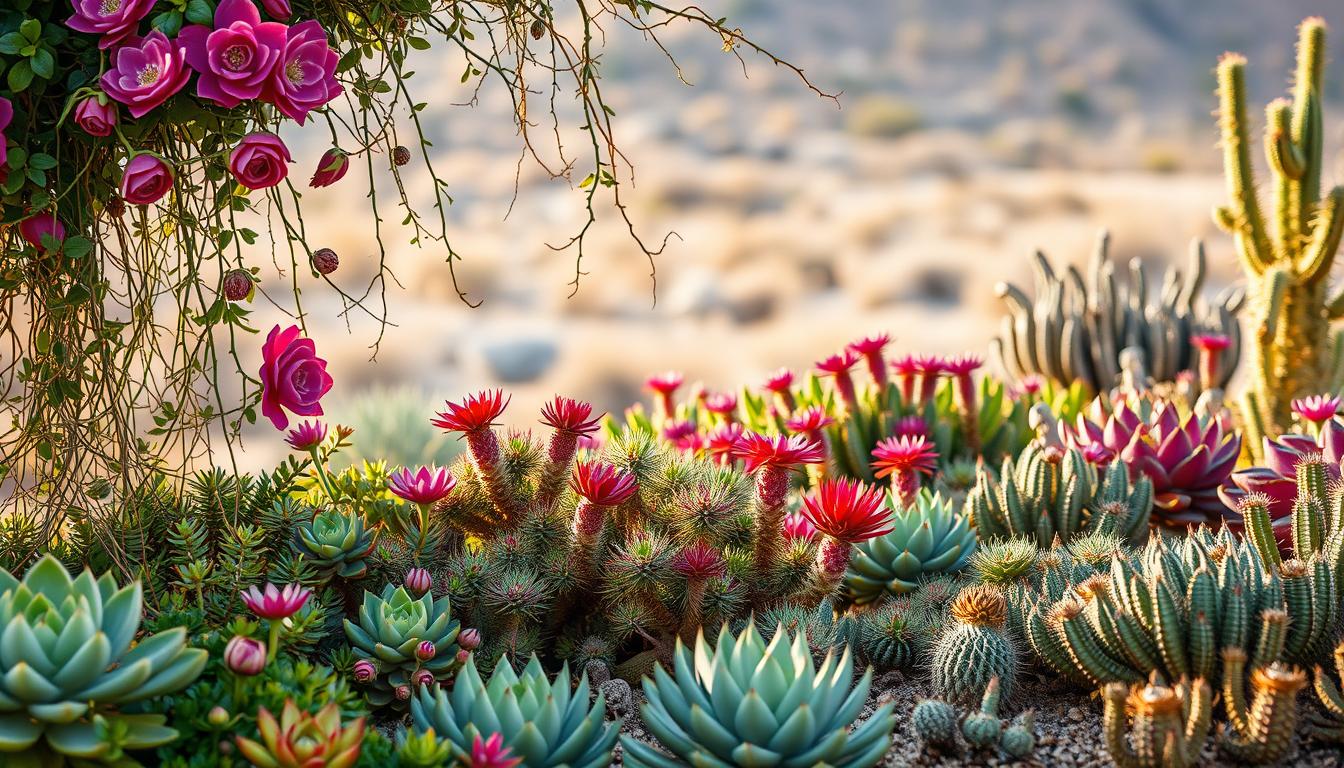
Low-water plants are now more popular than ever. They are beautiful and can survive with little water. Succulent maintenance is easy, but you need to know their special needs.
Succulents can hold water in their leaves, stems, or roots. This makes them good at handling drought. But, they also need certain care requirements to do well.
Good succulent care is more than just watering. It’s about giving them the right place to live, soil, and food. With a few easy steps, you can keep these plants looking great with little effort.
Understanding Succulents and Their Needs
To care for succulents right, knowing their special traits is key. These plants have evolved to live in places with little water. They grow in areas where the soil drains fast and water is rare, but heavy when it rains.
Succulents store water in their leaves and stems. This lets them go without water for a long time. Knowing this is important for meeting their succulent needs.
How succulents store water changes how they need to be watered. Unlike other plants, they do best with less water but when they get it, it should be plenty. This is because they live in places where water is scarce for weeks or months.
The soil is also very important for succulents. They need soil that drains well to avoid getting waterlogged. This prevents root rot, a big problem for succulents. By using the right soil, you help your succulents stay healthy.
In short, knowing what makes succulents special and what they need is essential for good care. By understanding their dry environment adaptation and adjusting your care, you can have happy, healthy succulents.
Basic Care Tips for Succulents
Caring for succulents is more than just watering. You need to pay attention to their lighting and temperature needs. Succulent lighting is key, as most need bright, indirect light to grow. But, some can handle direct sunlight, so check what your succulents need.
Keeping the rightsucculent temperature is also important. They like temperatures between 55 to 80 degrees Fahrenheit. This is similar to their natural habitats. Don’t put succulents near heating vents or drafty windows.
For bettersucculent care tips, make sure they have good air circulation. This stops fungal diseases that love humid, stale air.
By following these basic care tips, you’ll grow a healthy succulent collection. The secret to success is finding the right balance. Not too much water, not too little light, and temperatures just right.
Watering Succulents: The Low-Maintenance Approach
The secret to happy succulents is knowing when to water them. They can handle dry spells but need water to thrive. Watering them right is key to their health and growth.
Watering succulents with the “soak and dry” method works well. This means soaking the soil until it drains, then letting it dry before watering again. Succulent experts say, “The soak and dry method mimics the natural rainfall patterns that many succulents are adapted to in their native habitats.“
How to Implement the “Soak and Dry” Method
To use the “soak and dry” method, water your succulents until water flows out of the pot. This makes sure the soil is fully wet. Then, let the pot drain well to avoid soggy soil.
Wait until the soil is completely dry before watering again. How often you water depends on the climate, season, and soil type. Succulents usually need more water in spring and summer and less in fall and winter.
“Overwatering is the most common cause of death for succulents. By adopting the soak and dry method, you can significantly reduce the risk of root rot and other problems associated with too much water.”
Watch your succulents for signs of too little or too much water. Shriveled leaves mean they need more water. Soft, mushy, or falling leaves indicate too much water.
By sticking to the “soak and dry” method and paying attention to your succulents, you can have healthy plants with little effort.
Potting Succulents for Success
Succulents need the right potting conditions to grow well. The soil type is a key factor in their care.
They do best in soil that drains well. This stops water from staying around the roots. Well-draining soil often includes perlite, sand, or small rocks to keep it dry.
The Importance of Drainage Holes
Drainage holes in pots are essential for succulents. They let excess water out, preventing the soil from getting too wet. This helps avoid root rot and keeps the plant alive.
Choosing the right pot is also important. Pots with built-in drainage holes are best. If your pot lacks holes, you can drill some to help your succulents thrive.
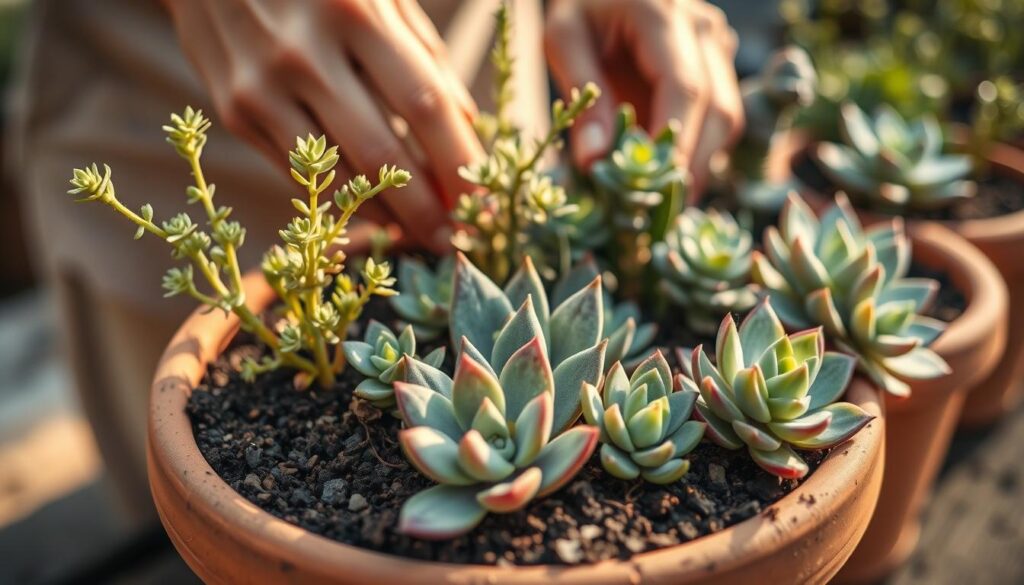
When planting succulents, think about the pot size too. A pot that’s too big can make the soil too wet. A smaller pot that fits the succulent’s roots is usually best.
By using well-draining soil and a pot with good drainage, you create a perfect home for your succulents. They will grow and flourish in this environment.
Fertilizing Succulents: Do You Really Need It?
Fertilizing succulents can be puzzling for many. These plants do well in poor soil but sometimes need a nutritional boost.
Succulents need nutrients to grow well. But, their needs differ from other plants because they live in dry, poor soil. Understanding what nutrients they need and when is key to successful fertilization.
In the spring and summer, succulents benefit from a balanced fertilizer. Use a diluted, water-soluble fertilizer to avoid harming the roots. Choose a fertilizer low in nitrogen but high in phosphorus and potassium. This helps with root growth and overall health.
“Fertilizing your succulents during the growing season can enhance their growth and promote healthier plants.”
Some fertilization tips include fertilizing sparingly. Succulents don’t need a lot of nutrients. Don’t fertilize in the fall and winter, as it can harm them. Always dilute the fertilizer to half the recommended strength to prevent damage.
By knowing your succulents’ nutritional needs and following succulent fertilization tips, you can help them thrive. The goal is to support their health, not push for fast growth.
Pests and Diseases: Keeping Your Succulents Healthy
Keeping your succulents healthy means watching out for pests and diseases. Succulents are tough but can get sick from pests and diseases. This can hurt their health and look.
Some common pests are mealybugs, spider mites, and scale. Mealybugs are small, white, cottony bugs that live on leaves and stems. Spider mites are tiny and leave fine webs on plants. Scale insects look like small, brown bumps on the plant’s surface.
To stop pests, check your succulents often. Keep new plants separate before adding them to your collection. If you see pests, use insecticidal soap or neem oil to treat them.
Prevention and Treatment
Stopping diseases before they start is important. Too much water can cause root rot, which is deadly. Make sure plants get air and don’t water the leaves to avoid fungal diseases.
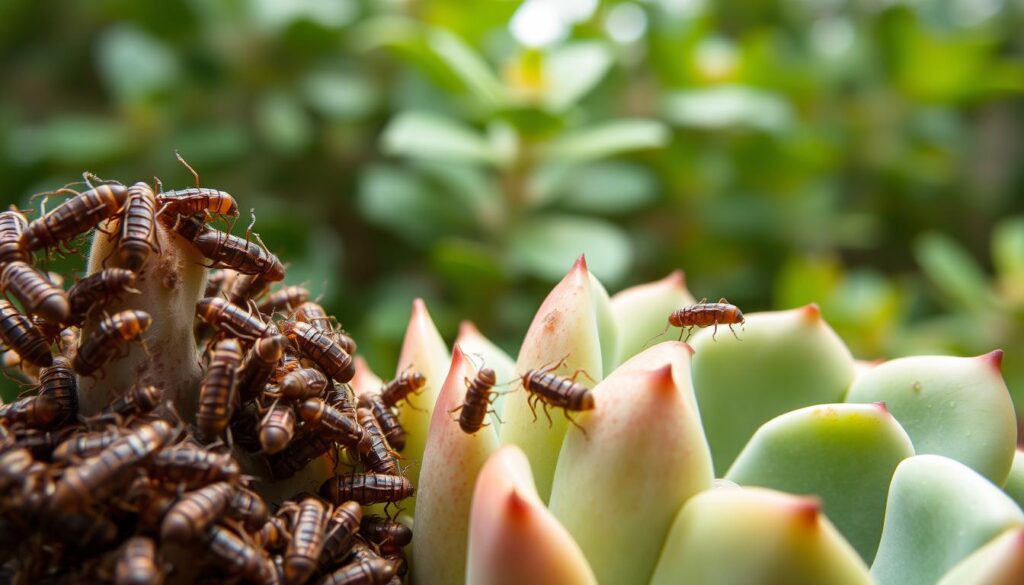
Diseases can come from bacteria or fungi. Look for soft, mushy spots on leaves or stems, and color changes. To fix diseased plants, cut off the bad parts with clean tools. Also, make sure plants have good air flow.
Keeping your succulents clean and well-ventilated is key. Clean your plants often and give them enough room. This helps prevent pests and diseases.
Seasonal Care for Succulents
To keep your succulents thriving, adjust their care with the seasons. Seasonal succulent care means knowing what your plants need at different times.
In the winter months, succulents need less water because it’s colder and they grow less. Water them once a month or even less, depending on your home’s humidity and temperature.
But in spring and summer, succulents grow more and need more water. Water them every 7-10 days, based on the weather. It’s also a great time to repot them and give them adequate sunlight.
Adjusting Lighting and Temperature
As seasons change, so do your succulents’ lighting and temperature needs. In the summer, give them some shade to avoid overheating. In the winter, keep them in a bright spot but away from frost.
Seasonal adjustments also mean watching the temperature. Most succulents like daytime temperatures between 65-75°F (18-24°C) and nighttime temperatures around 55-65°F (13-18°C). Don’t put them near heating or cooling vents, fireplaces, or drafty windows.
By following these succulent care tips and adjusting your care with the seasons, your succulents will stay healthy and thrive all year.
Propagating Succulents: Easy Methods
One of the joys of growing succulents is how easy they are to propagate. You can do this through leaf propagation or stem cutting propagation. This lets you multiply your favorite plants and share them with friends and family.
Succulents can grow from different parts, making them perfect for propagation. There are two main ways: leaf and stem cuttings. Each has its own simple steps.
Stem Cutting Propagation
Stem cutting propagation works well for succulents with long stems. Start by cutting a healthy stem section from the mother plant. Use a clean, sharp tool for this.
Let the cut end dry for a few days to form a callus. This step stops rot when you plant the cutting. After it’s callused, plant it in well-draining soil. Water it sparingly until roots grow.
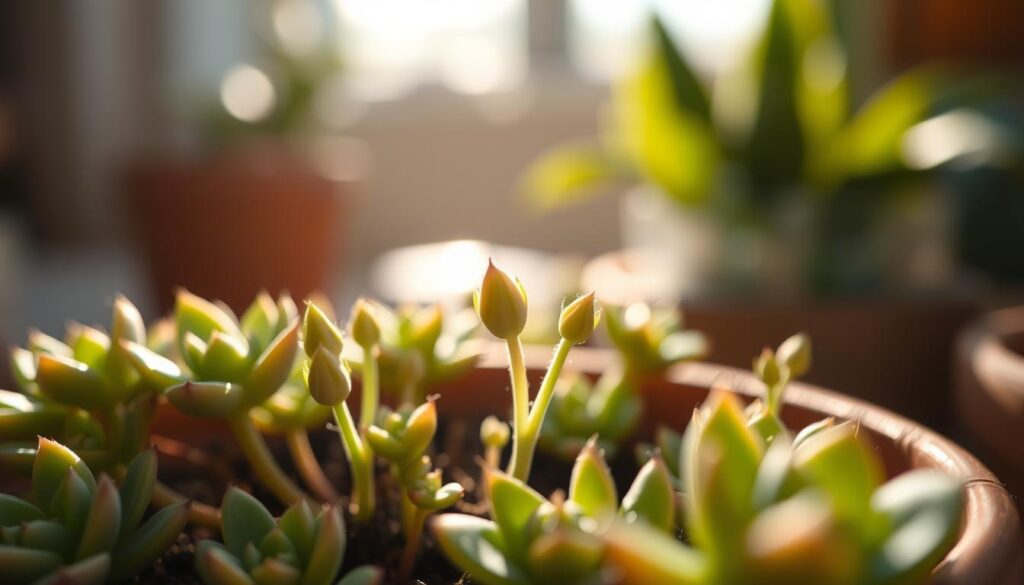
For both leaf and stem cutting propagation, give the new plants the right conditions. They need enough light and controlled watering. With patience, you’ll grow new succulents.
Learning these simple propagation methods lets you grow a thriving succulent collection. You can also share the joy of growing succulents with others.
Decorating with Succulents
Succulents come in many shapes and sizes, making them perfect for creative decorating. They can brighten up indoor spaces or create a beautiful outdoor display. Their versatility is unmatched.
Adding succulents to your decor is easy with succulent arrangements. Mix different species in one container for a stunning display. Choose decorative pots that match their natural beauty.
For a bold look, try a succulent display on a tiered stand or tray. It showcases your succulents and adds a unique touch to your home. Succulents also work well in outdoor decor, like garden beds or rock gardens, for a beautiful landscape.
In succulent decor, balance plants with other items. Mix succulents with plants, stones, or driftwood for a unique display. Succulents fit many decorating styles, from modern to rustic.
Using succulents in your decor makes your space look better and is easy to care for. They’re great for both experienced gardeners and beginners. Succulents are a simple way to add greenery to your life.
Troubleshooting Common Issues
Knowing how to fix common problems is key to caring for succulents. Whether you’re new or experienced, solving issues is vital for your plants’ health.
Overwatering is a big problem. It causes root rot when the soil stays too wet. Make sure your succulents have well-draining soil and don’t water them too often.
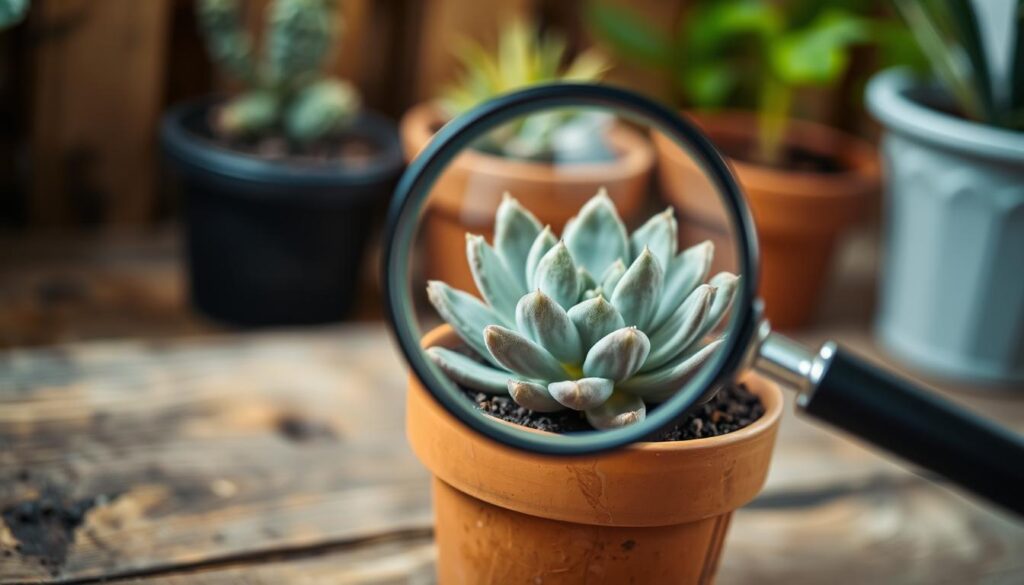
Underwatering is also a concern, but it’s less deadly. Succulents need some water to live. Without it, they can shrivel or change color. Finding the right water balance is important.
Other Common Problems
Succulents can also get pests and diseases. Check your plants often for signs of trouble. Common pests include mealybugs, spider mites, and scale.
To avoid many issues, give your succulents the right conditions. They need enough light, the right temperature, and food during the growing season. Following these tips and watching for problems will help your succulents thrive.
For succulent troubleshooting, watch how your plants react to care. Pay attention to their responses to watering, fertilizing, and more. This way, you can fix problems before they get worse.
Sustainable Succulent Care Practices
Sustainable succulent care means making choices that help the planet and keep your plants healthy. It’s good for the environment and your plants.
Using eco-friendly materials is key. Choose pots made from recycled or sustainable materials to cut down on waste. Also, use natural and organic fertilizers for healthier soil and plants.
Water conservation is vital. Succulents need less water because they’re used to dry conditions. Water them in the morning or evening to save water.
Monty Don, a famous gardener, said, “Gardening is not just about the plants; it’s about the connection we make with the natural world.” This shows how important it is to care for the environment.
“The clearest way into the Universe is through a forest wilderness.” –
This quote reminds us to value and protect nature. For succulents, it means caring for them in a way that respects the natural world.
Consider repurposing or recycling old pots and materials. It’s good for the environment and adds a creative touch. Also, choose succulents native to your area. They need less care because they’re adapted to your climate.
In summary, sustainable succulent care is rewarding for you and the planet. By choosing eco-friendly methods, you can enjoy healthy plants and help create a greener future.
Conclusion: Embracing Succulents in Your Life
Caring for succulents is rewarding. They purify the air and add beauty to your space. With the right care, they thrive with little effort.
Succulents are loved for their beauty and easy care. They appeal to both new and experienced gardeners. Adding them to your home brings elegance.
Succulents fit well in many places, indoors and outdoors. They make your space better and help the planet.