








Life can be overwhelming, and it’s common to feel overwhelmed by daily demands. But, too much pressure can harm our well-being. Luckily, there are simple strategies to help.
Effective stress management is key for a healthy life. Adding simple techniques to your day can help you face life’s challenges better. This improves your overall quality of life.
Learn how to manage stress and boost your well-being with our easy tips on stress relief. By using these simple methods, you can live a more balanced life.
Understand the Sources of Your Stress
To tackle stress, it’s key to know what causes it. Stress affects everyone differently, based on their life and how they see things.
There are mainly two kinds of stress: emotional and physical. Emotional stress comes from daily life challenges like relationship issues, work pressure, or money problems. These can be hard because they touch on our feelings deeply.
Physical stress is about how our body feels. Being ill, in pain, or not sleeping well can cause physical stress. This kind of stress is often easier to see because it affects our health directly.
Knowing if your stress is emotional, physical, or both is important. This helps you find the right way to deal with it. For emotional stress, trying mindfulness or talking to friends might help. If it’s physical, fixing the health issue or sleeping better could work better.
By figuring out what causes your stress, you start to fight its negative effects on your mental well-being. Knowing what triggers it lets you create specific plans. This can lead to a more balanced and healthier life.
Practice Mindfulness Techniques
Mindfulness techniques are great for managing stress. They help you stay in the present moment. This way, you worry less about the past or future, lowering stress.
Meditation is a key mindfulness method. It trains your mind to stay focused, often on your breath or a mantra. Regular meditation brings calm and peace, easing stress in your daily life.
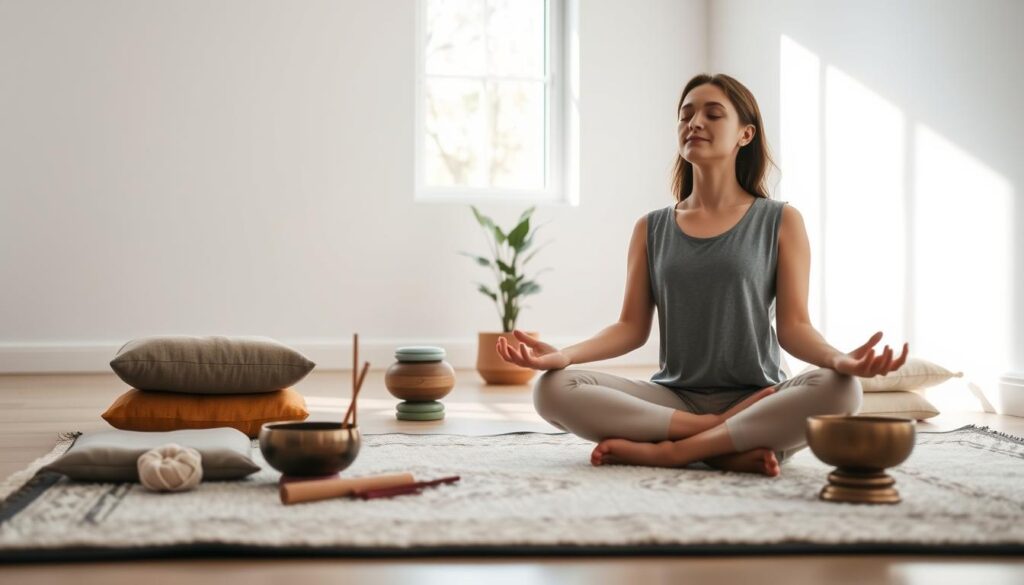
Deep breathing exercises are also effective for stress relief. Slow, deep breaths relax your body and calm your mind. They’re great for stressful times or when feeling overwhelmed.
To do deep breathing, sit or lie comfortably. Place one hand on your belly and the other on your chest. Breathe in slowly through your nose, letting your belly rise. Your chest should not move.
Hold the breath for a few seconds. Then, exhale slowly through your mouth, letting your belly fall. Repeat this several times, focusing on your breath.
Regular mindfulness, like meditation and deep breathing, boosts their stress-fighting effects. Adding these to your daily routine can make you more resilient to stress. It also improves your overall well-being.
Develop Healthy Coping Mechanisms
It’s important to find healthy ways to deal with stress. One of the best ways is through regular exercise. It boosts happy hormones, clears your mind, and lifts your mood.
Exercise as a Stress Reliever
Exercise is a natural way to reduce stress. Activities like walking, running, swimming, or dancing can help. Even a short walk can make a big difference.
There are many exercises to fit everyone’s taste and fitness level. Yoga combines movement with deep breathing to relax and reduce stress. Strength training also helps by releasing tension and improving health.
Incorporating Physical Activity into Daily Life
Adding physical activity to your daily routine is easy. Try taking the stairs, walking to work, or doing jumping jacks during breaks. The key is to find something you enjoy to keep doing it.
Build a Support Network
Surrounding yourself with positive people can boost your mental well-being. A support network acts as a safety net during tough times. It offers emotional support, practical help, and new views on problems.
Connecting with family and friends is key to building a support network. Regular talks, whether by phone, video, or in person, strengthen these bonds. Joining clubs or classes that interest you can also help you meet others with similar passions.
Volunteering is a great way to grow your support network and help your community. It lets you meet new people and feel a sense of purpose. This can be very uplifting when you’re feeling stressed.

Being part of a community or group with shared interests can make you feel like you belong. This feeling can be very comforting, even when you’re facing challenges.
Cultivating a diverse support network is important. It means having a variety of relationships. This diversity ensures you’re supported from all sides, making you more resilient to stress.
Manage Your Time Wisely
Learning to manage your time is key to handling stress. When you manage your time well, you feel more in control. This helps you reduce stress by handling tasks and deadlines better.
Good time management means prioritizing tasks and focusing on what’s most important. Avoid putting things off. Start by making a to-do list and sorting tasks by urgency and importance. This simple step boosts your productivity.
It’s also important to set realistic goals. Be honest about what you can do in a day without getting overwhelmed. Don’t try to do too many things at once. Instead, tackle one task at a time to do it well.
Using these time management tips can help you balance work and personal life. This leads to stress reduction. Remember, getting good at managing time takes time and effort. So, be patient and keep at it.
Embrace Healthy Lifestyle Choices
Choosing a healthy lifestyle can really help you deal with stress. A big part of this is nutrition and diet. Eating foods like fruits, vegetables, and whole grains is good for your mind.
A healthy diet gives your body what it needs to handle stress. Foods full of antioxidants, like berries and leafy greens, can fight stress. Whole grains, such as brown rice and quinoa, are full of fiber. This fiber helps keep your mood stable.

It’s important to eat a variety of foods. Include lean proteins like chicken and fish, which have omega-3 fatty acids. These fats are good for your brain and can lower stress.
Healthy eating habits are not just about what you eat. It’s also about how you eat. Mindful eating helps you enjoy your food more and feel less stressed. This means listening to your body’s hunger and fullness signals, eating slowly, and really enjoying your meals.
By choosing wisely what you eat, you can manage stress better. This improves your life quality a lot.
Explore Relaxation Techniques
Relaxation techniques like yoga and imagery offer a peaceful break from stress. They calm the mind and body, lowering stress levels.
Yoga mixes physical poses and breathing to relax. It helps quiet the mind and release tension. Start with simple poses like downward-facing dog or child’s pose, then move to more complex ones.
Imagery is another great way to relax. It uses the mind to create a calm state. Imagine a peaceful place, like a beach or forest, and focus on its details. Regular imagery practice can greatly reduce stress and anxiety.
To add these relaxation techniques to your day, start with short sessions. Even a few minutes a day is good. As you get more comfortable, you can do longer sessions. Making relaxation techniques a daily habit can help you manage stress better and improve your well-being.
Seek Professional Help When Needed
Understanding that asking for help is a sign of strength is key. It’s a turning point in managing stress. Knowing when to seek professional help is vital.
A healthy lifestyle is the base for stress management. A balanced diet is a big part of it. Foods rich in nutrients boost both physical and mental health.

Professional help can guide you in keeping a healthy lifestyle. They can give advice on nutrition and diet to reduce stress. They also offer strategies for better mental health.
Managing stress is more than just diet. It’s about a whole approach. This includes healthy habits and, when needed, professional support.
“The greatest wealth is health.” – Virgil
This quote highlights the value of prioritizing health. It’s about self-care and seeking help when needed for mental health.
Set Boundaries to Protect Your Well-being
Setting healthy boundaries is key for your mental and emotional health. Clear limits help reduce stress and improve life quality.
Being assertive is important for setting boundaries. It means clearly sharing your needs and feelings. Dr. Harriet Lerner said,
“The most courageous act is to think for yourself. Aloud.”
To set healthy boundaries, first know your limits. Then, tell others clearly. Be firm but polite. Saying “no” to others is saying “yes” to yourself. Dr. Brené Brown says,
“You can’t get to courage without walking through vulnerability.”
Being open helps build strong, meaningful relationships.
Don’t forget about self-care when setting boundaries. Taking care of your body, mind, and emotions keeps you strong. This helps you keep healthy boundaries and feel less stressed.
In short, setting boundaries is vital for your well-being. Being assertive, caring for yourself, and clearly sharing your needs protects your time, energy, and mental health.
Keep a Positive Mindset
Keeping a positive mindset is key to managing stress and feeling better overall. By focusing on good thoughts and being thankful, people can change their view and deal with life’s tough times better.
Being grateful means noticing and valuing the good things in life. You can do this by writing in a gratitude journal, thanking others, or just taking a moment each day to think about the positive things in your life.
Thinking positively is also important. By being optimistic, people can turn negative thoughts into positive ones. This helps them handle stress better and feel mentally and emotionally stronger.
By using these methods every day, people can build a more positive outlook. This helps them face stress and life’s challenges with confidence and clarity.