







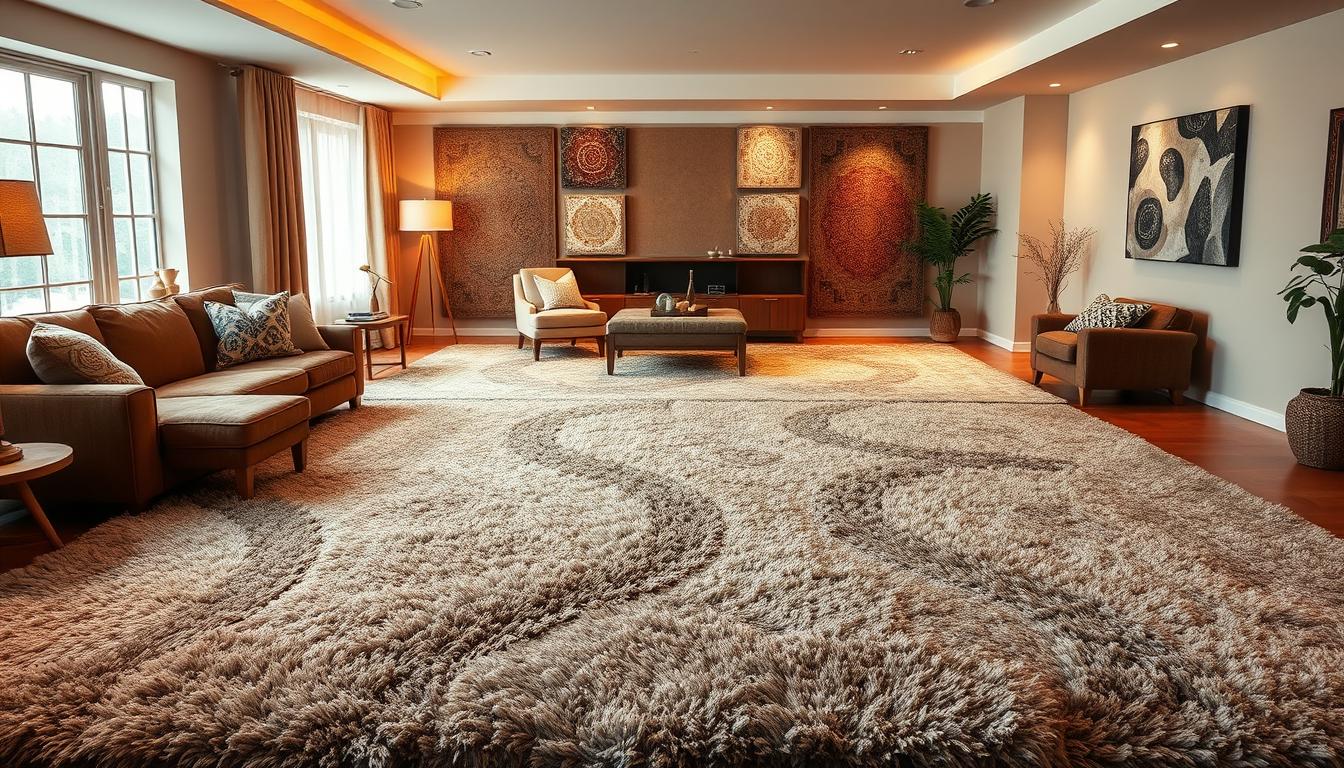
Area rugs are more than just decorations. They help improve room acoustics and add comfort. This makes them key in home design. By adding area rugs, you can cut down echo and soften loud sounds. This creates a more peaceful space.
Noise control is vital in homes, mainly in busy areas or where sound bounces off hard floors.
Area rugs can absorb sound well. They help reduce distractions and make living spaces more comfortable.
Understanding Noise Control and Its Importance
Too much noise is more than just annoying; it’s a major stress and discomfort in our homes. The quote, “the click-clack of my downstairs neighbor’s clogs drives me up the wall,” shows how noise affects us. It points to the need for good noise control solutions.
Noise control is key for a cozy home. Loud noises can raise our stress, mess up our sleep, and harm our health. Good noise reduction can make us feel better and live better.
In home decor, acoustics are very important for noise control. How a room is set up can make noise better or worse. For example, hard floors can make noise louder, but the right furniture and decor can soak up sound.
Knowing how important noise control is is the first step to a quieter home. By seeing how noise affects us and looking for solutions, we can make our homes better.
The Role of Rugs in Noise Reduction
Rugs can greatly affect a room’s sound quality by absorbing it. This is key in homes and offices where loud noises can be a problem. Area rugs are more than just decorations; they help make rooms quieter and more comfortable through sound absorption.
Studies show that a thick pile wool rug can greatly enhance a room’s acoustics. The rug’s fibers soak up sound, stopping it from echoing off hard surfaces. This is how rugs work to absorb sound: their fibers act as a barrier, spreading out sound energy instead of reflecting it back.
The Science Behind Sound Absorption
Sound absorption happens when sound energy is taken in by a material, not bounced back. Thick and dense rugs are top-notch at absorbing sound because their fibers offer a big surface area for sound to interact with. When sound hits the rug, it turns into heat, not bouncing back into the room.
The quality of a rug in sound absorption depends on its thickness, density, and material. For example, thick pile wool rugs are very good at absorbing sound because of their dense fibers. On the other hand, thin or loosely woven rugs might not work as well.
By knowing how sound absorption works and picking the right rug, people can greatly cut down on noise in their spaces. This makes the environment more pleasant and helps with productivity and comfort.
Choosing the Right Rugs for Your Space
To effectively soften loud noises, choosing a rug that meets specific criteria is essential. When it comes to rugs for noise control, several factors come into play. These include the material, thickness, and density of the rug.
The material of the rug is key because it affects sound absorption. Rugs made from dense, plush materials are better at reducing noise. For example, a thick pile rug can greatly cut down on echo and ambient noise in a room.
Experts say a thick ‘cut pile’ rug with a pile height of over 10 mm is best for sound absorption. This range, between 10-18 mm, is ideal. Such a rug not only looks great in your interior design but also makes your space quieter.
When picking a rug, think about the pile’s density too. A denser pile absorbs sound better than a less dense one. Also, the underlay or padding under the rug can boost its noise-reducing power.
Adding thick pile rugs to your interior design can be creative. For instance, a large area rug in a living room or bedroom can cover a lot of floor space. This maximizes the rug’s noise reduction.
The right rug can greatly benefit your home or office. It’s not just for noise control but also for the look and feel of the space. By picking a rug that’s both functional and stylish, you can make your environment more pleasant and peaceful.
Placement Tips for Maximum Effectiveness
To get the most out of rugs for noise reduction, place them wisely in your home. The right spot can really boost your DIY soundproofing efforts.
Put rugs in busy spots or rooms where sound bounces around, like hallways and living rooms. This helps soak up sound waves and cuts down on echo.
Also, use rug pads under big furniture. Experts say this catches any stray sound waves, making your rugs even better at blocking noise.
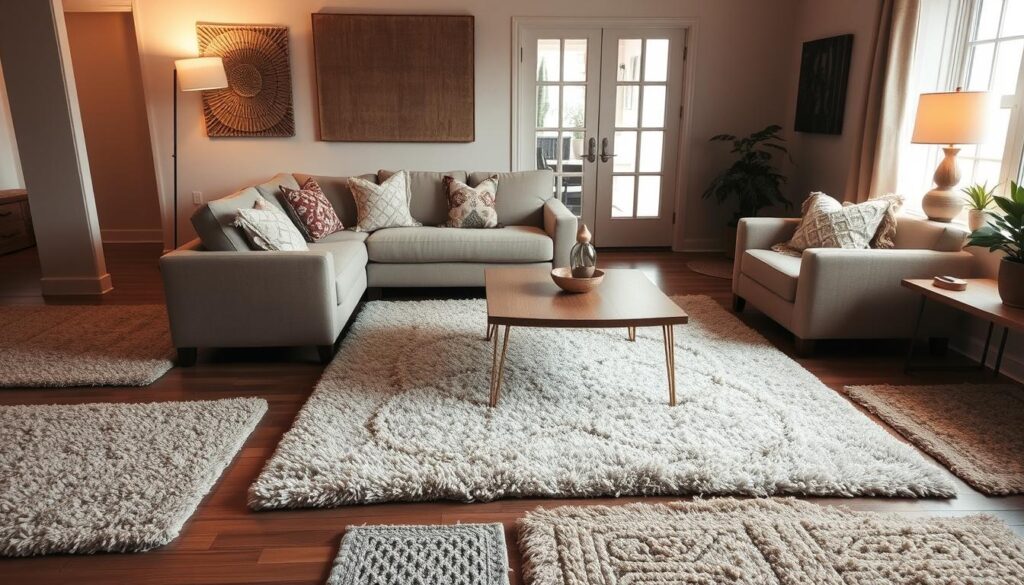
Rugs also add to your home’s look, making them key to your home decor. Pick rugs that match your style to make your space feel calm and cozy.
Think about the size and material of your rugs too. Bigger rugs with thick piles work best at mopping up sound. Smaller, thinner ones don’t do as much.
By placing rugs smartly and mixing them with other DIY soundproofing tricks, you can make your home quieter. This improves your life quality in big ways.
DIY Soundproofing Techniques with Rugs
Using rugs can make your living or working space quieter. A good way is to use area rugs with thick rug pads. The rug pad helps absorb sound, making floors quieter.
Enhancing Soundproofing with Rugs: Area rugs work well with other soundproofing materials. For example, a rug on a hardwood or tile floor can lessen footstep noise and other sounds.
Another DIY trick is to use area rugs in busy areas or rooms with hard floors. This can greatly cut down on echo and reverberation. You can also use rugs to cover walls or as wall hangings to absorb sound.
Combining Rugs with Other Sound-Absorbing Materials
To get the best soundproofing, mix rugs with other sound-absorbing items. Bookshelves filled with books can block sound and add style. Using acoustic panels with area rugs can also reduce echo and noise.
By adding these DIY soundproofing tricks to your space, you can make it more peaceful. Be creative and mix rugs, sound-absorbing materials, and other noise-reducing methods for the best results.
Maintaining Your Rugs for Longevity and Effectiveness
Keeping your rugs in good shape is key to their lasting effectiveness. Regular care not only makes them last longer but also keeps them working well. This means they can continue to block out noise effectively.
Regular Vacuuming is a must for rug upkeep. It gets rid of dirt and dust that can harm the rug fibers. For noise control rugs, vacuuming both sides is vital. This removes debris that could lessen their sound-absorbing power.
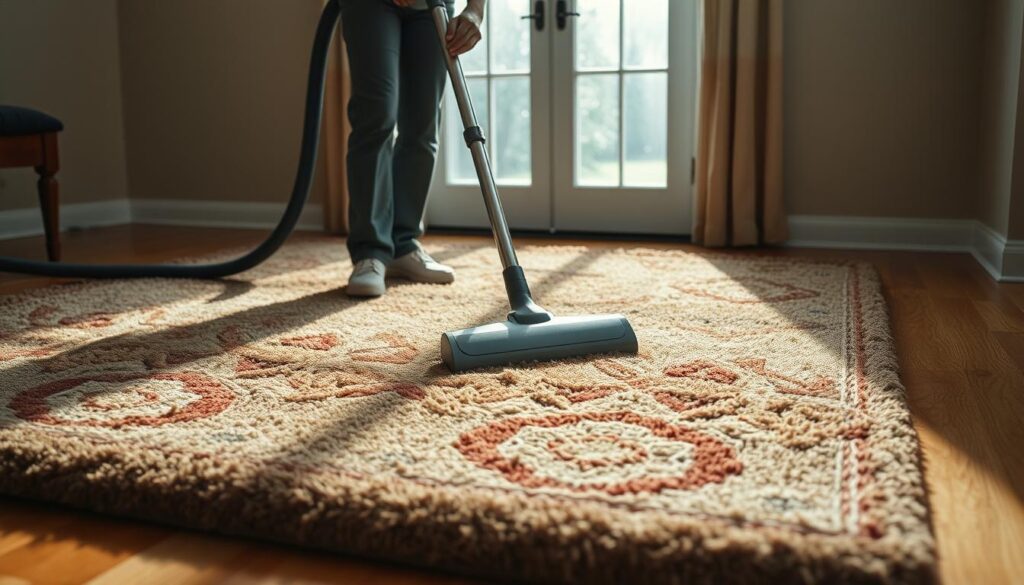
Spot cleaning is also essential for spills and stains. Using the right cleaning products and methods is important. It helps avoid damage to the rug. Make sure to dry the rug well after cleaning to avoid mold or mildew.
For a deeper clean, think about professional rug cleaning services. These experts have the tools and knowledge to clean rugs thoroughly. They ensure your rugs stay effective for noise control and keep your home looking great.
By following these maintenance tips, you can enjoy your rugs for a longer time. They will help make your home quieter and more comfortable.
Combining Rugs with Other Noise Control Solutions
To get the best noise control, mixing rugs with other solutions is key. Rugs help a lot, but they work even better with other soundproofing methods.
Adding mass to walls is a good idea. It absorbs sound waves and cuts down echo. You can use mass-loaded vinyl or extra drywall layers. Pairing this with rugs makes a strong noise control plan.
Sound-absorbing materials, like acoustic panels, are also great. Place them on walls or ceilings for best results. Using rugs with these panels creates a strong soundproofing system.
It’s important to think about how everything looks together. A good design not only lowers noise but also makes the room feel better. Choose rugs and materials that match your decor for a space that looks and sounds good.
In short, mixing rugs with other solutions is a smart way to soundproof. By using different materials and methods, you can make a space that’s quieter and nicer.
The Benefits of Rugs Beyond Noise Control
Rugs do more than just block out noise. They add comfort and beauty to any room. Area rugs, in particular, are key in home decor and interior design. They can change a room by adding warmth and texture.
Rugs make a room feel warmer and more welcoming. This is true for rooms with hardwood or tile floors. Rugs add a soft layer that’s missing.
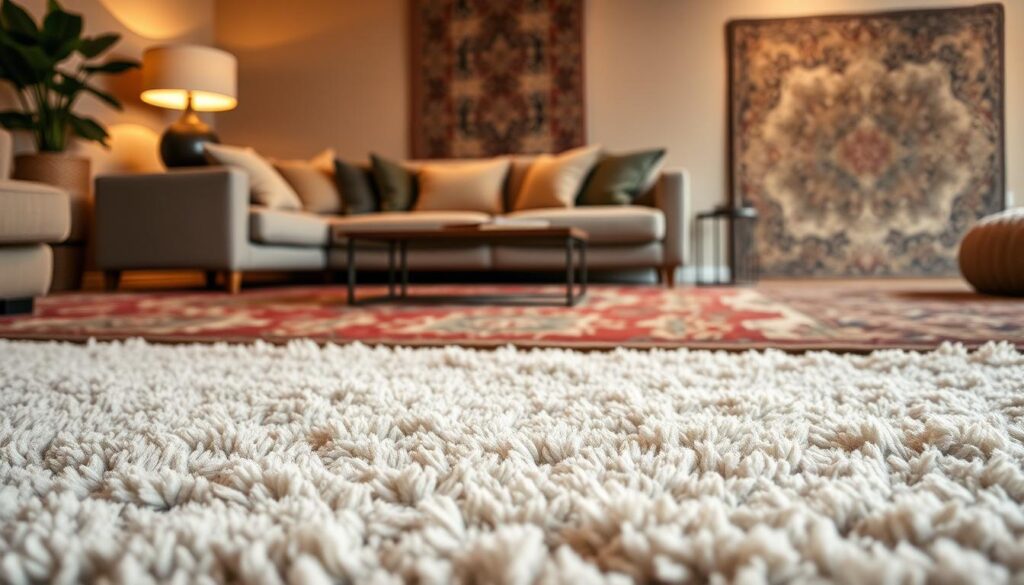
In interior design, area rugs are great for dividing open spaces. They also add color and pattern to a room. This helps tie different design elements together, making the room look better.
Rugs also make a room look better. A good rug can be the main attraction, drawing the eye. It can also balance the room’s look, making it feel calm and peaceful.
To sum up, rugs, like area rugs, do more than just block noise. They are essential in home decor and interior design. They make a room more comfortable, beautiful, and inviting.
Cost-Effective Noise Control Options
Controlling noise doesn’t have to cost a lot. You can use DIY soundproofing techniques and affordable materials. One easy way is to use rugs. They can soak up sound and make your space quieter.
Putting a thick rug pad under your rug makes it even better. The rug pad adds extra cushioning. This helps to muffle footsteps and other sounds. It’s really helpful in homes with hardwood or tile floors, where sounds can travel easily.
Another budget-friendly DIY soundproofing trick is to fill bookshelves with books. The books help absorb sound, cutting down on echo and background noise. This method also makes your space look nicer.
There are also cheap soundproofing materials out there. You can find acoustic panels, soundproofing blankets, and sealants. These can be used to block gaps and cracks in walls and windows. Mixing these with DIY methods can help you control noise without spending a lot.
When you start using these affordable noise control methods, think about where the noise is coming from. Use rugs, DIY tricks, and cheap soundproofing materials in those spots. This way, you can make your space sound better without spending a lot.
Expert Opinions on Rugs and Noise Reduction
Experts are interested in how rugs reduce noise. The Carpet and Rug Institute says rug thickness is key. It greatly affects how well a rug can block footfall noise.
Rug Thickness and Density: Research shows that thick, dense rugs absorb sound best. A thick rug can block up to 100% of footfall noise. This makes them great for controlling noise.
“Thicker rugs are more effective at absorbing sound, making them ideal for high-traffic areas or homes with multiple levels.”
Expert Insights: Experts say area rugs do more than just look good. They help lower noise levels. The right rug can really help make a room quieter.
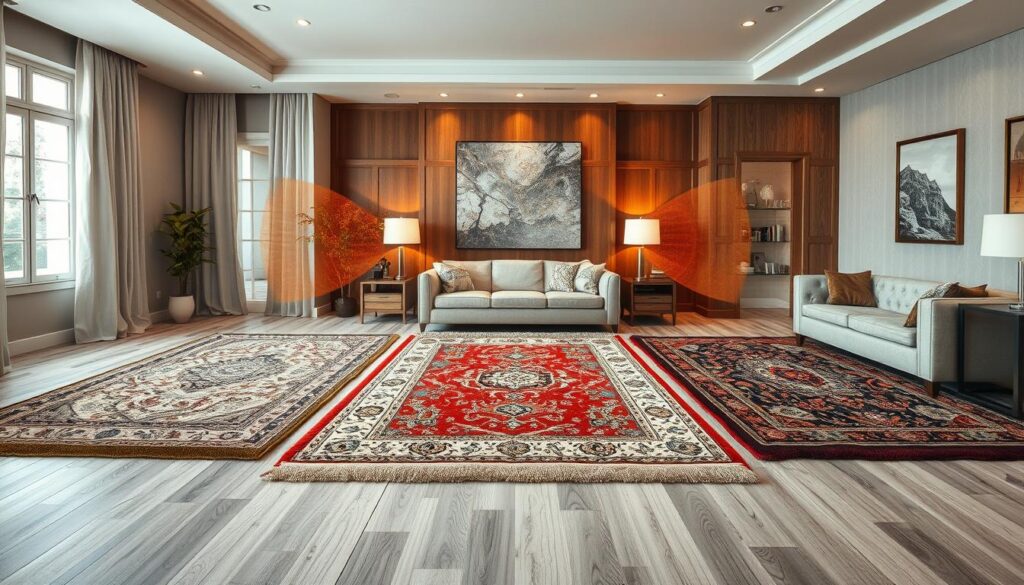
Practical Application: When picking a rug for noise reduction, think about its thickness and density. A rug that’s both thick and dense will absorb sound the best.
Future Trends in Noise Control and Interior Design
The future of noise control is linked to new interior design trends. New materials and technologies are being used in soundproofing. This includes acoustic panels and sound-absorbing materials. These innovations help reduce noise and make spaces look good.
Designers now focus on making spaces quiet and nice to look at. They use rugs, soundproofing materials, and other elements to achieve this. This way, they create places that are both functional and beautiful.
The need for quieter spaces is growing. This means noise control in interior design will become even more important. By keeping up with the latest in noise control and soundproofing, we can make spaces that are both lovely and useful.