







Understanding and sharing the feelings of others is key for kids. It helps them make healthy friendships and become kind people.
Teaching empathy to kids is important for their emotional growth. It lets them handle social situations well and form strong connections with others.
By teaching empathy, parents and teachers help kids become caring and understanding adults. These adults can make a big difference in their communities.
Nurturing empathy in kids early on can change their lives. It helps them connect with others and creates a more peaceful world.
Understanding Empathy: Definition and Importance
Empathy lets us understand and share another’s feelings. It’s key to emotional intelligence and keeping society together. It’s not just about feeling for someone but also understanding their view and sharing that.
Defining Empathy: Empathy means seeing things from another’s point of view. It’s about feeling and understanding others, which helps create strong, positive bonds.
Daniel Goleman, a famous psychologist, said empathy is vital for success in work and love. It’s essential for good relationships with friends, family, and in organizations.
“The best way to understand people is to listen to them.” –
Knowing about empathy is important because it boosts emotional health and helps people get along. Teaching kids empathy helps them deal with tough social situations.
Empathy’s role is huge. It helps us build a kinder, more understanding world. Teaching empathy to kids sets the stage for a more united and helpful community.
The Benefits of Teaching Empathy
Teaching empathy to kids helps them grow into caring and understanding people. It’s key for their emotional and social growth.
One big benefit of teaching empathy is building positive relationships. Kids who can feel and share others’ feelings make strong connections. This leads to a supportive and welcoming community.
Teaching empathy also boosts kids’ emotional health. It helps them handle their feelings and deal with social situations better. This emotional smarts is essential for their mental health and can lower bullying chances.
Empathy also helps reduce fights and encourages kindness. When kids think about others’ feelings, they’re less likely to hurt or offend. This makes places like home and school nicer and more respectful.
In short, the benefits of teaching empathy to kids are many and lasting. It helps them form good relationships, improves their emotional health, and makes society kinder and more understanding.
Age-Appropriate Ways to Teach Empathy
As children grow, they can learn to understand and share feelings. This is done through special ways.
Teaching empathy to kids needs different methods for each age. This helps them connect with others’ feelings better.
Young kids (ages 4-6) can learn by sharing toys and taking turns. Role-playing also helps them learn how to act in different situations.
Older kids (ages 7-10) can do more complex things. They can talk about feelings and try to see things from others’ viewpoints. This makes them understand others better and build deeper friendships.
Pre-teens (ages 11-13) can help others through volunteering and community service. This teaches them the importance of helping and being responsible.
Using strategies that fit their age, parents and caregivers can help kids become more empathetic. This makes them kinder and more understanding.
Utilizing Storytelling to Foster Empathy
Storytelling is a great way to help kids understand empathy. It lets them see different emotions and experiences. This way, they learn to be more compassionate and understanding.
When kids connect with characters in stories, they start to see things from other people’s viewpoints. This helps them feel more connected to others. It’s key for building strong relationships and a caring community.
The power of storytelling lets us explore many emotions safely. It helps kids think about their feelings and understand others’. This builds a stronger sense of empathy in them.
Using storytelling in daily life or school can teach kids about empathy. It boosts their emotional smarts and helps create a kinder world.
Empathy Through Play
Play is a great way to teach kids empathy. It lets them see things from different points of view in a fun way.
Play helps kids understand others’ feelings and thoughts better. Role-playing is a good example. Kids can try out different roles, learning to see things from others’ eyes.
Games that make kids work together are also good. For example, team games teach the value of cooperation. Kids learn to appreciate each other’s strengths and weaknesses.
Creative play, like arts and crafts, teaches empathy too. It lets kids express and understand different emotions through their work. This helps them grasp emotional experiences more deeply.
Adding these play activities to daily life helps kids develop empathy. This sets them up for better relationships in the future.
Empathy in Everyday Conversations
Fosteringempathyinkidsis key for their emotional and social growth. Everyday conversations are a great chance to teach them. Simple strategies in daily talks can help kids become more compassionate and understanding.
One good way to boost empathy is by listening to kids and acknowledging their feelings. When they feel understood, they learn to see things from others’ viewpoints better.
Talking about different situations and how they might affect others also helps. For example, discussing a friend who feels left out can teach kids about the value of being included.
Everyday conversations can also teach empathy by sharing stories. This way, kids can connect with others and grasp different viewpoints.
By making empathy a regular part of talks, parents and teachers equip kids with vital skills. These skills will serve them well throughout their lives.
Encouraging Acts of Kindness
Teaching kids about kindness is key to helping them feel for others. Acts of kindness show them how to understand and connect with others’ feelings. This builds compassion and empathy.
When kids do acts of kindness, they see how their actions help others. It might be as easy as sharing a toy or assisting a friend. This way, parents and caregivers help kids grow in empathy.
There are many ways to encourage acts of kindness. You can volunteer together as a family or just be kind at home. Making kindness a daily habit helps kids see the world with more empathy.
Teaching kids about kindness and empathy makes them caring and compassionate. This positively affects their relationships and how they interact with others.
Role of Parents in Teaching Empathy
Parents have a big impact on their kids, and teaching empathy is key. They can show empathy and do activities that help kids understand others. This way, parents help their children learn a valuable skill.
Parents can teach empathy by discussing feelings and looking at different views. For instance, while watching a movie or reading a book, they can ask their child about a character’s feelings. This helps kids think about others’ emotions.
Parents can also encourage acts of kindness and volunteer together. This shows kids how their actions affect others. It helps them feel responsible for helping others.
By being actively involved in their kids’ lives, parents guide them through tough social situations. This helps kids learn to empathize and build strong relationships.
Classroom Strategies for Teachers
Teachers are key in teaching empathy to their students. They can do this by adding empathy-building activities to their lessons. This helps students understand and see things from other people’s points of view.
Using discussions and role-playing is a great classroom strategy. Teachers can set up scenarios where students play different roles. This makes them think about how others might feel in certain situations.
Teachers can also use storytelling in their lessons. Stories with different characters help students grasp the depth of human emotions. It makes them understand that people’s feelings and actions are complex.
Creating a supportive classroom environment is another way to teach empathy. Teachers should make sure students feel safe to share their feelings. By listening well and encouraging different views, teachers can build a caring classroom.
By using these classroom strategies, teachers can teach empathy effectively. This is a skill that will help students throughout their lives.
Evaluating Empathy Development
Checking how kids grow in empathy is key for their emotional health. It’s a complex task that requires understanding their ability to connect with others.
Observation is a good way to check empathy development. Parents and teachers can watch how kids act with their friends. They look for times when kids show kindness and understanding.
Using storytelling is another way to assess. Adults can share stories with different emotional scenes. This helps see if kids can feel and understand the characters’ feelings.
Role-playing is also helpful. It lets kids show they can see things from different points of view. This is a big part of empathy.
Regular talks and feedback are important too. They help check and grow empathy in kids. It’s vital to make a safe space where kids can share their feelings and learn about others.
Understanding and sharing the feelings of others is key for kids. Teaching kids to be empathetic helps them make better choices and build strong relationships. It also makes them more caring people.
Nurturing empathy in children is vital for their emotional growth. Parents and teachers can help kids see things from other people’s viewpoints. This creates a more peaceful community.
Adults can make a big difference by using simple strategies every day. This helps kids grow into empathetic people. A more caring environment is the result.
Understanding Empathy: Definition and Importance
The idea of empathy is key in helping kids feel emotionally well. It means getting and sharing the feelings of others.
Empathy lets us understand and share another person’s feelings. It’s very important for kids to grow up well. It helps them make good friends and stay emotionally healthy.
Empathy is more than just feeling for someone. It’s about seeing things from their point of view. It’s like wearing their shoes and feeling what they feel. This skill is essential for a caring and supportive place, like home or school.
The importance of empathy in growing up is huge. Teaching kids to be empathetic helps them build strong bonds with others. It creates a world filled with kindness, understanding, and teamwork.
Teaching empathy to kids brings many benefits. It improves their social skills, helps them manage their feelings, and makes them more caring towards others. It’s a vital skill for being emotionally smart.
In short, empathy is not just a trait; it’s a skill we can teach and grow. By learning how to encourage empathy, we can help create a kinder and more understanding future.
The Benefits of Teaching Empathy
Teaching empathy to kids is a smart move for their future. It brings many benefits that last a lifetime.
Empathy helps kids build positive relationships with others. They learn to see things from different perspectives. This leads to better interactions and friendships.
Empathy also boosts emotional well-being in children. They can handle stress and other tough times better. This is because they understand and manage their feelings well.
Teaching empathy also fights bullying. It creates a kinder, more supportive place for everyone. Here, everyone feels valued and respected.
In short, teaching empathy is very beneficial for kids. It shapes them into caring, understanding, and emotionally smart people. By teaching empathy, we help them grow into better individuals.
Age-Appropriate Ways to Teach Empathy
Teaching empathy to kids needs to match their age. Empathy grows differently at each stage of life. It’s key for parents and teachers to know these differences.
Young children, like toddlers, start with emotional recognition. Using simple words to talk about their feelings helps them understand. Saying “You seem upset” is a great way to teach them about emotions.
As kids get older, around 5 or 6, they start to grasp more complex emotions. Storytelling is a great tool here. Reading stories with different characters facing challenges helps them see other perspectives and feel empathy.
Pre-teens can learn empathy through talks about social issues and current events. Asking them to see different sides of a topic helps them understand the world better. An expert says, “Empathy is about feeling and sharing others’ feelings, which is key for strong relationships.”
“The best way to teach empathy is by modeling it. Children learn from observing the behaviors and attitudes of adults around them.”
Getting kids involved in acts of kindness and volunteer work is also helpful. It teaches them the value of helping others and shows them how their actions affect others.
By using these age-specific methods, parents and teachers can help raise empathetic kids. These kids will be able to make strong connections and help their communities in meaningful ways.
Utilizing Storytelling to Foster Empathy
One of the best ways to teach empathy to kids is through stories. Stories are a powerful tool. They help kids understand and connect with the feelings of characters, promoting emotional understanding.
Through stories, kids can see different viewpoints and experiences. This helps them become more compassionate and empathetic towards others. Stories make empathy real and easy to grasp for kids.
When kids read stories, they start to see and understand the emotions and reasons behind the characters’ actions. This is key for developing empathy. It lets kids imagine how others might feel in different situations.
Stories also give kids a safe place to deal with complex emotions and social issues. This helps them understand themselves and others better. Talking about the stories and characters with parents or teachers can improve kids’ empathetic skills even more.
Reading a variety of stories can greatly help kids empathize with others. This makes storytelling a vital tool for teaching empathy.
Empathy Through Play
Play is a great way to teach empathy to kids. It lets them see things from different points of view and feel what others feel.
Play helps kids learn important life skills. Empathy is key for making strong connections with others.
Role-playing: Kids can act out different stories. They take on different roles to see things from others’ eyes.
Games: Games that make kids work together are good. They help kids feel connected and understand each other better.
Creative Play: Arts and crafts are great for kids. They help kids share their feelings and grow in empathy.
Adding empathy to play helps kids understand others better. It makes our community kinder and more caring.
Empathy in Everyday Conversations
Teaching kids empathy through everyday talks is powerful. Parents and teachers can help kids understand others’ feelings and views. This makes them more empathetic.
Listening to kids and validating their feelings is key. When they feel heard, they’re more likely to care about others. For example, if a child is upset, saying “You’re feeling really upset right now, aren’t you?” helps a lot.
Using daily talks to explore different views is also helpful. Watching movies or reading books together is a great time to ask questions. For example, “How do you think the character felt in that situation?” or “What do you think the character could have done differently?” makes kids think about others’ feelings and actions.
Parents and teachers should also show empathy. Kids learn a lot from what they see adults do. Showing kindness and understanding sets a good example for them.
Practical Tips for Encouraging Empathy
To encourage empathy in daily talks, try these tips:
– Listen actively by keeping eye contact and asking more questions.
– Make sure kids know their feelings are valued.
– Talk about different views and ask kids to think about others.
– Show empathy yourself in how you interact with others.
By using these methods in daily chats, we can teach kids empathy. This helps them deal with social situations better and build stronger relationships.
Encouraging Acts of Kindness
By promoting acts of kindness, we help kids understand empathy better. Kindness is key to teaching compassion and understanding. When kids do kind things, they see how their actions affect others.
There are many ways to encourage kindness in kids. Activities like volunteering, sharing, and saying thank you are great. These actions help both the person receiving kindness and the child doing it.
Doing acts of kindness makes kids more empathetic. It helps them build strong relationships with others. By being kind every day, kids can make their connections with people deeper and more meaningful.
Teaching kids about kindness and empathy also boosts their mental and social health. As they grow, they become more caring and understanding. This helps them make a positive impact on the world.
Role of Parents in Teaching Empathy
Parents have a huge role in teaching empathy to their kids. This is key for their social and emotional growth. They can help their children understand and share feelings with others.
One great way parents can teach empathy is by showing it themselves. When kids see their parents being kind and understanding, they learn from it. For example, if a parent is nice to a stranger, the child notices and learns.
Parents can also help by doing activities that teach empathy. They can play roles or talk about how others might feel. This helps kids see things from different points of view.
Encouraging acts of kindness is another good way. Helping others through volunteer work shows kids how their actions affect people. It helps them understand the value of kindness.
Storytelling is also a powerful tool. Reading stories that show different characters’ feelings and experiences helps kids understand others better. It makes them more empathetic.
By being involved in their kids’ emotional and social growth, parents are key in teaching empathy. They help their children become more caring and understanding people.
Classroom Strategies for Teachers
Effective teachers know that teaching empathy is as vital as teaching academics. They make their classrooms more caring by adding empathy-building activities to daily lessons. This helps create a more compassionate and understanding place for students.
One great classroom strategy is using discussions and role-playing to teach empathy. For instance, teachers can have students act out different scenarios. This could be being the new kid in school or facing a tough situation.
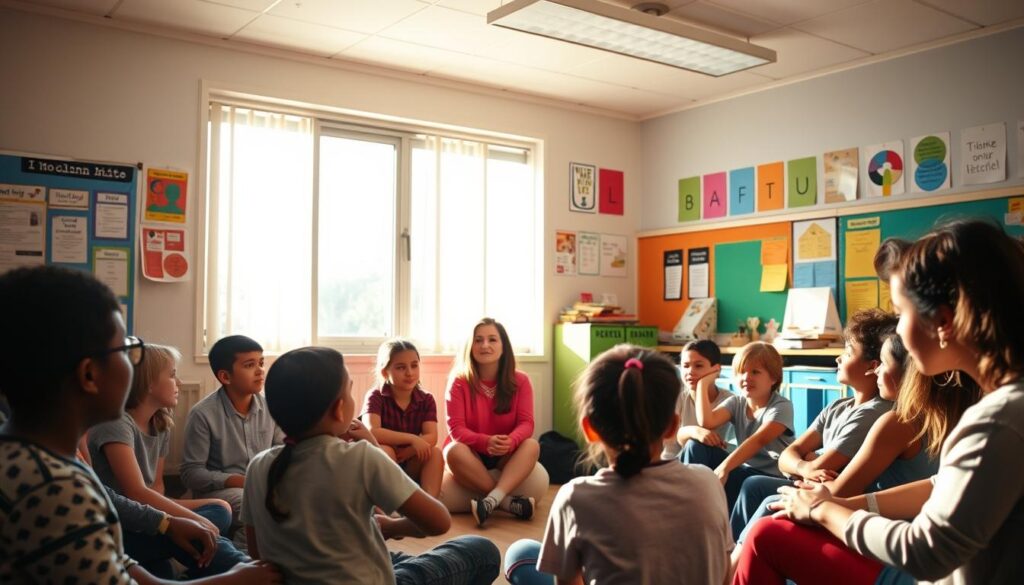
Teachers can also use literature and storytelling in their lessons. Reading and talking about stories that show different cultures and experiences helps students understand others better. It builds empathy.
Teachers should also show empathy themselves. When they are kind and understanding, students are more likely to be the same. Simple acts like listening and acknowledging feelings are powerful.
Another strategy is to encourage teamwork and collaboration. When students work together on projects, they learn to value each other’s strengths and weaknesses. This builds a sense of unity and empathy.
“Empathy is about finding echoes of another person in yourself.”
In summary, teaching empathy in the classroom needs a variety of methods. This includes discussions, role-playing, literature, and showing empathy. By using these classroom strategies, teachers can help shape empathetic and caring individuals.
Evaluating Empathy Development
It’s important to check how well kids develop empathy. This helps parents and teachers see where kids might need extra help.
Good ways to check empathy include watching how kids act in social situations. You can also use role-playing and stories to see if they understand others’ feelings.
By checking on empathy often, we can teach each child in the best way. This helps create a kinder and more caring future.
Checking empathy isn’t just a one-time thing. It’s something we do all the time. It takes patience, watching closely, and being ready to change how we teach as kids grow.