







Teaching kids how to make friends is key for their growth. Social connections are vital in helping them deal with different social situations. They also help build a strong sense of self.
As a parent, you play a big role in your child’s social skills. You guide them in how to interact with others and manage their feelings. This helps them learn emotional regulation.
By teaching these important skills, you help your child make lasting friendships. This makes their childhood better and prepares them for the future. It’s a big step towards their social and emotional well-being.
Understanding Friendship Skills
Knowing what makes good friends is key for kids. Friendship skills include many social abilities that help kids make and keep friends. These skills are vital for healthy relationships.
Emotional intelligence is a big part of being a good friend. It means knowing and understanding feelings in yourself and others. Kids with good emotional intelligence can handle social situations better, feel for their friends, and control their own feelings.
Communication skills are also very important. Good communication means speaking clearly, listening well, and answering right. Kids with strong communication skills can share their needs, solve problems, and get closer to their friends.
Experts say, “Kids with strong emotional intelligence and communication skills have better and longer friendships.” This shows why we should help kids grow these skills early on.
“The development of emotional intelligence and communication skills in children is key for forming and keeping meaningful friendships.”
By working on these areas, parents and caregivers can help kids become better at social skills. This helps them deal with complex social situations and make lasting friendships.
The Role of Communication in Friendships
Effective communication is key for kids to make lasting friendships. It’s not just about talking. It’s also about active listening and getting the other person’s view.
Practicing active listening helps kids understand their friends better. This builds trust and strengthens their bond. It means keeping eye contact, nodding, and asking questions to get things clear.
Expressing feelings is also vital in friendships. Kids should share their feelings in a kind and respectful way. This prevents misunderstandings and helps solve problems before they get big.
When conflicts come up, kids need to learn to talk things out. They should share their concerns clearly and listen to their friend’s side too. This way, they can find a solution that works for both.
Teaching kids about effective communication helps them make stronger friendships. It’s not just about words. It’s also about body language and knowing how to handle emotions.
Recognizing Emotions in Friendships
Knowing how to spot emotions is key for kids in friendships. When they can identify their feelings, they handle their emotions better. This helps them act right in social settings.
Emotional regulation is important for good friendships. Kids who control their feelings don’t fight as much. They solve problems peacefully. Teaching them to breathe deeply, count, or talk about their feelings helps.
Empathy is also vital for strong friendships. When kids get and share their friends’ feelings, their bonds grow stronger. Encouraging them to think about others’ feelings helps build empathy.
Parents and caregivers can help kids recognize emotions by naming and accepting them. Saying “You seem upset” or “I see you’re frustrated” helps kids know their feelings are seen.
Teaching kids to recognize and manage their emotions helps them make and keep good friends. This skill is key for their social and emotional growth. It sets a strong foundation for their happiness and well-being.
Active Listening for Better Friendships
Active listening is key to better friendships. When kids listen well, they show they care about their friends’ thoughts and feelings.
So, how can kids get better at listening? First, they need to give their full attention to the speaker. This means no distractions like phones or toys and keeping eye contact.
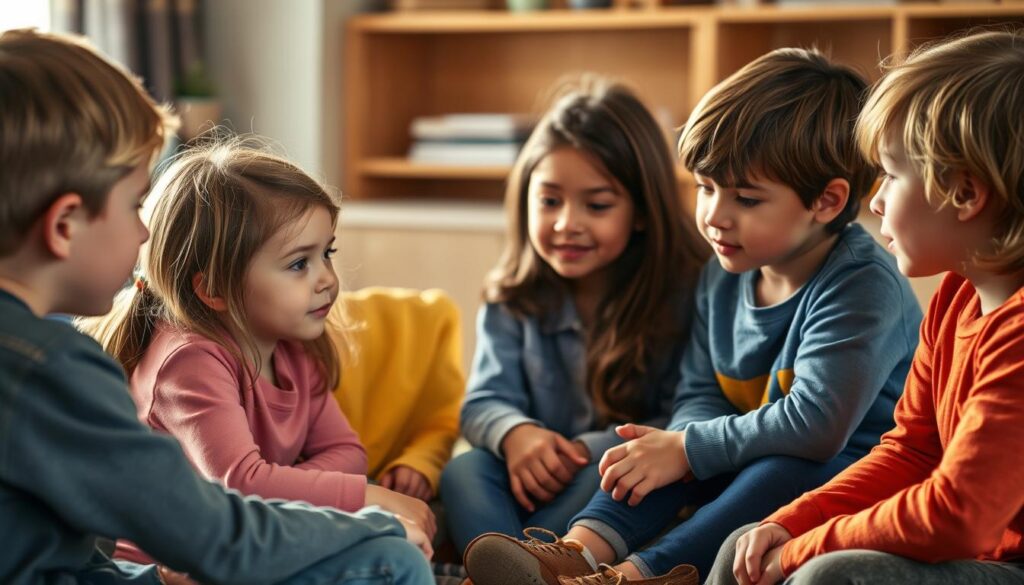
Active listening is not just about hearing words; it’s about understanding the underlying emotions and responding appropriately. This helps build trust and makes friendships stronger.
Practical Tips for Active Listening
To practice active listening, kids can follow a few simple steps:
- Face the speaker and maintain eye contact.
- Avoid interrupting, even if they think they know what the other person is going to say.
- Repeat back what they’ve heard to ensure understanding.
By following these tips, kids can get better at communication skills and make stronger friendship skills.
Active listening is good for all kinds of relationships. Teaching it to kids early can help them make and keep healthy friendships.
Building Confidence to Make Friends
Helping children develop self-esteem is key to making friends. When kids feel good about themselves, they’re more likely to connect with others. This leads to building strong relationships.
Boosting a child’s confidence starts with positive parenting. Parents can praise their kids’ efforts and unique qualities. This makes kids feel secure and confident, helping them connect with others.
Activities that improve social skills are also important. Joining group sports or clubs can help kids meet peers with similar interests. This boosts their confidence and social skills in a supportive community.
Encouraging Independence
Letting kids make some decisions and take on small tasks boosts their self-esteem. Giving them choices or letting them pick their clothes helps build confidence in their decisions.
It’s also vital to create a safe space where kids can try new things without fear. This helps them develop resilience and a growth mindset, increasing their confidence.
Encouraging Cooperative Play
The importance of cooperative play is huge. It helps kids learn teamwork and social skills.
Cooperative play means kids work together for a goal. This builds respect and understanding, says Dr. Laura Markham. “It teaches kids important social skills like talking, solving problems, and handling conflicts.”
“Cooperative play is not just about playing together; it’s about working together, sharing ideas, and building on each other’s strengths.”
Cooperative play helps kids see things from others’ viewpoints. This builds empathy. It also makes their friendships stronger and more meaningful.
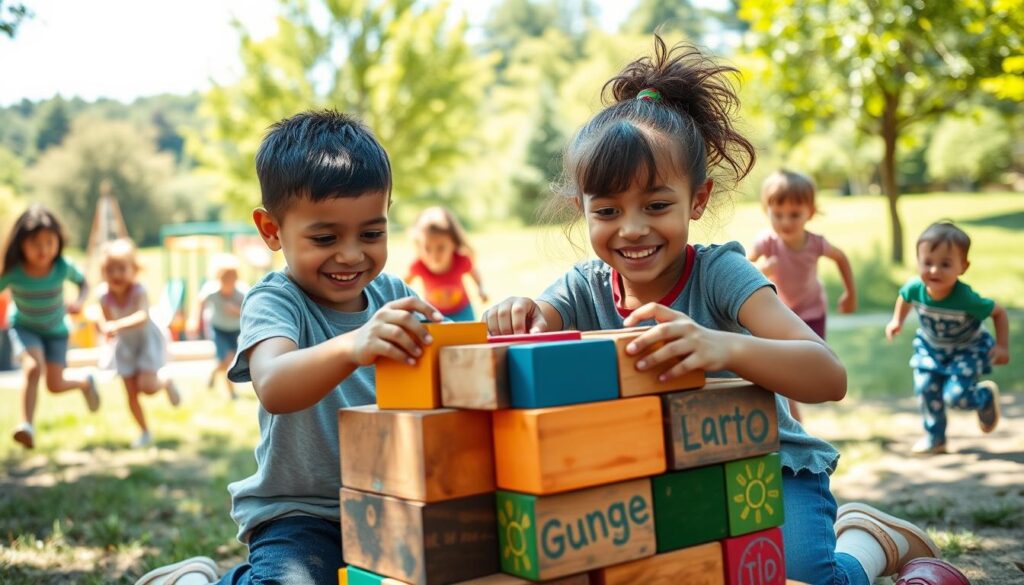
Examples of cooperative play include solving a big puzzle, playing team sports, or doing a group art project. These activities teach kids to work together, share ideas, and use each other’s strengths.
By supporting cooperative play, parents and caregivers help kids develop key social and friendship skills. These skills are vital for building and keeping healthy relationships.
Resolving Conflicts Among Friends
Teaching kids how to handle and solve friend conflicts is a key life skill. Conflicts are a normal part of friendships. Learning to deal with them is essential for kids.
One important strategy is emotional regulation. Kids need to control their feelings during disagreements. This helps them communicate well and find solutions. Parents can show them by managing their own emotions and teaching calming techniques.
Effective communication is also key. Encourage kids to share their feelings and concerns clearly and kindly. It’s also important for them to listen well to their friends, understanding their views and responding thoughtfully.
When conflicts happen, guide kids in finding a solution. This means identifying the problem, coming up with ideas, and picking a solution everyone can agree on. By teaching these steps, parents help kids build stronger friendships.
Talking about conflicts and how they were solved is also valuable. It helps kids learn more about communication skills and managing emotions. This way, they can handle future conflicts better.
Nurturing Long-term Friendships
Building lasting friendships takes effort, commitment, and understanding what makes them last. Consistency is key. Regular talks and activities strengthen the bond, laying a solid foundation for a lasting friendship.
Emotional support is also vital. Friends who offer emotional support and security help each other through life’s ups and downs. This support comes from listening actively, showing empathy, and being there when needed.
To keep friendships strong, open communication and trust are essential. Friends should feel free to share their thoughts and feelings, knowing their bond can handle disagreements. This way, they can resolve conflicts in a healthy way.
Also, showing consistent interest in each other’s lives and celebrating successes can deepen the friendship. It’s simple things like remembering important dates, showing gratitude, or just listening.
In short, nurturing long-term friendships is about balance. It’s about being supportive, maintaining trust, and keeping communication strong. By focusing on these, people can build friendships that are lasting and rewarding.
Teaching Inclusivity and Acceptance
Teaching inclusivity and acceptance helps kids make and keep friends. It’s about making a place where everyone feels welcome and valued. This means celebrating all kinds of diversity.
Showing kids what it means to be inclusive is key. When they see everyone being treated fairly, they learn to do the same. For example, joining in activities that celebrate different cultures helps kids feel part of a bigger group.
Inclusive places teach kids to love diversity. This happens when schools use books and toys that show different cultures. It’s not just about acceptance; it’s about broadening their view of the world.
It’s also important to teach kids to be kind and understanding. We can do this through talks and activities that show the value of empathy. This way, they learn to make and keep friends.
In short, teaching inclusivity and acceptance is vital for kids to make and keep friends. By instilling these values, we help create a supportive community where kids can grow and succeed.
The Impact of Technology on Friendships
The role of technology in kids’ friendships is complex. It has both good and bad sides. Social media and digital platforms make it easy for kids to connect, no matter where they are.
But, too much technology can hurt face-to-face talks. This can make it hard for kids to learn important friendship skills like empathy and solving problems.

Parents and caregivers should help kids find a balance. Joining clubs or sports teams can teach friendship skills in person. Social media can help keep these friendships alive over time.
It’s also key to teach kids about the dangers of technology. This includes cyberbullying and online harassment. They need to know how to deal with these issues.
By finding a balance in technology use and talking openly about social media, we can help kids build strong friendships. These friendships should be based on more than just digital communication.
Seeking Support from Adults
Adults play a huge role in helping kids with friendship problems. Kids often face tough times in their friendships. This makes adult support very important for them.
When kids have issues with friends, they might not know how to fix it. That’s when guidance from grown-ups, like parents or teachers, is really helpful. Adults can give a new view, helping kids see things clearly and find a good way to solve the problem.
Knowing when to ask for adult support is important. If a child is always unhappy or upset because of friends, they need help. Adults can teach kids how to deal with friendship challenges well. This teaches them skills that last a lifetime.
By getting help from adults, kids can handle their friendships better. This leads to more positive and healthy friendships.
Celebrating Friendship Milestones
Celebrating friendship milestones is a great way to show appreciation and strengthen bonds. It helps create a positive space for friendships to flourish. Parents and caregivers play a big role in this.
When kids achieve something special, like making new friends or solving problems, we can celebrate. A special outing or a small family party can do the trick. This celebration boosts their confidence and shows how much we value their friendships.
Using positive reinforcement when we celebrate friendship milestones is very important. It helps kids keep working on their friendships. It also helps them build strong relationships as they grow up.