






As parents, we never know when a scrape, cut, or other minor injury might happen at home. Having a well-stocked first aid kit and knowing how to handle common pediatric emergencies can give you the confidence to provide quick and effective care.
Being prepared is key to ensuring child safety. By having the right information and equipment, you can make a significant difference in providing care during emergencies. This knowledge is an essential part of parenting tips that can help you navigate unexpected situations.
Understanding the basics of care for minor injuries can help you stay calm and respond effectively. This makes a big difference in your child’s recovery and well-being.
Understanding First Aid Basics
As a parent, knowing basic first aid can save lives in emergencies. Whether it’s a small cut or a serious injury, knowing how to act can make a big difference.
First aid is more than just treating injuries. It’s about giving emergency care to keep someone stable until doctors arrive. It’s key for parents to know basic life support to act right in urgent situations.
First aid basics include checking the situation, calling for help when needed, and giving care to stop things from getting worse. This might be as simple as cleaning and bandaging a wound or as complex as doing CPR.
Knowing first aid basics well lets parents feel more ready for emergencies. This way, they can make sure their kids get the right care fast.
Common Injuries in Children
Children are always exploring and growing, which means they often get injured. Cuts and scrapes are common among these injuries. It’s important for parents to know how to care for them properly.
Injury prevention is a big part of child safety. Knowing the dangers around them helps parents keep their kids safe.

Cuts and scrapes are very common in kids. They can happen from falls, hitting things, or touching sharp objects. Parents need to know how to treat these injuries to help them heal and avoid infections.
To treat cuts and scrapes, start by cleaning them with mild soap and water. Use an antibiotic ointment to prevent infection. Then, cover the wound with a bandage to keep it clean and safe.
For deeper or bleeding cuts, immediate action is needed. Apply pressure to stop the bleeding and get medical help if it’s too much.
Preparing Your First Aid Kit
Preparing your first aid kit ahead of time can greatly help in emergency situations. A well-stocked kit is your first defense against minor injuries and accidents at home.
To be well-prepared, it’s key to include basic supplies for different needs. Here are some must-haves for your home:
Adhesive bandages in various sizes are essential for covering cuts and scrapes. They come in sizes to fit all ages, making them versatile for the whole family.
An antiseptic solution or wipes is vital for cleaning wounds to stop infection. Antiseptic wipes are handy for dealing with a fidgety child.
Latex-free gloves are also important, mainly for those with latex allergies. They keep both the caregiver and the child safe from infection.
“A well-prepared first aid kit can be a lifesaver in unexpected situations, providing immediate care and comfort until professional help is available.”
Also, an instant cold compress is useful for swelling in sprains or strains. Antibiotic ointment prevents infection in minor cuts and scrapes.
By adding these items to your first aid kit, you’ll be ready for emergencies. Make sure to check and update your kit regularly. This ensures all supplies are fresh and nothing is missing.
Responding to Cuts and Scrapes
Knowing how to handle cuts and scrapes is key for parents. If your child gets hurt, stay calm and check the injury first.
Initial Wound Care: Clean your hands with soap and water before touching the wound. If you have them, wear gloves to avoid infection.
Then, clean the cut or scrape with mild soap and lukewarm water. Don’t use harsh soap, hydrogen peroxide, or iodine. They can make the skin worse and slow healing. Dry the area with a clean towel.
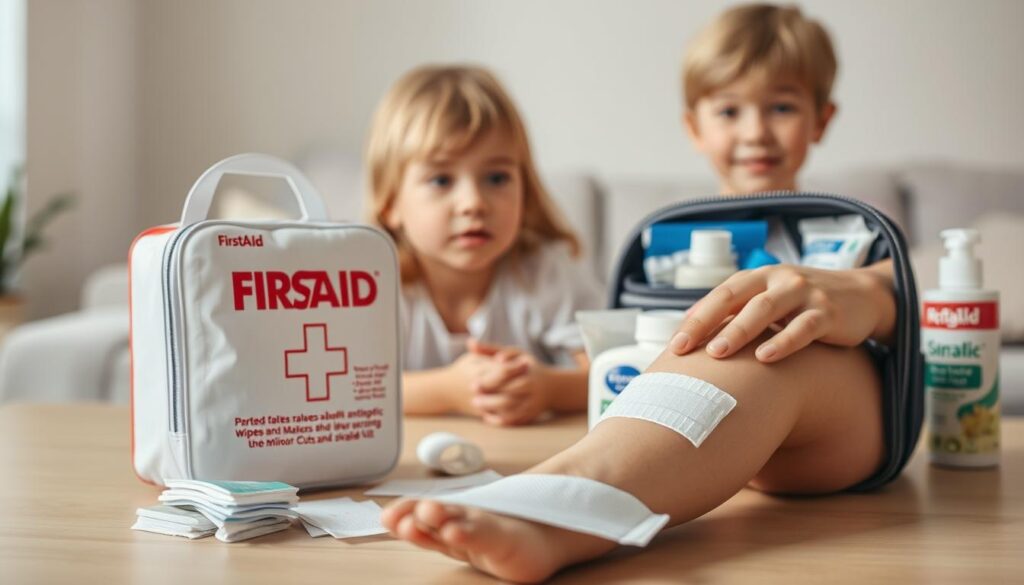
For small cuts and scrapes, put a thin layer of antibiotic ointment on. This helps prevent infection and aids in healing. Use a bandage or dressing to keep it clean.
Monitoring for Infection: Watch the wound for signs of infection like more redness, swelling, or pus. If you see these, or if it’s not healing, get medical help.
By following these steps, you can give good first aid for cuts and scrapes. This helps your child heal fast and avoids bigger problems.
Managing Burns and Scalds
Burns and scalds can be scary for kids, but you can help make them feel better. These injuries can happen from hot stoves, spilled coffee, or hot water. Knowing how to treat them is key for parents.
First, cool the burn. Use cool tap water for 10-15 minutes or a cool, wet cloth if water is not there. This cools the skin and lessens pain. Never use ice or ice water because it can harm more.
After cooling, dress the burn right to help it heal. Use a non-stick, sterile bandage or dressing. Don’t use fluffy or fibrous stuff that might stick. If the burn is big or very bad, get medical help right away.
Monitoring for Infection
Watch the burn closely as it heals. Look for signs of infection like more redness, swelling, or pus. If you see these or if your child hurts more, see a doctor. Watching closely helps avoid problems and helps it heal better.
For small burns, care for them at home by keeping them clean and covered. But for big burns or if you’re not sure, it’s safer to get medical help. Knowing when to get help is important for taking care of burns and scalds.
Addressing Sprains and Strains
It’s important for parents to know how to handle sprains and strains. A sprain is when a ligament gets pulled or partially torn. On the other hand, a strain is when a muscle or tendon gets stretched or partially torn.
The RICE method is a key first aid for sprains and strains. RICE means Rest, Ice, Compression, and Elevation.
Rest, Ice, Compression, Elevation
Rest: Start by resting the injured area. Stay away from activities that make the pain worse.
Ice: Ice helps with pain and swelling. Wrap an ice pack in a cloth and apply it for 15-20 minutes, several times a day.
Compression: Compression reduces swelling. Use an elastic bandage but don’t wrap it too tight to avoid cutting off circulation.
Elevation: Elevating the injured limb above the heart reduces swelling. It improves blood flow back to the heart.
By using the RICE Method, parents can help their kids recover from sprains and strains faster. This also lowers the chance of more injuries.
Dealing with Bumps and Bruises
Minor bumps and bruises can be handled at home. But, knowing when to see a doctor is key. Kids often get bumps and bruises because they are active and curious.
For a minor bump or bruise, a cold compress can help. Wrap a cold pack in a cloth to protect the skin. Apply it for 10-20 minutes a few times a day. This can ease your child’s pain and swelling.
Watch the bump or bruise for signs that need a doctor. If it doesn’t get smaller or if your child keeps saying it hurts, see a doctor. Also, if it gets red, warm, or has pus, get medical help right away.
Knowing how to handle bumps and bruises helps with the injury and reassures your child. Being ready and knowing the right care can help with these common childhood injuries.
Recognizing Allergic Reactions
As a parent, knowing the signs of allergic reactions is key. This helps you react fast in emergencies. It’s important whether your child has a known allergy or not.
Allergic reactions can vary from mild to severe. Mild ones might show as hives or itching. But severe reactions, called anaphylaxis, are very serious and need quick medical help.
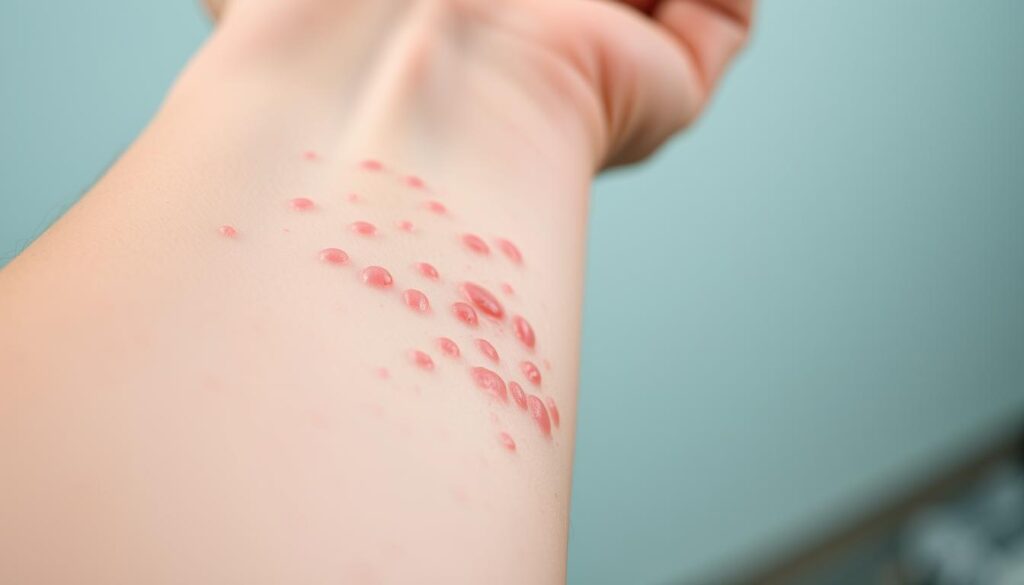
Spotting anaphylaxis signs is critical. Look for trouble breathing, swelling in the face, lips, tongue, or throat, and a fast heartbeat. If you think your child is having anaphylaxis, act fast.
Administering Epinephrine
If your child has anaphylaxis, give them epinephrine from an auto-injector (like an EpiPen). Hold it against their thigh and press to release the epinephrine. Then, call for emergency help right away.
Stay calm and follow the auto-injector’s instructions. After using epinephrine, get medical help fast. They might need more treatment.
Tips for First Aid at Home
Home safety is very important. Knowing how to do first aid can really help. Make sure your home has the basics of a first aid kit ready for emergencies.
To keep your home safe, find and fix any dangers. Secure furniture and appliances to stop them from falling. Also, keep harmful substances away from kids. These steps can lower the chance of injuries at home.
A good first aid kit is key. It should have bandages, antiseptic wipes, pain relievers, and any needed medicines. Check the kit often to make sure it’s full and everything is not expired.
It’s also important to know how to use these items. Learn basic first aid skills, like treating cuts, burns, and sprains. This knowledge helps you act right in an emergency.
Preventing injuries is as important as treating them. Simple steps like putting up safety gates, using non-slip mats, and covering outlets can help a lot. These actions improve child safety and overall home safety.
By making your home safe and knowing how to do first aid, you can greatly improve your family’s safety. Remember, injury prevention and being ready are essential for handling emergencies well.
When to Call for Help
Knowing when to call 911 can save lives. Parents need to be alert and know when to get emergency care for their kids.
If your child is choking and can’t talk, cough, or make sounds, but is conscious, call 911. Quick action is key in these moments. A medical expert says,
“In choking cases, every second is vital, and fast action can save a life.”
Other urgent situations include severe injuries, trouble breathing, or severe allergic reactions. For example, if your child has sudden breathing trouble or shows signs of a severe allergy, like swelling, don’t wait to call for emergency help.

For severe injuries, like deep cuts or broken bones, keep your child calm and quiet until help comes. A first aid guide notes,
“The main thing in first aid is to stay calm and follow the right steps.”
In short, knowing when to call for help is very important. Parents should stay informed and ready.
Staying Calm During Emergencies
When an emergency happens, it’s key to stay calm for your child’s first aid. Managing stress is important for making smart choices and actions.
As a parent, keeping your cool is critical. Panicking can cause bad decisions, making things worse. Staying calm helps you think clearly and care for your child right.
Useful tips for staying calm include taking a deep breath and assessing the situation. Also, seek help when you need it. If your child is choking, stay calm and close until it passes. Don’t hit them on the back, as it could make things worse.
By staying calm and using the right first aid, you can help your child in an emergency. Good parenting means being ready and calm, ensuring the best for your child.