







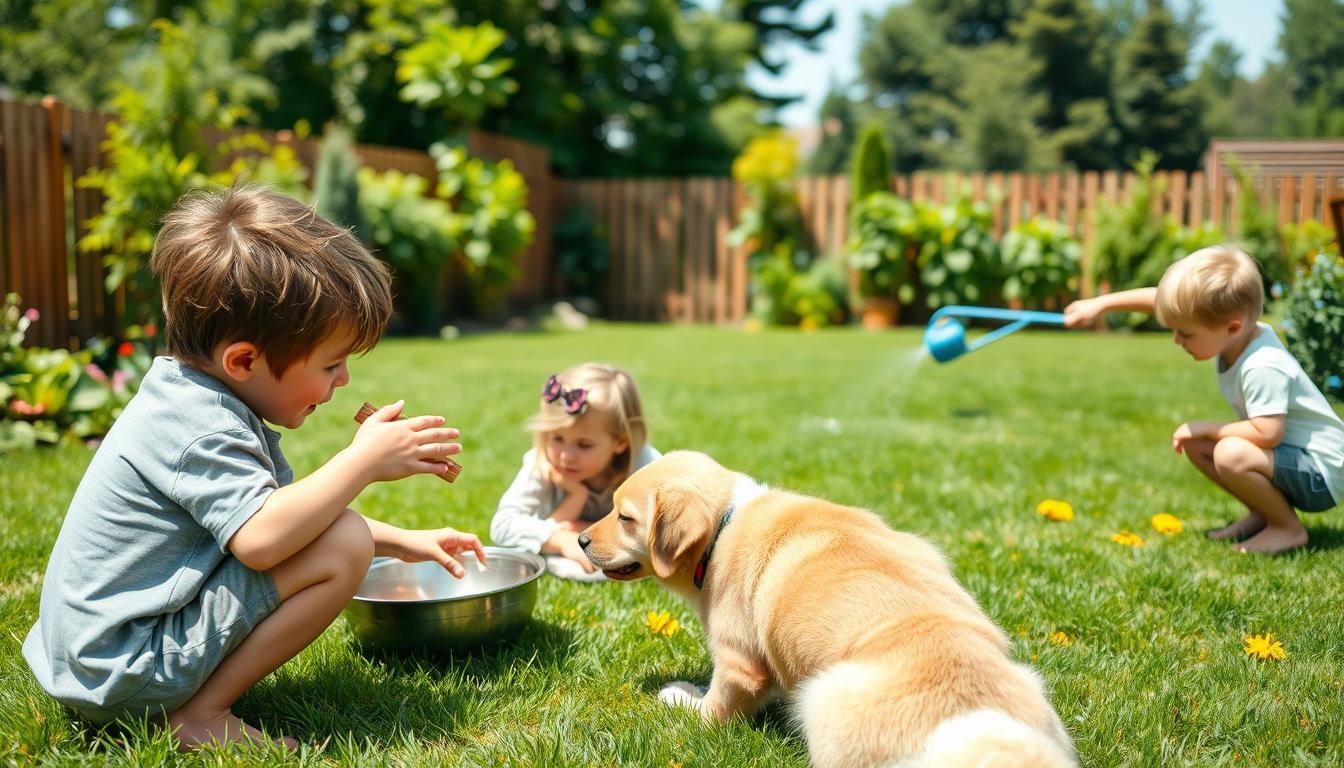
Bringing a pet into your home can be a great adventure for kids. It creates memories and teaches them important life lessons. It’s like adding sprinkles to ice cream – they’re the best part of childhood.
But, kids might not always know how to act around pets. It’s key to teach them about responsible pet care. This helps them see the value of caring for animals.
When kids help with pet care, they learn valuable lessons. They grow to be more empathetic, responsible, and selfless. This benefits both the child and the pet, making their bond stronger.
The Importance of Pet Care Education
Teaching kids about pet care is a key life skill. It helps both kids and pets. By learning about pet care, kids understand animal welfare better. They also learn to be responsible and compassionate.
Adults must supervise when kids care for pets. Even if kids think they can handle it, it’s important. The Humane Society says, “
Children should be supervised when interacting with pets to ensure the safety and well-being of both the child and the pet.
Pet care education for kids is more than just feeding or walking pets. It’s about understanding animal needs and how to meet them. This education helps prevent accidents and builds a good relationship between kids and pets.
Key Benefits of Pet Care Education
Inviting kids in pet care activities helps them learn important skills. They gain responsibility, empathy, and self-confidence. It also helps animals by ensuring they are treated with care and respect.
Julie Levy, a renowned animal welfare expert, says, “
The way we treat animals reflects our values as a society.
” Teaching the next generation about pet care helps create a more compassionate society.
Choosing the Right Pet for Your Family
Families with young kids should think carefully about the right pet. If you’re adding a furry friend to your home, our experts have some tips. These will help make sure everyone gets along well.
When picking a pet, your child’s age matters a lot. For little ones, pets like fish or turtles are good choices. They’re easy to care for and gentle. As kids get older, they can handle pets that need more attention, like dogs or cats.
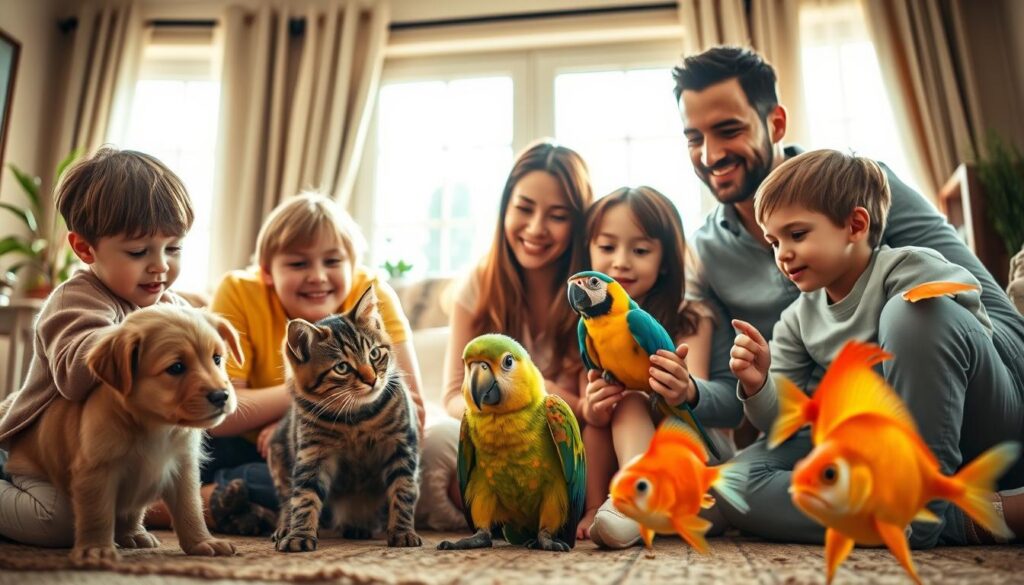
The pet’s personality is also key. A calm and patient pet is best for families with kids. It’s important to learn about different pets before deciding. This way, you can find one that fits your family well.
Your family’s lifestyle affects the pet you should choose. If you’re often out, a pet that’s okay on its own might be better. But if you’re home a lot, a pet that likes to play and needs attention could be perfect.
By thinking about these things and involving your kids, you can pick a pet that will love and be part of your family.
Basic Pet Care Responsibilities
Caring for a pet is a big responsibility that kids can learn from. It teaches them about empathy, responsibility, and compassion. By getting kids involved in pet care, parents can pass on valuable life skills.
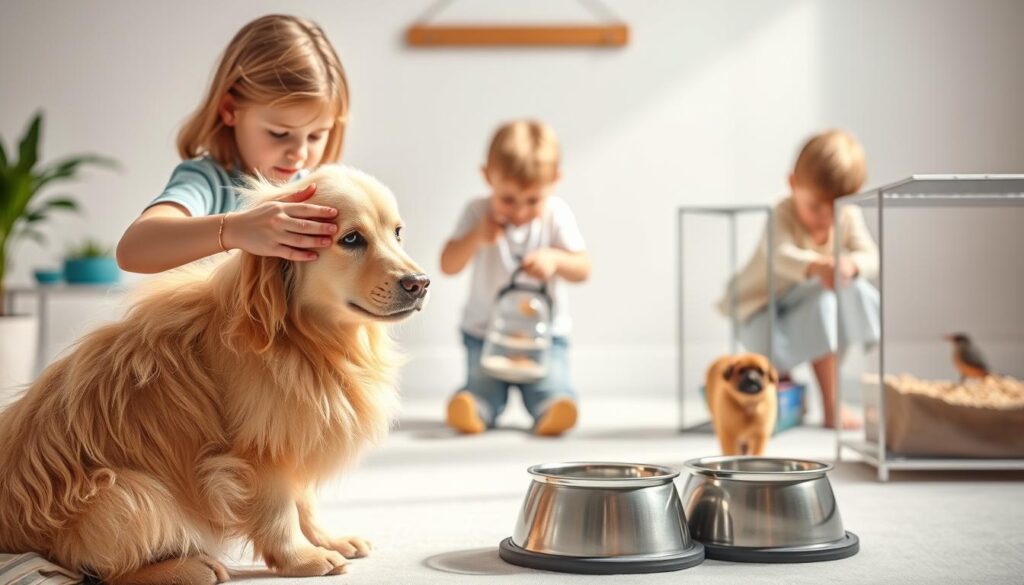
Daily Tasks are key to keeping pets healthy and happy. Kids can help with these tasks, which strengthens their bond with their pets.
Feeding
Feeding is a critical task. Kids can help measure food and refill water bowls. This teaches them about nutrition and the effects of overfeeding or underfeeding.
Grooming
Grooming is important for pets and a chance for kids to bond. It keeps pets clean and reduces shedding and hairballs.
Providing Fresh Water
It’s vital for pets to have fresh water. Kids can help check and refill the water bowl. This teaches them about keeping pets hydrated.
Helping with daily care builds trust and a strong bond between pets and humans.
By getting kids involved in these tasks, parents teach them about pet care. It shows the value of caring for another living being.
Teaching Kids About Pet Behavior
It’s important for kids to learn about pet behavior. This helps them interact with animals safely and positively. Animals talk in different ways, like body language, sounds, and eye contact. Knowing these signs helps kids avoid misunderstandings and build a better bond with their pets.
Pet behavior includes body language, vocalizations, and eye contact. Kids need to recognize these signals to understand their pets’ feelings and needs.
Dogs wag their tails to show happiness or excitement. But, a tucked tail might mean they’re scared or anxious. Cats purr when they’re happy but hiss when they feel threatened or scared.
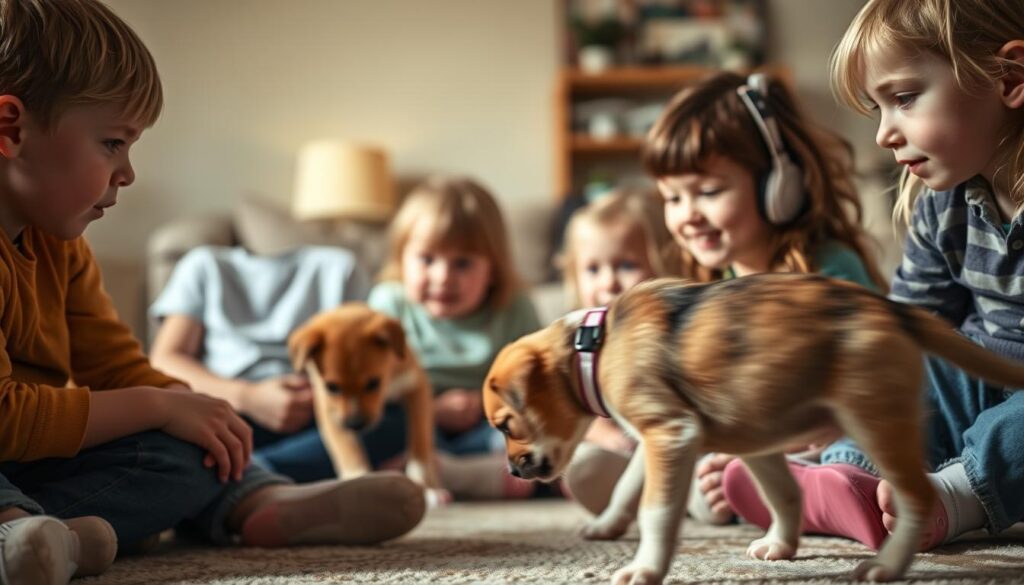
By learning about pet behavior, kids can interact with their pets in a safe and caring way. For example, if a pet looks stressed or scared, kids can give it space or calm it down with gentle actions.
Teaching kids to be observant and responsive to pet behavior not only enhances their relationship with their pets but also promotes a culture of empathy and responsibility.
Involving Kids in Pet Care Tasks
Getting kids involved in pet care helps them learn empathy and responsibility. By giving them tasks that fit their age, parents teach them important life skills. These skills will help them in many ways as they grow up.
Dr. Geller says that doing pet tasks at the same time every day is key. She notes, “Cats love routine and predictability,” which makes them feel safe and happy. This idea works for other pets too, showing how important a daily routine is in caring for them.
Age-Appropriate Pet Care Tasks
Young kids can start by refilling food and water bowls or helping with simple pet meals. As they get older, they can do more like grooming or giving medicine with a grown-up’s help.
“Involving children in pet care not only teaches them responsibility but also fosters a deeper bond between the child and the pet.”
Older kids can handle bigger tasks like watching the pet’s health or setting up vet visits. This way, they learn more about caring for a pet.

Inviting kids to help with pet care is more than teaching them to be responsible. It’s also about creating a caring space for both kids and pets. This helps kids grow up to be kind and caring towards animals.
Safety First: How to Interact with Pets
Teaching kids how to safely interact with pets is a key life skill. It’s important to teach them the right ways to approach and handle pets. This helps avoid harm to both the child and the animal.
One important pet safety tip is to tell kids not to disturb pets when they’re sleeping, eating, or stressed. It’s also key to teach them to ask permission before petting an animal. They should be gentle when playing with pets.
Kids should be encouraged to sit on the floor when with pets. This makes pets feel safer. They should also learn not to tease pets or make sudden moves that might scare them.
It’s vital to supervise when kids and pets interact. Adults should be there to step in if needed. They should guide kids on how to gently and respectfully interact with pets.
By teaching kids these simple yet effective interaction tips, we create a safe and happy space for both kids and pets.
Fun and Engaging Ways to Learn About Pet Care
Pet care education for kids can be fun through interactive activities. It teaches kids responsibility and strengthens their bond with pets.
Playing fetch is fun for both kids and dogs. It’s a great way to teach dogs manners, like “drop it.” This activity also teaches kids about patience and how to interact with pets.
Adding training sessions makes pet care education more fun. Training pets with positive reinforcement is rewarding for kids. It teaches them about communication, consistency, and rewarding good behavior.
Pet care challenges are another fun way to learn. These can be simple tasks or quizzes about pet health, nutrition, and behavior. Making learning fun helps kids love animals for life.
In conclusion, adding fun and interactive activities to pet care education is key. Through play, training, and challenges, kids learn essential life skills while enjoying their pets.
Overcoming Challenges in Pet Care
Bringing pets into the family comes with challenges. Caring for them is a big job, often too much for kids.
One big pet care challenge is dealing with bad behaviors. Dogs and cats might bark too much, scratch furniture, or not use the litter box. Understanding why they behave this way and using consistent training and positive reinforcement is key.
Health issues are another problem. Regular vet visits are important for pets’ health. Kids can help by going to vet visits, giving medicine, and following vet instructions. This keeps pets healthy and teaches kids about responsibility.
Changes in the family, like moving or having guests, can upset pets. To help, families should keep a routine. Kids can help by doing tasks like feeding or playing with the pet.
Practical Solutions for Families
Getting kids involved in pet care is good for everyone. They can help with grooming, feeding, or just watching the pet. This makes caring for pets fun and educational for kids.
By facing challenges and finding solutions, families can create a great home for pets. This environment is good for both pets and family members, building a strong bond between kids and pets.
Fostering a Lifelong Love for Animals
Teaching kids to respect pets and enjoy playing with them makes their bond strong and happy. This helps kids grow up loving animals. It’s all about teaching them to care and be kind to pets.
Choosing the right pet and teaching kids about animal behavior are key. Getting them involved in pet care is also important. These steps help families create a loving space for both kids and pets.
When we teach kids to care for pets, we build a strong connection between them. It also teaches them to be empathetic and kind. As parents, it’s our job to keep showing them the importance of caring for animals. This way, they will always love pets.