








Teaching kids to be responsible is key for their growth. One great way is to get them involved in household chores early on.
Studies show that giving chores to kids as young as three can be very beneficial. It boosts their self-esteem and helps them handle frustration better.
When kids help out at home, they learn to contribute and work together. This builds important life skills. It also helps their emotional and social growth, making parenting more positive.
Assigning tasks to kids is a powerful way to shape their future. It’s a valuable tool for their development.
Why Chores Matter for Kids
Getting kids involved in household chores is key to their development and future success. Chores teach them basic skills and a sense of responsibility. They also learn the value of hard work and the importance of contributing to the community.
A Harvard study found that kids who do chores grow up to be successful adults. Chores help kids develop important life skills that last a lifetime. They learn to take care of themselves and their surroundings, understand the value of hard work, and feel a sense of accomplishment.
Chores also help shape a child’s work ethic and self-reliance. By doing tasks, kids gain confidence and learn to manage their time well. This makes them more independent and self-sufficient.
In short, giving kids chores is more than just getting help around the house. It’s about teaching them valuable lessons that will help them in the future. By teaching them responsibility and life skills, chores play a big role in a child’s development.
Age-Appropriate Chores
Age-appropriate chores are key for a child’s growth. Giving tasks that fit their age helps them learn responsibility and boosts their confidence.
Toddlers and Preschoolers
Toddlers can start with simple tasks like putting away toys and sorting laundry. These tasks help keep their space clean and teach them to contribute to household chores.
Preschoolers can handle more tasks like setting the table, cleaning their rooms, and helping with simple meal prep. These chores teach them about teamwork and their role in the family.
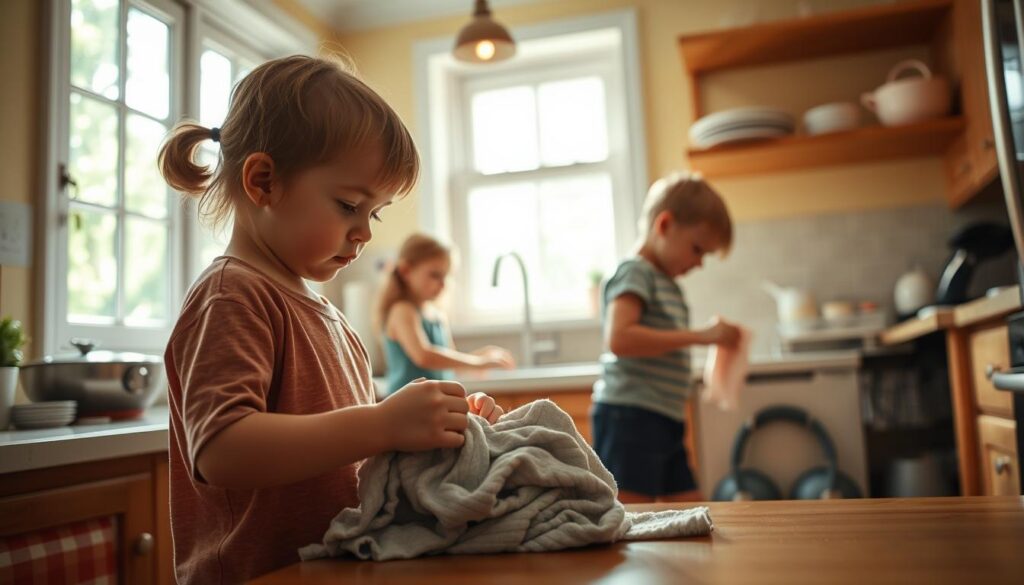
It’s important to praise their efforts and encourage them to keep helping. This way, we teach them responsibility and a strong work ethic that lasts a lifetime.
By giving age-appropriate chores, parents help their kids develop important life skills. It’s a step towards raising capable and independent people.
Creating a Chore Chart
A chore chart is a visual guide for tasks, helping kids remember their duties. It shows parents what kids need to do and lets them feel proud when they finish. This helps kids understand their roles and feel accomplished.
For younger kids, use pictures or illustrations on the chart. It makes the chart fun and easy to get. Older kids can handle a simple list with checkboxes.
Adding calendars to the chart teaches kids about time and deadlines. Giving praise, stickers, or small rewards for tasks done can motivate them. It keeps them focused on their duties.
Being flexible with the chore chart is key. As kids grow, so do their tasks and abilities. Regularly check and update the chart to keep it useful and relevant.
By following these steps, parents can make a chore chart that organizes tasks and teaches kids important skills. Skills like organization and time management are valuable for life.
Making Chores Fun
Chores don’t have to be boring. With a little creativity, they can become a positive experience for kids.
One way to make chores fun is by turning tasks into games. For example, parents can set up a “beat the clock” challenge. Kids have to finish a task before time runs out.
Playing music while doing chores can also make it more enjoyable. It helps create a positive link with household duties.
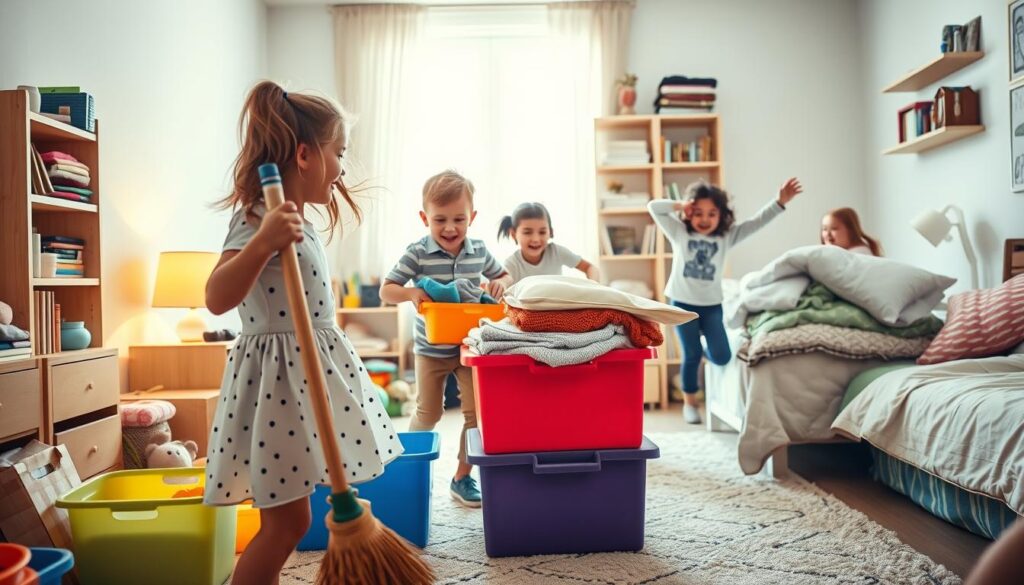
Creating a sense of friendly competition among family members can also make chores more fun. This can be done by competing to see who can do their tasks the fastest or most efficiently.
By using these strategies, parents can help their kids see chores in a positive light. It becomes a valuable learning experience that goes beyond just doing tasks.
Teaching Teamwork Through Chores
Working together on household tasks helps family members feel more cooperative and responsible. When kids help with chores, they learn important life skills. This also makes the workload easier to handle.
Dr. Jane Smith, a child development expert, says, “Chores teach kids about teamwork. They help create a more peaceful family atmosphere.” This teamwork in household tasks can shape kids’ views on responsibility and unity.
“The family is one of nature’s masterpieces.” – George Santayana
Assigning chores to kids and encouraging teamwork boosts their responsibility. Parents should show kids the value of helping out at home.
When chores are a family affair, parents teach kids about cooperation and teamwork. This prepares them for future challenges that need teamwork and support.
Overcoming Resistance to Chores
Understanding and overcoming resistance to chores takes a mix of knowledge, strategy, and patience. Kids often don’t want to do chores for many reasons. These include unclear expectations, not being consistent, and fighting with siblings. Knowing these reasons helps parents find ways to tackle them.
One big reason kids don’t want to do chores is unclear expectations. If kids don’t know what’s expected, they might not try or do it well. Parents should explain the task clearly, show them how it’s done, and give written instructions if needed.
Inconsistency is another big problem. If chores aren’t enforced the same way every time, kids might think they can skip them. Creating a routine and sticking to it helps solve this issue.
Sibling rivalry can also make kids resistant to doing chores. They might feel they’re doing more than their siblings. Encouraging teamwork and making chores a family activity can help. This way, kids learn to work together and feel united.
To really beat resistance, parents should praise effort and give rewards for finishing chores. This positive feedback can make kids more eager to help out.
Setting a Routine for Chores
Creating a chore routine helps kids develop lasting habits. It makes them better at handling tasks. This is a big plus for their future.
Being consistent is key. A regular schedule helps kids know what’s expected and when. Use a chore chart to outline tasks and days.
First, list the chores for daily, weekly, and monthly tasks. Then, make a schedule that fits your family. For example, daily tasks like making your bed or feeding pets can be done at the same time every day. Weekly tasks like cleaning the bathroom or doing laundry can be set for specific days.
“The way we teach our children to manage their responsibilities will shape their future success.” A chore routine teaches kids about responsibility and time management.
Remember to be flexible with the routine. As kids grow, so does their ability to do chores. Regularly check and tweak the routine to keep it working for everyone.
“Consistency is the foundation of virtue.” – John Dryden
In summary, a chore routine is vital for teaching kids responsibility and good habits. With a consistent schedule and flexibility, parents can help their kids succeed in managing chores and more.
The Role of Parents in Chores
Parents have a big role in teaching kids about chores. By showing a good attitude towards household work, they help kids see its value. This sets the stage for kids to think positively about helping out.
Children learn a lot from watching their parents. It’s important for parents to model the behavior they want their kids to have. This means doing chores well and showing excitement about them.
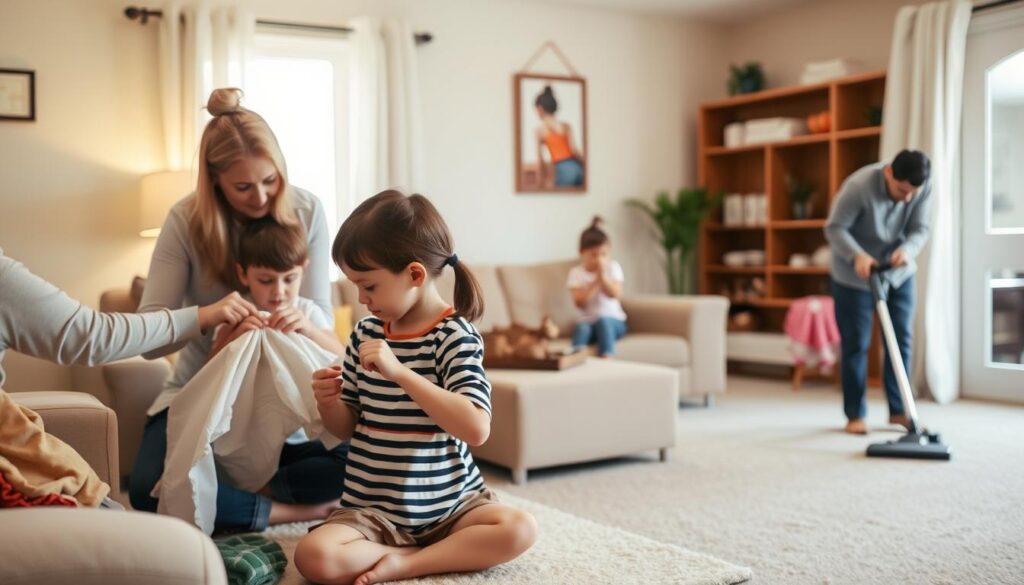
Guidance is key for parents. They should give clear instructions and show kids how to do chores right. This helps kids feel confident and understand why these tasks are important.
Positive feedback is a great way to encourage kids to help out. When kids do a good job, parents should praise them and maybe even give a reward. This not only makes kids want to help more but also strengthens the bond between parent and child.
Key Parental Responsibilities
Parents need to be involved in teaching kids about chores. They should show the right behavior, guide kids, and give positive feedback. This way, kids learn to work hard and take responsibility, skills that will help them all their lives.
Chores as a Learning Opportunity
Chores are a great way for kids to learn important life skills. By doing household tasks, they pick up lessons that help them grow. These lessons are not just about the task itself.
One key benefit of chores is learning to manage time well. Kids have to figure out how to do their tasks and other things like homework. This helps them learn to prioritize and use their time wisely.
Organization is another skill kids get from doing chores. They learn to keep track of their tasks and stay organized. This helps them keep their daily life in order.
Doing chores also helps kids become more self-reliant. As they take on more tasks, they feel more confident. They learn to take care of themselves and help out at home, setting them up for independence later on.
The skills kids learn from doing chores last a lifetime. They help kids manage their time, stay organized, and be self-reliant. These skills are essential for success as adults.
Celebrating Success in Chores
Celebrating kids’ success in chores helps them feel accomplished and responsible. When they see their hard work is valued, they’re more likely to keep helping out.
Recognizing Effort, Not Just Success, is key. It’s not just about the end result. It’s also about the effort they put in. This encourages them to keep up the good work.

There are many ways to celebrate their success. Verbal praise, like a simple “thank you,” can mean a lot. You can also set up a reward system with stickers, special privileges, or treats.
Letting kids help plan the celebration is another great idea. It makes them feel more involved and teaches them about planning. They can choose a special activity or outing as a reward.
Celebrating milestones is also important. Acknowledging big achievements or consistent effort boosts their morale and motivation.
In short, celebrating success in chores is essential. It teaches kids about responsibility and teamwork. By valuing their efforts and achievements, parents can foster positive behavior and a strong work ethic.
Common Challenges and Solutions
Setting up a chore system can be tough, but knowing the usual problems helps. Parents often face resistance, inconsistency, and lack of motivation when teaching kids to do chores.
To tackle these issues, parents can try different strategies. Adjusting the chore chart, giving positive feedback, and showing good work habits themselves can help. By finding the source of the problem, parents can come up with specific solutions to get kids back on track.
For example, if a child doesn’t want to do chores, making the task fun or rewarding might help. If chores are done unevenly, setting a regular routine can solve the problem. Being proactive and flexible helps parents overcome these challenges and teach kids to work hard.
By solving common problems, parents can make their homes more peaceful and productive. Troubleshooting and being open to change are key. These efforts can greatly help in teaching kids to do chores and teaching them important life skills.