







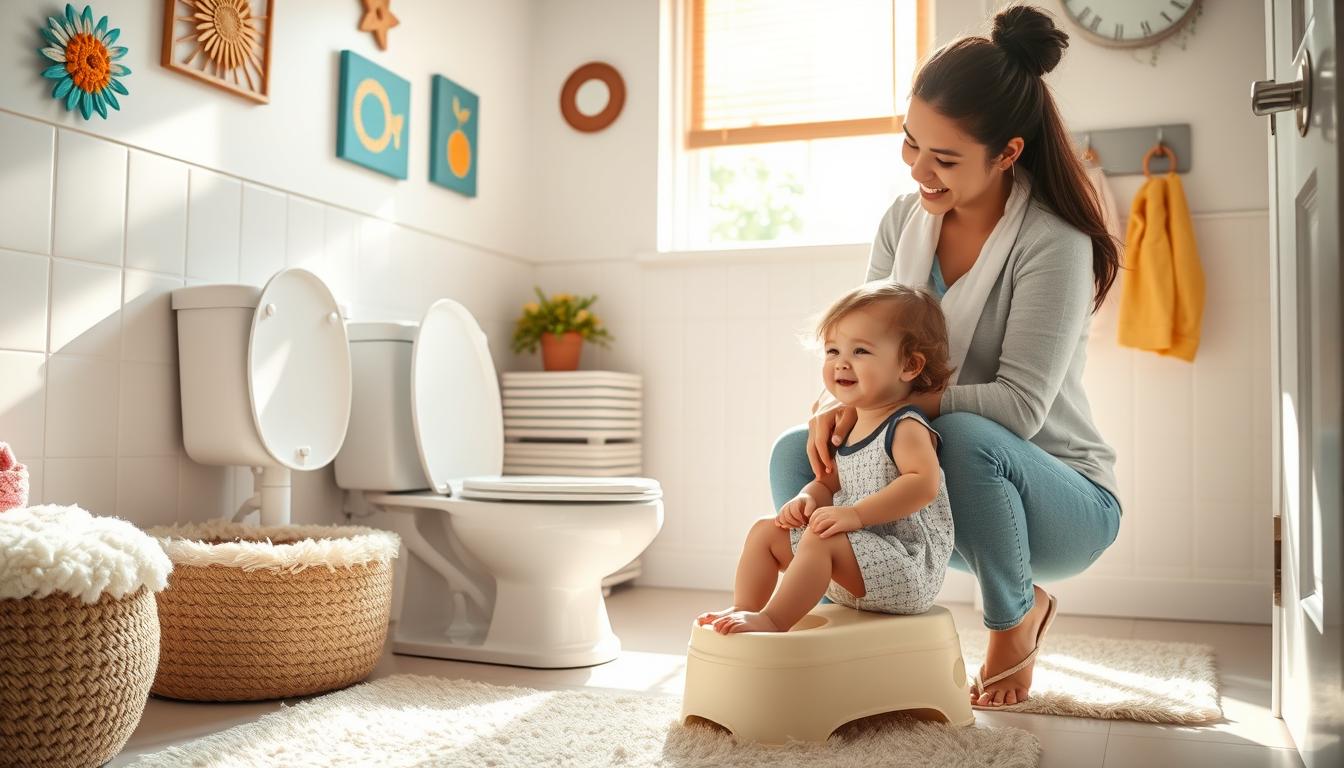
Learning to use the potty is a big step for kids. The American Academy of Pediatrics says it’s a key part of growing up. It needs patience, consistency, and lots of positive words.
Being supportive is key for a good experience. Parents can make their child feel proud and eager to learn. This helps a lot.
This article will share important potty training tips. These tips will help parents and kids have a good time. And, they will make sure the child learns to use the potty well.
Understanding Potty Training Basics
The journey to potty training success starts with knowing when a child is ready. It’s not just about hitting a milestone. It’s about understanding their physical, emotional, and mental growth.
Children usually show they’re ready between 18 and 30 months, says the American Academy of Pediatrics. They might stay dry longer, show interest in the toilet, or tell you they need to go. Recognizing these signs is key to starting potty training.
At this time, children show behaviors that mean they’re ready to learn. These signs are not just physical. They also show emotional and mental readiness. For example, a child might want to use the toilet like others or be curious about it.
Parents need to be watchful and supportive during this time. Creating a positive and encouraging environment helps a lot. This means praising their efforts, being patient with accidents, and slowly moving from diapers to underwear.
Remember, every child grows at their own pace. Some might be ready sooner, while others might need more time. Paying attention to their cues and not rushing helps. This makes potty training less stressful for everyone involved.
Signs That Your Child is Ready
Before starting potty training, it’s important to look for certain signs. These signs show if your child is ready physically and emotionally. Knowing these signs can make potty training easier for everyone.
Physical readiness is key. The Mayo Clinic says a big sign is if your child can walk to the toilet and sit down. They should also be able to pull their pants up and down. This shows they’re ready to start potty training.
Emotional readiness is also vital. Kids often show interest in the potty or try to imitate others. This curiosity means they’re ready to begin potty training.
Other signs include staying dry for longer and feeling uncomfortable with a soiled diaper. If they can tell you they need to go, they’re ready for the potty.
Watching how your child acts can help you know if they’re ready. By noticing these signs, you can start potty training at the right time. This makes the process more successful.
Choosing the Right Potty
Choosing the right potty is a big decision for parents when potty training. It can really help make the process a success.
The market has many potties, mainly potty chairs and toilet seat reducers. Potty chairs are small and easy for young kids to use. They’re great for kids just starting out because they’re not scary.
Toilet seat reducers are for kids ready to use the toilet. They make the toilet seat smaller and more comfy for kids.
When picking a potty, think about your child’s size, how easy it is to get to, and what they like. Some kids like the freedom of a potty chair. Others might want to use the toilet with a reducer.
The potty training equipment should be comfy, easy to clean, and the right size for your child. It’s also important for the potty to be stable and safe. This helps prevent accidents and makes the child feel secure.
The main goal is to make potty training easy and stress-free for everyone. By choosing the right potty, you can help make potty training a success.
Creating a Positive Environment
Potty training works better in a positive and supportive setting. Kids are more likely to pick up this skill if they see it as fun.
Parents can make potty training enjoyable. Try reading books or singing songs together. This makes the experience pleasant and fun.
Using Rewards and Praise
Using rewards is a smart move. Sticker charts are great because they show progress clearly. Each time a child uses the potty right, they get a sticker. This can really motivate them.
Don’t forget the power of praise. Words of encouragement and affection can make a big difference. Be sure to be specific and genuine with your praise.
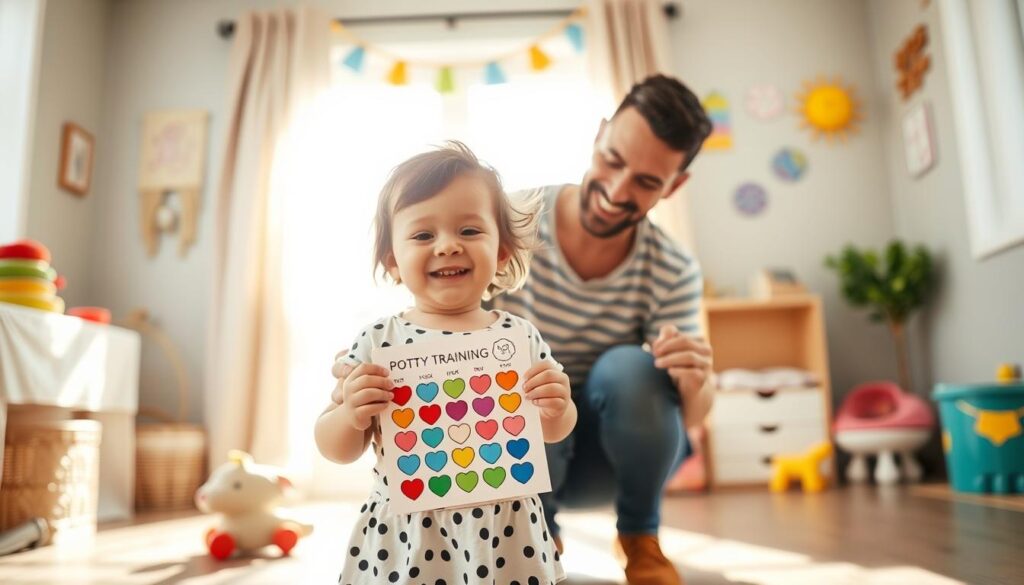
By mixing fun activities, rewards, and genuine praise, parents can make potty training a positive experience. This helps kids learn and grow.
Techniques for Effective Potty Training
A key factor in successful potty training is developing a routine that includes regular potty breaks. A consistent schedule helps your child learn when it’s time to use the potty. This makes the transition smoother.
To start, identify regular intervals for potty attempts, such as after waking up, after meals, and before bedtime. This consistent routine helps your child understand the connection between these activities and the act of using the potty.
Creating a potty training schedule that works for your child is key. Start by taking your child to the potty at the same times each day. As your child becomes more comfortable, you can gradually increase the intervals between potty breaks. This encourages independence.
Gradually increasing independence is a vital part of the potty training process. Encourage your child to take ownership by letting them choose their own potty seat or underwear. This makes the experience more engaging and helps build confidence.
It’s also beneficial to praise and reward progress, no matter how small. Positive reinforcement can make the potty training experience more enjoyable for both you and your child.
By implementing these potty training techniques and maintaining a consistent routine, you’ll be well on your way to achieving potty training success.
Dealing with Challenges
Potty training can be tough, but it’s also rewarding. One big potty training challenge is when kids don’t want to use the potty.
They might be scared, uncomfortable, or just not ready. It’s important to stay calm and not get mad. Encourage them to try again, making it a positive experience.
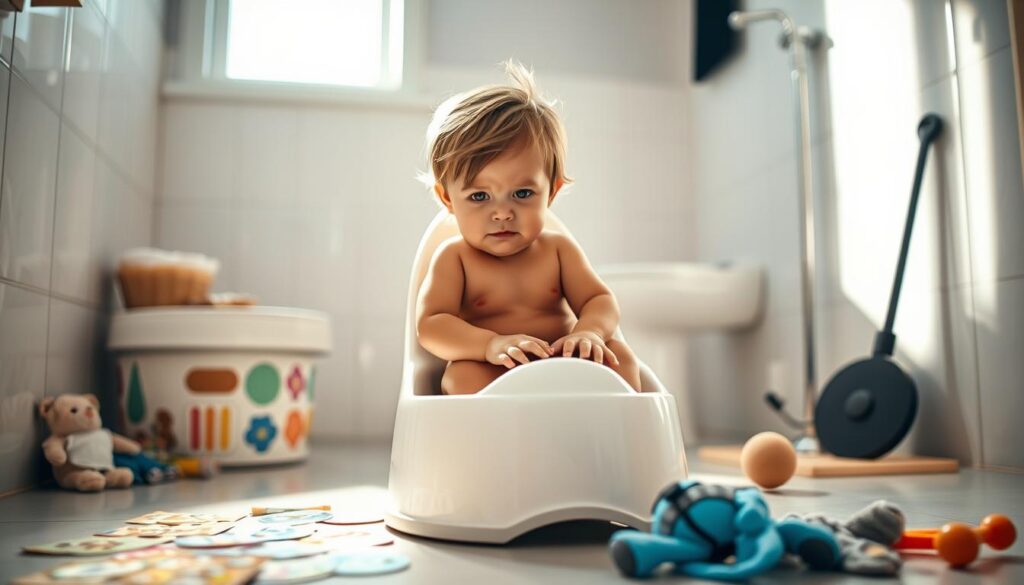
Accidents are common too. When they happen, stay patient and understanding. Yelling or punishing can make things worse.
Some kids are afraid of the toilet. They might be scared of the sound of flushing or the toilet’s height. Gradual exposure and explaining how it works can help.
Overcoming potty training obstacles needs patience, understanding, and good strategies. By being calm, supportive, and encouraging, parents can help their kids succeed.
Incorporating Hygiene Education
As your child learns to use the potty, it’s key to teach them about hygiene. Keeping clean is important for their health and happiness.
Wiping correctly is a basic hygiene practice. Girls should wipe from front to back to avoid infections. This simple step can greatly lower the chance of urinary tract infections.
Handwashing is another critical aspect of hygiene education. Kids should wash their hands well with soap and water after using the potty. This keeps them healthy and teaches them a lifelong cleanliness habit.
To make handwashing fun, use fun, child-friendly soap. Sing a song together while washing hands to ensure they wash for 20 seconds.
Cleaning around the potty area is also important. Regularly clean the potty chair or seat and keep the bathroom floor clear. This helps prevent accidents and germ spread.
By teaching these hygiene practices during potty training, you’re helping your child become more independent. You’re also teaching them valuable habits that will benefit their health for years to come.
Tracking Progress and Celebrating Success
Effective potty training is more than just teaching a child to use the potty. It’s also about tracking their progress and celebrating their successes. Monitoring progress helps parents understand their child’s readiness and adapt their approach as needed.
Using a sticker chart or a reward system is a great way to track progress. These visual reminders of achievements can motivate children to keep going. For example, a sticker chart on the fridge or bathroom wall can make tracking fun for kids.
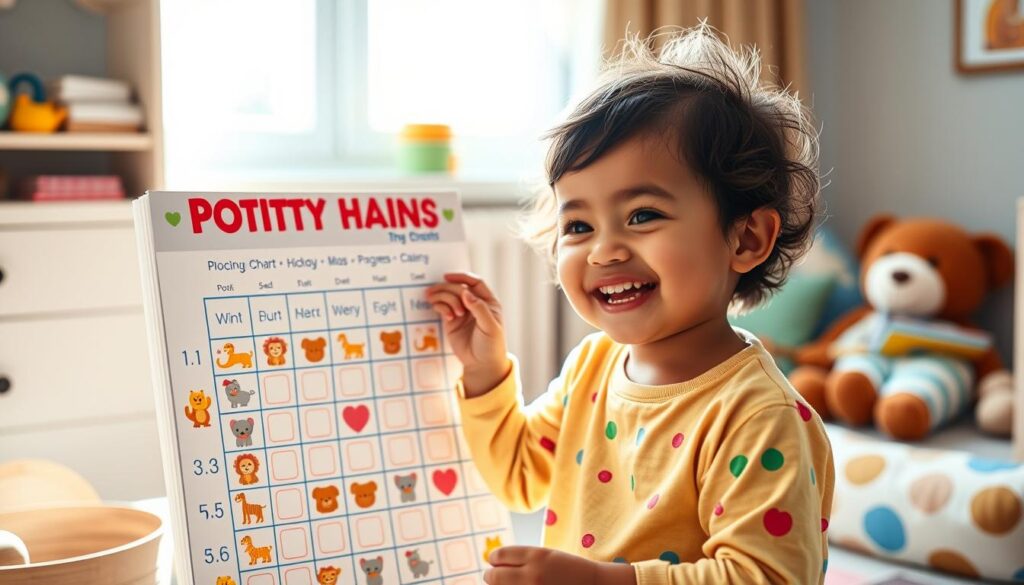
Celebrating successes, no matter how small, reinforces positive behavior. Celebrations can be as simple as verbal praise, a hug, or a small treat. The goal is to make the child feel proud of their accomplishments, which encourages them to keep using the potty.
“The way we talk to our children becomes the way they talk to themselves.” – Peggy O’Mara
This quote shows how important positive reinforcement is during potty training. By focusing on encouragement and celebration, parents can help their children develop a positive attitude towards using the potty.
Tracking progress also helps parents identify patterns or challenges. For instance, if a child has accidents at a certain time, parents can adjust their potty training schedule. This tailored approach can make training more effective.
In conclusion, tracking progress and celebrating success are key to successful potty training. By using tools like sticker charts and keeping a positive, celebratory attitude, parents can help their children navigate this important milestone with confidence and enthusiasm.
Potty Training for Special Needs Children
Potty training for special needs children needs patience and a plan made just for them. They might need special ways to learn, like visual schedules and extra time. It’s all about being patient and understanding.
Visual aids are a big help in potty training for special needs kids. A visual chart or picture schedule can show each step clearly. This includes sitting on the potty and washing hands afterward.
Tailoring the Approach: Every child is different, so the potty training plan should be too. Find out what motivates them, like stickers or praise. Patience is key because every child learns at their own speed.
“The greatest sign of success for a teacher is to be able to say, ‘The children are now working as if I did not exist.'” –
This quote shows how important it is for kids to learn on their own. But it also highlights the need for a supportive environment. A calm and structured place helps a lot with potty training.
Teaching kids about hygiene is also important. Showing them how to wash hands after using the potty is good for their health. It also helps them stick to the potty training routine.
In short, potty training special needs children needs careful thought and patience. By understanding their needs and using strategies that fit, parents and caregivers can make potty training easier and less stressful for everyone.
When to Seek Professional Help
Potty training can be tough, and some kids need extra help. If your child keeps resisting or is way behind, it’s time to get help from a doctor or a child development expert.
Getting help for potty training is a smart move. It helps tackle any problems that might be slowing your child down. A pro can give you tailored advice and support to help your child succeed.
Children with special needs or big potty training hurdles can really benefit from professional help. By getting assistance, you make sure your child gets the support they need to master potty training.
If you’re worried about your child’s potty training, don’t wait to ask for help from a qualified expert. They can offer guidance and support.