







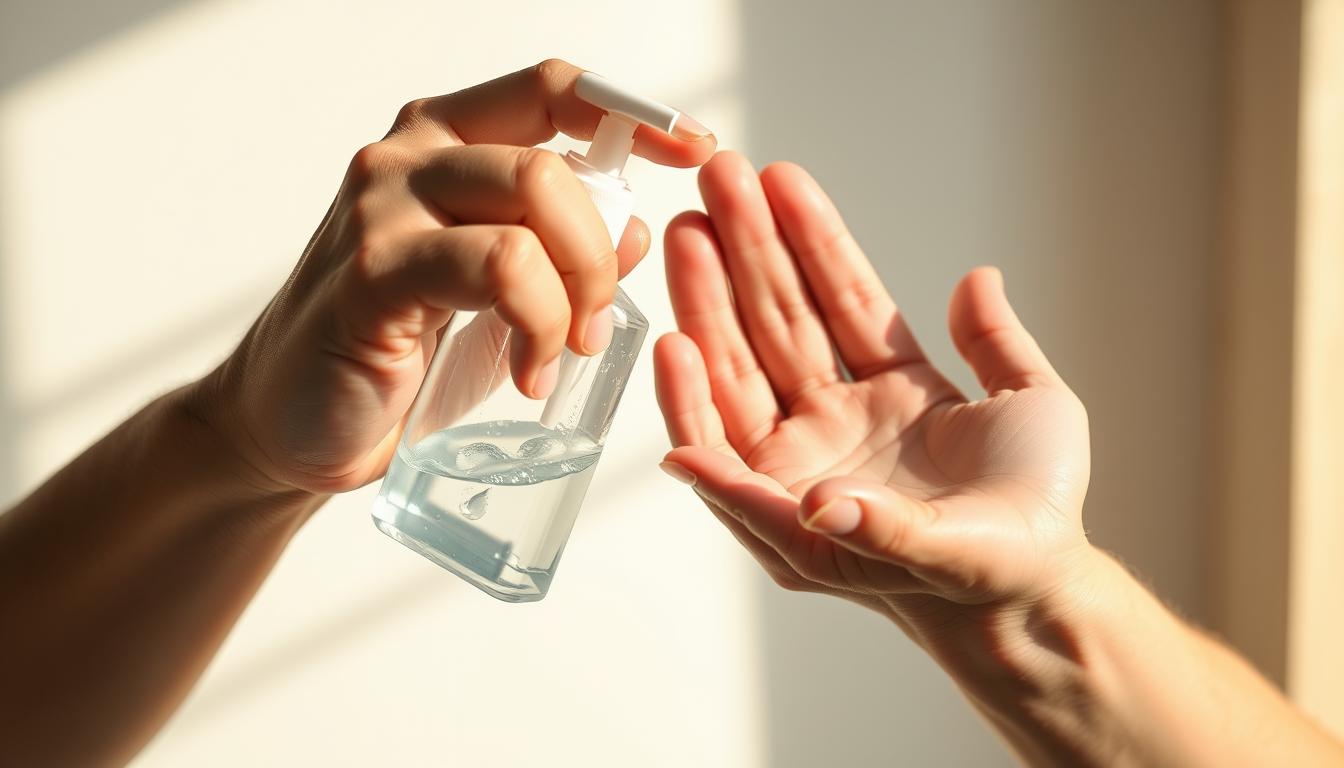
Keeping your hands clean is key to stopping the spread of sicknesses like COVID-19. The best way is to wash your hands with soap and water for 20 seconds.
But, if you can’t wash your hands, the CDC suggests using alcohol-based hand sanitizers. They should have at least 60% alcohol. This cuts down on germs and viruses on your skin.
Learning how to use hand sanitizer right can help protect you from getting sick. This is important during outbreaks or in places where germs spread easily.
What is Hand Sanitizer?
Hand sanitizer helps reduce germs and infections by killing them on the skin. It’s key for keeping clean, mainly when soap and water aren’t around.
The main ingredient in most hand sanitizers is alcohol, with 60% to 95% concentration. Alcohol-based hand sanitizers are effective against many germs, making them a good choice for staying germ-free.
“Hand sanitizers are an essential tool in our fight against the spread of infectious diseases. They offer a convenient and effective way to maintain hand hygiene on the go.”
There are various hand sanitizers like gels, foams, and wipes. Each has its own benefits, fitting different needs and situations.
In short, hand sanitizer is a must for keeping hands clean. It’s great at killing germs and is easy to use, making it a daily essential.
When to Use Hand Sanitizer
When you can’t wash your hands with soap and water, hand sanitizer is key. It helps stop illnesses from spreading. It’s a good choice when you can’t use soap and water.
Choose a hand sanitizer with at least 60% alcohol. This is important. It kills many germs, like bacteria and viruses.
Key situations for using hand sanitizer include:
- Before eating or preparing food
- After using the restroom
- After blowing your nose, coughing, or sneezing
- After touching animals or their waste
- After being in a crowded area or public place
Remember, hand sanitizer isn’t a full replacement for soap and water. If your hands are dirty or greasy, wash them with soap and water. But if they’re clean and you can’t wash them, hand sanitizer is a good option.
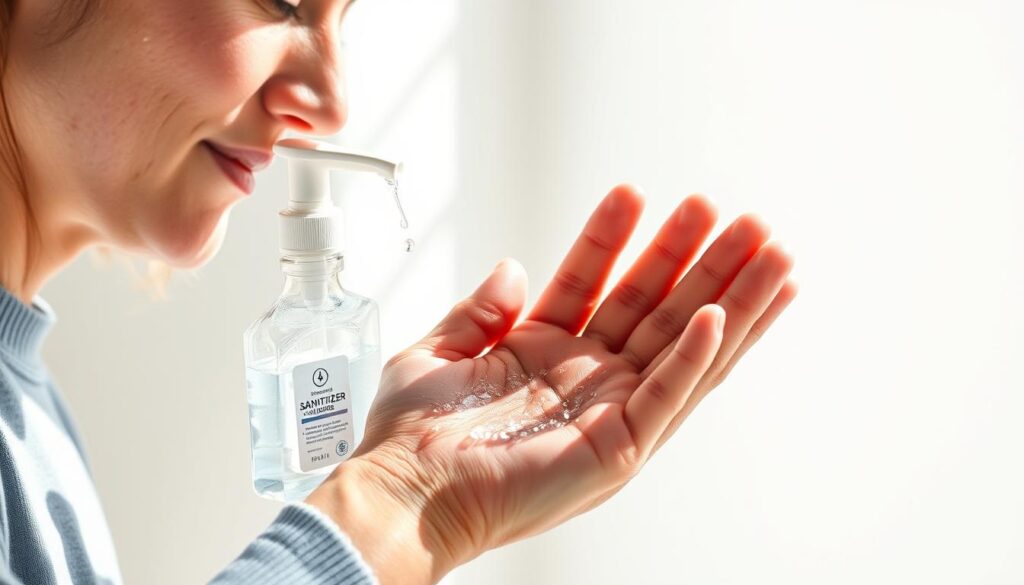
Knowing when to use hand sanitizer and picking the right one helps keep your hands clean. This lowers your chance of getting sick.
How to Use Hand Sanitizer Effectively
Using hand sanitizer right is key for germ-killing. First, put a good amount of gel on one palm. Make sure it covers all your hands.
Then, rub your hands together. Make sure to get the backs, fingers, and under your nails. This is important for effective elimination of germs.
Ensuring Complete Coverage
Keep rubbing until your hands are dry. This should take about 20 seconds. It’s important to cover all areas well to avoid missing spots.
By following these steps, you can make your hand sanitizer work better. Regular and correct use helps keep your hands clean, even when you can’t wash them.
Understanding Alcohol Concentration
Alcohol concentration is key in hand sanitizer’s effectiveness. The Centers for Disease Control and Prevention say to use hand sanitizers with at least 60% alcohol. This helps kill germs and viruses.
Alcohol works by denaturing proteins and disrupting cell membranes. This kills microorganisms. If the alcohol is too low, it might not kill all germs. This could leave users open to infections.
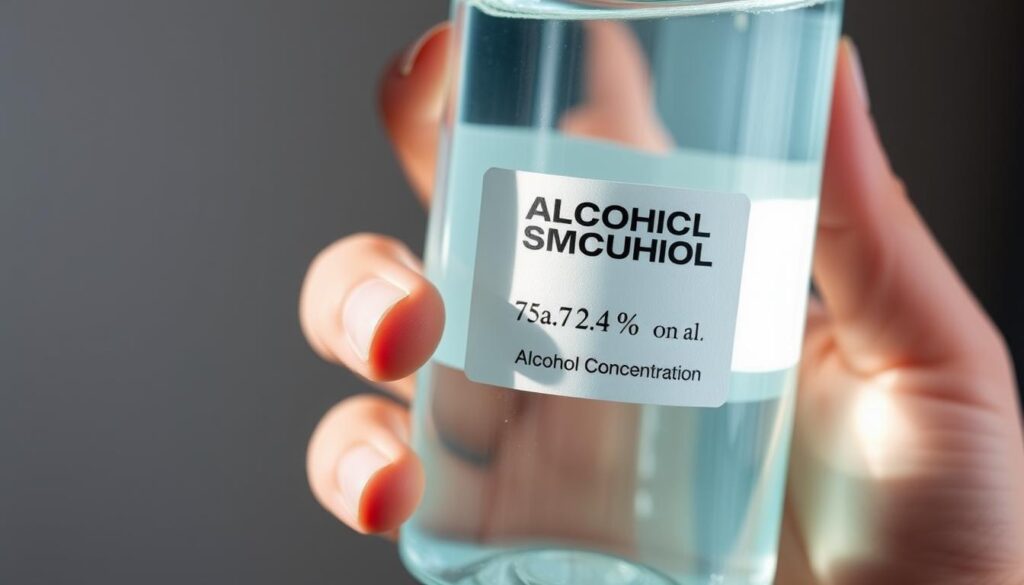
To pick the right hand sanitizer, always check the label. Look for the alcohol percentage, often listed as “ethanol,” “ethyl alcohol,” or just “alcohol.” Be cautious of products without clear alcohol percentages. They might not work well against many germs.
Choosing a hand sanitizer with the right alcohol concentration is a key step in keeping hands clean. It’s important when you can’t use soap and water. By choosing a product with at least 60% alcohol, you can lower the risk of spreading infections. This keeps you and others safer.
In short, knowing and checking the alcohol concentration in hand sanitizers is essential. Always choose products with at least 60% alcohol for the best protection against germs and viruses.
Hand Sanitizer Safety Tips
Hand sanitizer is great for keeping clean, but we must be careful. To use it right and safely, we need to follow some important rules.
First, keep hand sanitizer away from kids and pets. This is because hand sanitizer has alcohol, which is harmful if swallowed in big amounts.
When kids use hand sanitizer, an adult must watch them closely. This helps make sure they use it correctly and don’t swallow it.
Teaching kids how to use hand sanitizer properly is key. They should put a little on one hand, rub it all over both hands until dry, and not touch their faces or eyes.
By following these safety tips and being aware of the risks, we can keep everyone safe and healthy.
Potential Risks and Side Effects
Hand sanitizer has many benefits, but it can also harm your skin if used too much. It can take away the skin’s natural oils, causing dryness and even cracks.
Dry, cracked skin often happens when you use hand sanitizer too often. This can be painful and might make your skin red or discolored.
Some people might have allergic reactions or become sensitive to hand sanitizer ingredients like alcohol or fragrances. These reactions can be mild or very serious.
Knowing what’s in your hand sanitizer is key. Watch how your skin reacts. If you see any bad effects, try a different product or talk to a doctor.
Myths About Hand Sanitizer
Hand sanitizer has become very popular, but many myths surround it. It’s a great tool against germs, but we must know its limits.
Many think hand sanitizer can kill all germs. But, hand sanitizer is not a magic solution. It can’t kill norovirus, Cryptosporidium, or some bacteria. Knowing this helps us understand sanitizer safety better.
Some believe hand sanitizer removes harmful chemicals from skin. But, it may not remove or neutralize chemicals. If you’ve touched harmful substances, washing with soap and water is best.
Knowing what hand sanitizer can and can’t do helps us use it right. It’s about choosing the right tool for the job. We shouldn’t rely only on hand sanitizer for all hygiene needs.
Hand Sanitizer for Kids
Hand sanitizer for kids is more than just a quick fix. It’s about safety and education. As kids go back to school, they’re more likely to catch germs. Teaching them to use hand sanitizer right is key to keeping them healthy.
It’s important to watch over young kids when they use hand sanitizer. They might accidentally drink it, which is dangerous. Kids should only use a little and rub their hands dry. Hand sanitizers should also be kept away from little ones to keep them safe.
Teaching kids about proper hand hygiene is important. They need to know when and how to use hand sanitizer. Parents should show them how it’s done and make it a daily habit.
By teaching and watching over them, parents can help kids develop good habits. Encouraging them to use hand sanitizer when they can’t wash their hands is a smart move. It helps keep them healthy and happy.
Environmental Impact of Hand Sanitizers
Hand sanitizer use is growing, and so is concern about its environmental impact. The way hand sanitizers are made, packaged, and thrown away affects our planet.
Some hand sanitizers have ingredients that can harm the environment. For example, certain chemicals can pollute water and harm fish and other sea creatures. The impact of these chemicals on ecosystems is a significant concern, as they can disrupt the balance of nature and affect biodiversity.
A study found that hand sanitizers with triclosan can harm the environment. Triclosan can build up in nature and hurt aquatic life.
“The presence of triclosan in waterways has raised concerns about its impact on ecosystems.”
To address these issues, some companies are making eco-friendly hand sanitizers. These use safer ingredients and come in sustainable packaging. By choosing these products and disposing of them properly, we can help reduce harm to the environment.
Knowing the environmental effects of hand sanitizers and making smart choices can lessen their harm. By thinking about the safety and environmental risks of hand sanitizers, we can find greener ways to stay clean.
Recommended Brands and Products
Choosing the right hand sanitizer is key. Look for one that kills germs well and is safe to use. Hand sanitizers with 60-95% alcohol are best for this.
The FDA has a list of hand sanitizers to avoid because of safety issues. This includes products with methanol. Brands like Purell and Germ-X are safe and follow FDA rules.
Using hand sanitizer correctly is important for good hand hygiene. Make sure to use enough, rub it in well, and let it dry. This helps prevent the spread of germs and keeps you healthy.