





Knowing how to prevent fires is key for everyone’s safety. The “stop, drop, and roll” method is a top way to protect yourself if your clothes catch fire.
This easy technique can greatly lower injury risks. By learning to act fast and right, you can keep yourself and others safe.
The next parts will cover the basics of fire safety. We’ll explain the “stop, drop, and roll” method in detail. You’ll also learn about other important topics to improve your safety knowledge.
Understanding Fire Safety Basics
Learning about fire safety can greatly lower the chance of injury or damage from fires. It’s key to understand fire safety importance to be ready for any fire emergency.
Fire safety includes many practices to stop fires and lessen their effects. It’s about knowing fire dangers, having a plan for emergencies, and knowing how to act. Good fire prevention strategies help avoid fires from happening.
Fires start and spread in many ways, like electrical issues, cooking left unattended, and open flames. Knowing these risks helps us take steps to avoid them.
Using fire prevention strategies is very important. This means keeping electrical things in good shape, being careful with open flames, and keeping flammable stuff away from heat. These steps can really cut down the chance of a fire.
Also, having a solid fire escape plan is key. This plan should show safe ways out, a meeting spot outside, and practice drills. This helps everyone know what to do in a fire.
In short, knowing fire safety basics is essential to stop fires and be ready for emergencies. By understanding fire safety importance and using good prevention, we can keep ourselves, our families, and our homes safe.
The Stop, Drop, and Roll Technique
The stop, drop, and roll method is a simple yet effective way to put out clothing fires. Knowing this technique is key to staying safe in case of a fire.

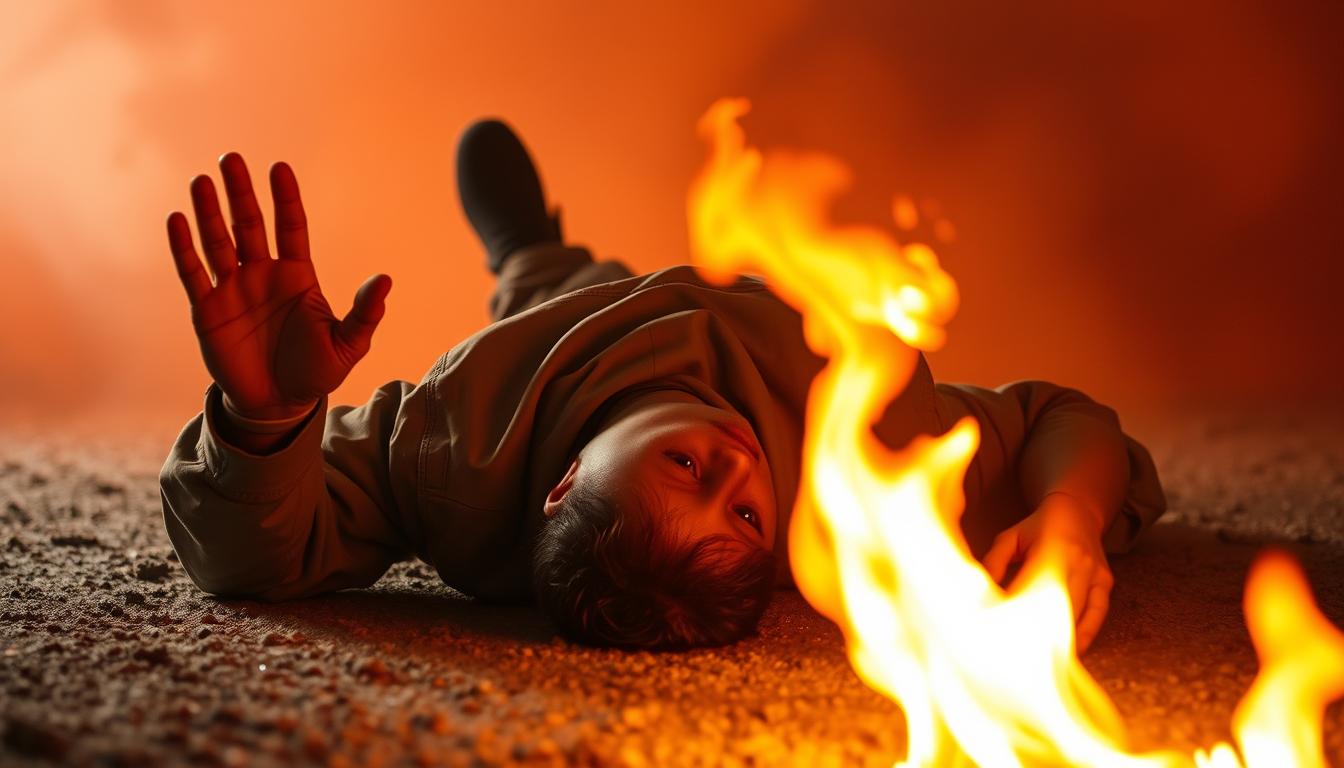
If your clothes catch fire, stay calm and act fast. The stop, drop, and roll technique has three steps. These steps help put out the flames and prevent damage.
Step-by-Step Guide to Stop, Drop, and Roll
Stop: First, stop moving. This stops the fire from spreading. Stopping cuts off oxygen to the fire, making it easier to put out.
Drop: Then, drop to the ground. This step takes away oxygen from the fire. It’s important to drop quickly to smother the flames.
Roll: Last, roll back and forth on the ground. Rolling starves the fire of oxygen. Keep rolling until the fire is gone.
It’s important to practice the stop, drop, and roll technique. This way, you’ll know how to do it right in an emergency. It’s also a great fire safety tip to teach kids and others in your home.
Learning the stop, drop, and roll technique boosts your fire safety skills. It prepares you to handle clothing fires better.
When to Use Stop, Drop, and Roll
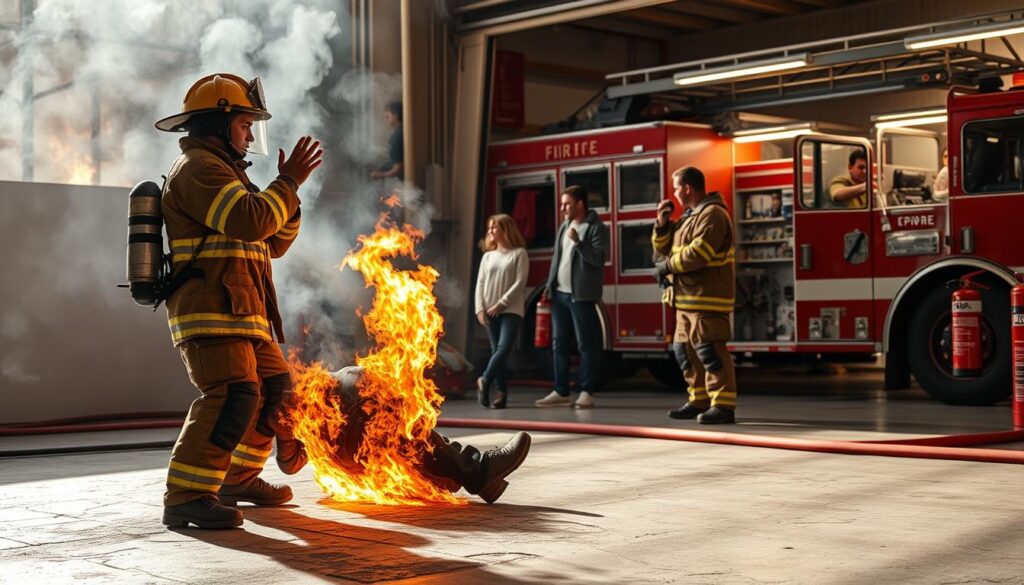
In case your clothes or body catch fire, using stop, drop, and roll is key. This method helps smother flames by cutting off oxygen. It prevents more harm.
Knowing when to use stop, drop, and roll is important. Do it right away if your clothes or body are on fire. It’s not for every fire situation but is critical when you’re directly exposed to flames.
Fire safety experts say, “stop, drop, and roll is a simple yet effective method to extinguish clothing fires.” It can save lives if done right and fast.
Remember, stop, drop, and roll is for when your clothes or body are on fire. It’s a simple, three-step action that lowers injury risk.
“The key to surviving a clothing fire is to act quickly and decisively. Stop, drop, and roll is an easy-to-remember and effective technique for putting out flames on your body or clothing.”
Fire Prevention Strategies
Understanding and using fire prevention measures is vital for keeping people and property safe. By taking action early, we can greatly lower the chance of fires in our homes and workplaces.
Being careful with things that could start fires is a top fire prevention strategy. Watch out for open flames from candles, cigarettes, and cooking. Make sure to put out or watch these sources closely to stop fires.
It’s also important to keep electrical appliances and wiring in good shape. Check for damaged cords, don’t overload outlets, and keep electrical stuff away from water. These steps can really cut down on fire risks.
Having a solid fire escape plan is also key. This plan should show at least two ways out of every room. Pick a meeting spot outside and practice the plan with everyone in the house or at work.
By using these fire prevention strategies and doing regular fire drills and safety checks, we can make our surroundings safer. It’s all about being ready and taking steps to prevent fires.
Creating a Fire Escape Plan
Creating a fire escape plan is key to emergency preparedness. It helps everyone in the home know what to do in a fire. This reduces panic and boosts the chance of a safe exit.
To make a good fire escape plan, first find all exits in your home. This includes windows and doors. It’s important that everyone knows the plan and has at least two ways out of each room.
After finding the exits, draw a map of your home with these routes. Make sure to pick a meeting spot outside where everyone can gather safely. This could be a tree, a mailbox, or any other spot that’s easy to find.
Practicing your fire escape plan is just as important as making it. Do fire drills often, and make sure kids are included. This practice helps everyone remember the plan and spots any problems.
Also, update your fire escape plan often. This is important after any changes in your home or family. This keeps the plan current and effective.
Fire Safety Equipment
Fire safety depends on fire safety equipment. This gear helps prevent, detect, and fight fires. It keeps people and property safe.
The fire extinguisher is key in fire safety. It can put out or control small fires. There are different extinguishers for different fires, like Class A for ordinary combustibles and Class C for electrical fires.
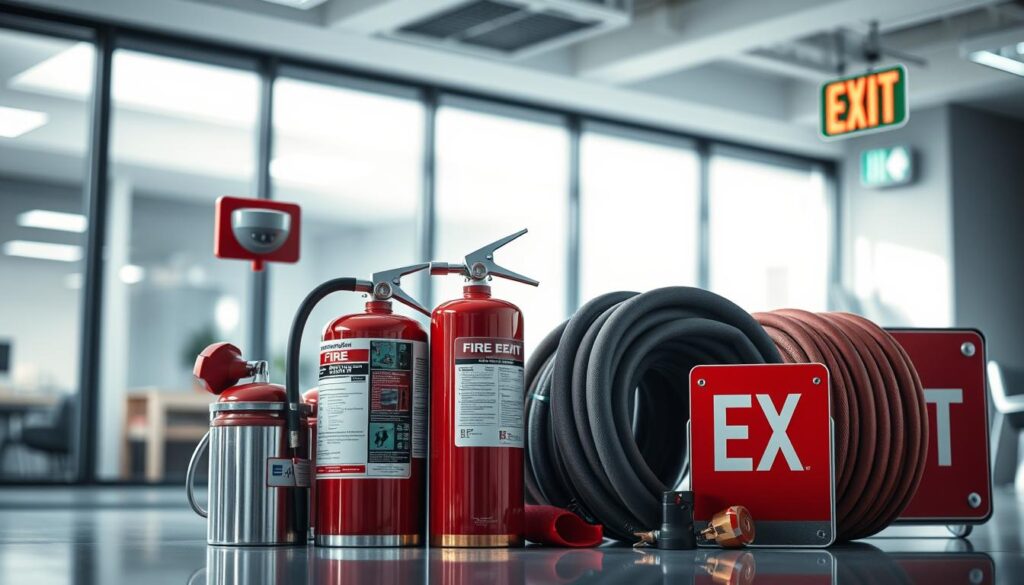
Fire safety experts say, “The right fire extinguisher and knowing how to use it can save a lot.” It’s important to have extinguishers ready and check them often.
Other important fire safety tools include smoke alarms and sprinkler systems. Smoke alarms warn of fires early. Sprinkler systems can fight fires automatically, lessening damage.
It’s vital to keep fire safety equipment in top shape. Regular checks make sure it works when needed. Using and maintaining this equipment is part of a good fire safety plan.
Conducting Fire Drills
Fire drills are key to saving lives and preventing injuries. They help everyone know what to do in a fire. This makes them vital for fire safety.
Why Conduct Fire Drills? Fire drills find weak spots in emergency plans. They help make needed changes. They also make sure everyone knows how to evacuate quickly and safely.
Effective Fire Drill Practices include a clear plan and knowing roles. Drills should happen at different times to mimic various scenarios. After each drill, it’s good to talk about what worked and what didn’t.
To improve fire drills, try different scenarios like blocked exits or fake injuries. This prepares people for many situations. It boosts emergency readiness.
Regular fire drills with these practices improve emergency readiness. This makes the environment safer for everyone.
Teaching Fire Safety to Children
Teaching kids about fire safety is key to preventing fires. It’s not just about what to do in a fire. It’s about teaching habits that last forever.
Using simple words and examples is best for teaching fire safety. For example, telling kids that fires can start from electrical malfunctions or unattended candles helps them understand risks. Teaching them the “stop, drop, and roll” method is also important. It’s a simple way to put out fires on clothes.
A lesson plan for first-graders teaches “stop, drop, and roll” through demo, practice, and reinforcement. This method works for older kids too. It adds more about the science and staying calm in emergencies.
Teaching kids more than just “stop, drop, and roll” is vital. They need to know about smoke alarms and fire escape plans. They should also learn to avoid fire hazards like matches and lighters. And never play with fire.
By teaching fire safety and involving kids in drills, parents and caregivers can help. This way, kids develop good habits and stay safe from fires.
Understanding Fire Hazards
It’s key to know about fire hazards in your area to prevent fires.
Things like electrical problems, unwatched candles, and flammable stuff near heat can start fires. Knowing these dangers is vital for stopping fires. Electrical issues, like bad cords or too many plugs, can spark fires. Also, leaving candles or cooking alone can lead to big problems.
To fight fire dangers, keep electrical stuff in good shape, avoid flammable things near heat, and never leave cooking alone. Regular checks on electrical systems and watching out for fire starters can lower fire risks a lot.
Doing a detailed fire risk assessment at home or work can spot dangers early. This way, you can fix problems before they cause harm. It makes sure everyone is safer.
Knowing about fire dangers and acting to stop them can greatly lower fire risks. Always be careful and make fire safety a big deal.
The Role of Local Fire Departments
Local fire departments are key in keeping communities safe. They do more than just fight fires. They also teach people about fire safety.
Fire Safety Inspections and Education: Fire departments check homes and businesses for fire dangers. They find and fix problems before fires start. They also teach people how to stay safe from fires.
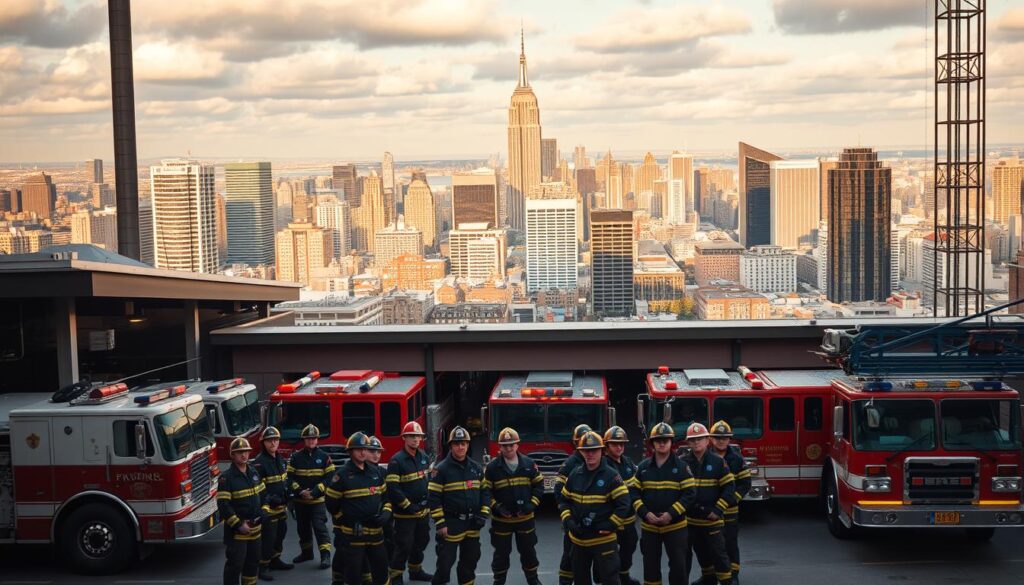
Emergency Response and Community Outreach: Fire departments are known for fighting fires. But they also reach out to the community. They teach people how to prevent fires and use safety equipment right.
In short, local fire departments do a lot to keep communities safe. They inspect, educate, and respond to emergencies. This helps lower fire risks and builds a safer community.
Resources for Fire Safety Training
Fire safety training is key, and there are many resources to help. Organizations, both government and non-profit, offer training programs and materials. They help individuals and communities get ready.
Online Resources: Websites like the National Fire Protection Association (NFPA) and the Federal Emergency Management Agency (FEMA) have lots of guides, videos, and interactive training. They cover everything from basic fire safety to advanced training for professionals.
Local Workshops and Community Programs: Local fire departments and community centers have workshops and training sessions. These include hands-on training, like using fire extinguishers and practicing evacuations.
Fire Safety Equipment Manufacturers: Companies that make fire safety equipment, like fire alarms and extinguishers, also offer training. They provide instructional videos, user manuals, and on-site training sessions.
To get the most out of fire safety training, use a mix of resources. Online materials, local workshops, and community programs are all helpful. They help you understand fire safety practices well.
Staying Informed About Fire Safety
Knowing about fire safety is key to preventing fires and acting fast in emergencies. Keeping up with the latest fire safety tips helps lower the risk of injuries and damage. It’s important for everyone’s safety.
Good sources for fire safety info include local fire departments, the National Fire Protection Association (NFPA), and FEMA. They offer tips, guides, and training to help you stay safe.
To stay in the loop, sign up for fire safety newsletters. Follow fire safety groups on social media. Also, join community fire safety events. This way, you help make your community safer and protect your family from fire dangers.