






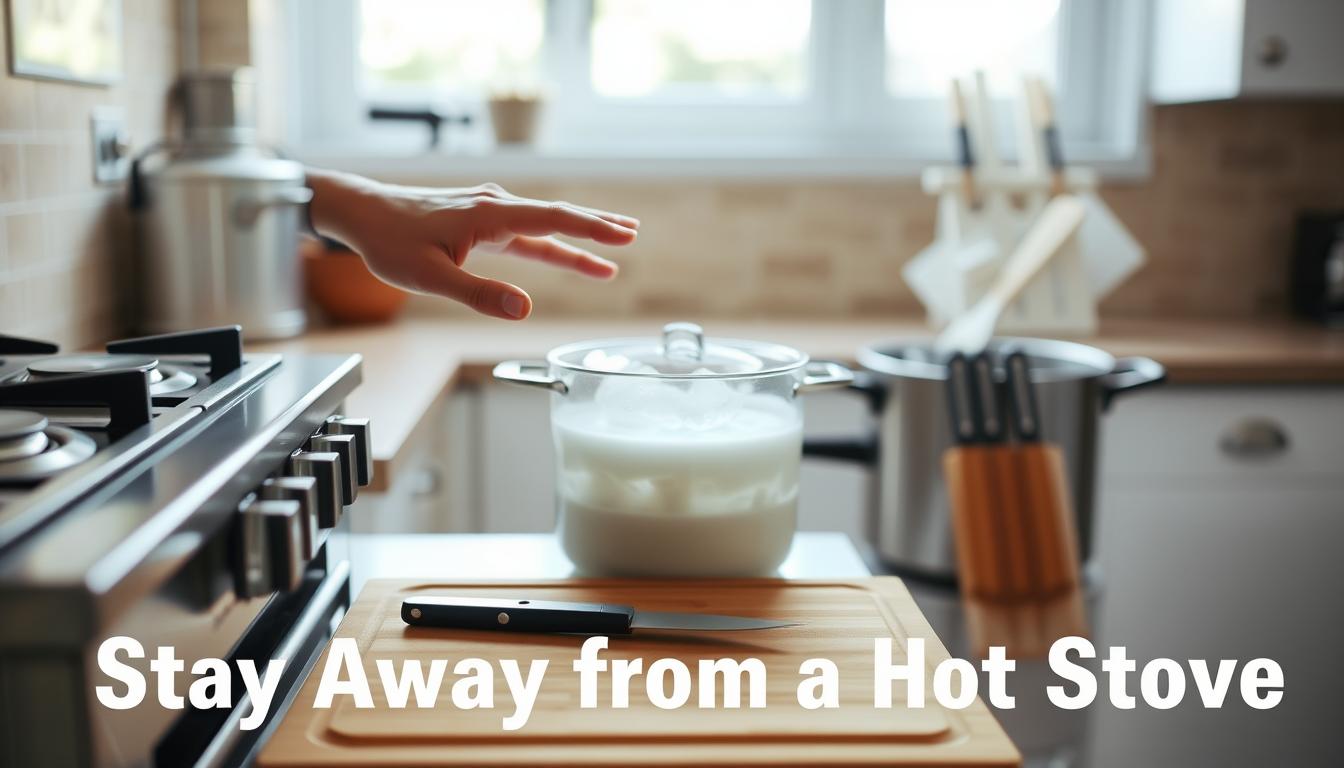
The phrase “stay away from a hot stove” is more than just a warning. It’s a lesson in kitchen safety that shapes our behavior from a young age.
As kids, we’re told that even if the burners look safe, they might be hot. They could cause harm if we touch them.
This simple lesson helps us avoid accidents in the kitchen. It also makes us more aware of dangers in our daily lives.
By learning about stove safety, we can be careful in other risky situations. This makes our community safer and more aware.
Importance of Stove Safety
Kitchen safety is key, and stove safety is a big part of it. Using your stove safely can stop many accidents and make cooking fun. Stove Accident Prevention is very important for home safety.
Teaching people about Safe Cooking Practices helps a lot. Studies show that learning soft-skills also means learning to make good choices. This is true for stove safety too. By teaching people to make safe choices while cooking, we can lower accident risks.
Knowing the dangers of stove use and how to avoid them makes kitchens safer. Learning about stove safety is important. It gives people the knowledge to cook safely.
Also, focusing on stove safety can cut down on kitchen accidents. This makes kitchens safer for everyone. We should work hard to spread the word about stove safety through education.
Understanding Different Types of Stoves
Stove safety starts with knowing your stove type. Each stove has its own safety needs for kitchen safety and fire safety.
Households often have electric, gas, or induction stoves. Each has its own safety points. Electric stoves are easy to use and clean but can be dangerous if not maintained well.
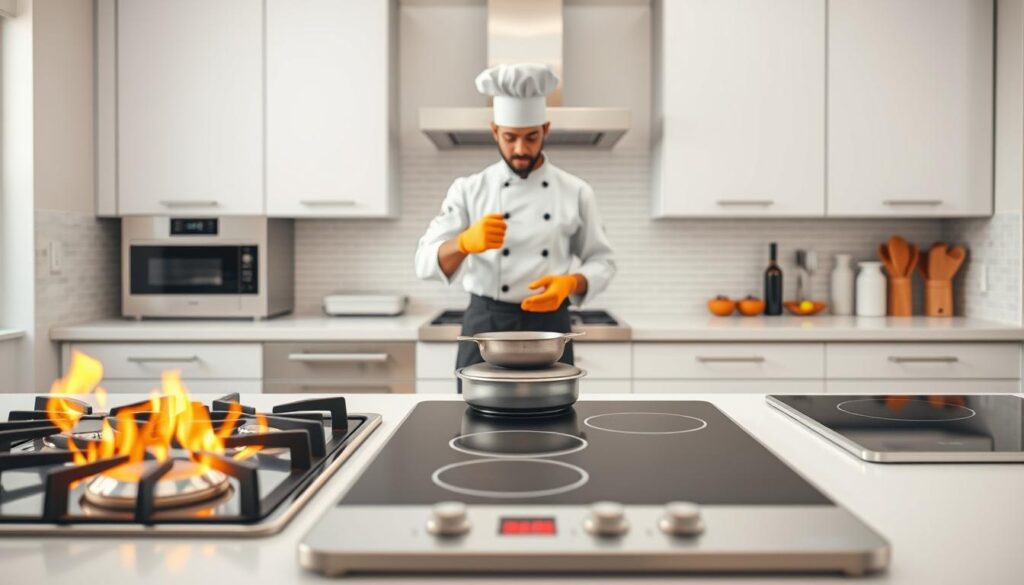
Gas stoves are loved for their precise heat control. But, they can leak gas, leading to fires or explosions if not checked. Always check for leaks and make sure your kitchen is well-ventilated.
Induction stoves are becoming popular for their energy saving and safety. They heat directly through cookware, lowering burn risks. But, they need special cookware and you must avoid leaving metal objects on them.
Safety Considerations for Each Stove Type
Keeping your stove in good shape is vital for safety. For electric stoves, check the heating elements and keep it clean to avoid fires. Gas stoves need leak checks and proper installation. Induction stoves require the right cookware and a clean surface.
Knowing your stove’s unique features and dangers is the first step to a safer kitchen. Being informed and taking the right steps can greatly lower accident risks.
Key Stove Safety Tips
Keeping your kitchen safe is very important. Knowing the dangers and taking steps to avoid them is key.
General Stove Safety Precautions mean being careful while cooking. Keep flammable things away from the stove. Make sure your cooking area is clean and free of clutter. Never leave cooking alone.
It’s vital to keep kids away from the stove. Tell them about the dangers of hot stoves. Make sure they know the risks of using the stove.
To keep kids safe, use stove guards or safety gates. Always watch them when they’re in the kitchen.
By following these key stove safety tips, you can lower the risk of accidents at home.
Cooking with Kids
Teaching kids to cook is more than just a skill. It’s about teaching them safe cooking practices. It’s important to make a safe space for them to learn and have fun.
Getting kids involved in cooking is both fun and educational. But, we must always think about kitchen safety to avoid accidents. Experts say it’s key to teach kids to stay away from hot stoves.
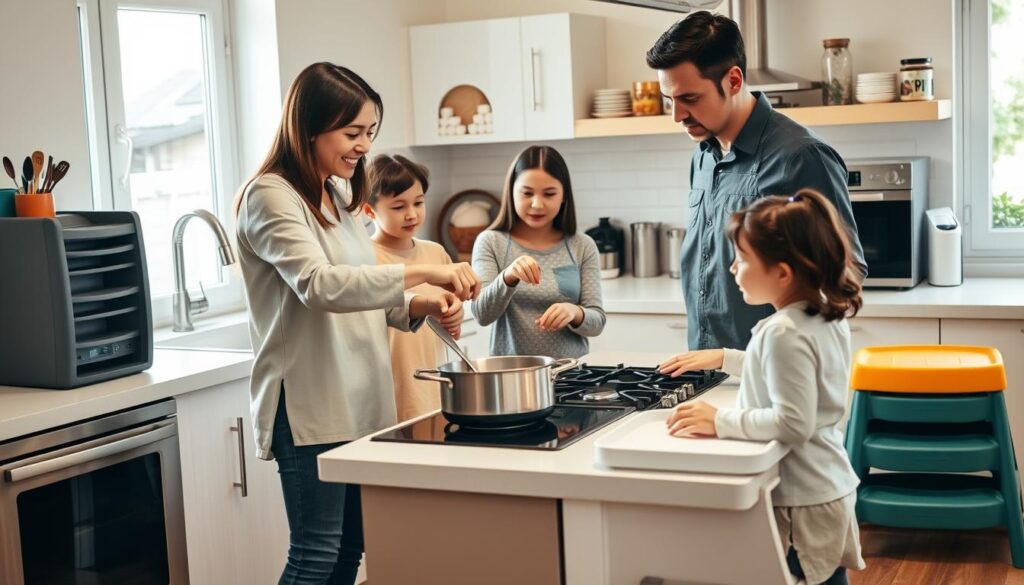
To make cooking safe for kids, start by teaching them kitchen safety basics. Explain the dangers of hot stoves, how to handle utensils safely, and the need to stay focused while cooking.
It’s also important to give kids tasks that fit their age. Younger kids can wash veggies or mix ingredients. Older kids can do more, like cooking simple meals with supervision.
By teaching kids safe cooking practices and getting them involved, you boost their cooking skills. You also teach them responsibility and awareness about kitchen safety.
Emergency Preparedness
Being ready for emergencies in the kitchen is vital. It helps prevent small problems from becoming big disasters. This is key for Fire Safety and keeping the kitchen safe.
Having a fire extinguisher in the kitchen is a must. But it’s not enough to just have one. You also need to know how to use it. The PASS method is important: Pull the safety pin, Aim the nozzle, Squeeze the handle, and Sweep the nozzle from side to side.
Creating a kitchen emergency plan is also essential. This plan should include escape routes and a meeting spot outside. It’s important to practice the plan with everyone in the household. This helps prevent fires and keeps everyone safe.
By following these steps, you can greatly lower the risk of kitchen emergencies. Stay safe and always be prepared.
Maintaining Your Stove
Stove maintenance is key to kitchen safety. It’s often ignored. Regular care keeps your stove running well and lowers accident risks.
Keeping your stove in good shape involves a few steps. First, regular cleaning is a must. Food spills and debris can cause blockages and fires. Use the right cleaners and follow the instructions to protect your stove.
Checking for worn-out parts is also important. Over time, parts like burner caps and igniter electrodes can wear out. This affects your stove’s performance and safety. Regular checks can spot these issues early.
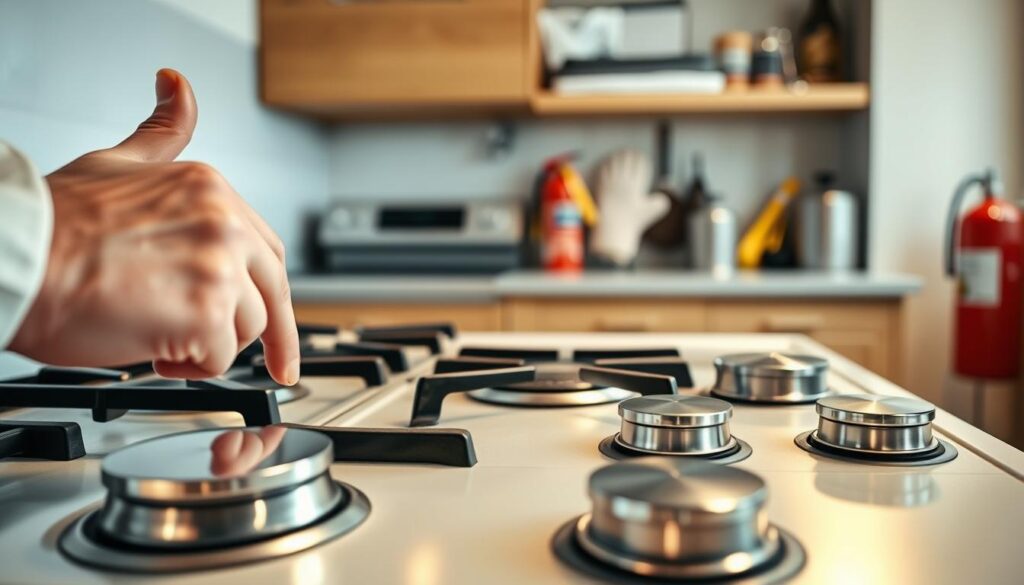
Also, make sure your stove is properly installed. Have a pro check it, mainly if it’s a gas stove. Leaks or bad connections can be dangerous.
By following these maintenance steps, you boost stove safety and kitchen safety. A well-kept stove is essential for a safe kitchen.
Using Stove Timers Effectively
Using stove timers is a key part of safe cooking practices. It helps prevent overcooking and kitchen fires. By setting a timer, you can keep an eye on your cooking and control it better, lowering the chance of accidents.
Safety experts say, “Setting a stove timer is as easy as setting a phone reminder. It greatly improves kitchen safety.” This simple step helps you track cooking time. It ensures your dishes are cooked right and safely.
To use stove timers well, first learn how long different dishes take to cook. Knowing this lets you set the timer right, avoiding overcooking and fires. Also, use timers with sounds to remind you when your food is done.
Adding stove timers to your cooking routine boosts stove accident prevention. It makes cooking safer and gives you peace of mind. You can cook with confidence.
“The key to safe cooking is being mindful of your cooking time and taking proactive measures to prevent accidents.”
By following these tips and using stove timers right, you make cooking safer. You also get a better cooking experience.
Awareness of Stove Temperature
Knowing the stove temperature is key to avoiding kitchen accidents. It’s important for Kitchen Safety and to prevent Fire Safety issues.
Learning to use stove controls is the first step. Most stoves have dials or digital settings for heat adjustment. It’s vital to get to know these controls to cook at the right temperature.
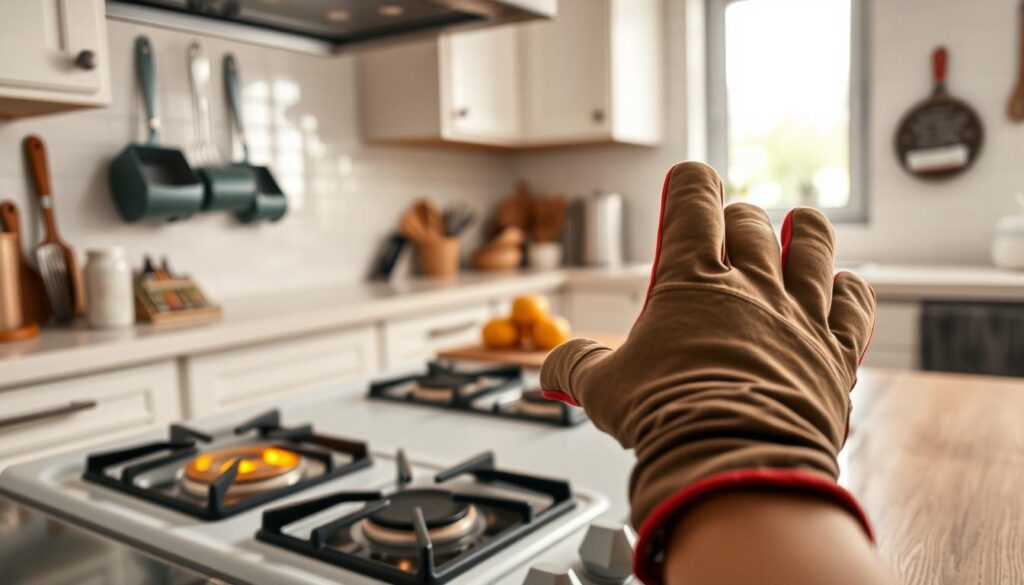
Cooking at the wrong temperature can result in undercooked or overcooked food. It can even cause a fire. Being mindful of the stove temperature helps avoid these problems. For example, high oil temperatures can lead to splatters and fires.
Effective Temperature Management
To manage stove temperature well, start with low heat and adjust as needed. This method ensures Kitchen Safety and helps in getting the cooking results you want. Also, keep a safe distance from the stove and never leave cooking unattended. These steps are simple but effective for Fire Safety.
By controlling the stove temperature, you lower the risk of kitchen accidents. This makes cooking safer and more fun.
Common Mistakes to Avoid
Knowing the common mistakes when using stoves can make cooking safer. It helps prevent kitchen fires.
One big mistake is leaving cooking unattended. This can cause overheating and start a fire. Always stay in the kitchen, but watch closely when cooking with oil or grease.
Not keeping the stove and area clean is another error. Grease and food can build up and catch fire. Clean regularly to keep your cooking space safe.
Wearing loose clothes that can catch fire is risky. Wear tight clothes while cooking to avoid this danger.
Not having a fire extinguisher nearby is a big mistake. Make sure you have one rated for kitchen fires and know how to use it.
By knowing these mistakes and avoiding them, you can make your kitchen safer. This improves stove safety and kitchen fire prevention.
Safe Cooking Habits
Safe cooking practices prevent stove accidents and make cooking better. By following a few simple habits, you can lower the risk of kitchen mishaps.
Being attentive to cooking is key. Stay in the kitchen, mainly when using high heat or handling dangerous items like oil or sharp objects. Never leave cooking unattended, as it’s a common cause of fires and accidents.
Keeping your cooking area clean and organized is also important. Cluttered spaces can cause accidents, like slipping or tripping. Clean your stove, oven, and around them often to avoid grease and food fires.
Proper storage of cooking utensils and ingredients is vital. Make sure your kitchen is tidy, with things you use often within reach. This makes cooking smoother and lowers accident risks from searching through messy places.
Knowing your cooking skills and appliance limits is essential. Understand what your stove and other appliances can do to avoid accidents from misuse.
By making safe cooking habits part of your routine, you’ll have a safer and more fun cooking space. This approach to kitchen safety keeps you and your family safe while making cooking more enjoyable.
Implementing Stove Safety Rules at Home
Kitchen safety begins with knowing and following stove safety rules at home. A safe kitchen is key to avoiding accidents and keeping everyone safe.
Start by checking your kitchen’s layout for hazards. Make sure the stove is installed right and there’s good ventilation. Proper ventilation improves air quality and lowers fire risk by removing flammable vapors.
Using safety gear is also vital. Having a fire extinguisher in the kitchen and knowing how to use it can greatly lower fire accident risks. Choose a fire extinguisher that works for grease and electrical fires, as these are common in kitchens.
Being careful with your kitchen layout can also prevent accidents. Keep flammable stuff away from the stove and clear the cooking area of clutter. Never leave cooking unattended, as this is a big cause of kitchen fires.
Teaching everyone in your home about kitchen and fire safety is important. Teach kids about the dangers of playing near the stove and staying away from hot surfaces.
By following these steps and staying alert to kitchen safety, you can greatly reduce accident risks. Regularly check and update your stove safety rules to keep up with new kitchen setups or appliances.
Resources for Learning About Stove Safety
The article covered stove safety, including stove types and safety tips. It also talked about cooking with kids and emergency prep. To learn more, there are many resources available.
Check out the National Fire Protection Association (NFPA) website for kitchen fire safety info. They have guidelines, stats, and tips to prevent fires. The United States Fire Administration (USFA) also has resources on cooking safety and fire prevention.
For specific stove safety advice, look at your stove’s user manual. Brands like Whirlpool and GE Appliances offer safety and maintenance tips for your model.
Using these resources can help you understand stove safety better. This way, you can make your kitchen a safer place to cook.