







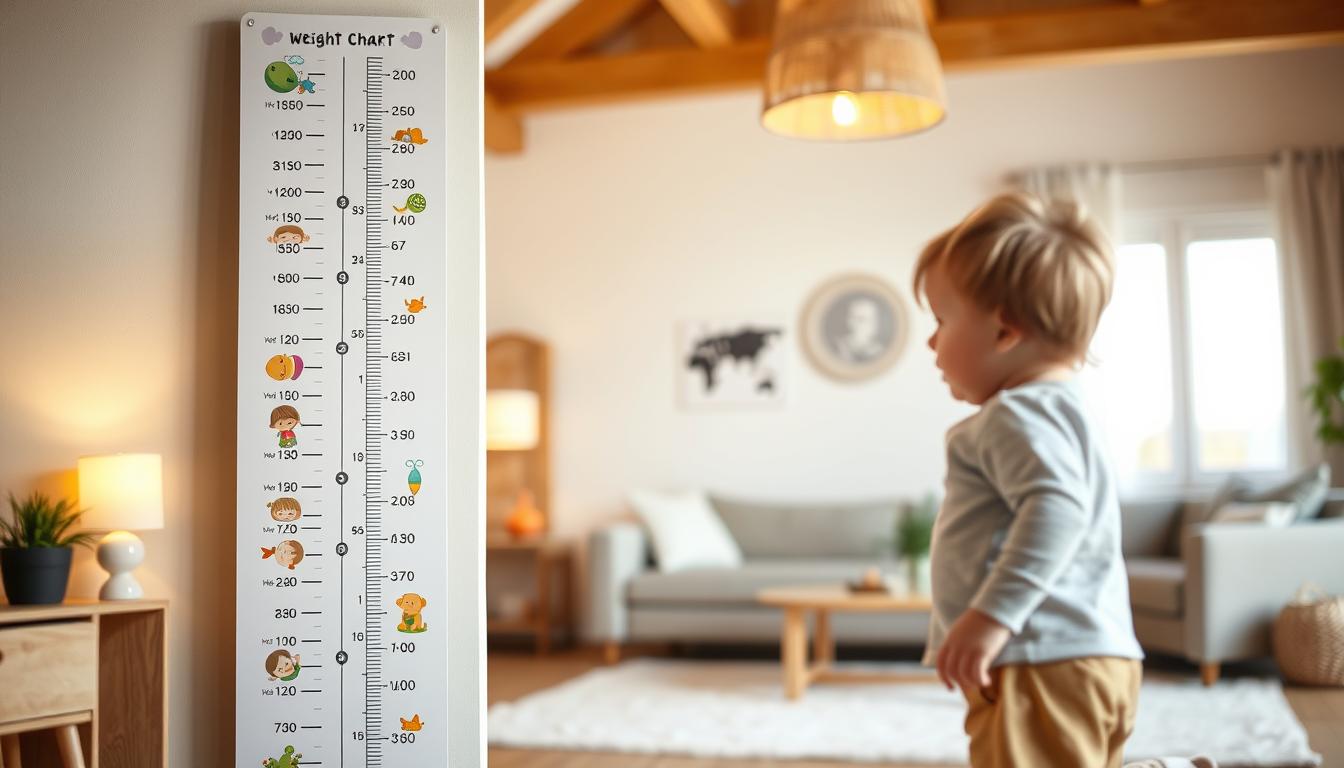
Creating a growth chart at home is a fun DIY project. It lets parents track their child’s growth over time.
By watching a child’s height measurement, parents can spot any issues early. They can also celebrate their child’s growth.
This project is easy to make. You’ll need a wooden board, paint or stain, and basic materials. It’s a great way to track your child’s development.
In this article, we’ll show you how to make a growth chart at home. We’ll also give tips on using it to support your child’s growth.
What is a Growth Chart?
A growth chart is a visual tool that tracks a child’s height and weight as they grow. It’s an essential tool for parents and pediatricians to watch a child’s development over time.
This chart measures height and weight, showing a child’s growth pattern. It helps spot any growth issues early, allowing for quick action if needed.
Pediatricians and parents use growth charts to track a child’s growth. By watching growth over time, they can spot patterns that might need medical attention. Regular checks help in early detection of growth-related issues, ensuring quick action.
Knowing how to use a growth chart is key to child growth monitoring. It helps parents work with healthcare professionals to make sure their child grows healthily.
Understanding Growth Percentiles
Growth percentiles help parents see how their child compares to others of the same age and sex. By using a growth chart, parents and doctors can see where a child stands. This shows how a child compares to a standard group.
Interpreting Growth Percentiles: A child at the 50th percentile is average. This means half the kids are taller or heavier, and half are not. Being above or below average doesn’t always mean there’s a problem. It just shows how they compare.
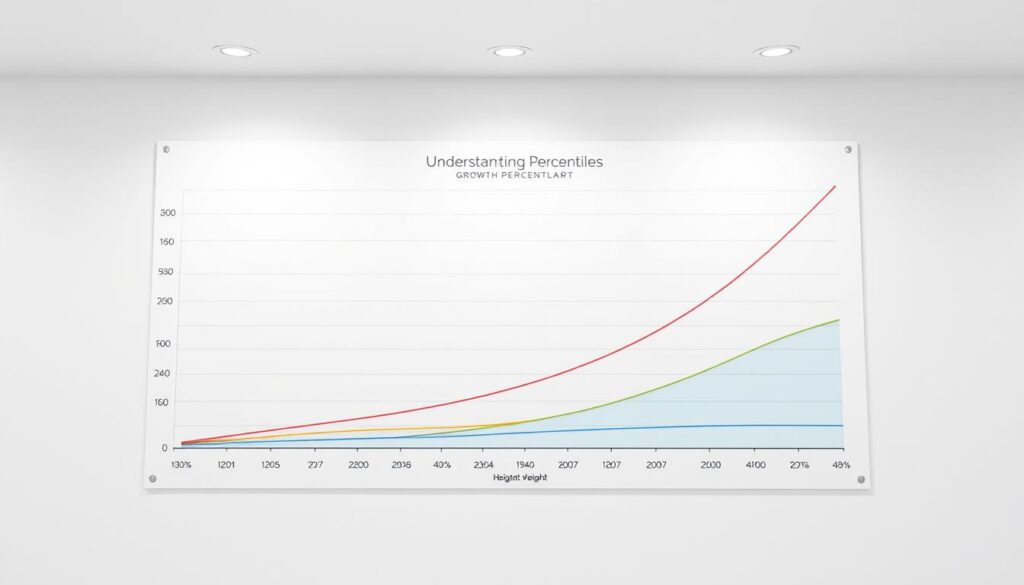
For example, a child in the 75th percentile for height is taller than 75% of their peers. They are shorter than 25%. Knowing these percentiles helps spot growth issues early.
Using Percentiles for Growth Monitoring
Tracking a child’s growth percentiles over time is key. It helps find trends or changes in growth. This info is vital for early action if there’s a growth concern.
By grasping and using growth percentiles, parents can team up with doctors. Together, they can make sure their child grows healthily.
How to Create a Home Growth Chart
Creating a DIY growth chart for your child is easy and fun. It’s a great way to track their growth in a personal way. You just need a few simple materials.
You’ll need a wooden board, paint or stain, and a measuring tape. The wooden board is the base of your chart. It’s sturdy and lets you mark your child’s height over time. Choose a board that matches your home’s style.
Choosing the Right Materials is key for a lasting and nice-looking chart. Pick a board size that fits your child’s height and your space. A bigger board is good for taller kids, while a smaller one works for younger ones.
The paint or stain you pick adds a personal touch. Choose colors that match your child’s room or their favorite colors. This not only looks good but also protects the board.
After getting your materials, prepare your board. Sand it to make it smooth. Then, apply paint or stain as the instructions say.
When your board is ready, mark the heights with a measuring tape. You can paint or use a marker. Make sure the scale is easy to read so you can track your child’s growth.
Making a DIY growth chart is more than tracking growth. It’s a keepsake your child will treasure. By following these steps, you’ll make a meaningful addition to their room.
Tracking Growth Over Time
Keeping an eye on a child’s growth is key to their health and development. By measuring height and marking it on a growth chart, parents can see how their child is doing. They can also spot any growth issues early on.
Tracking growth is more than just height. It’s about seeing how a child is growing overall. This helps find and fix growth problems early.
To mark height on a growth chart right, parents should measure their child’s height often. This could be on their birthday. Being consistent helps show how a child is growing over time.

Keeping a steady record helps parents see where their child is now and where they might be in the future. This way of watching health can really help parents feel in control.
Regular tracking growth lets doctors make better choices about a child’s health. It’s a simple but powerful way to keep up with a child’s growth.
Understanding Red Flags
Spotting red flags in a child’s growth chart is key for catching growth issues early. Parents can watch the chart closely to find any odd trends or patterns. This helps them see if their child’s growth is off track.
Red flags might show if a child’s growth is below a certain level or not increasing as it should. For example, if a child’s height or weight drops a lot in a short time, it could mean a health problem. This needs to be checked by a doctor.
Look out for big changes from the expected growth curve, not gaining weight or height as usual, and other signs of health problems. Catching these early can help prevent bigger issues later. It lets parents get help from doctors sooner.
If you notice something odd, talk to a pediatrician or healthcare provider right away. They can check the child’s health, find out why there’s a growth problem, and suggest how to fix it. Knowing and acting on these signs can really help a child’s health and growth.
Being careful and taking action early, parents can help spot problems before they get worse. This ensures their child gets the care and support they need for healthy growth.
Using Technology for Growth Tracking
Digital growth charts have changed how we track growth. They make it easier and more convenient to monitor growth patterns.
Growth tracking apps and digital charts offer many benefits. They do the math for you and track growth accurately. This helps parents and doctors make better decisions.

One big benefit of digital growth charts is how easy they make tracking growth. You can update them quickly and see growth patterns clearly.
They also spot problems early, so you can act fast. Plus, sharing growth data with doctors is easier. This helps get expert advice when needed.
Technology lets us be more active in supporting healthy growth. Whether through apps or online tools, digital growth tracking tools are handy and effective.
Growth Chart Variations by Age
Growth charts are not the same for everyone. They change as children grow from babies to teenagers. This means we need age-specific growth charts to track their growth correctly.
For infants, we look at weight, length, and head size. These are key in the first year to see if they’re growing well. The World Health Organization (WHO) has charts for babies up to 2 years old. These charts match the growth of healthy babies.
When kids become toddlers, growth charts are just as important. They watch weight, height, and BMI. The Centers for Disease Control and Prevention (CDC) charts are used here. They show how a child’s growth compares to others.
For older children and teens, growth charts are key too. They help spot growth spurts and make sure kids are growing right. The CDC charts are used here, focusing on BMI and other signs of healthy growth.
Using growth charts for different ages helps spot growth problems early. By watching growth over time, we can help kids who aren’t growing right. This ensures they get the care they need.
Encouraging Healthy Growth
Creating an environment that supports healthy growth is key for kids’ development. It’s important to focus on nutrition, physical activity, and rest. These areas greatly impact a child’s growth.
Promoting healthy growth means giving a balanced diet full of nutrients. Kids should eat fruits, veggies, whole grains, lean proteins, and healthy fats. A well-fed child grows and develops healthily.

Also, regular exercise is vital. It helps kids grow physically and boosts their health. They can play outside or join sports, based on their interests and age.
Adequate sleep is also essential for promoting healthy growth. Enough rest helps kids’ bodies grow and develop. A regular bedtime routine is helpful.
By following these tips for healthy growth, parents can help their kids thrive. It’s about finding a balance that supports overall development.
Frequently Asked Questions
Parents often look for help on using growth charts. It’s good to clear up common questions. One big worry is how to make a growth chart that really shows how a child is growing.
To create a growth chart, parents can use a pre-made template or make one themselves. They should track their child’s height, weight, and other important stats over time. It’s key to take measurements often and record them right.
Many ask how to use a growth chart right. The chart helps track progress, spot problems early, and guide health and development choices.
Interpreting growth chart results can be tricky. Parents should look at trends and patterns, not just single numbers. If growth concerns arise, it’s wise to talk to a doctor.
Some parents are curious about the different types of growth charts. There are charts for various ages, genders, and growth areas. The right chart depends on the child’s needs and situation.
By answering these frequently asked questions, parents can better understand growth charts. This makes them a great tool for supporting their child’s growth.
Conclusion and Next Steps
Using a growth chart is a simple yet effective way to monitor a child’s growth and development. By regularly tracking growth, parents can identify any issues early. This helps promote healthy growth.
To keep using the growth chart effectively, parents should update it regularly. They should also consult with their pediatrician if they have any concerns. This proactive approach helps address any growth-related issues quickly.
The next steps involve continuing to track the child’s growth over time. Parents should be aware of any red flags and make necessary adjustments. This way, parents can help their child grow and thrive.
By following these guidelines and using growth charts effectively, parents can take an active role in their child’s development. This ensures their child receives the care they need.