







A healthy digestive system is key for overall wellness. Fiber is a big part of a healthy diet. It helps keep your tummy happy.
The Mayo Clinic Staff says fiber is vital for a healthy diet. It supports digestive health. Eating foods high in fiber can prevent digestive problems and keep your gut balanced.
Adding fiber-rich foods to your diet is a great start. It leads to a healthier gut and better wellness. This makes you happier and healthier overall.
What is Fiber and Why is it Important?
Fiber is key for a healthy digestive system. It’s a type of carbohydrate that our bodies can’t digest. Yet, it’s essential for our health, mainly for digestive health.
There are two main types of fiber: soluble fiber and insoluble fiber. Soluble fiber turns into a gel when mixed with water, slowing digestion. It’s found in oats, barley, nuts, and fruits. Insoluble fiber, on the other hand, doesn’t mix with water and makes stool bulkier, helping with regular bowel movements. It’s in whole grains, veggies, and wheat bran.
The Mayo Clinic Staff highlights the importance of knowing the difference between soluble and insoluble fiber.
“Soluble fiber dissolves in water to form a gel-like material. Insoluble fiber doesn’t dissolve in water.”
This difference shows how each type affects our digestive health.
Both types of fiber are important for a healthy gut. Soluble fiber lowers cholesterol and blood sugar. Insoluble fiber prevents constipation and helps with regular bowel movements. Together, they greatly improve digestive health.
How Fiber Affects Digestion
Fiber plays a big role in digestion, affecting many parts of gut health. It’s key for a healthy digestive system, thanks to soluble fiber.
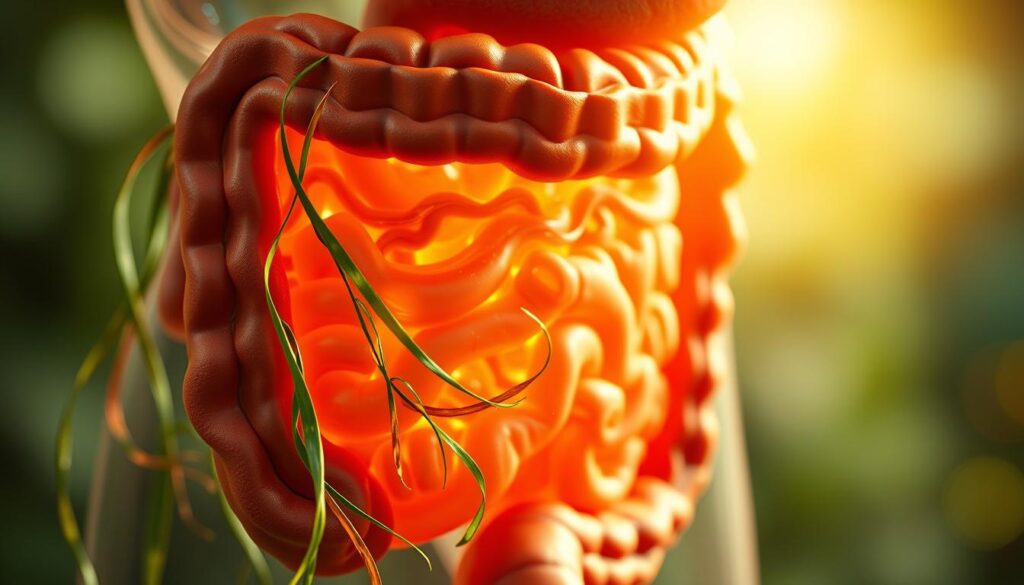
Fiber helps control bowel movements and stops constipation. Amanda Beaver, a wellness dietitian, says, “Soluble fiber forms a gel that slows digestion.”
How Soluble Fiber Regulates Bowel Movements
Soluble fiber turns into a gel-like substance when it meets water. This slows down digestion. It makes nutrient absorption better and keeps bowel movements regular.
This helps avoid constipation and diarrhea. It keeps the gut balanced. A balanced gut is vital for gut health and prevents digestive problems.
Additional Health Benefits of Fiber
Fiber does more than just help with digestion. It also boosts overall health and wellness. Eating foods high in fiber can lead to many health benefits, making it key for a healthy lifestyle.
Fiber and Heart Health: Eating a lot of fiber can lower your heart disease risk. It helps lower bad cholesterol, which is good for your heart.
Blood Sugar Control: Soluble fiber slows down sugar absorption, which helps control blood sugar. This is great for people with diabetes or those at risk of getting it.
Chronic Disease Prevention: A diet full of fiber can also lower cancer risk, like colorectal cancer. Fiber helps keep the gut healthy, which is thought to be part of the reason.
The Mayo Clinic Staff says a high-fiber diet can lower heart disease, type 2 diabetes, and some cancers risk. Adding fiber-rich foods to your diet can greatly improve your health and prevent chronic diseases.
Learning about fiber’s health benefits helps you make better food choices. This can greatly improve your overall well-being.
Recommended Daily Intake of Fiber
The National Academy of Medicine sets guidelines for recommended daily fiber intake. These guidelines change based on age and gender.
Adults need to eat between 21 to 38 grams of fiber each day. Women aged 19-50 should aim for 25 grams. Men in the same age group should aim for 38 grams. For those over 50, women need 21 grams and men need 30 grams.
“A diet rich in fiber can have numerous health benefits, from improving digestion to reducing the risk of chronic diseases.”
It’s important to meet these fiber recommendations for a healthy digestive system and overall health. It’s not just about any fiber, but the right amount each day.
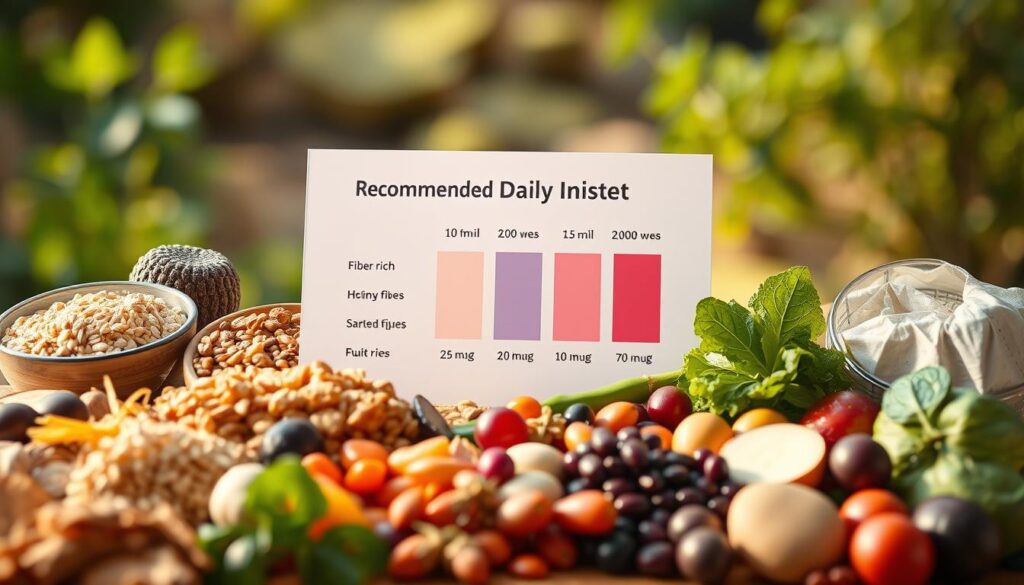
To hit your daily fiber intake goals, eat a variety of high-fiber foods. Include fruits, vegetables, whole grains, and legumes in your diet. This way, you meet your fiber needs and get other important nutrients too.
High-Fiber Foods to Include in Your Diet
High-fiber foods like fruits, vegetables, whole grains, and legumes are key for a healthy diet. They give you fiber and important vitamins, minerals, and antioxidants.
Fruits such as apples, bananas, and berries are full of fiber. Apples, for example, have both types of fiber, helping your digestion.
Vegetables like broccoli, carrots, and Brussels sprouts are also high in fiber. You can add them to meals or eat them as snacks.
Whole grains like brown rice, quinoa, and whole-wheat bread are fiber-rich. Choose them over refined grains. Legumes like lentils, chickpeas, and black beans are not only fiber-rich but also high in protein. They’re great for vegetarians and vegans.
Adding these high-fiber foods to your diet is easy. Start by making small changes, like switching to whole-grain bread or adding legumes to your meals. As you get used to these changes, try different high-fiber foods to keep your diet exciting and healthy.
Tips for Adding More Fiber to Your Meals
Making small changes to your meal planning can boost your fiber intake. Amanda Beaver, a wellness dietitian, suggests starting with a high-fiber breakfast. Also, add fiber-rich foods to your meals and snacks.
Start by changing your breakfast. Try oatmeal with fruits or whole-grain toast with avocado. These high-fiber meals keep you full and kick off a healthy day.

For snacks, choose fruits, nuts, and veggies with hummus. They’re full of fiber and vitamins. Make sure to include a mix of fiber-rich foods like legumes, whole grains, and leafy greens in your meals.
Gradual Increase
It’s important to slowly increase your fiber intake. A big jump can cause discomfort. Gradual changes help your body adjust and avoid digestive problems.
By following these tips, you can enjoy a high-fiber diet’s benefits. Improved digestion and health are just the start. Begin with small steps and stay consistent for lasting results.
Common Myths About Fiber
Many people think fiber only helps with digestion. But, fiber does much more than that.
Fiber and Digestive Health: Some believe fiber only helps with digestion. But, it does more than that.
Fiber helps lower cholesterol and control blood sugar. A study in the Journal of Nutrition found a high-fiber diet lowers heart disease and type 2 diabetes risks.
“A high-fiber diet can help reduce the risk of chronic diseases, such as heart disease and diabetes, by improving blood lipid profiles and glucose metabolism.”
Some think fiber is only in boring foods like bran and broccoli. But, there are tasty high-fiber foods like apples, bananas, quinoa, and brown rice.
Fiber and Weight Management: Some worry fiber makes you gain weight. But, it can actually help with weight management by making you feel full.
Knowing the truth about fiber can help you make better diet choices. It can improve your health and energy levels.
Signs You May Need More Fiber
Many people face digestive problems without knowing a lack of fiber is the cause. If you often feel uncomfortable, check if you’re getting enough fiber.
Constipation is a common sign of low fiber. Without enough fiber, your bowel movements can get irregular. This leads to discomfort and other issues.
Bloating and gas also show you might not have enough fiber. Fiber keeps your gut bacteria in balance. Without it, you might feel bloated.
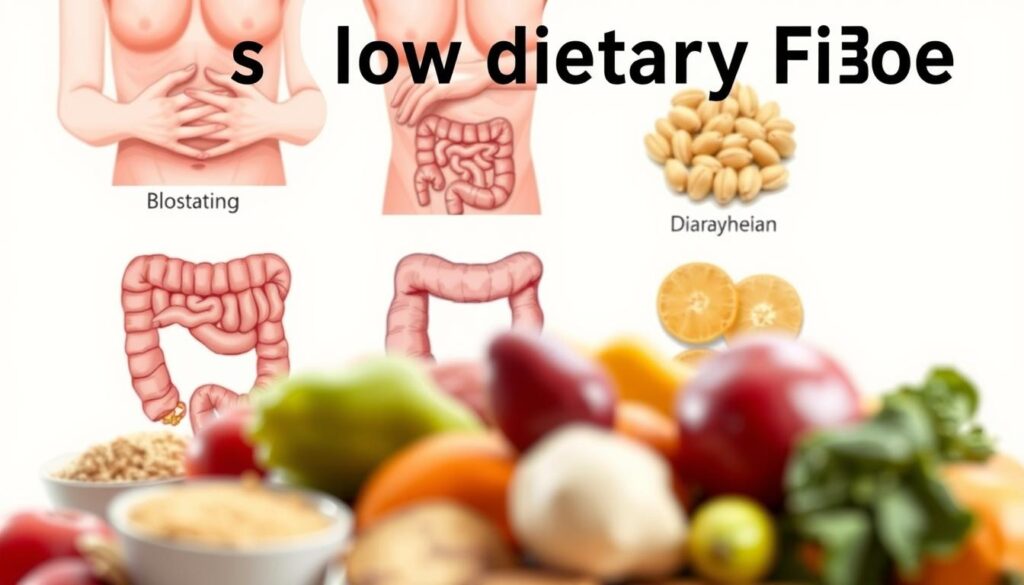
Other digestive issues like abdominal pain and cramps can also mean you need more fiber. Changes in bowel movements are another sign. Getting enough fiber can help solve these problems and boost your digestive health.
By paying attention to these signs and changing your diet, you can improve your digestive system’s health.
Fiber Supplements: Are They Necessary?
A balanced diet is the best way to get fiber. But, supplements can help if you can’t get enough from food.
Supplements are good for people with special diets or health issues. The Mayo Clinic Staff says they support digestive health.
Deciding to use supplements depends on your needs. Always consult with a healthcare professional to see if you need them and which ones are best.
When picking a supplement, think about the fiber type. Psyllium, methylcellulose, or polycarbophil are common. Each has its own benefits and might suit you differently.
Start with a small dose and slowly increase it. This helps avoid side effects like bloating or gas. Drinking plenty of water is also key to prevent constipation.
In summary, fiber supplements can be useful for some. But, they should never replace a diet full of whole foods. A healthcare professional can help you use supplements wisely.
Conclusion: Make Fiber a Part of Your Healthy Lifestyle
Adding fiber to your diet is key for good health and wellness. A diet full of fiber can greatly improve your digestion and overall life quality.
Learning about fiber and making smart food choices is the first step to a healthier life. Try to eat more foods high in fiber to enjoy its benefits.
Regularly eating fiber can help your digestion, boost your energy, and lower the risk of serious diseases. By focusing on fiber and wellness, you can improve your health and live a happier life.